Visual Learning Easy Addition Worksheets for Ages 5-9
3 filtered results
-
From - To
Discover our Visual Learning Easy Addition Worksheets designed specifically for children ages 5-9! These engaging worksheets offer a fun and interactive way to introduce basic addition concepts through visual aids and colorful graphics. Perfect for young learners, each worksheet encourages exploration and understanding of numbers and simple addition problems, fostering essential math skills while promoting visual learning. Our carefully crafted resources support differentiated learning and can be easily integrated into any classroom or home setting. Help your child build confidence in math with our visually stimulating worksheets that make the process of learning addition enjoyable and effective!
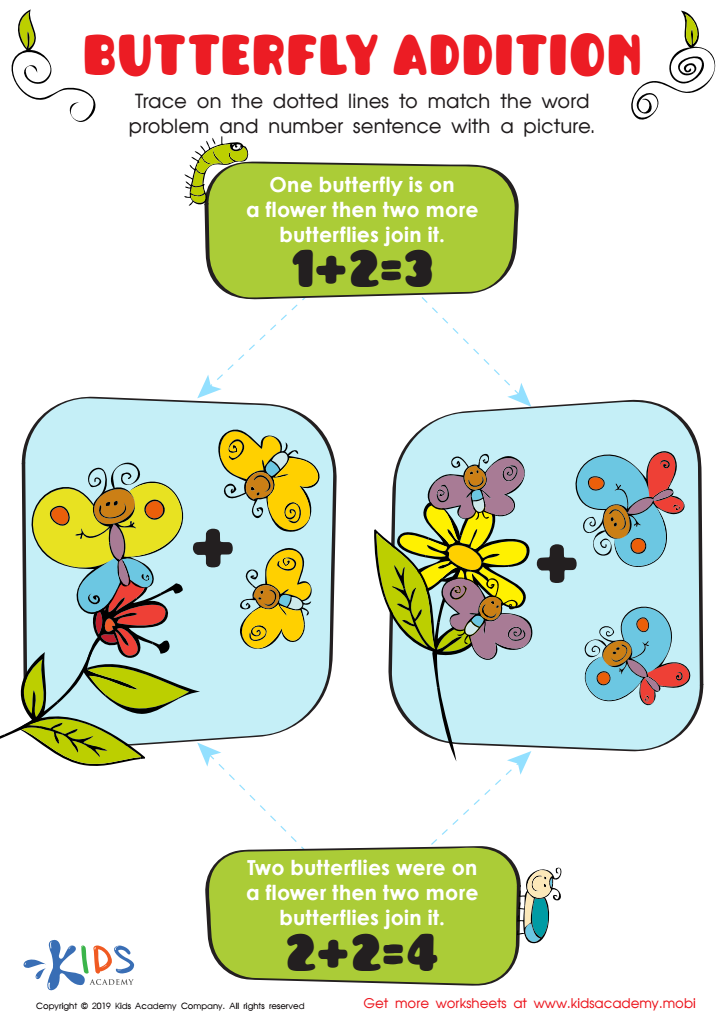
Butterfly Addition Worksheet
 Assign to My Students
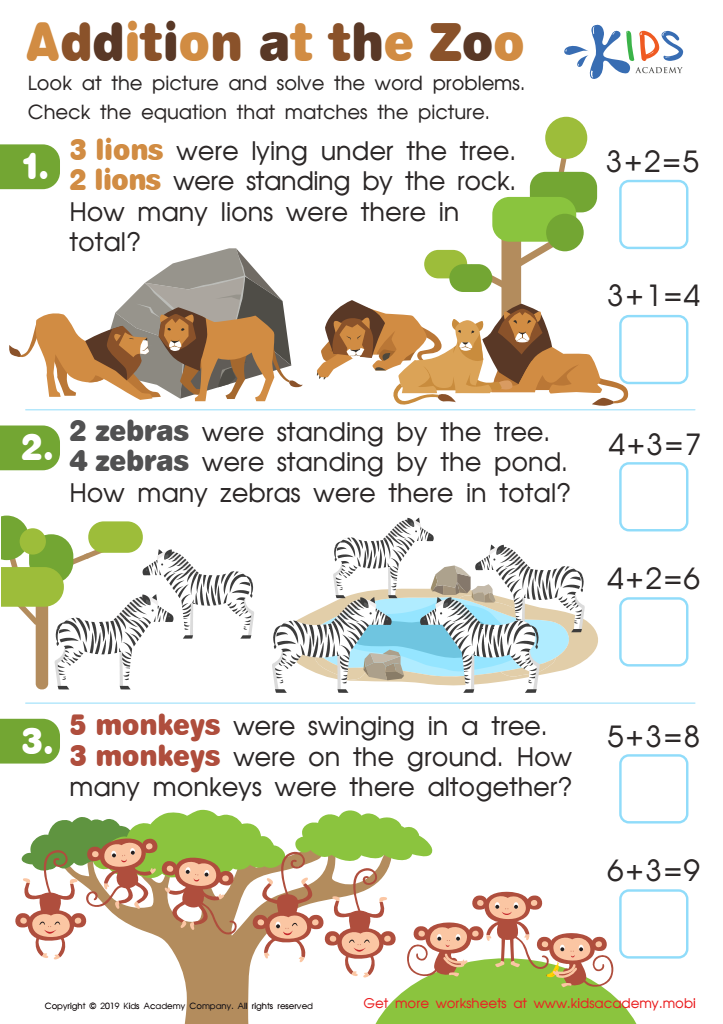
Addition at the Zoo Worksheet
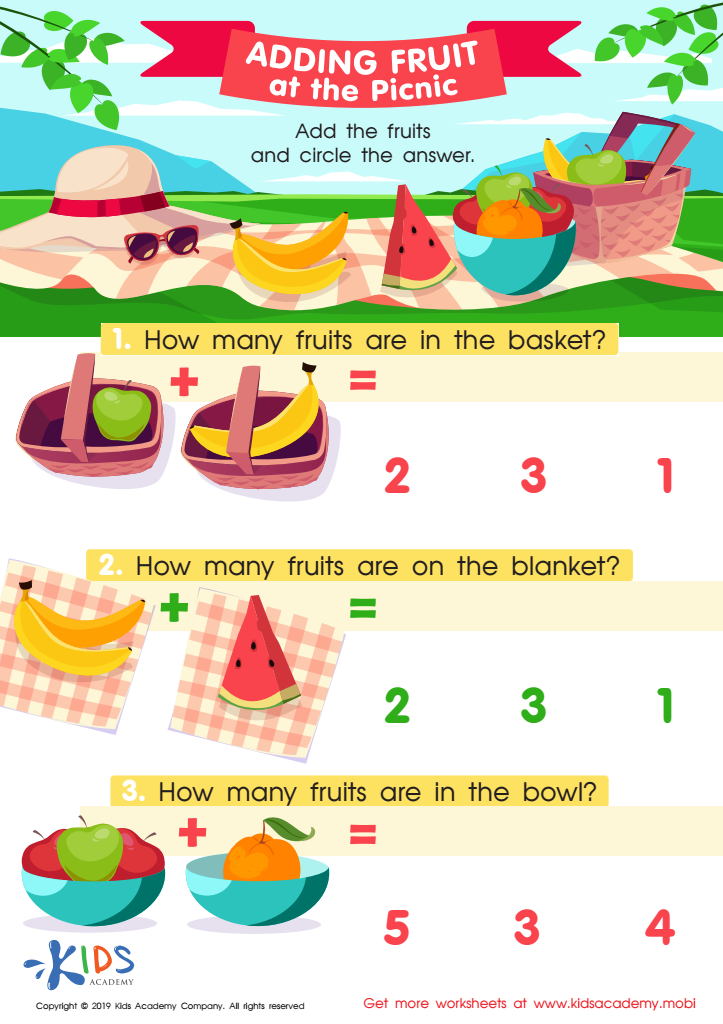
Adding Fruit at the Picnic Worksheet








Visual Learning Easy Addition for Ages 5-9 is crucial for developing foundational math skills in young learners. It leverages images, diagrams, and engaging visual aids to present mathematical concepts in a manner that resonates with children in this age group. Parents and teachers should care because visual learning caters to diverse learning styles; many children are visual learners who grasp concepts better when they can see representations rather than just working with numbers or abstract symbols.
At ages 5 to 9, children are at a critical stage of cognitive development, where early math skills are directly linked to future academic success. By utilizing visual tools and strategies, children can easily comprehend addition concepts, understand number relationships, and effectively perform basic arithmetic operations. This approach not only increases engagement and enjoyment in learning but also builds confidence, as students feel more accomplished in their problem-solving abilities.
Moreover, fostering early math proficiency has long-lasting effects and can significantly influence a child's attitudes toward mathematics as they progress through their education. Consequently, promoting Visual Learning Easy Addition supports educators' and parents' goals of nurturing not only capable but also enthusiastic learners who are prepared for ongoing mathematical challenges.








