Understanding patterns Easy Times Tables Worksheets for Ages 5-9
3 filtered results
-
From - To
Unlock the secrets of multiplication with our "Understanding Patterns Easy Times Tables Worksheets" designed specifically for ages 5-9! These engaging, printable worksheets make learning fun and interactive, helping young learners grasp the essential techniques of times tables through pattern recognition. Each worksheet is tailored to reinforce key concepts and enhance critical thinking skills, allowing children to discover the relationships between numbers as they multiply. With bright, kid-friendly designs, these resources promote confidence and fluency in math. Start building a strong foundation in mathematics today and watch your child thrive as they master their times tables through exciting pattern exercises!
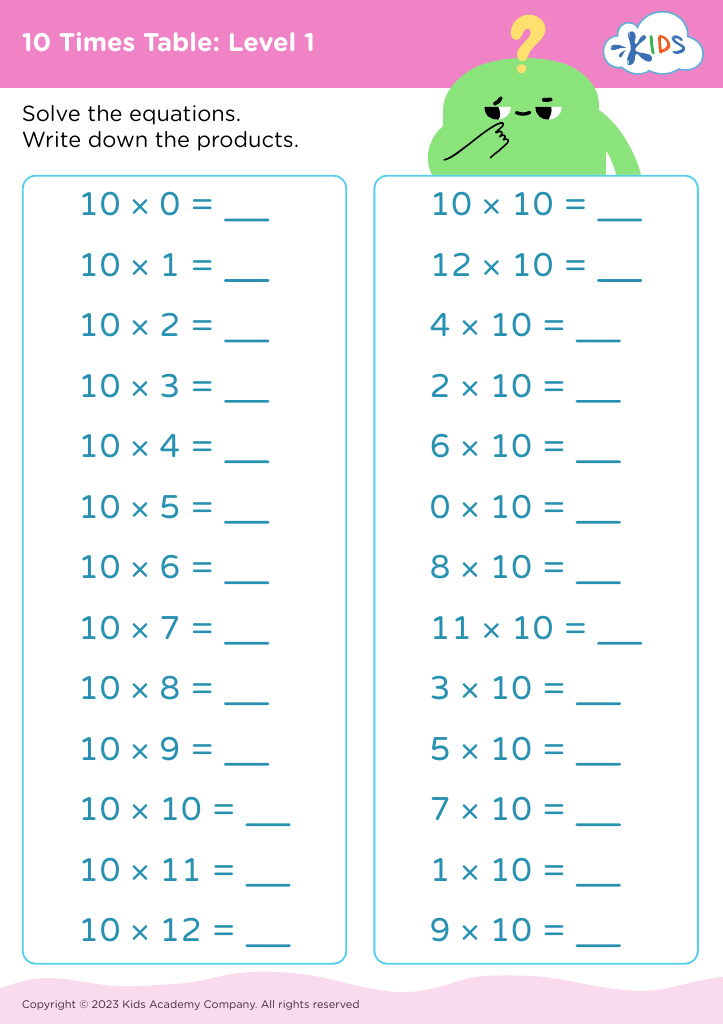
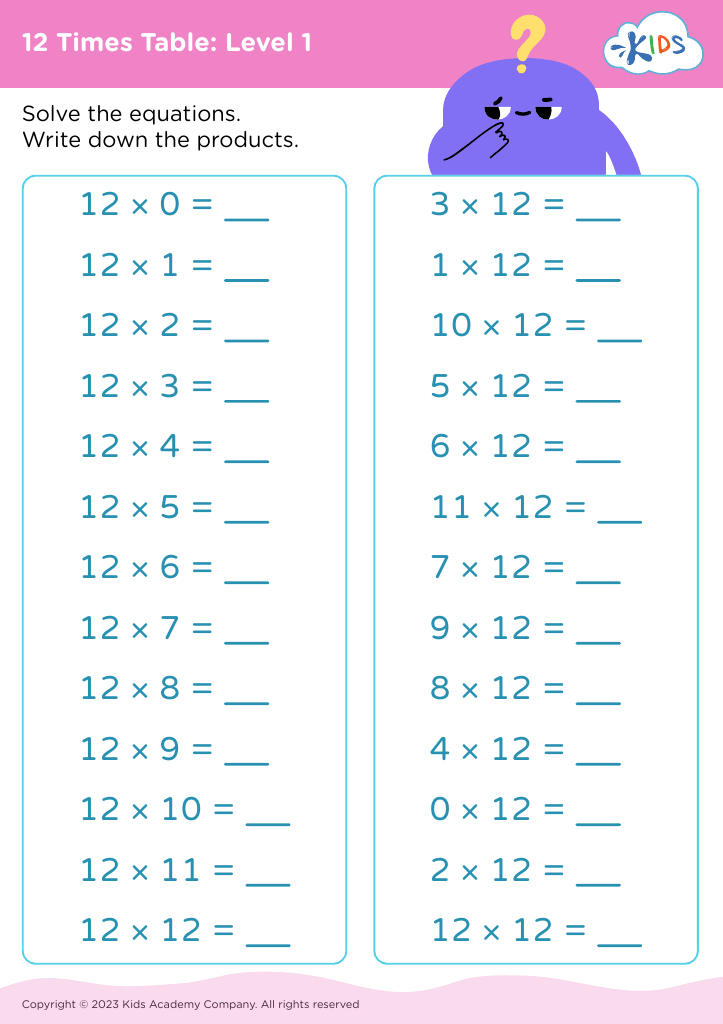
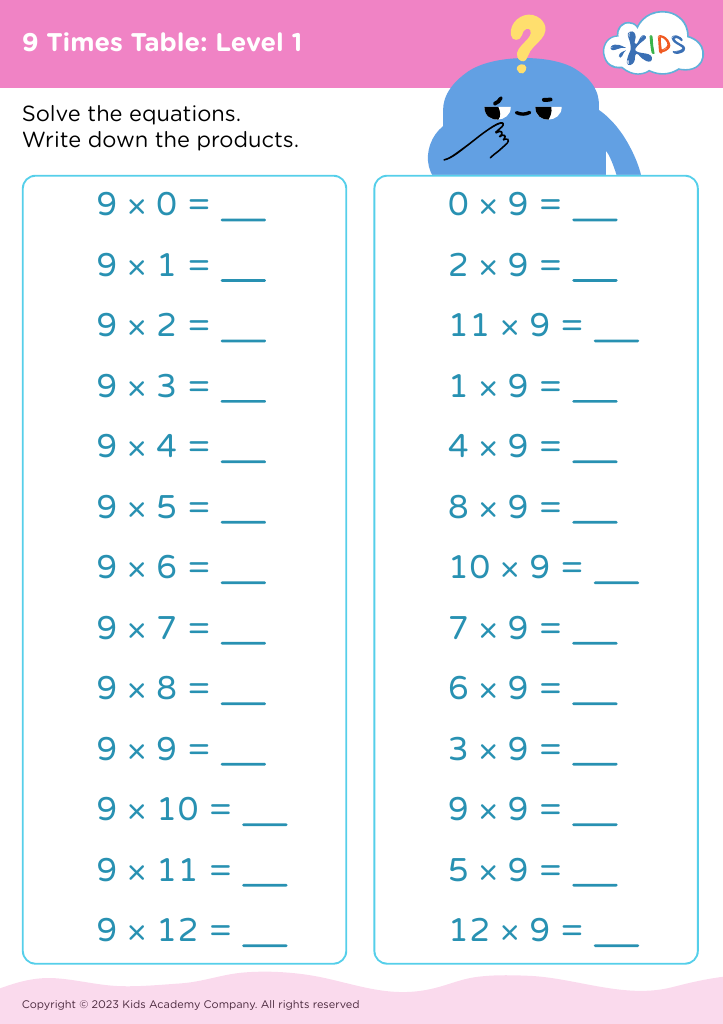





Understanding patterns, particularly in the context of Easy Times Tables, is critical for children aged 5-9 as it builds a solid mathematical foundation. Young learners naturally thrive on recognizing patterns, which enhances their critical thinking and problem-solving skills. Engaging with times tables early helps children see relationships between numbers, making multiplication less abstract and more concrete.
Parents and teachers should prioritize this understanding because it promotes confidence and fluency in mathematics. When children grasp the patterns in multiplication (e.g., understanding that 4 x 3 is the same as adding 4 three times), it enables them to tackle more complex math concepts as they progress in school. This foundational skill can lead to better performance in later grades, paving the way for more advanced mathematics.
Moreover, fostering this knowledge at a young age can alleviate math anxiety, encouraging a positive attitude toward the subject. Parents and teachers play a crucial role by introducing engaging, playful methods—like songs or games—to reinforce these concepts. By cultivating an environment where understanding mathematical patterns is valued, adults can help children develop lifelong number sense and resilience in facing academic challenges. Ultimately, a solid grasp of easy times tables empowers young learners for future math success.








