Basic Math Skills Easy Worksheets for Ages 6-7 - Page 2
28 filtered results
-
From - To
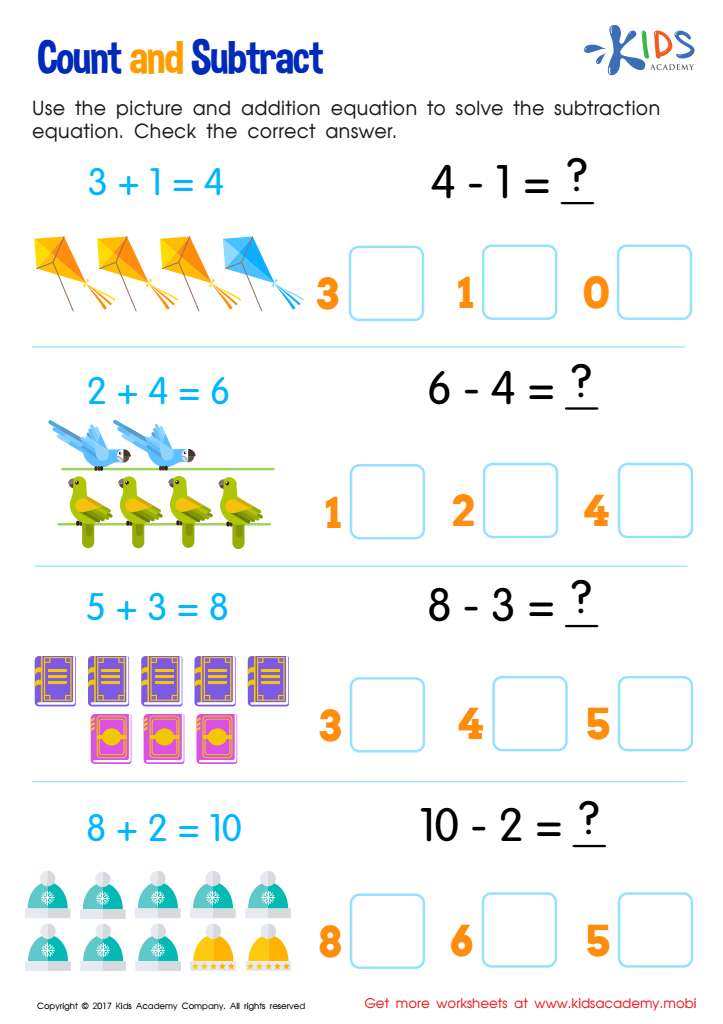
Count and Subtract Worksheet
 Assign to My Students
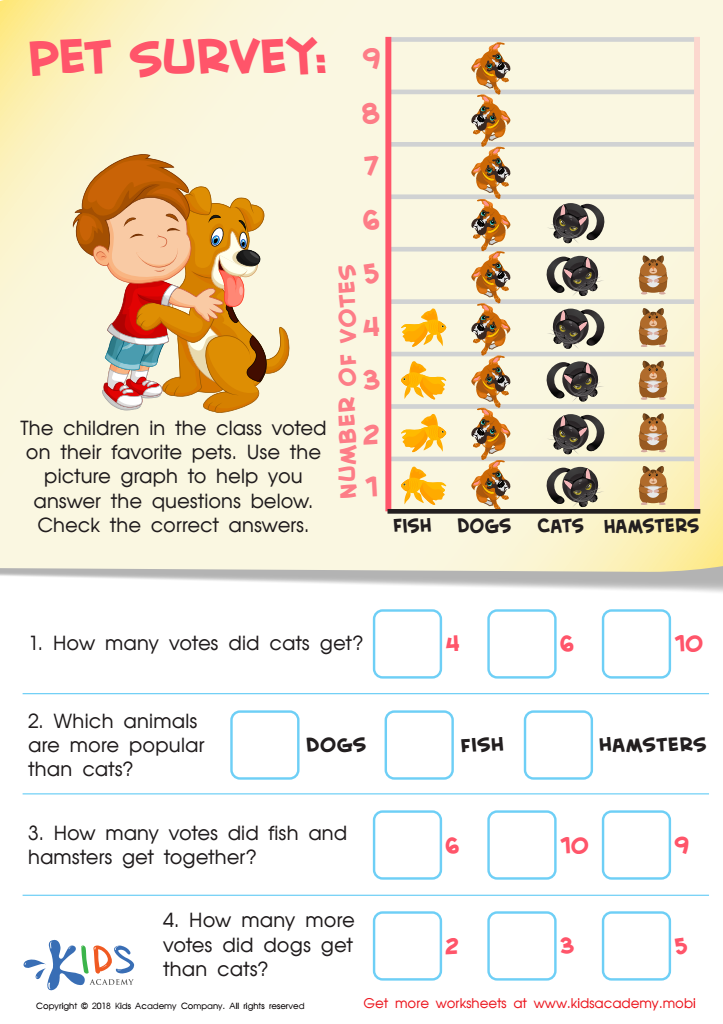
Pet Survey Worksheet
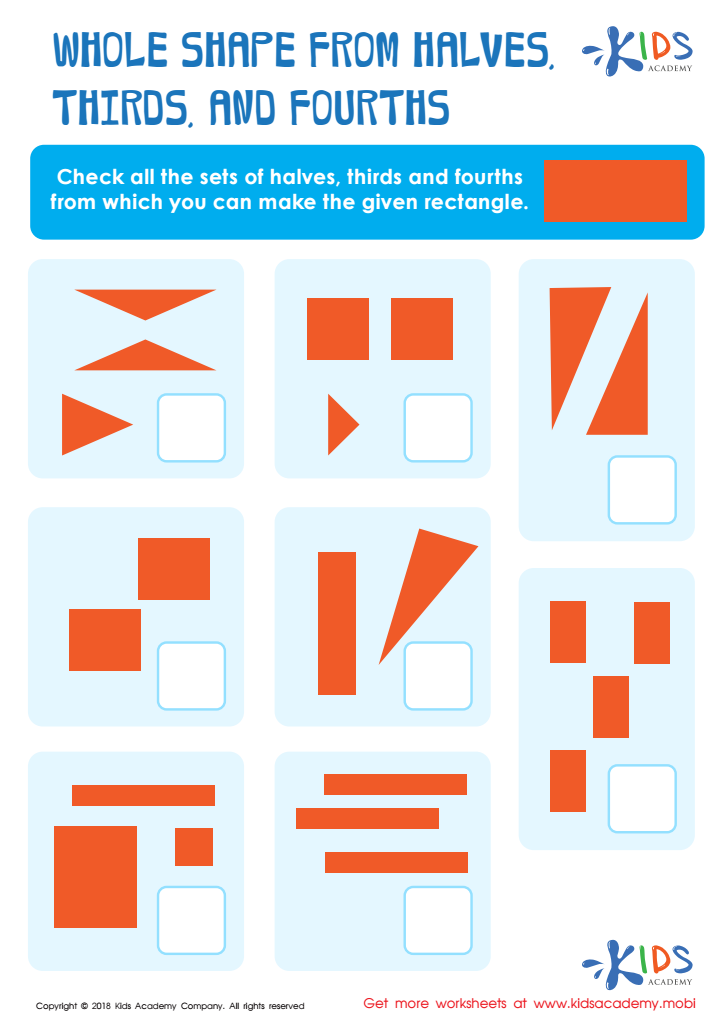
Whole Shape from Halves, Thirds and Fourths Worksheet
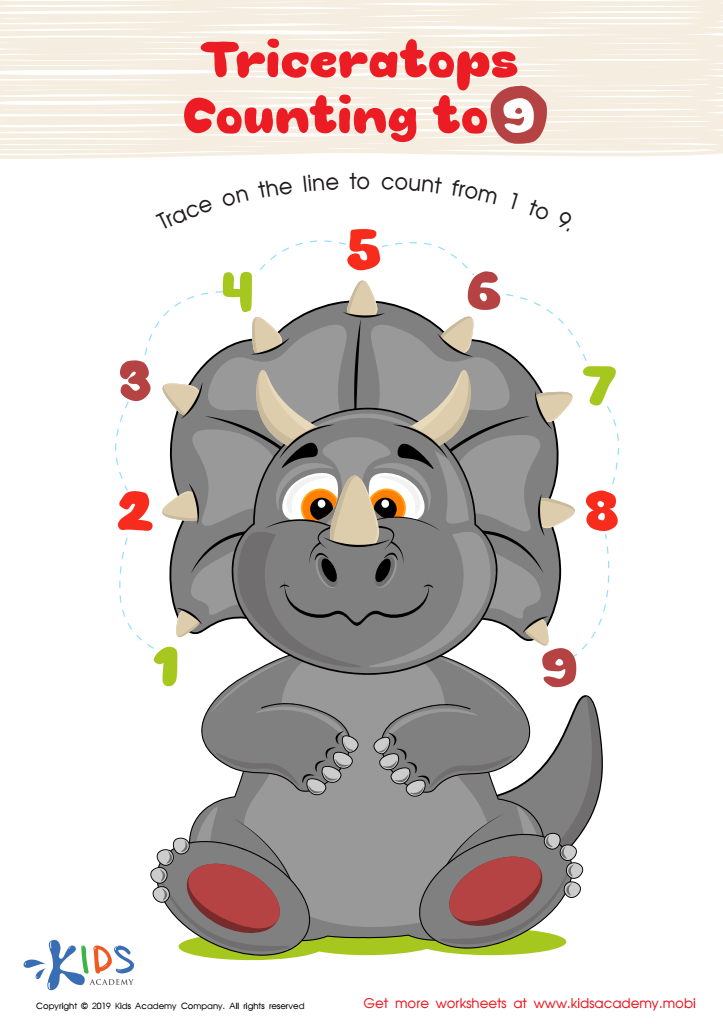
Triceratops Counting to 9 Worksheet








Basic Math Skills are vital for children aged 6-7 as they form the foundation for more complex mathematical concepts and problem-solving abilities encountered later in life. At this developmental stage, kids are typically learning to grasp fundamental ideas such as number recognition, addition, subtraction, shape identification, and simple measurement. Mastery of these skills is crucial as they are not just academic milestones, but practical tools that children use in their daily lives—like counting toys, sharing snacks, or understanding time.
For parents and teachers, prioritizing these foundational skills ensures that children are not overwhelmed as they advance through their education. Kids who struggle early on may develop a negative attitude towards math and experience long-term academic challenges. On the other hand, children who build a solid math foundation often exhibit improved critical thinking, problem-solving, and analytical skills, which benefit them in various subjects.
Moreover, fostering a positive and engaging learning environment at home or in school can nurture a child’s curiosity and confidence in math. Interactive activities, hands-on learning, and encouraging a growth mindset can make learning basic math fun and accessible, setting children on the path to academic success and beyond. Therefore, investing time and effort in teaching Basic Math Skills to young learners is indispensable for their overall cognitive and educational development.








