Basic subtraction Easy Worksheets for Ages 6-7
4 filtered results
-
From - To
Welcome to our Basic Subtraction Easy Worksheets for ages 6-7! These educational resources are designed to enhance young learners' understanding of subtraction concepts. Each worksheet features engaging exercises that simplify basic subtraction skills, helping children grasp the fundamentals at their own pace. Our user-friendly layout and colorful designs make learning enjoyable, motivating kids to practice essential math skills confidently. Perfect for both classroom and home use, these worksheets encourage critical thinking and problem-solving abilities. Fillable with fun illustrations, they’re ideal for reinforcing math readiness as kids embark on their educational journey. Start your child's subtraction mastery today!
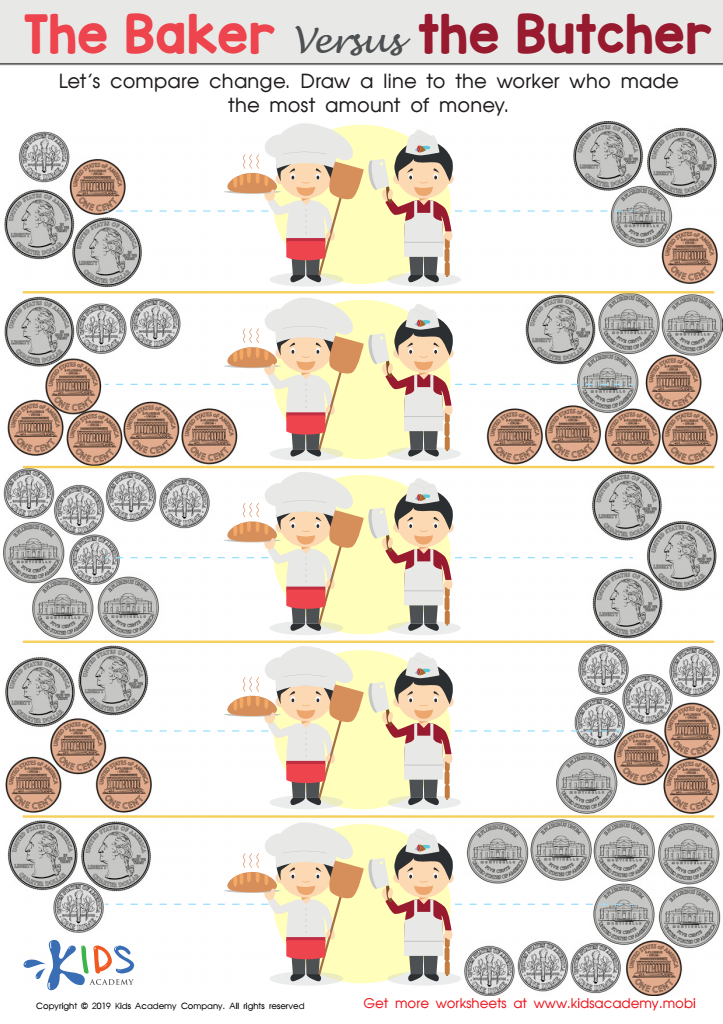
The Baker versus the Butcher Worksheet
 Assign to My Students
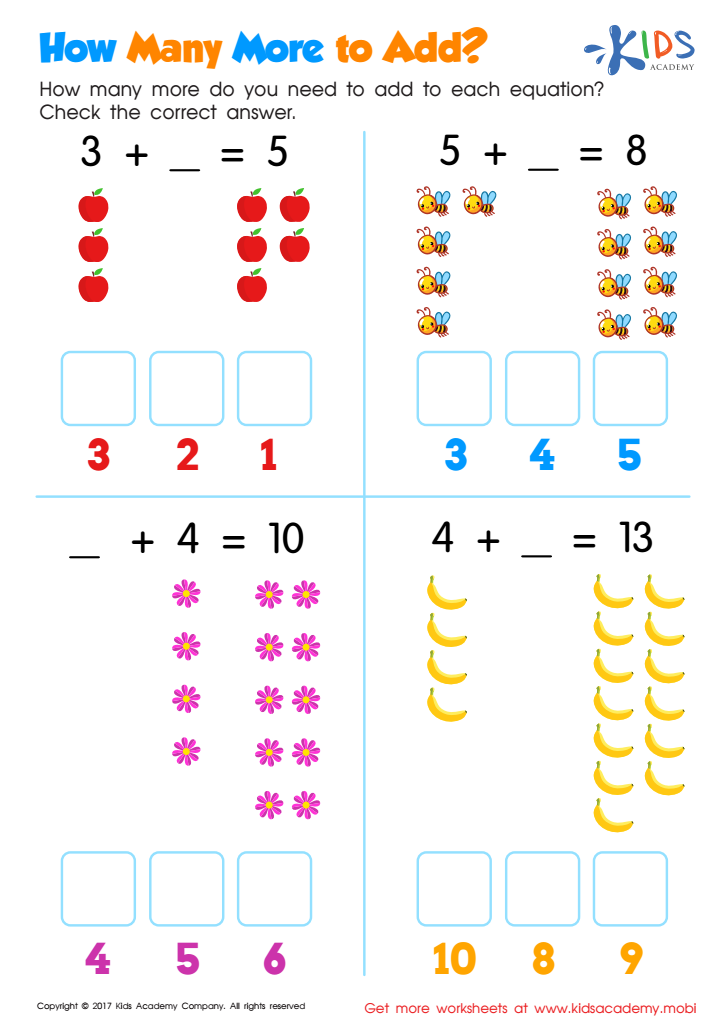
How Many More to Add Worksheet
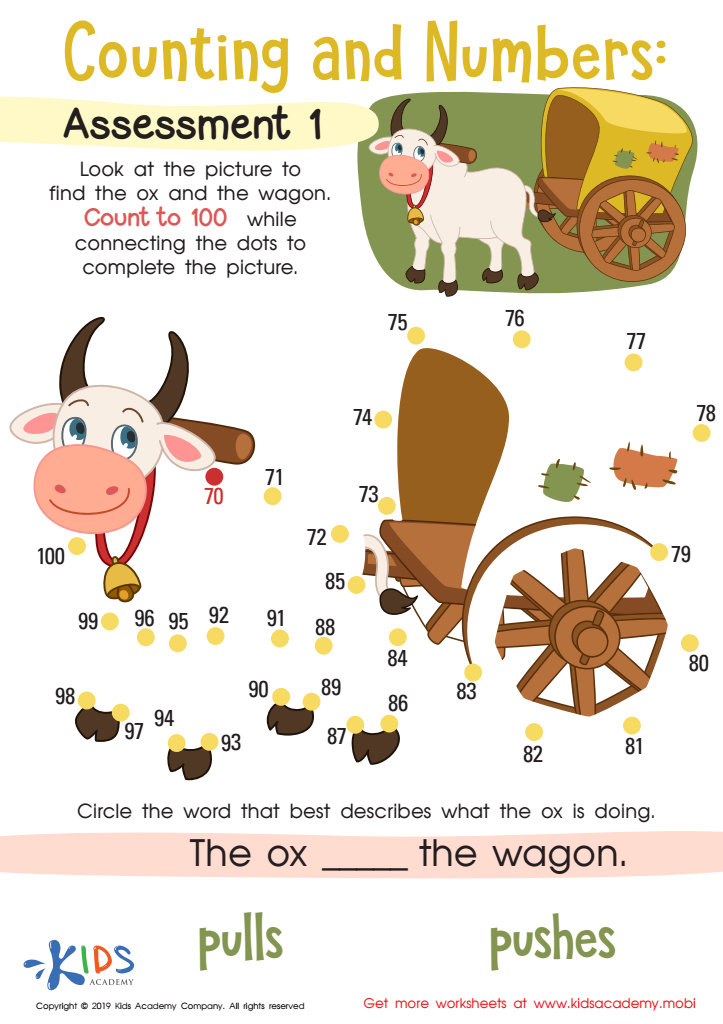
Counting and Numbers: Assessment 1 Worksheet
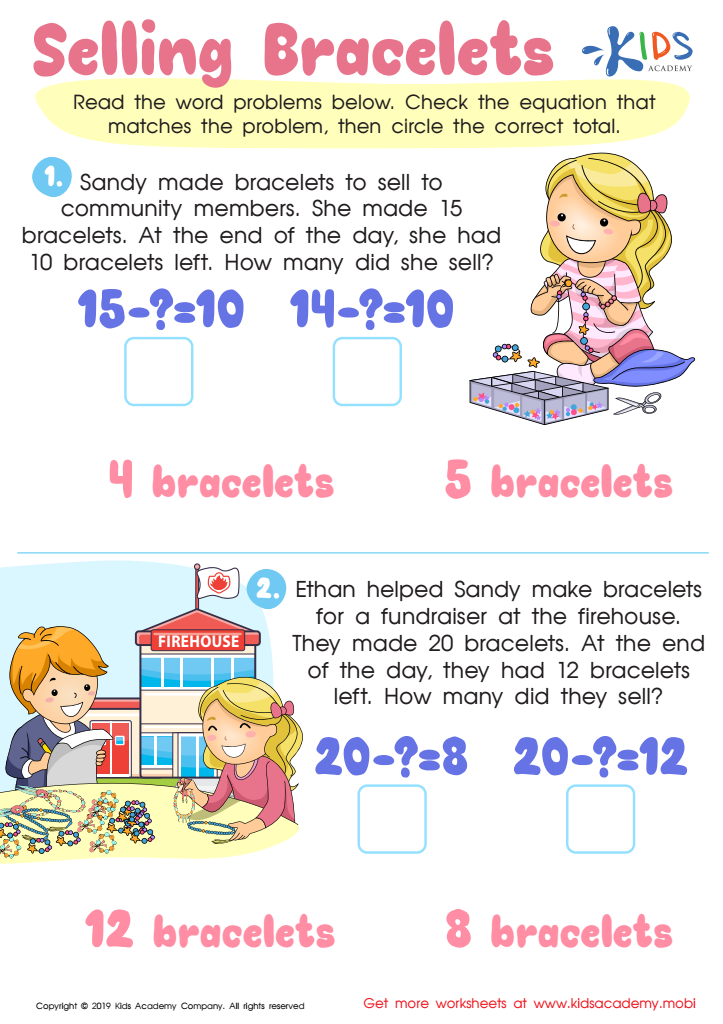
Selling the Bracelets Worksheet







Basic subtraction is a fundamental skill that children ages 6-7 need to develop for their academic success and everyday life. Understanding subtraction helps children grasp the concept of taking away or comparing quantities, which is crucial for building a strong mathematical foundation. At this age, children are transitioning from concrete to abstract thinking, and mastering subtraction enables them to solve problems more effectively.
Parents and teachers should care about this skill because it fosters critical thinking and encourages logical reasoning. Arithmetic proficiency enhances confidence, as children realize they can tackle numerical challenges independently. Furthermore, subtraction practice encourages perseverance and resilience, important traits that will serve children well throughout their education.
Additionally, subtraction is not just about numbers; it relates to real-life situations such as sharing, problem-solving, and planning. By connecting subtraction to everyday experiences, parents and teachers can highlight its relevance, making learning more engaging.
Investing time in developing basic subtraction skills can lead to greater success in mathematics as children progress in school, benefitting their overall academic journey and future endeavors. Supporting children in this essential area ensures they are well-prepared for more complex mathematical concepts they will encounter later on.








