Chess strategy understanding Easy Worksheets for Ages 6-7
3 filtered results
-
From - To
Unlock the power of critical thinking with our "Chess Strategy Understanding Easy Worksheets for Ages 6-7." Tailored to young learners, these engaging worksheets introduce essential chess concepts in a fun, accessible manner. Our activities are designed to develop strategic thinking, problem-solving skills, and enhance concentration. Each worksheet breaks down basic moves and tactics, allowing kids to grasp the fundamentals of chess while enjoying themselves. Perfect for beginners, these resources will set a strong foundation for future learning in chess and beyond. Discover the joy of learning chess through play and strategy with our expertly crafted worksheets!
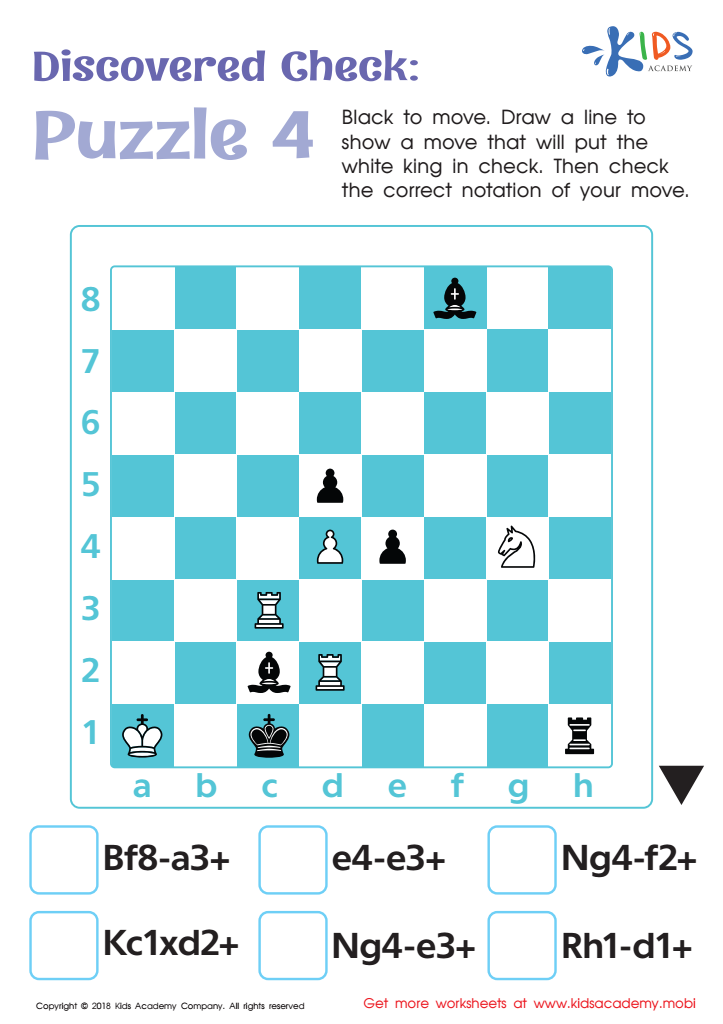
Discovered Check: Puzzle 4 Worksheet

Discovered Check: Puzzle 2 Worksheet
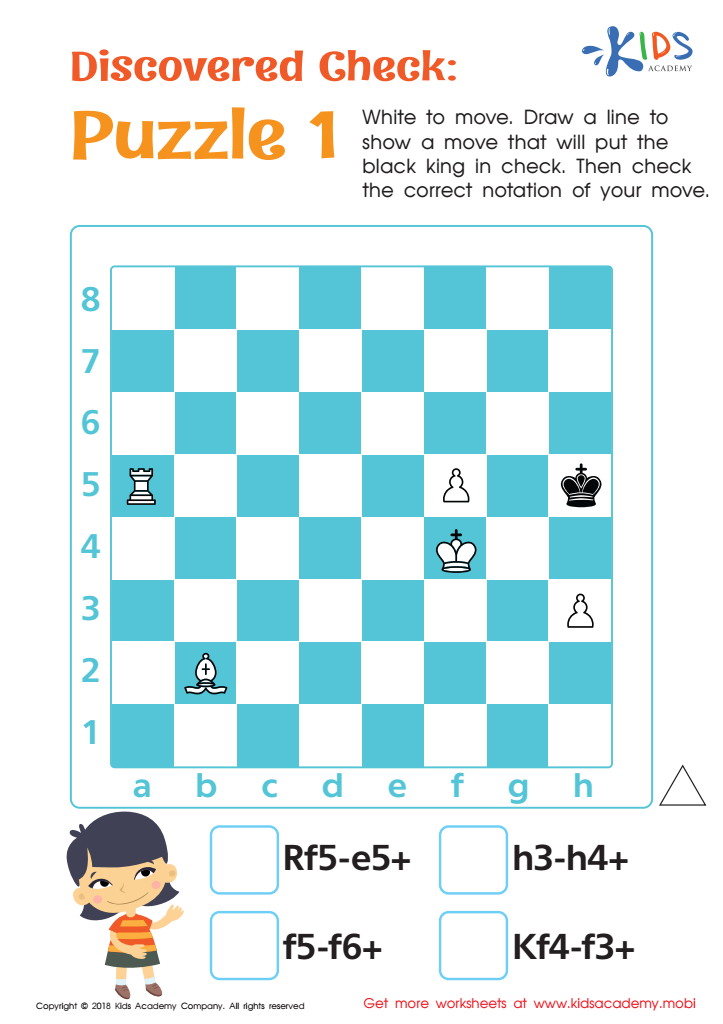
Discovered Check: Puzzle 1 Worksheet





Understanding chess strategy at an early age provides numerous cognitive and personal development benefits for children ages 6-7. Introducing young children to the thoughtful and strategic game of chess can enhance cognitive skills such as problem-solving, critical thinking, and decision-making. When children learn chess strategies, they develop the ability to plan ahead and anticipate possible outcomes from both their actions and their opponent's moves. These skills can transfer to other academic subjects and everyday life scenarios.
Moreover, chess encourages patience, concentration, and perseverance. Young children learn to focus their attention for extended periods and manage the excitement and disappointment of winning and losing, cultivating emotional intelligence and resilience. Chess is also a great medium for teaching social skills, as it requires players to respect the rules and demonstrate good sportsmanship.
Furthermore, making complex ideas like strategy simplistic and accessible for children taps into their natural curiosity and eagerness to learn. This early engagement can spark a lifelong interest in chess, provide a fun and intellectually stimulating activity, and create opportunities for meaningful bonds with peers and family members.
Hence, parents and teachers should prioritize introducing chess in an approachable manner to youngsters due to its vast potential in fostering cognitive, emotional, and social growth.








