
Handwriting practice Easy Worksheets for Ages 6-7
10 filtered results
Difficulty Level
Grade
Age
-
From - To
Subject
Activity
Standards
Boost your child's writing skills with our "Handwriting Practice Easy Worksheets for Ages 6-7" from Kids Academy. These printable resources are designed to make handwriting lessons engaging and fun. Tailored specially for young learners, the worksheets are filled with simple exercises and captivating illustrations that promote proper letter formation and improve fine motor skills. Perfect for beginners, our easy-to-follow activities will build your child's confidence, preparing them for more advanced writing challenges. Download these high-quality, teacher-approved worksheets and watch your young writer's abilities flourish while they learn at their own pace.
Favorites
With answer key
Interactive
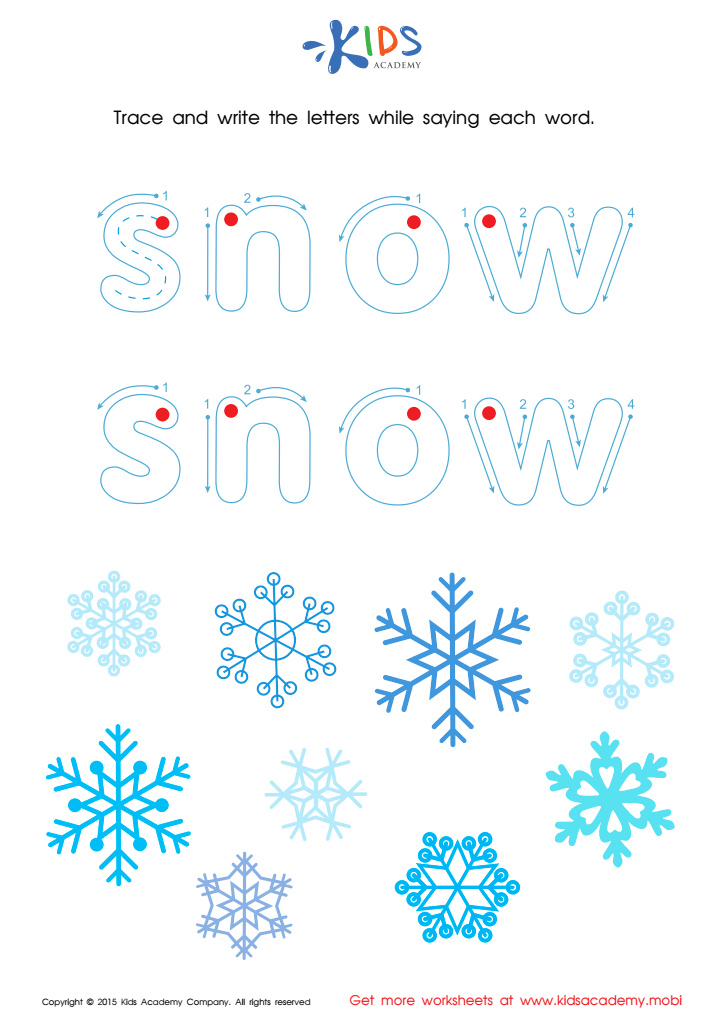
Snowflake Tracing Winter Words Worksheet
Get creative and have fun with our Snowflake handwriting worksheet! Trace the sight word, starting at the big red dots, and follow the arrows. It's a great way to help your little learner develop fine motor skills, work on spelling, and get ready for Christmas! More handwriting printables available on Kids Academy.
Snowflake Tracing Winter Words Worksheet
Worksheet
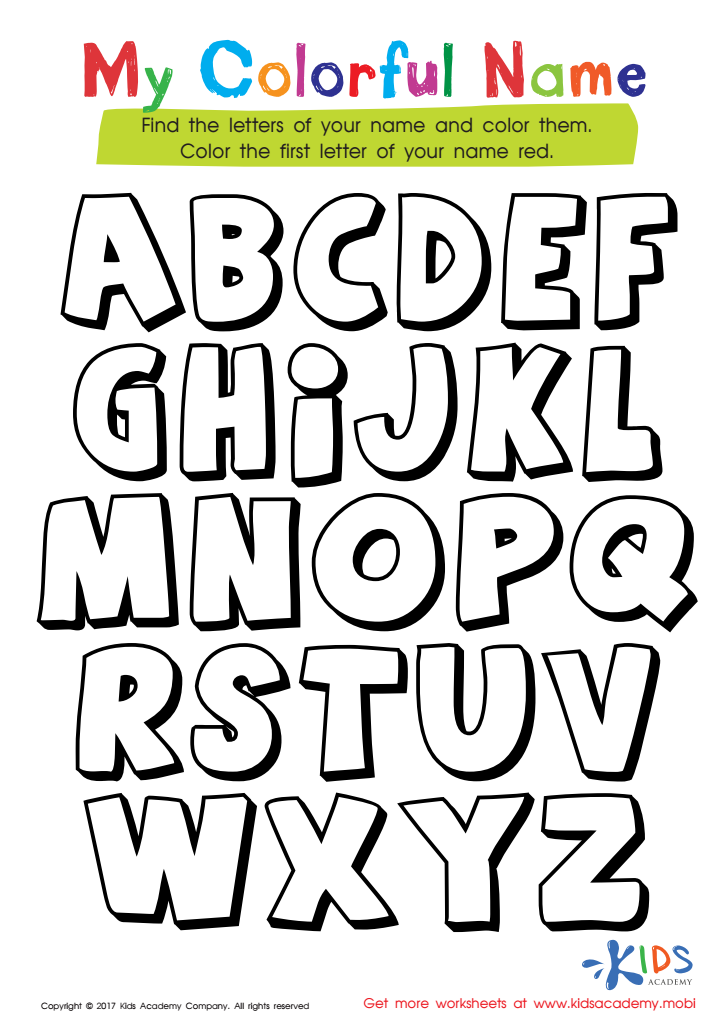
My Colorful Name Worksheet
Writing their names is a milestone for children. With this worksheet, they recall the letters in their name and color the letters one at a time. Spelling and alphabet order are reinforced as they find each letter. Use this fun printable to help kids learn to write their names!
Download (PDF)
 Assign to My Students
Assign to My Students
My Colorful Name Worksheet
Worksheet
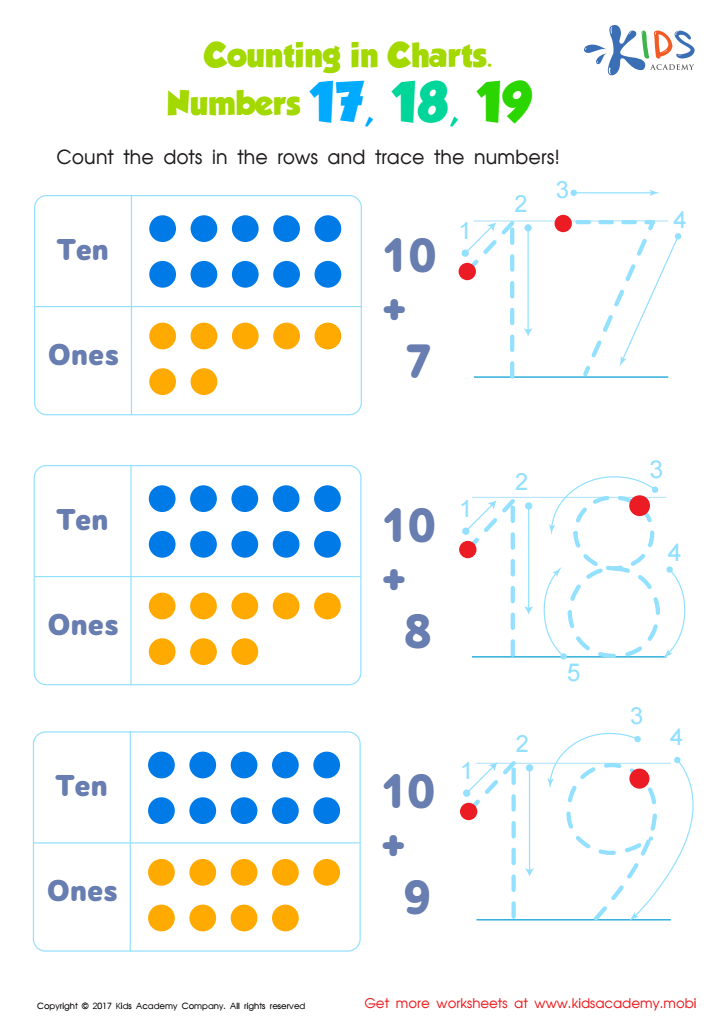
Kindergarten Number Tracing: Counting in Charts Worksheet
Little learners can find big numbers tricky! Help them practice counting and build early math skills, like place value and addition, with this kindergarten number tracing PDF worksheet. Count the dots to solve the problem and trace each answer!
Kindergarten Number Tracing: Counting in Charts Worksheet
Worksheet
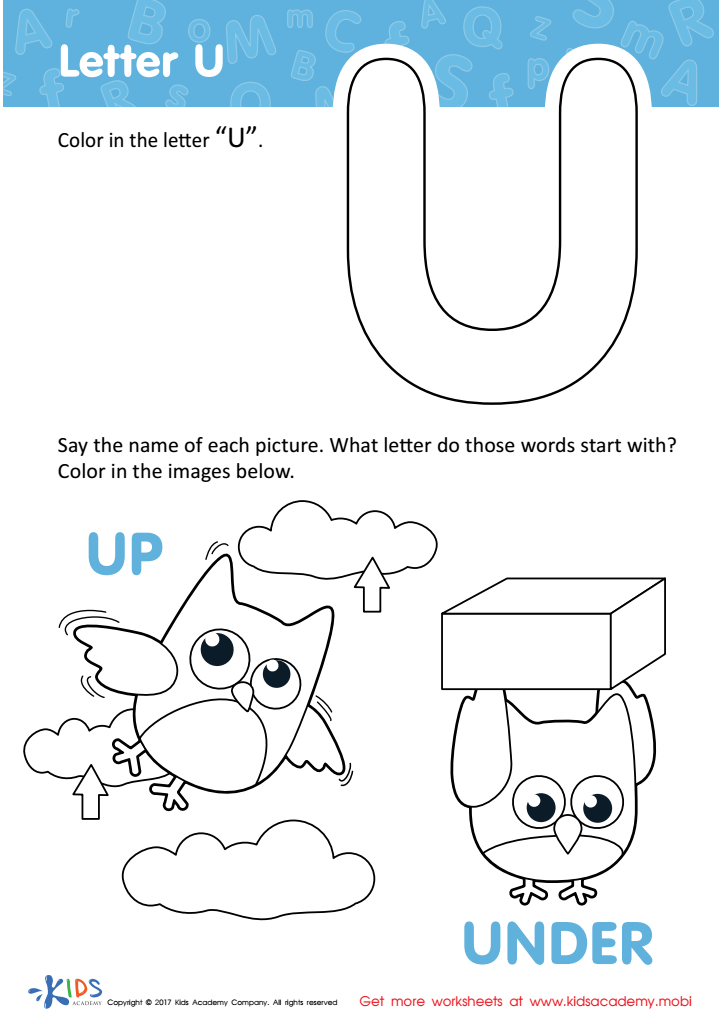
Letter U Coloring Sheet
This letter "U" coloring page helps your child learn two things at once - the letter "U" and positional words! An adorable owl character aids in understanding up and under. In a few strokes of a crayon, your child can master these concepts.
Download (PDF)
Assign to My Students
Assign to My Students
Letter U Coloring Sheet
Worksheet
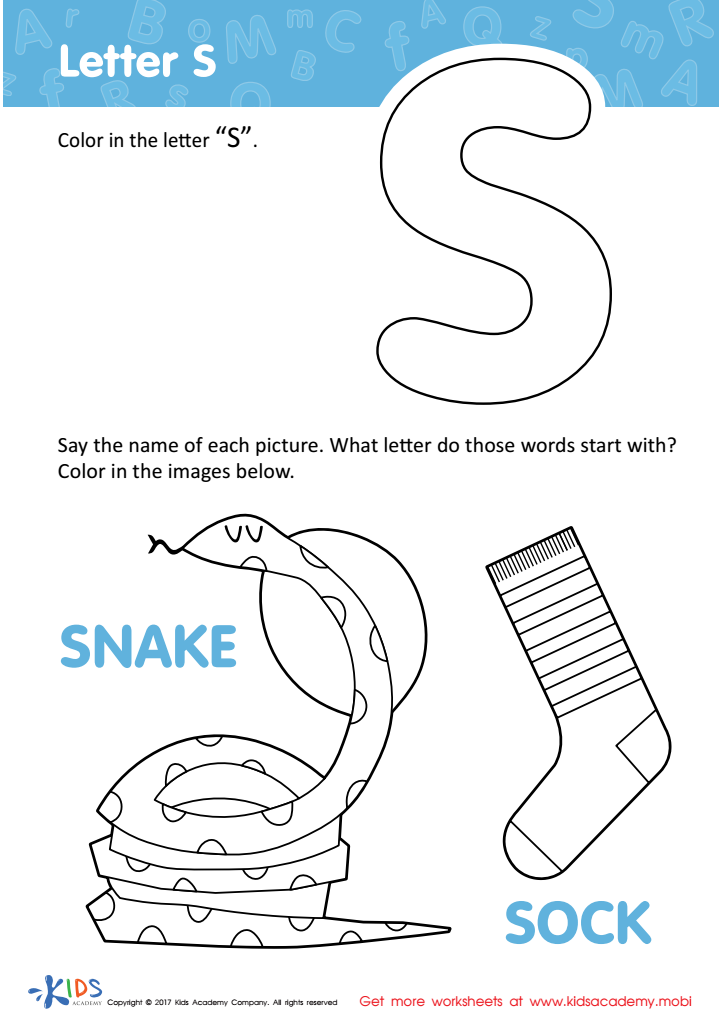
Letter S Coloring Sheet
Help your child practice recognizing the letter "S" and the sound it makes with this fun coloring page. It features a slippery snake, smelly sock and more! Give them extra practice by coming up with more "S" sounds and words.
Download (PDF)
Assign to My Students
Assign to My Students
Letter S Coloring Sheet
Worksheet
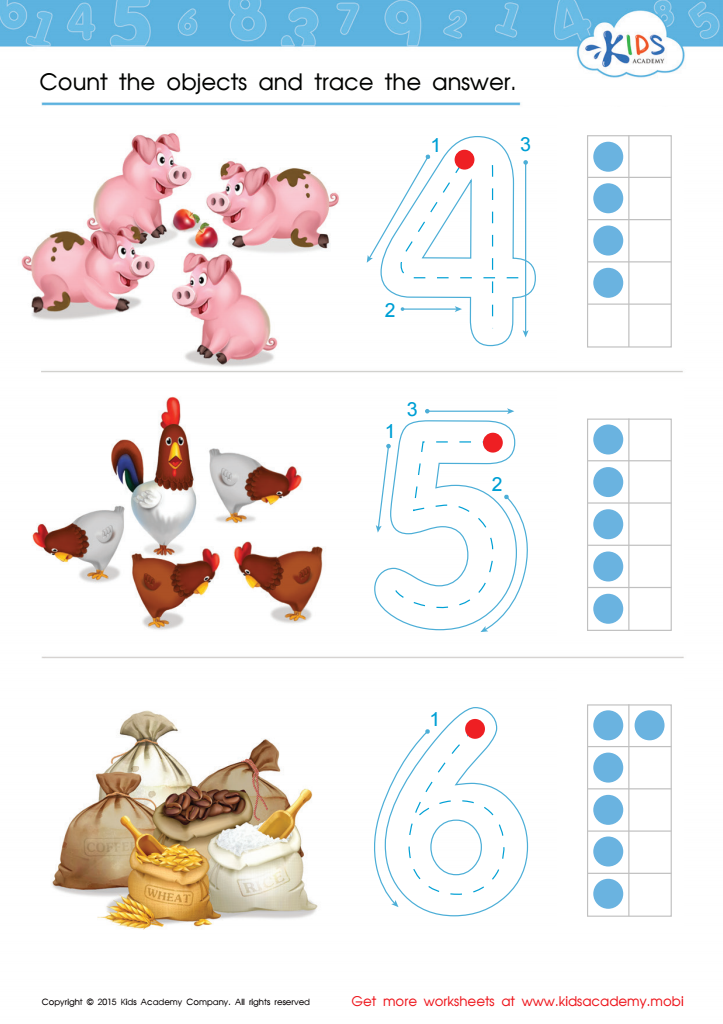
Count and Trace 4 – 6 Worksheet
Download Kids Academy's brightly colored math worksheet for a fun and rewarding math experience for your little learner. Using Singapore Math, this worksheet helps children visualize, solve and practice fine motor skills. Click here for more math worksheets!
Count and Trace 4 – 6 Worksheet
Worksheet
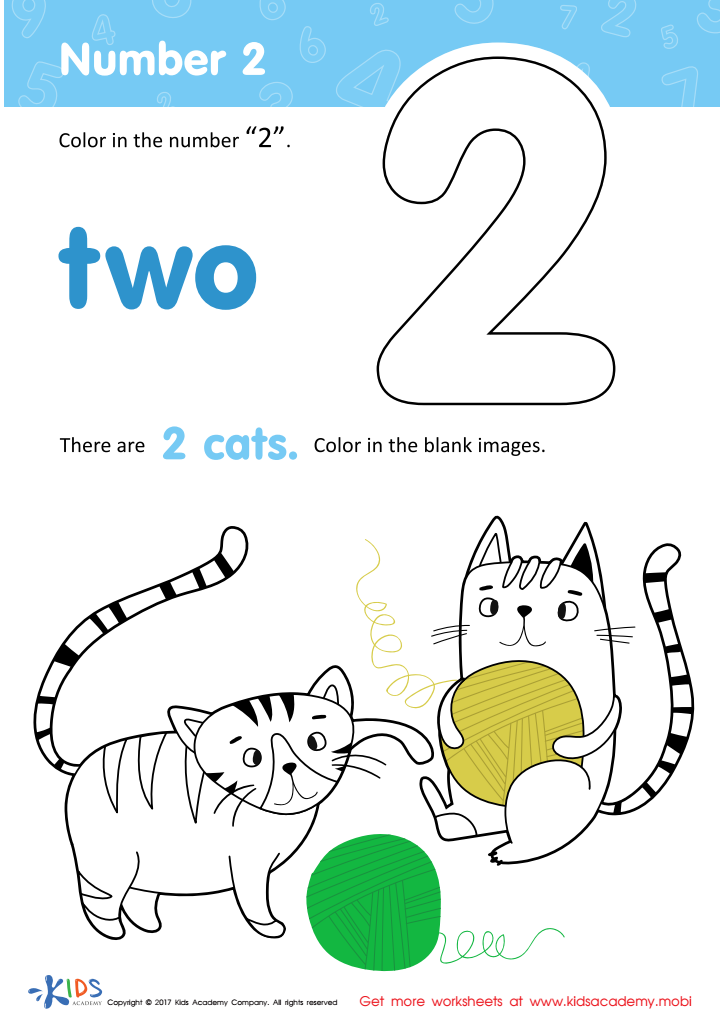
Number 2 Printable
Help your child learn to recognize the number two with these cats and their yarn balls. Print this coloring page – it's great for counting and coloring fun! Your child will develop basic numeracy skills as they visually see numbers in action.
Download (PDF)
Assign to My Students
Assign to My Students
Number 2 Printable
Worksheet
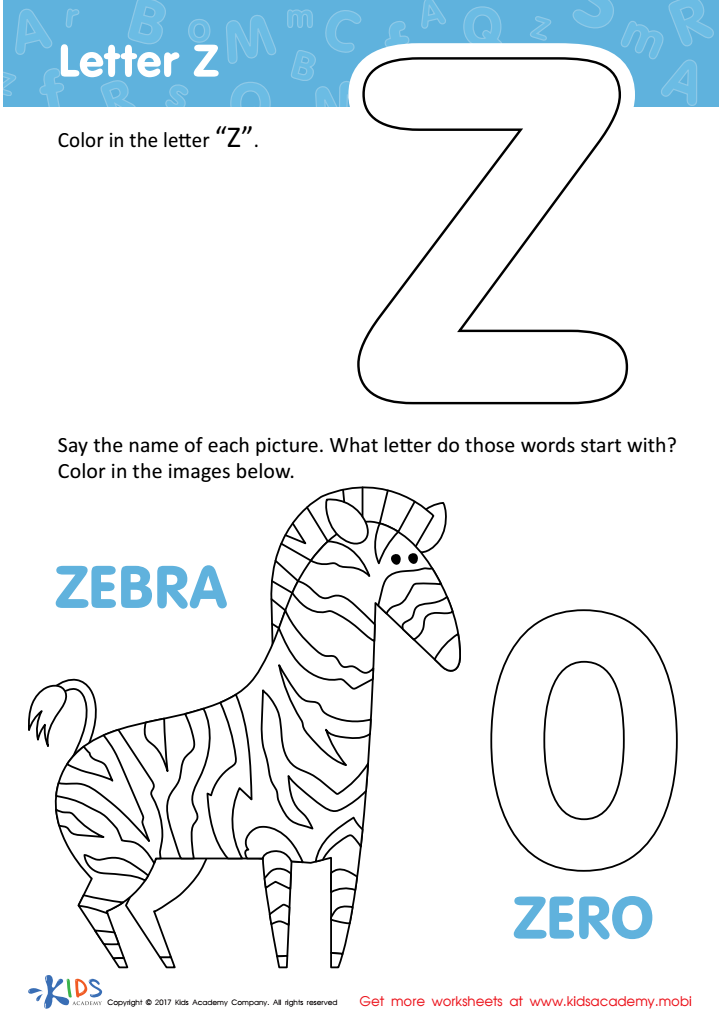
Letter Z Coloring Sheet
This coloring page featuring the letter "Z" is perfect for your child to practice letter recognition! Help them learn the unique sound it makes as they color. It'll be a fun and easy activity they won't have trouble with!
Download (PDF)
Assign to My Students
Assign to My Students
Letter Z Coloring Sheet
Worksheet
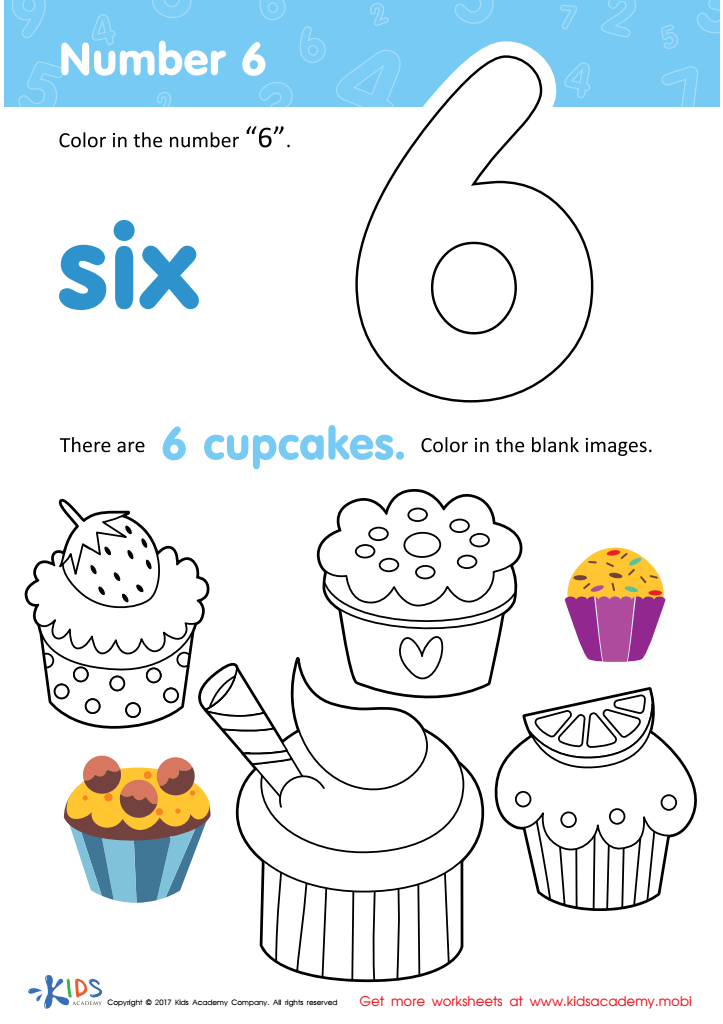
Number 6 Worksheet
Let's learn about the number six with cupcakes! Introduce your child to this fun and tasty coloring page. They'll love designing their own cupcakes while recognizing, counting, and reading the number six. An easy and enjoyable way to learn!
Download (PDF)
Assign to My Students
Assign to My Students
Number 6 Worksheet
Worksheet
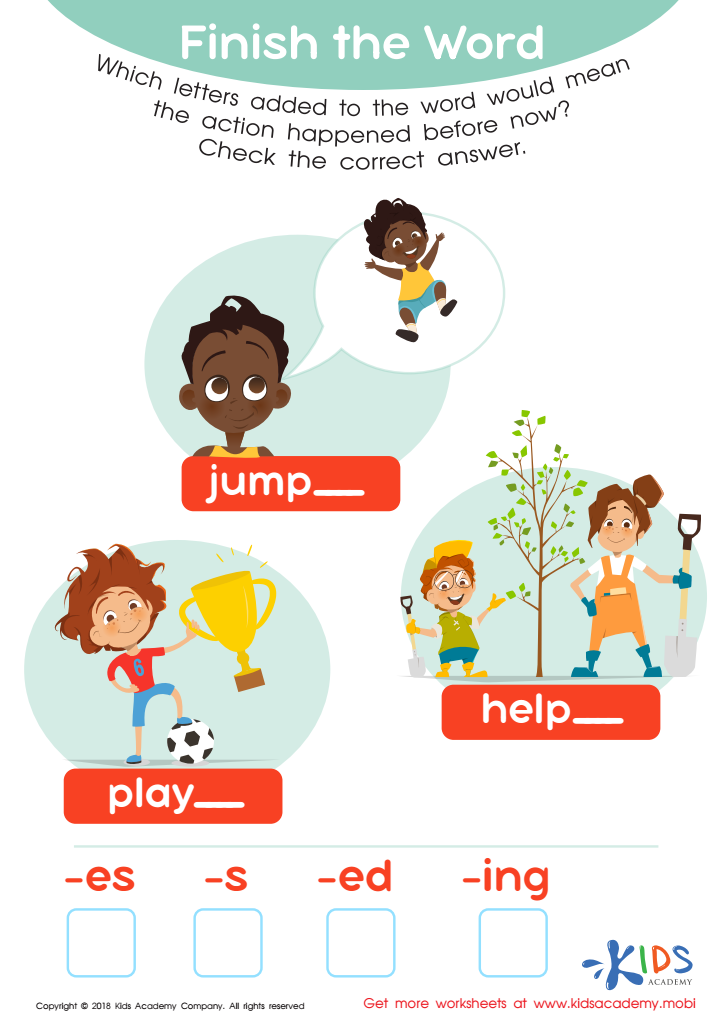
Finish the Word Worksheet
Does your kid know tenses? Listen to see if they are using words correctly. With this worksheet, your kids will learn to use the appropriate past tense forms. Ask them which letters added to words make the action past. Help them check the answers.
Finish the Word Worksheet
Worksheet
Join Kids Academy for Free
Who is primarily going to use this learning content?


.jpg)





Handwriting practice for children aged 6-7 is foundational and plays a pivotal role in their overall development. At this critical stage, fine motor skills are still emerging. Handwriting activities help strengthen these skills, improving hand-eye coordination and dexterity. An emphasis on easy, incremental practice ensures that children develop the confidence and precision needed for more complex motor tasks.
From an educational perspective, handwriting is intrinsically linked to literacy. When children write letters and words, they simultaneously learn to recognize them, reinforcing spelling and reading skills. This dual reinforcement is crucial as it creates a stronger neurological connection between the motor actions of writing and the cognitive processes of reading and spelling.
Moreover, handwriting fosters cognitive development by engaging areas of the brain responsible for thinking, memory, and language. Creating a legible script allows children to express their thoughts clearly, positively influencing their academic confidence and self-esteem.
Finally, handwriting practice should be consistent and enjoyable. By caring about easy handwriting practice, parents and teachers acknowledge the importance of setting children up for academic success. Ensuring this practice is both accessible and enjoyable paves the way for a lifelong positive relationship with learning.








