Understanding opposites Easy Worksheets for Ages 6-7
4 filtered results
-
From - To
Welcome to our "Understanding Opposites Easy Worksheets" designed specifically for children aged 6-7! These engaging, printable worksheets offer a fun way for young learners to explore the concept of opposites through colorful illustrations and interactive activities. With simple exercises, children will enhance their vocabulary, improve critical thinking skills, and grasp the differences between various opposing words effortlessly. Each worksheet encourages creativity and helps reinforce knowledge through enjoyable learning experiences. Ideal for both classroom and home use, our easy worksheets promote a strong foundation in language skills. Start your child’s adventure in understanding opposites today!
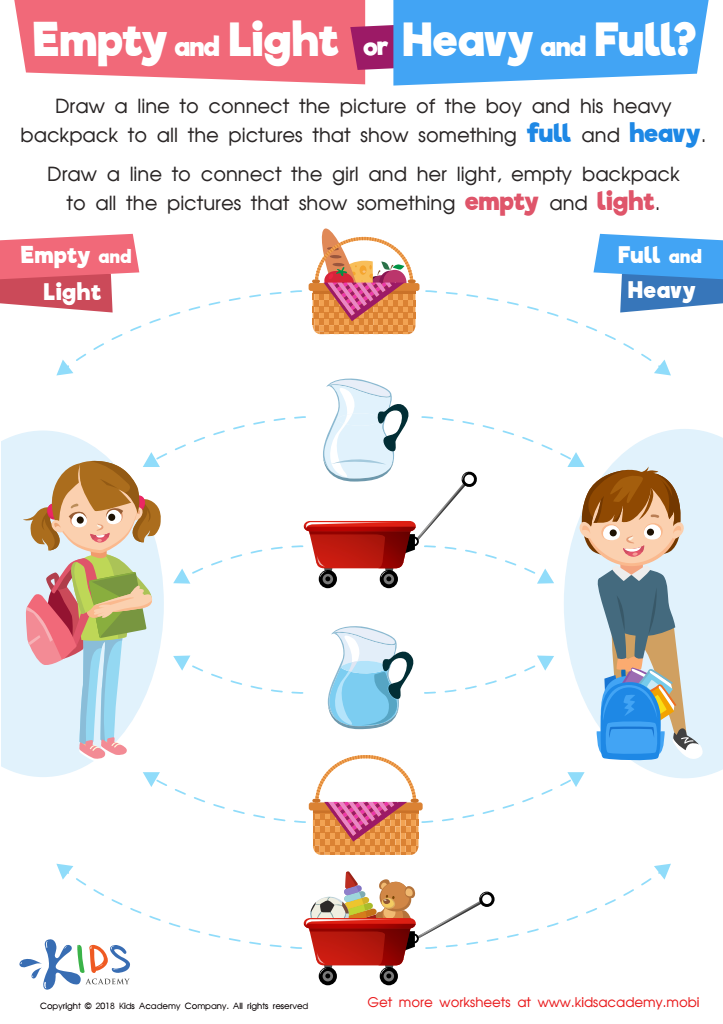
Empty and Light or Heavy and Full? Worksheet
 Assign to My Students
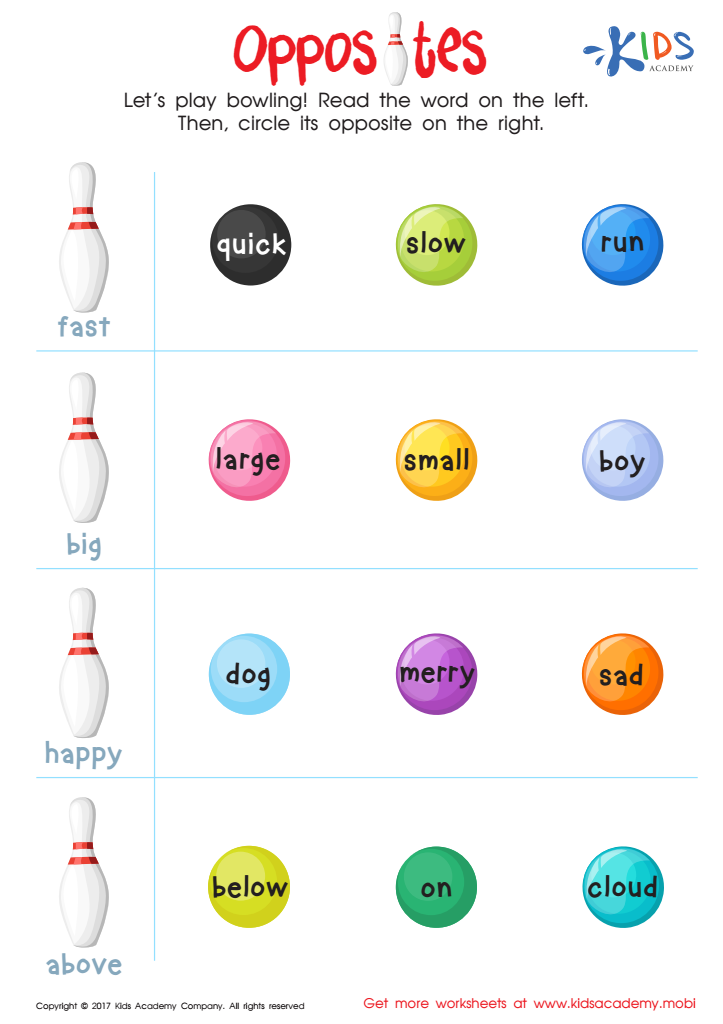
Opposites Worksheet
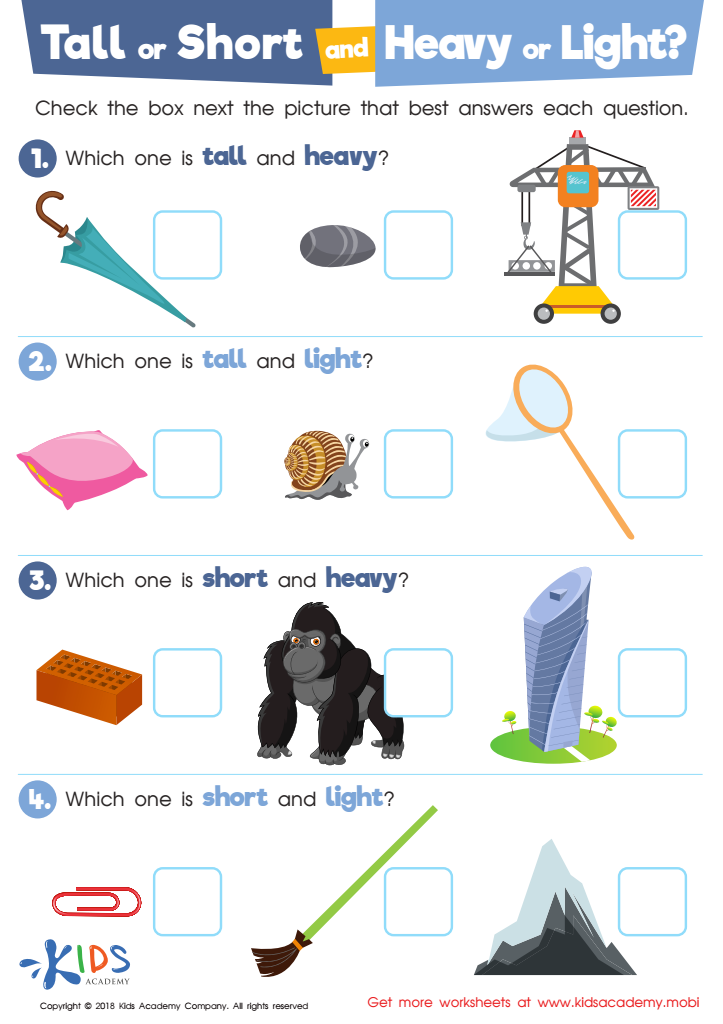
Tall or Short and Heavy or Light? Worksheet
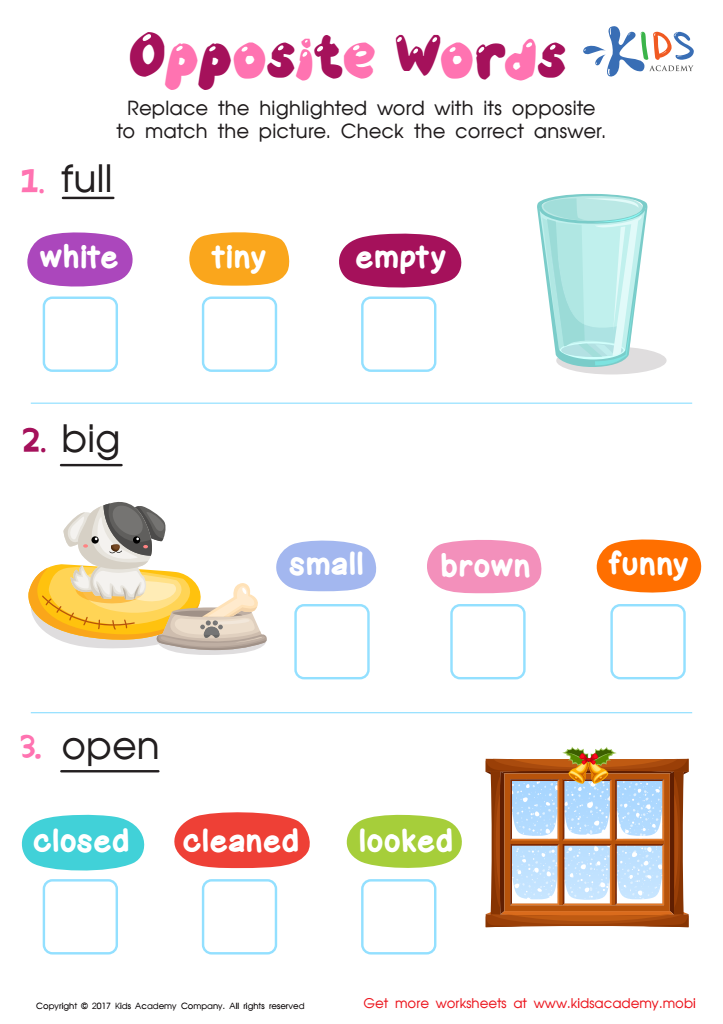
Opposite Words Worksheet




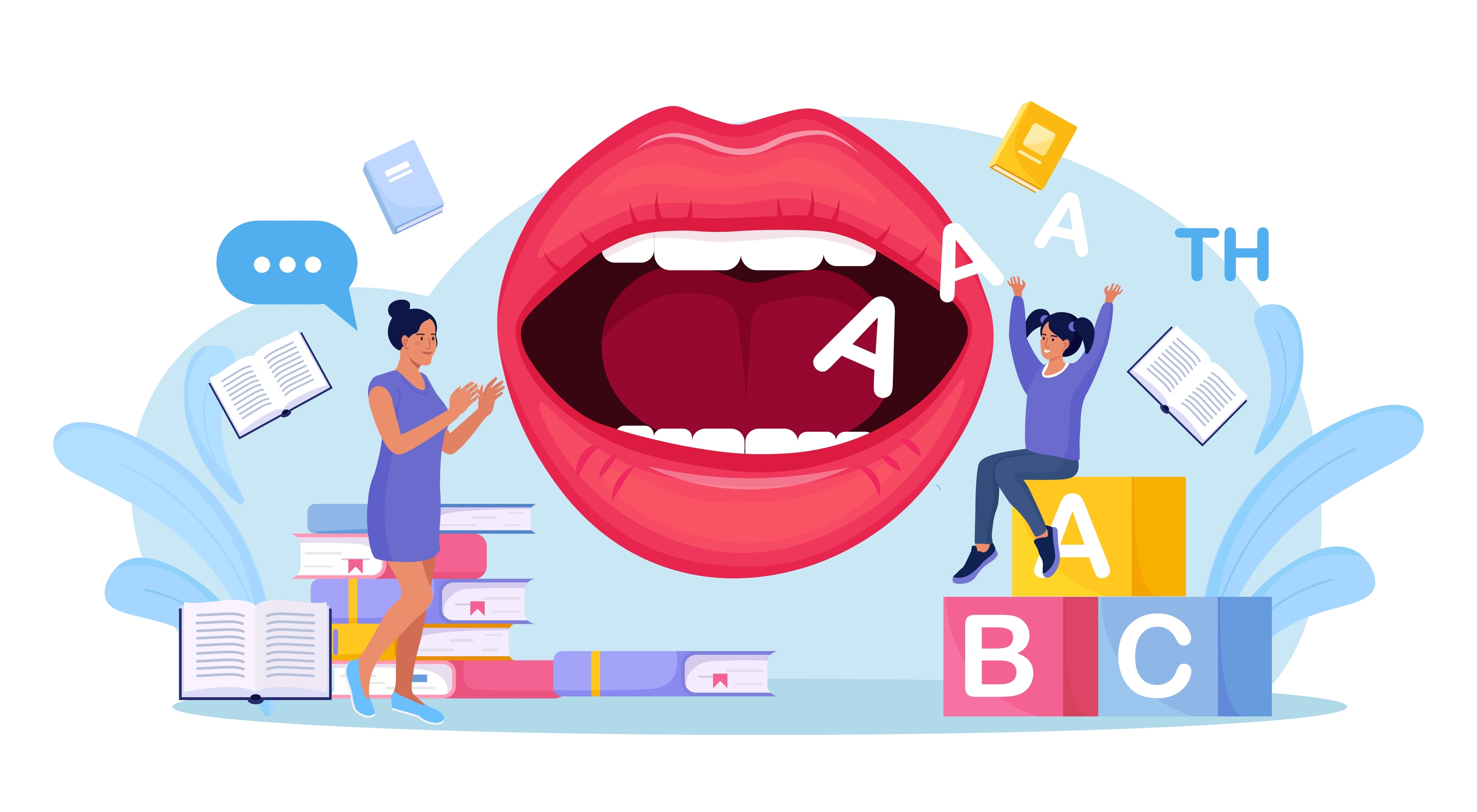


Understanding opposites is a fundamental concept that is essential in early childhood education, particularly for children aged 6-7. This skill helps children develop critical thinking and reasoning abilities as they learn to identify and categorize differing attributes. For example, recognizing that "hot" is the opposite of "cold" allows kids to better describe their world and enhance their vocabulary.
Teachers and parents should care about this concept because it lays the groundwork for more complex cognitive skills. When children understand opposites, they improve their comprehension of relationships between objects and ideas, which is key to language development and literacy. Engaging activities that involve opposites make learning fun and interactive, encouraging children to express their thoughts and feelings more clearly.
Furthermore, understanding opposites can enhance social skills by fostering empathy; children begin to recognize perspectives different from their own. For example, the concept of friend vs. foe encourages respect and acceptance of diversity. By incorporating lessons on opposites, both parents and teachers promote holistic growth, laying the foundation for effective communication and problem-solving skills in the future. Overall, mastering opposites enriches a child's cognitive development and social interactions, making it a vital area of focus in early education.








