
Visual interpretation Easy Worksheets for Ages 6-7
3 filtered results
Difficulty Level
Grade
Age
-
From - To
Subject
Activity
Standards
Discover our Visual Interpretation Easy Worksheets designed specifically for children ages 6-7. At Kids Academy, our engaging and educational worksheets help young learners develop critical visual interpretation skills through fun and interactive activities. Each worksheet encourages kids to observe, analyze, and draw conclusions based on visual information, honing their ability to understand and interpret various images and patterns. Perfect for enhancing early learning skills, these worksheets support cognitive development and ensure learning is enjoyable. Visit Kids Academy to explore our collection and watch your child's analytical skills soar!
Favorites
With answer key
Interactive
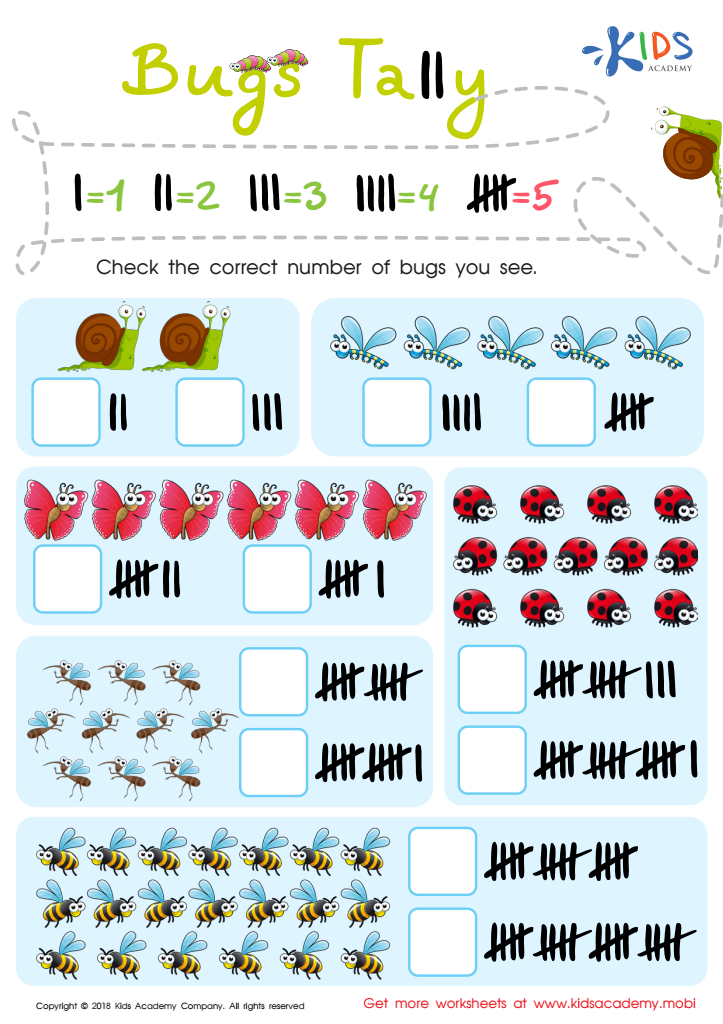
Bugs Tally Worksheet
This fun worksheet uses friendly bugs to help young mathematicians learn numbers and tally marks. They'll gain real-world skills to help with adding, subtracting and counting. Representations will solidify number reasoning, aiding with game playing and more.
 Assign to My Students
Bugs Tally Worksheet
Worksheet
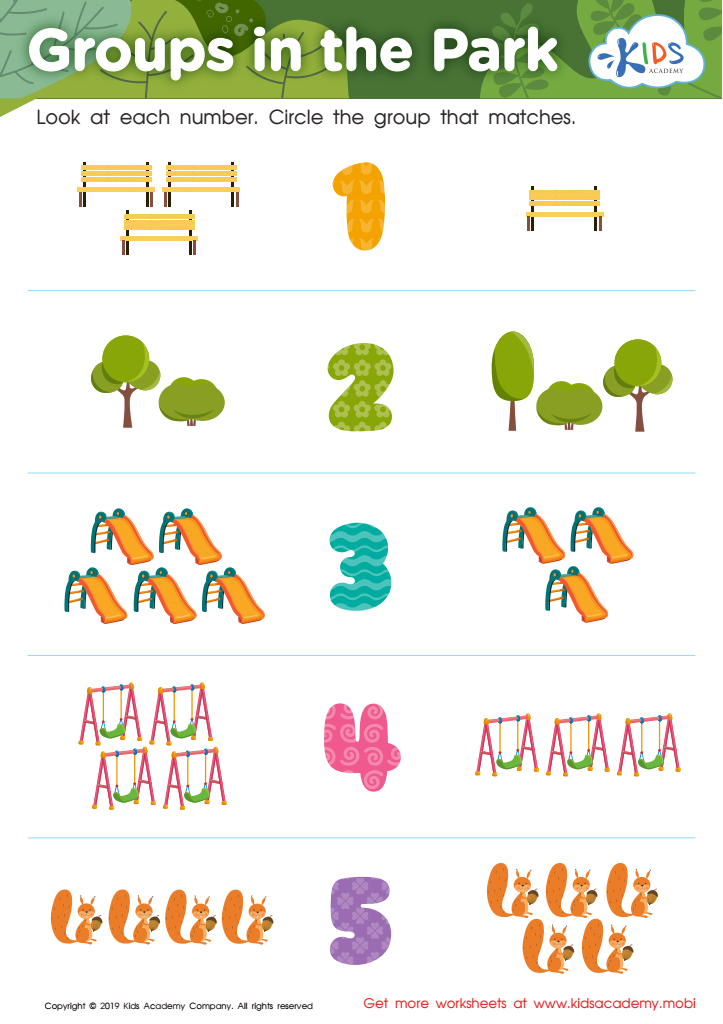
Groups in the Park Worksheet
Take your kids to the park and let them enjoy the freedom to play! Ask them what they love doing most and study a picture together - name items and count objects in the sets, then circle the correct one. It's a fun way for your kids to learn.
Groups in the Park Worksheet
Worksheet
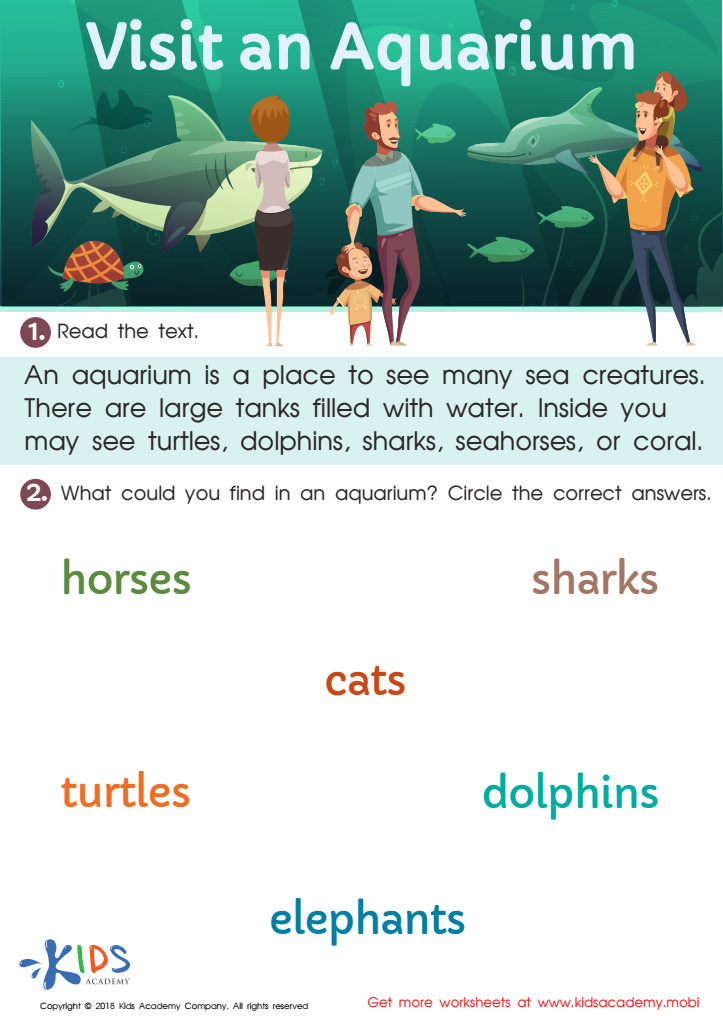
Visit an Aquarium Worksheet
Have your kids ever been to an aquarium? It's a great place to see a variety of sea creatures, like turtles, dolphins, sharks and fish. If they're fascinated by sea life, this worksheet is perfect! Help them circle the aquarium animals among the words in the picture.
Visit an Aquarium Worksheet
Worksheet
Join Kids Academy for Free
Who is primarily going to use this learning content?








Visual interpretation is crucial for young children, particularly those aged 6-7, as it plays a significant role in their overall cognitive and emotional development. This skill encompasses the ability to understand and derive meaning from visual information, which is essential for navigating the world around them. By fostering strong visual interpretation skills, parents and teachers can help children enhance their literacy, numeracy, and problem-solving abilities.
At this age, children are learning to read and write, and visual cues often aid in comprehension. For instance, pictures in storybooks and textbooks can help contextualize written content, making it easier for children to grasp and retain information. Moreover, visual interpretation supports learning in subjects like math, where understanding diagrams and charts is crucial.
Additionally, visual interpretation fosters creativity and imagination. When children engage with visual art, they learn to express themselves and interpret emotions, leading to better emotional intelligence and empathy. These skills are not just academic but are also fundamental for personal development and social interactions.
In conclusion, prioritizing the development of visual interpretation skills in young children equips them with essential tools for academic success and personal growth, making it a crucial aspect of early education.








