Shape Recognition Easy Fractions of Shapes Worksheets for Ages 6-7
5 filtered results
-
From - To
Explore our engaging "Shape Recognition Easy Fractions of Shapes Worksheets" designed specifically for ages 6-7! These worksheets provide a fun and interactive way for young learners to identify different shapes and understand basic fractions. Each activity is carefully crafted to enhance shape recognition while introducing simple fractional concepts, making math enjoyable and accessible. With colorful illustrations and straightforward instructions, children will gain confidence in their math skills as they complete each task. Ideal for home or classroom learning, these worksheets promote critical thinking and problem-solving. Start your child's journey to mastering shapes and fractions today!
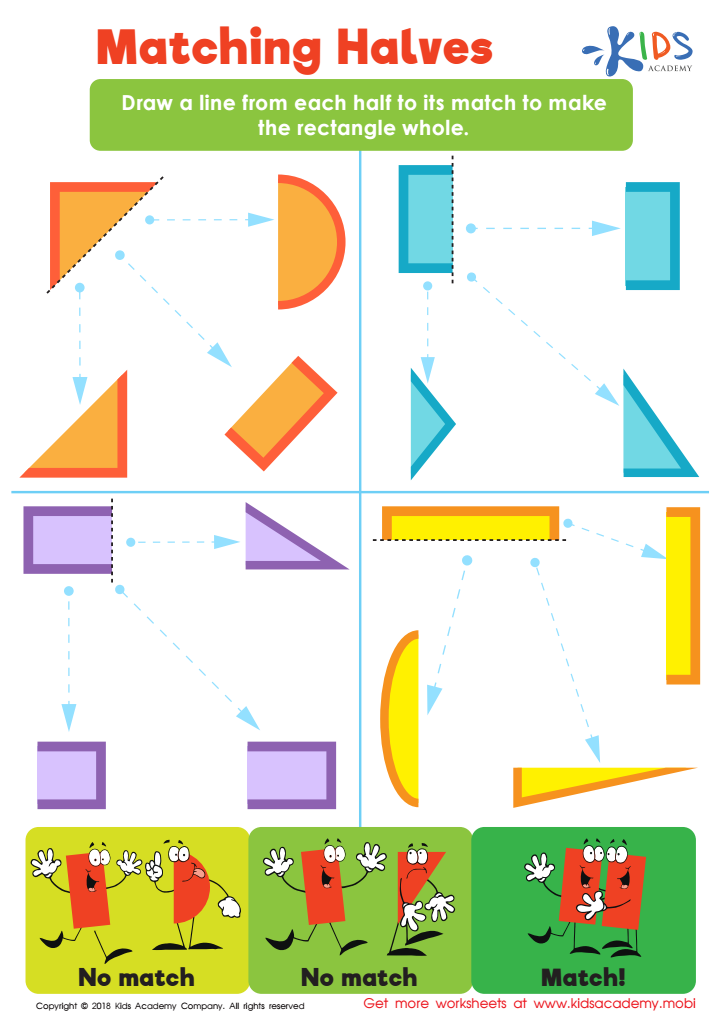
Matching Halves Worksheet
 Assign to My Students
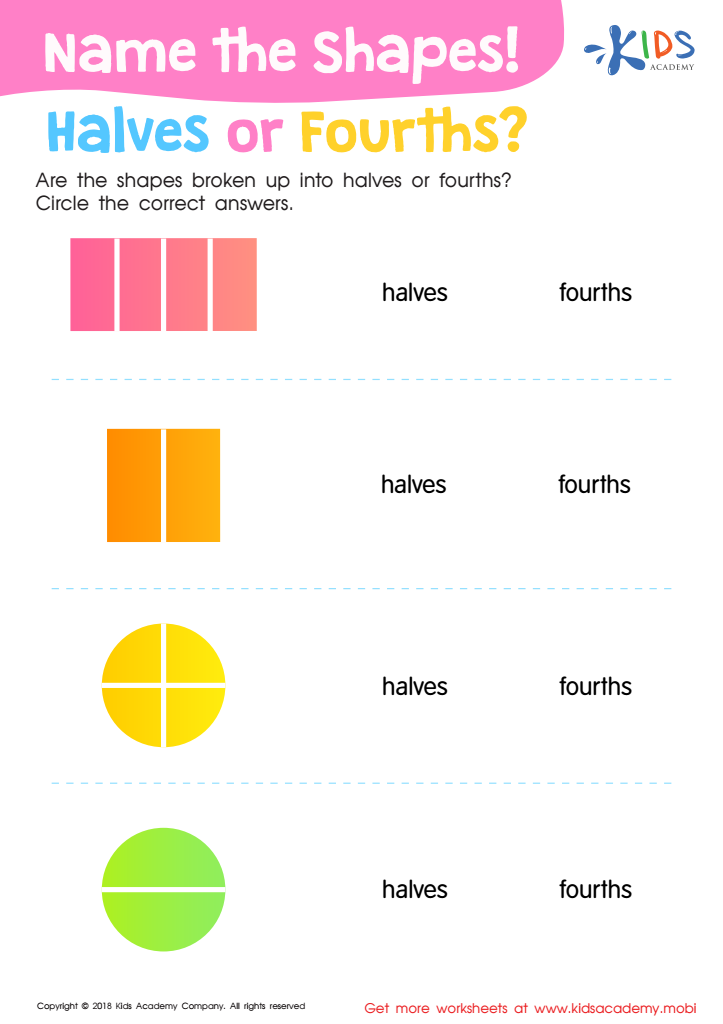
Name the Shapes Halves or Fourths? Worksheet
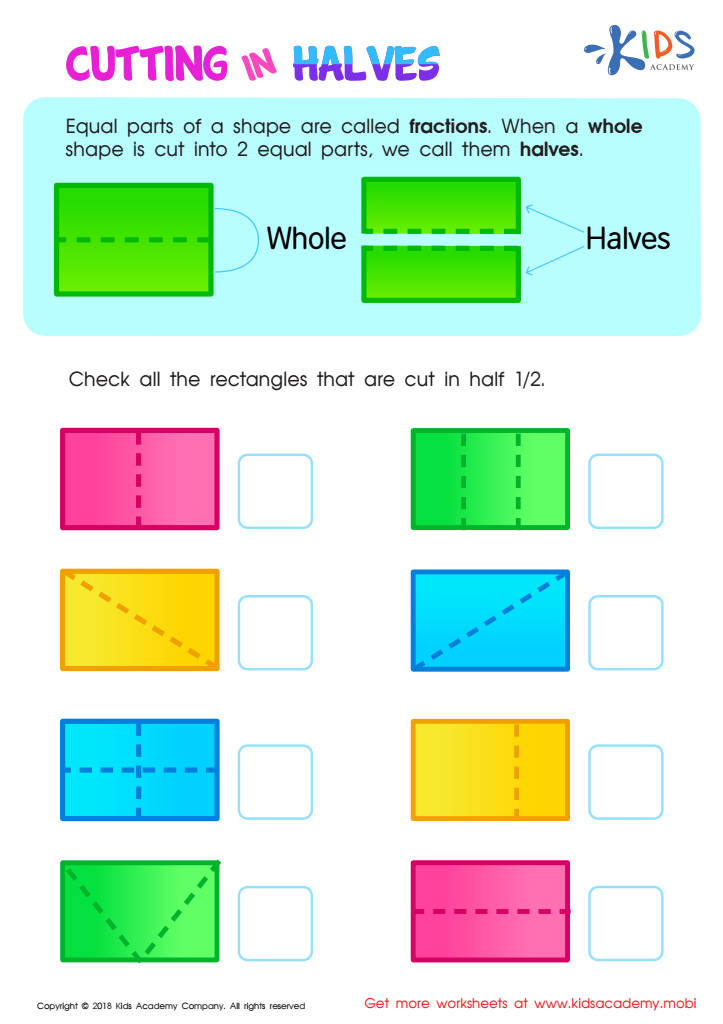
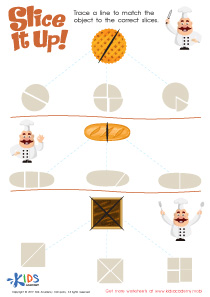
Cutting in Halves Worksheet
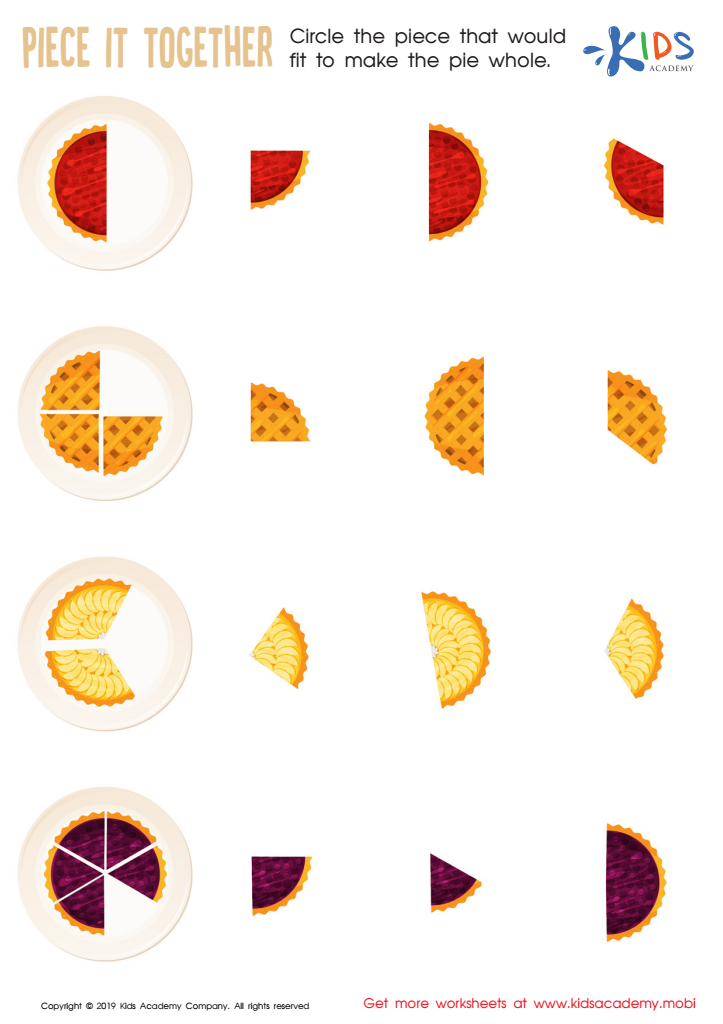
Piece it together Worksheet
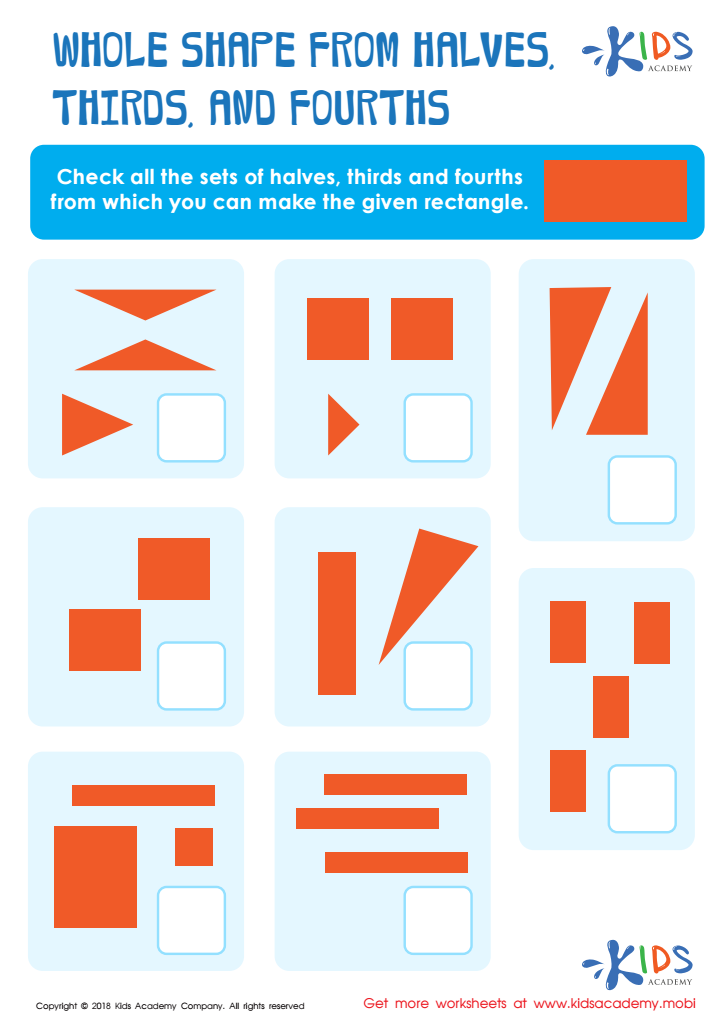
Whole Shape from Halves, Thirds and Fourths Worksheet








Shape recognition and understanding easy fractions of shapes are foundational skills for children aged 6-7. These concepts play a vital role in early mathematics education and beyond. Firstly, recognizing shapes helps children make sense of the world around them. It enhances their spatial awareness, critical for problem-solving in various fields, including engineering, architecture, and art.
Furthermore, understanding fractions through shapes introduces children to the concept of part-whole relationships, which is essential for more advanced mathematical concepts later on. By breaking down shapes into fractions, children learn to categorize and compare different sizes and shapes, fostering analytical thinking.
Engaging with shapes and fractions also supports overall cognitive development. It promotes reasoning skills, helps in developing concentration, and increases attention to detail. Activities that combine both shape recognition and easy fractions are fun, motivating ways to enhance learning, making mathematics more interactive and enjoyable.
Ultimately, parents and teachers should prioritize these skills, as they create a strong mathematical foundation, boost self-confidence in young learners, and prepare children for future educational challenges. Encouraging early engagement in shape recognition and fractions ensures children not only succeed in math but also appreciate its relevance in everyday life.