Problem-Solving Skills Easy Geometry Worksheets for Ages 6-7
3 filtered results
-
From - To
Boost your child's problem-solving skills with our engaging easy geometry worksheets designed specifically for ages 6-7. These worksheets introduce foundational geometric concepts in a fun and accessible way, fostering critical thinking and creativity. Each activity encourages kids to explore shapes, measurement, and spatial relationships while developing their ability to analyze problems and devise simple solutions. Perfect for classroom use, homework, or supplemental learning, our resources are ideal for nurturing a love of math and geometry in young learners. Start this exciting journey today and watch your child’s confidence and skills grow with our thoughtfully crafted activities!
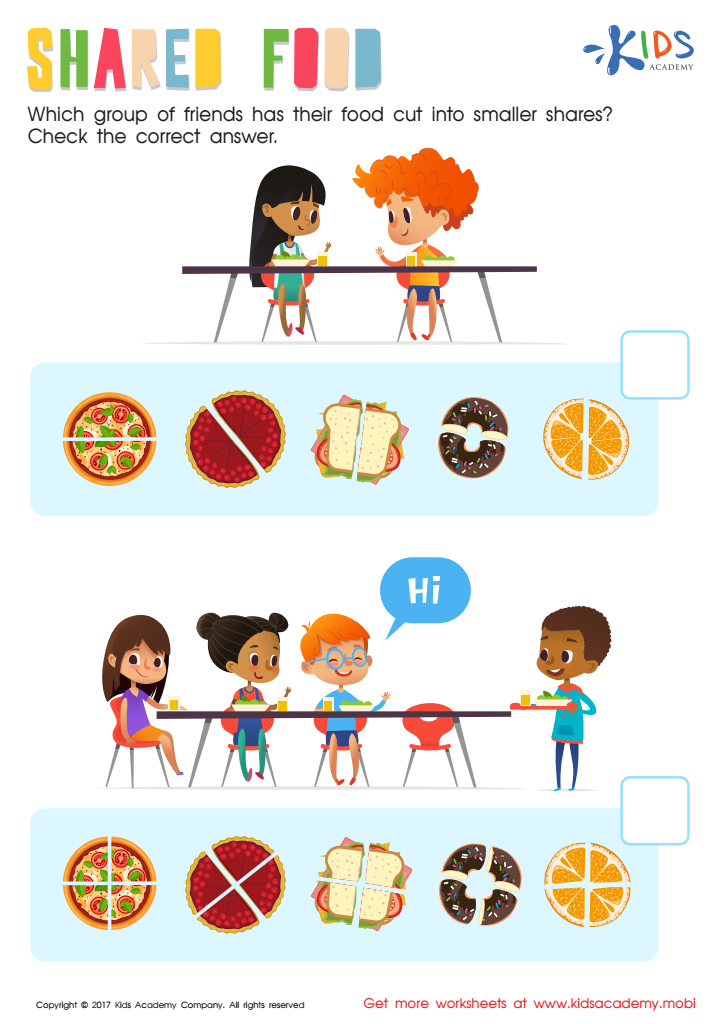
Shared Food Worksheet
 Assign to My Students











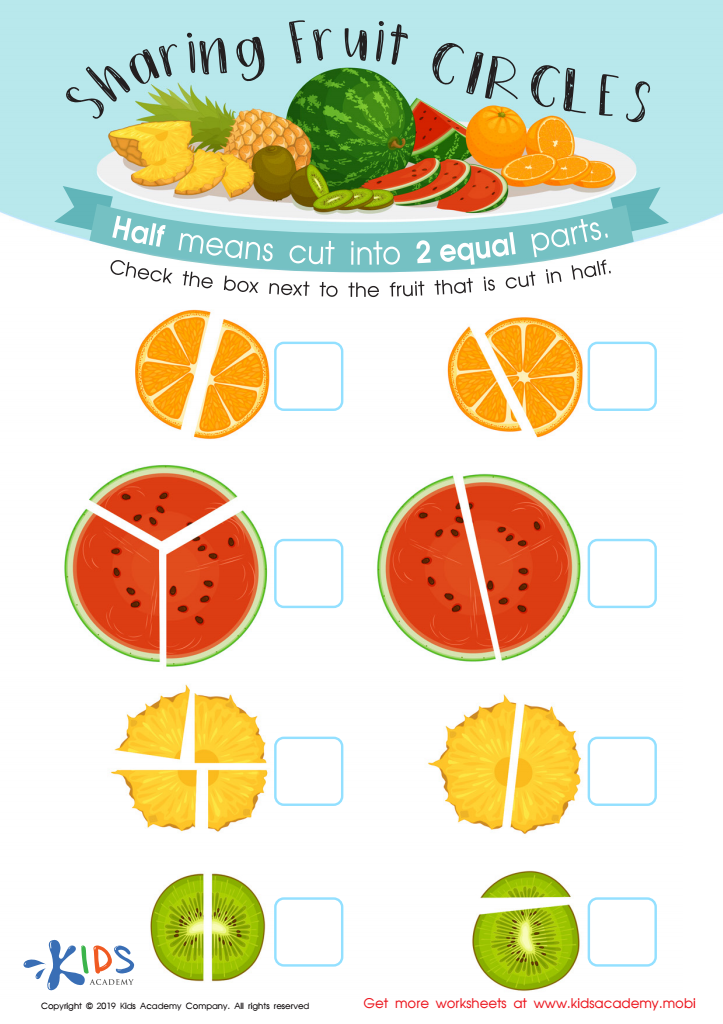
Sharing Fruit Circles Worksheet
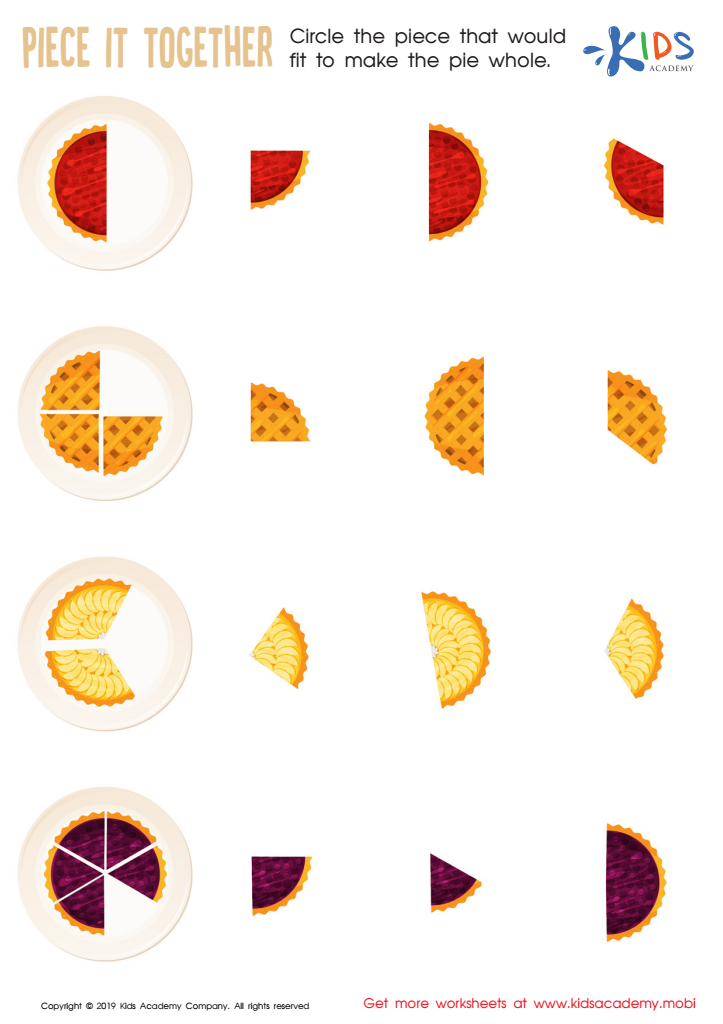
Piece it together Worksheet








Parents and teachers should prioritize problem-solving skills in geometry for children ages 6-7 because this foundational knowledge is crucial for cognitive development. At this age, children are naturally curious and eager to understand their environment. Incorporating easy geometry into their learning encourages logical thinking and enhances spatial awareness, which is vital in everyday life. Through engaging activities, children not only learn to identify shapes and understand spatial relationships but also develop critical thinking skills by figuring out solutions to problems.
Furthermore, problem-solving in geometry promotes persistence and resilience. As children tackle simple geometric challenges, they learn the value of trial and error and begin to appreciate the process of finding solutions. This instills a growth mindset, vital for their lifelong learning. Additionally, geometry provides real-world context; understanding shapes and spaces applies to various fields including art, science, and even geography.
By focusing on problem-solving skills in easy geometry, parents and teachers foster an engaging learning environment, cultivate a love for mathematics, and equip children with essential skills crucial for future academic success and everyday decision-making. Ultimately, these skills lay the groundwork for more advanced concepts in mathematics and related disciplines, preparing children for a variety of future opportunities.








