
Multiplication practice Easy Numbers Worksheets for Ages 6-7
3 filtered results
Difficulty Level
Grade
Age
-
From - To
Subject
Activity
Standards
Welcome to our "Multiplication Practice Easy Numbers Worksheets" for children aged 6-7! These engaging worksheets are designed to introduce young learners to the fundamentals of multiplication in a fun and interactive way. With a variety of colorful activities and exercises, kids will develop their multiplication skills while building confidence in their number sense. Our easy-to-follow format ensures that students can practice at their own pace, making learning enjoyable. Perfect for at-home learning or classroom use, these worksheets are a great tool for helping early-grade students master basic multiplication concepts. Start your child’s journey to multiplying success today!
Favorites
With answer key
Interactive
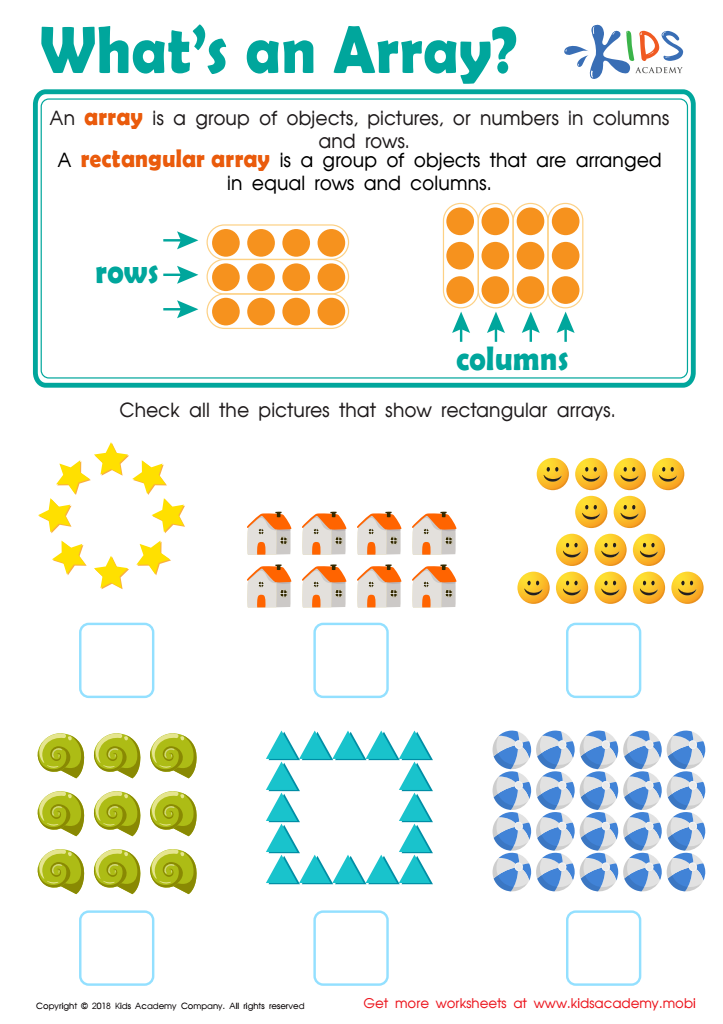
What's an Array? Worksheet
Explain to your child that an array is a group of objects, pictures, or numbers in columns and rows. Show them a rectangular array is a group of objects in equal rows and columns. Guide them to check the pictures in the worksheet to spot any rectangular arrays. Help them remember this concept.
 Assign to My Students
What's an Array? Worksheet
Worksheet
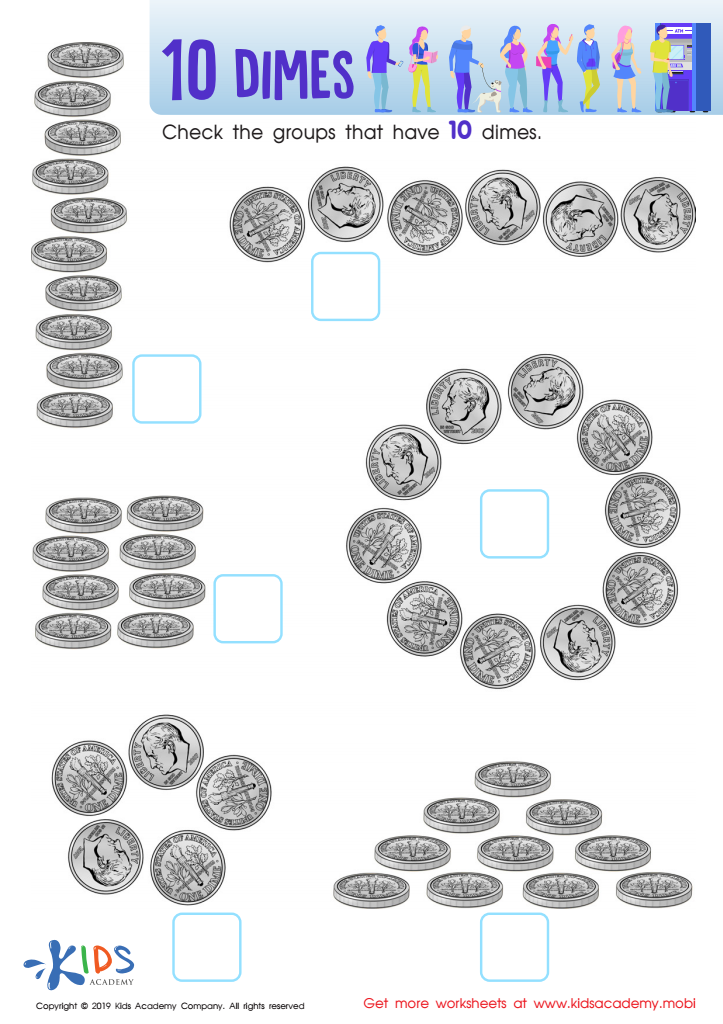
10 Dimes Worksheet
Get your students ready for the task by asking them to count as high as they can. Familiar objects are stacked in groups. Look at the picture and help them count the dimes. Circle the groups of 10. This worksheet will help kindergartners practice counting up to and recognizing 10 dimes.
10 Dimes Worksheet
Worksheet
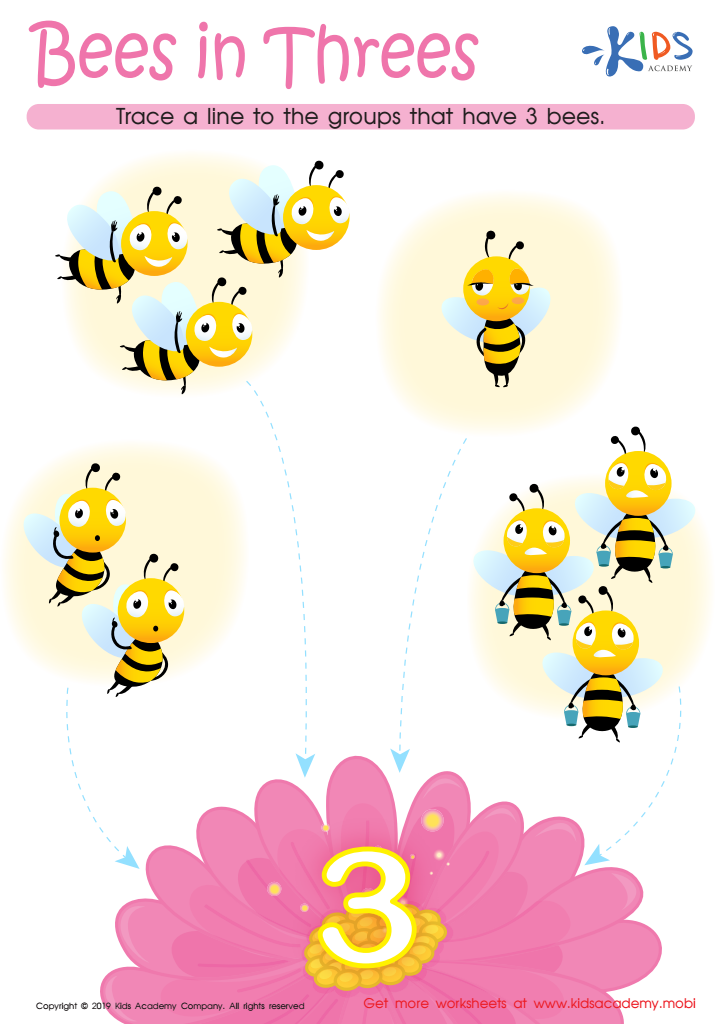
Bees in Threes Worksheet
Kids love learning numbers, especially 1, 2, 3! Counting bees with this fun worksheet? It's the bee's knees! They'll practice number recognition and counting skills while connecting groups of three to the number three. It's a great way to make math fun at home or school!
Bees in Threes Worksheet
Worksheet
Join Kids Academy for Free
Who is primarily going to use this learning content?







Parents and teachers should prioritize multiplication practice with easy numbers for children ages 6-7 as it establishes foundational math skills essential for future learning. At this early stage, children are developing number sense and cognitive skills. Mastery of basic multiplication facts not only aids in building confidence but also enhances problem-solving abilities. Simple multiplication lays the groundwork for understanding more complex mathematical concepts such as division, fractions, and percentages later on.
Additionally, frequent practice with easy multiplication fosters memorization, allowing children to recall facts quickly, which is vital for efficient math problem-solving in both academic settings and everyday life. This skill also bridges into additional subjects, helping students develop analytical thinking.
Moreover, incorporating fun and engaging methods—like games or visual aids—makes learning multiplication enjoyable, ensuring that students have a positive approach towards math. Building these relationships with numbers early promotes a growth mindset, preparing children to tackle more challenging math confidently as they advance through their education. Encouraging this practice through supportive guidance from parents and teachers ultimately cultivates a love for learning and equips children with the essential skills they need for success in the future.








