Understanding line plots Easy Measurement Worksheets for Ages 6-7
8 filtered results
-
From - To
Explore our "Understanding Line Plots" easy measurement worksheets designed specifically for children aged 6 to 7! These engaging resources introduce young learners to the concept of line plots through simple, relatable activities. Each worksheet promotes essential skills in measurement and data representation while making learning fun. Kids will practice interpreting and creating line plots, enhancing their critical thinking and analytical abilities. Our colorful, interactive format ensures that students remain engaged, developing a strong foundational understanding of this important math concept. Ideal for home or classroom use, these worksheets offer a perfect blend of education and enjoyment. Start your child’s mathematical journey today!
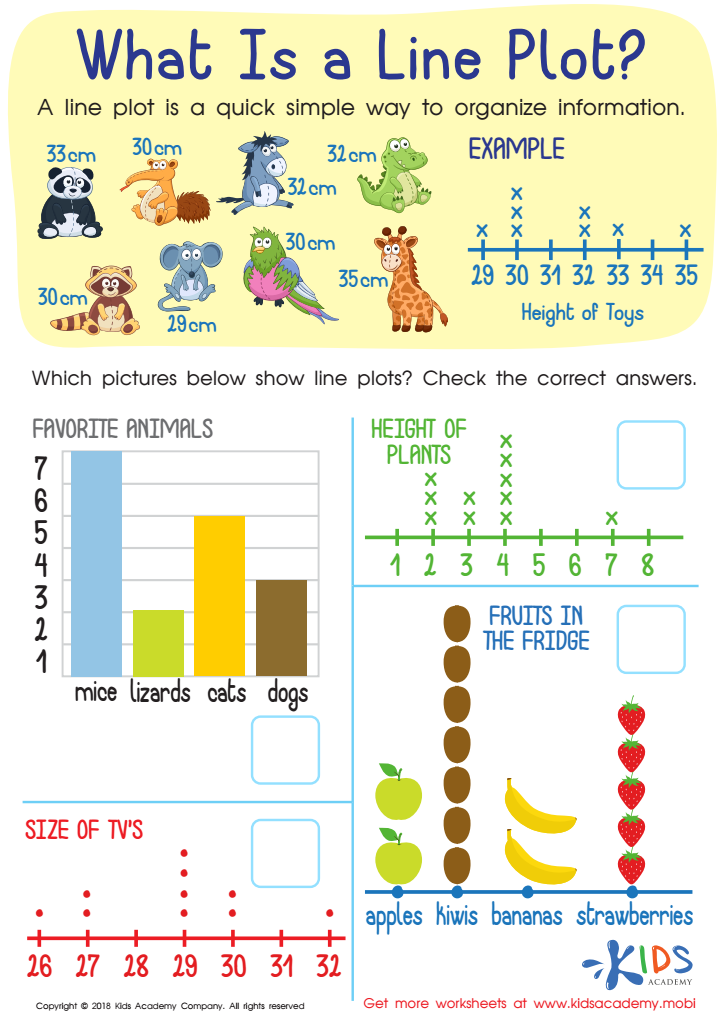
What Is a Line Plot? Worksheet
 Assign to My Students
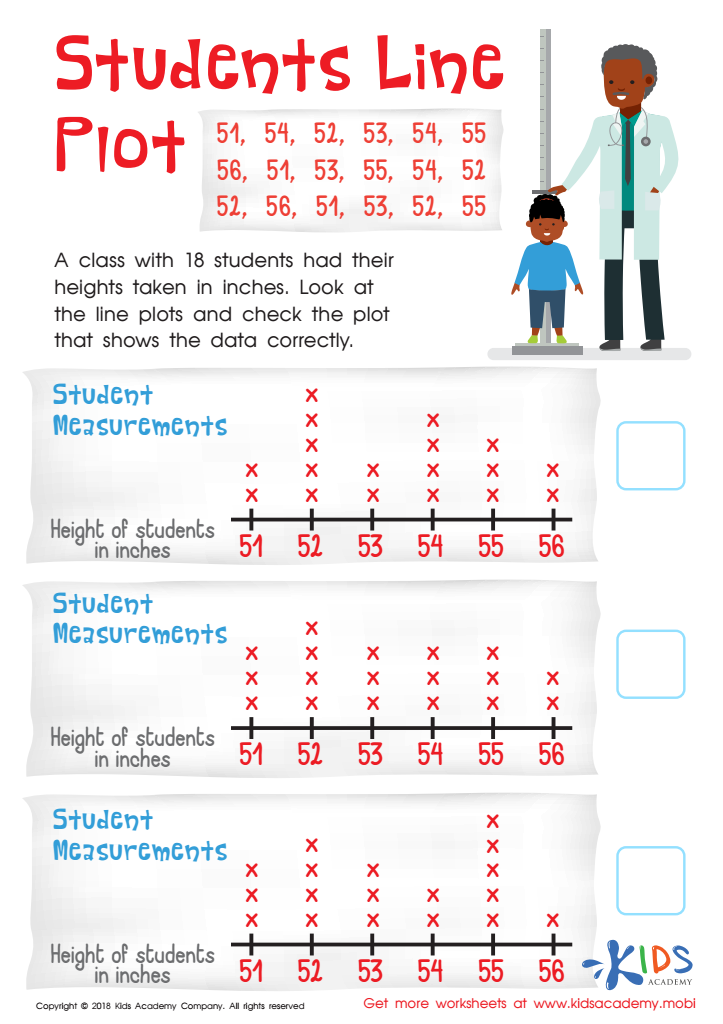
Students Line Plot Worksheet
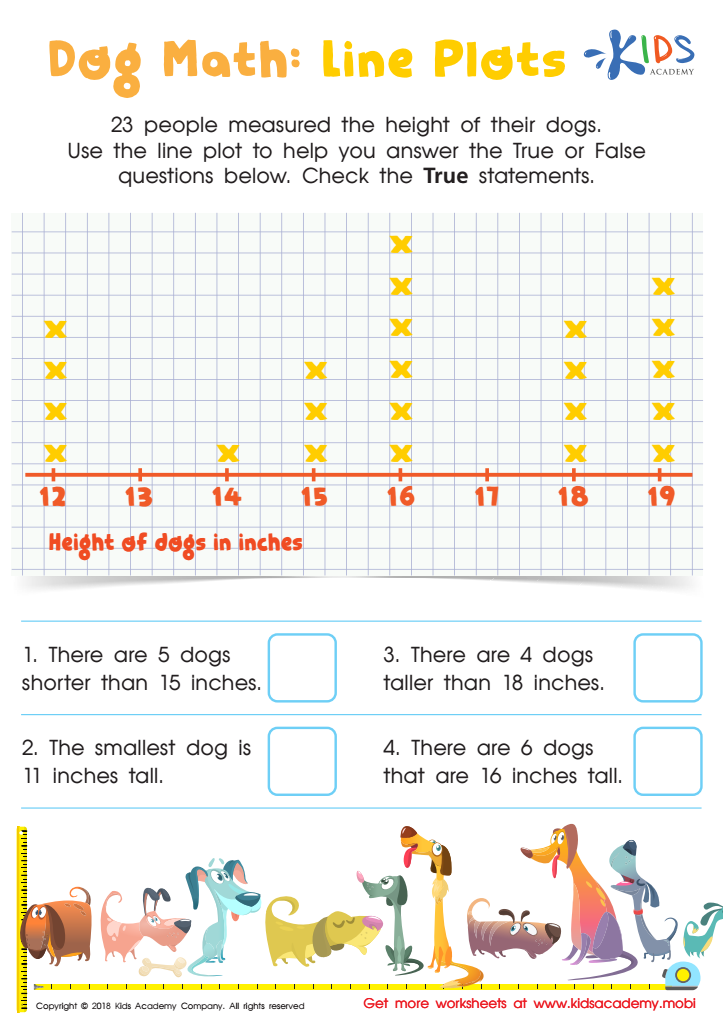
Dog Math: Line Plots Worksheet
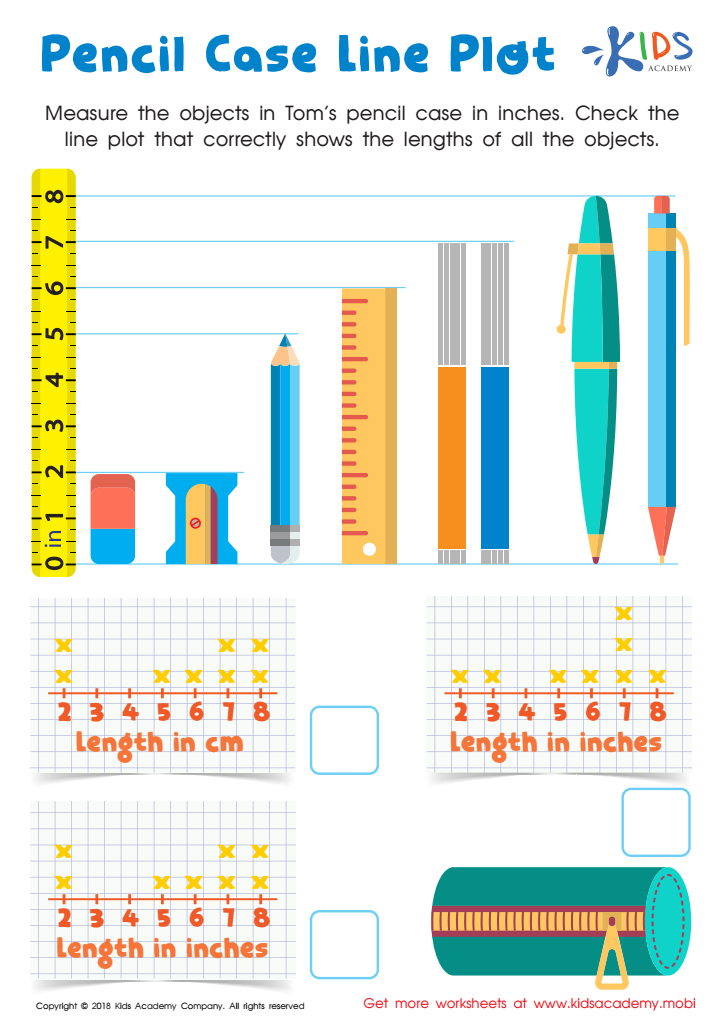
Pencil Case Line Plot Worksheet
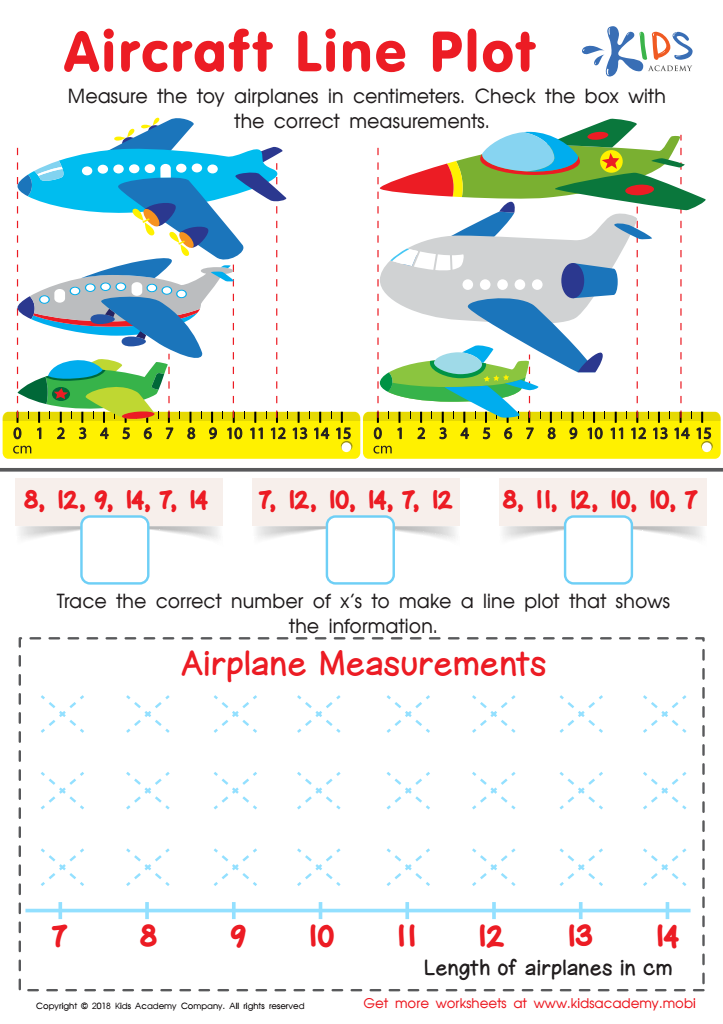
Aircraft Line Plot Worksheet
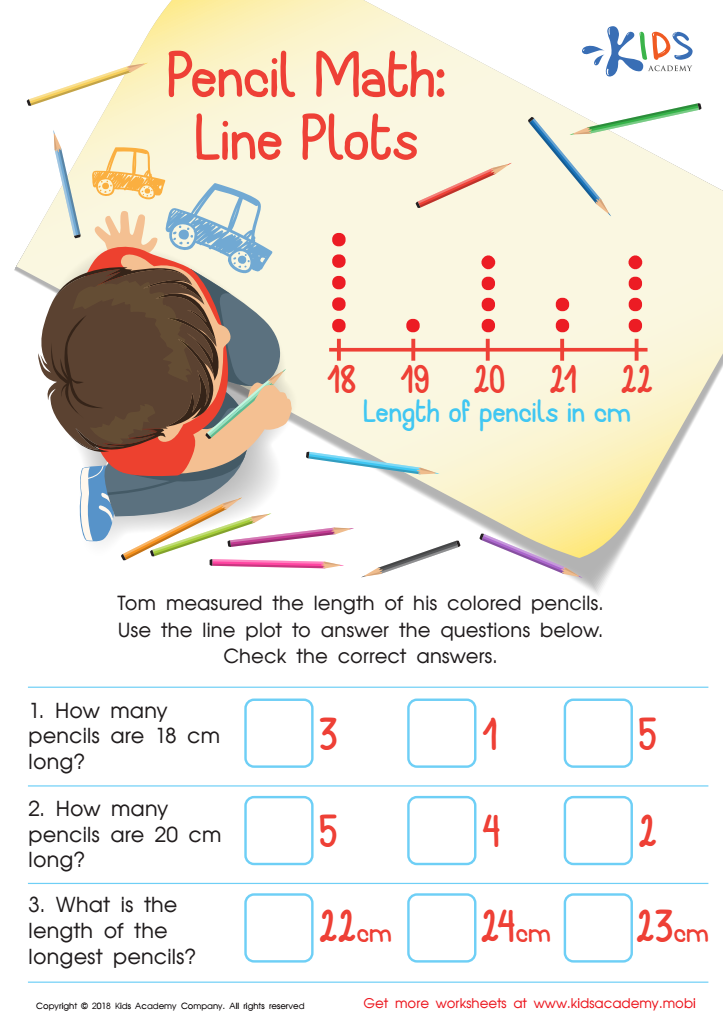
Pencil Math: Line Plots Worksheet
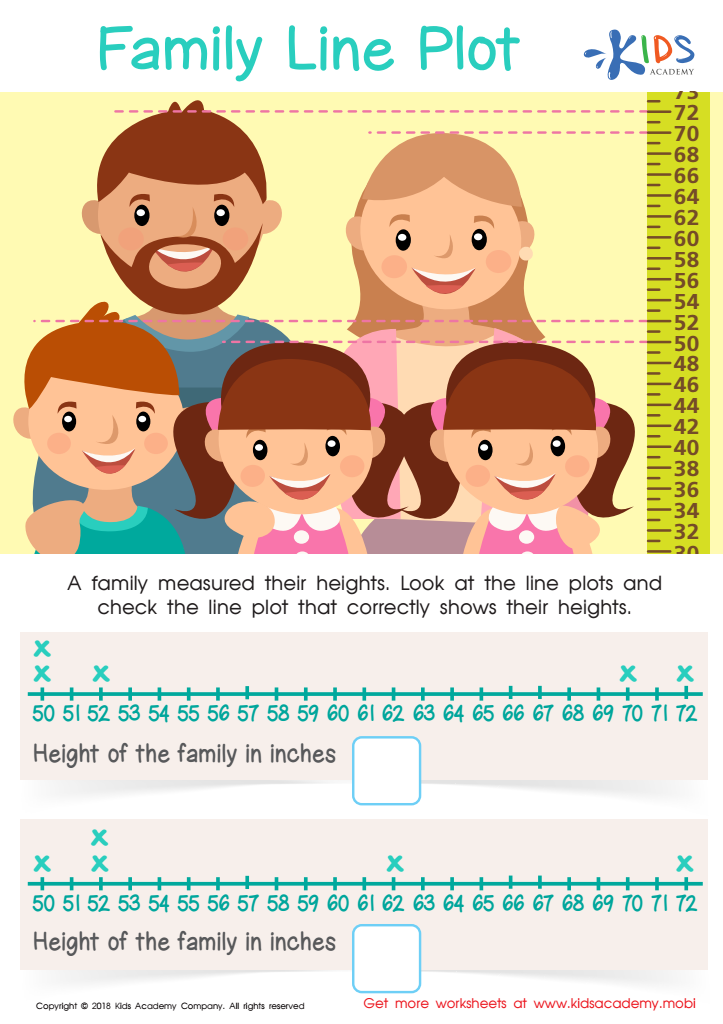
Family Line Plot Worksheet
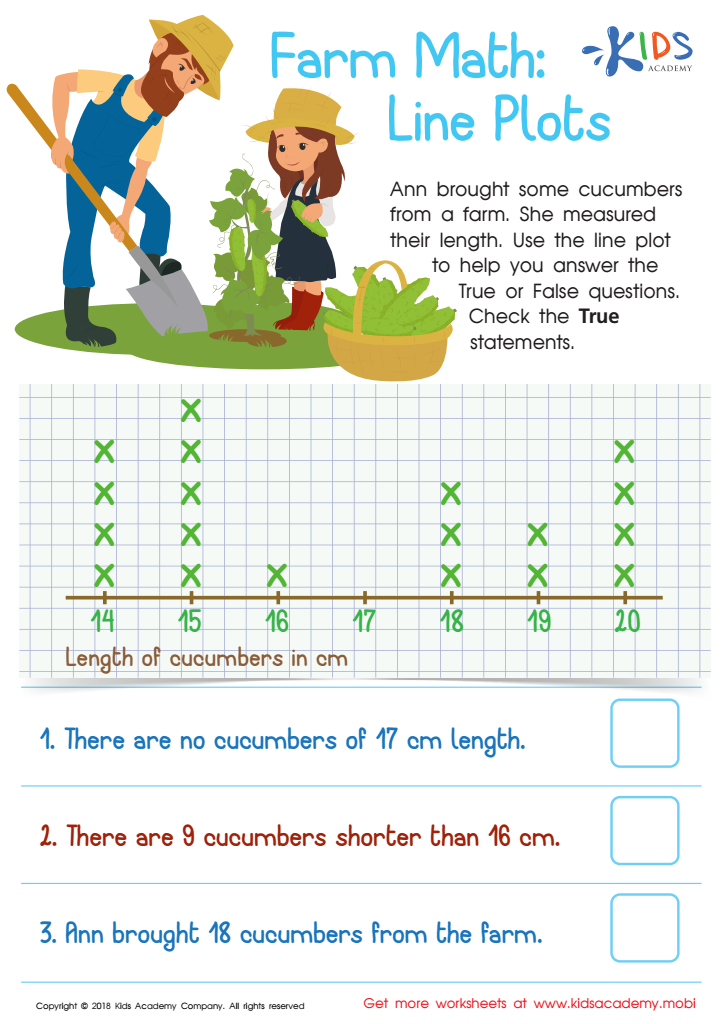
Farm Math: Line Plots Worksheet








Understanding line plots is a crucial aspect of early mathematics education, especially for children ages 6-7. At this developmental stage, children are beginning to engage with data in meaningful ways, and line plots provide a visual representation that can simplify complex information. Parents and teachers should care about this topic for several reasons.
Firstly, line plots foster critical thinking and analytical skills. By interpreting line plots, children learn to examine data, identify trends, and draw conclusions—skills that are imperative in today’s data-driven world. Secondly, this hands-on experience with measurement promotes a concrete understanding of concepts like length, weight, and volume, reinforcing their mathematical foundations.
Moreover, line plots encourage collaborative learning. Children often work in groups to collect data and create plots, enhancing their social skills and teamwork. This collaboration makes learning more engaging and helps them learn from one another.
Lastly, familiarizing children with line plots early prepares them for more complex concepts in mathematics as they progress in their education. Ultimately, understanding line plots allows children to become more confident in their analytical abilities, setting the stage for lifelong learning and problem-solving skills. Thus, parents and teachers should prioritize this aspect of early STEM education.