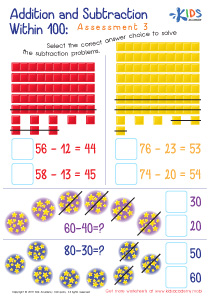
Sorting skills Easy Numbers 0–10 Worksheets for Ages 6-7
3 filtered results
-
From - To
Explore our engaging "Sorting Skills: Easy Numbers 0-10 Worksheets" designed for children ages 6-7! These interactive worksheets help young learners develop essential sorting skills through fun, age-appropriate activities. Tailored to enhance math understanding, these resources provide opportunities for children to classify numbers, recognize patterns, and improve their problem-solving abilities. Each worksheet features vibrant visuals and easy-to-follow instructions, making learning both enjoyable and effective. Ideal for classroom use or at-home practice, our worksheets are perfect for reinforcing numeric comprehension while encouraging critical thinking. Get ready to make sorting numbers a delightful experience for your little mathematicians! Discover now and watch their confidence grow!
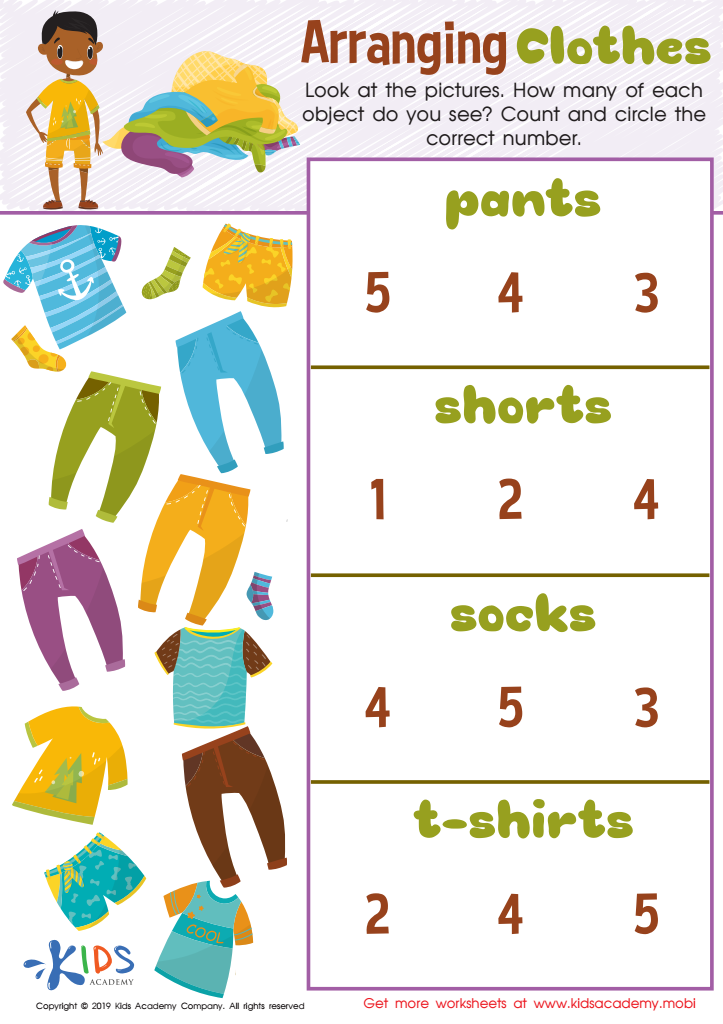
Arranging Clothes Worksheet
 Assign to My Students
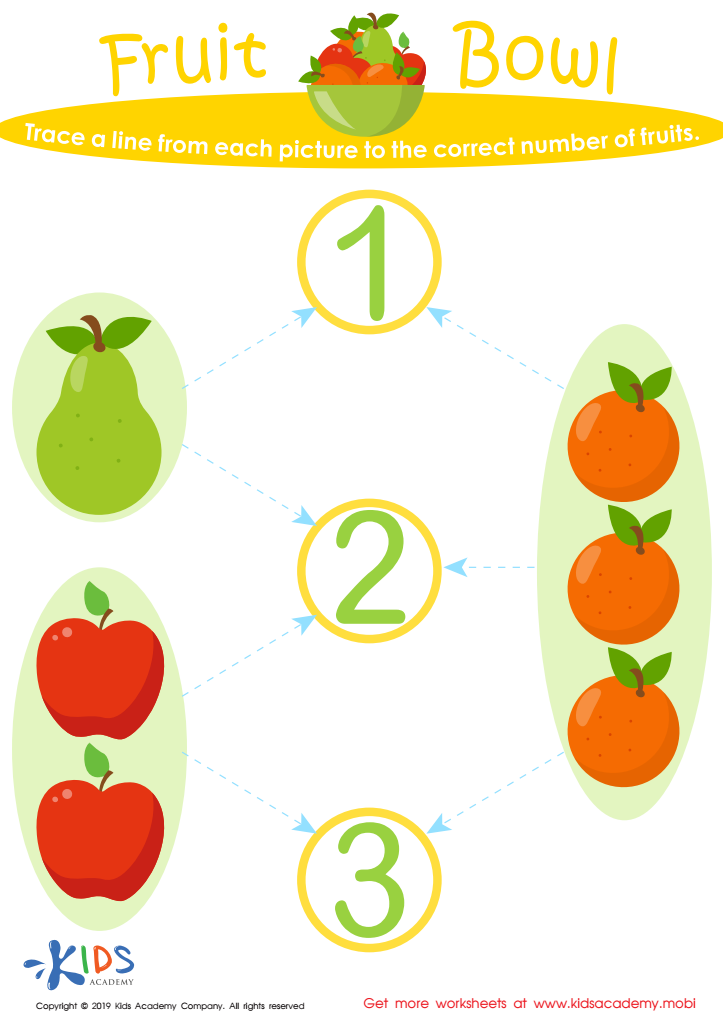
Fruit Bowl Worksheet
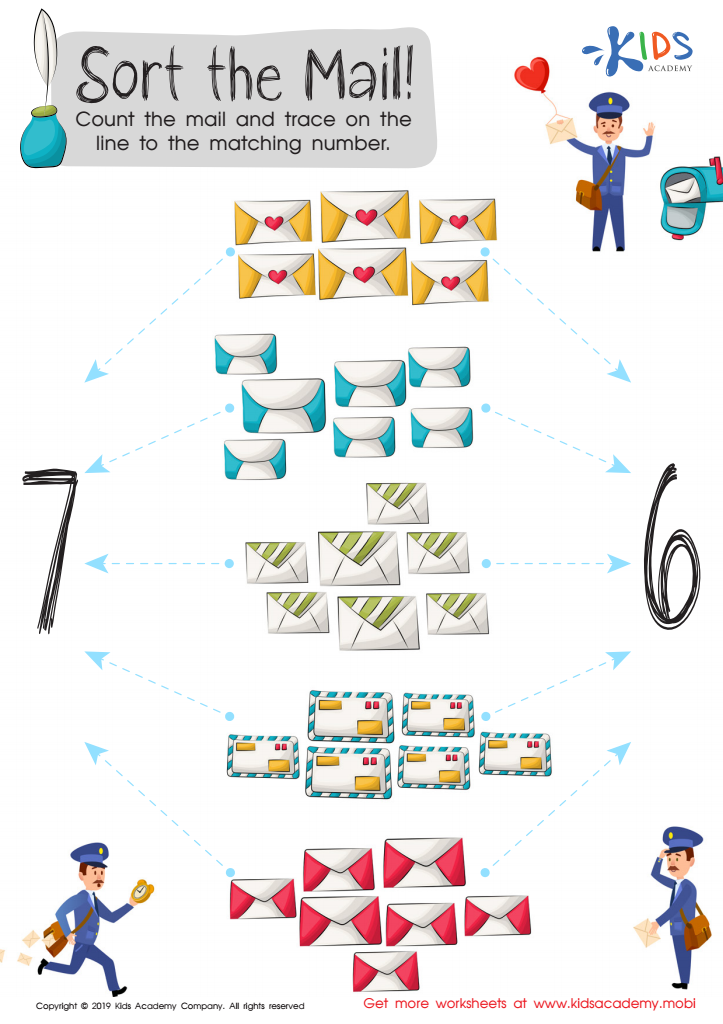
Sort the Mail Worksheet








Sorting skills are crucial for children aged 6-7, particularly when it comes to understanding easy numbers from 0-10. This foundational mathematical skill helps children recognize patterns, categorize objects, and develop critical thinking abilities. By sorting numbers, children learn to identify similarities and differences, laying the groundwork for more complex mathematical concepts later on, such as addition, subtraction, and basic problem-solving.
Parents and teachers should care about these skills because they promote cognitive development and encourage logical reasoning. Engaging with sorting activities fosters an interactive and hands-on learning experience, making math more relatable and enjoyable for young learners. Additionally, sorting helps children to organize information, which can improve their ability to process and retain new knowledge across all subjects.
Increased proficiency in sorting can also enhance a child’s confidence in their mathematical abilities, setting a positive tone for their academic journey. Furthermore, sorting skills often translate into real-life applications, such as organizing toys, school materials, or even understanding how to categorize animals or objects. For these reasons, incorporating sorting activities into the educational curriculum significantly enriches the learning experience for children, supporting them both academically and socially.