Filters

6 filtered results

Clear all filters
Favorites
With answer key
Interactive

6 filtered results

Difficulty Level

Grade


Welcome to our "Counting Skills Easy Numbers up to 100 Worksheets" tailored for children ages 6-7! These engaging worksheets are designed to improve early math skills, helping young learners master counting and number recognition from 1 to 100. With colorful illustrations and fun activities, children will find joy in practicing addition, subtraction, and more. Each worksheet is crafted to build confidence and promote a positive learning experience in math. Perfect for classroom use or at-home learning, these resources will support your child's development and foster a love for numbers. Get ready to make counting an enjoyable adventure!

Check out this FREE Trial Lesson on Numbers up to 100 for age 6-7!

Write 11-20

Favorites
With answer key
Interactive
  • 6-7
  • Counting skills
  • Numbers up to 100
  • Easy
Counting Fun Worksheet

Counting Fun Worksheet

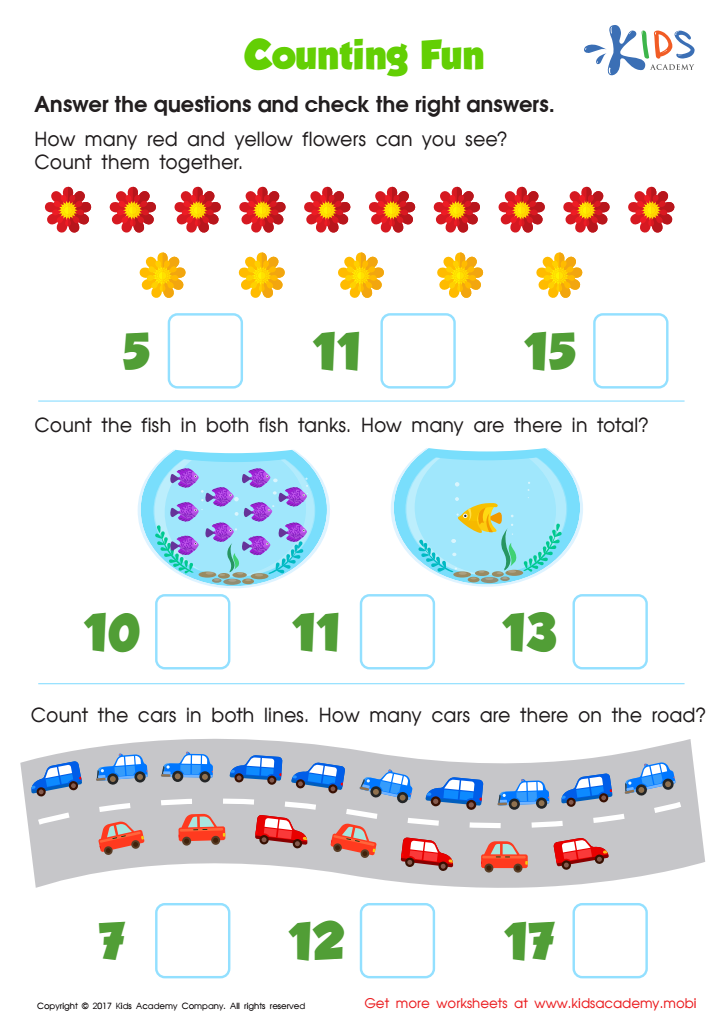
Math and fun can go hand-in-hand with this free PDF worksheet! Bright, colourful illustrations will activate your child's brain, as they count the red and yellow flowers. How many can you see? Count together and write down the total. Make learning and counting fun for your little ones!
Counting Fun Worksheet
Worksheet
Kindergarten number tracing PDF worksheet

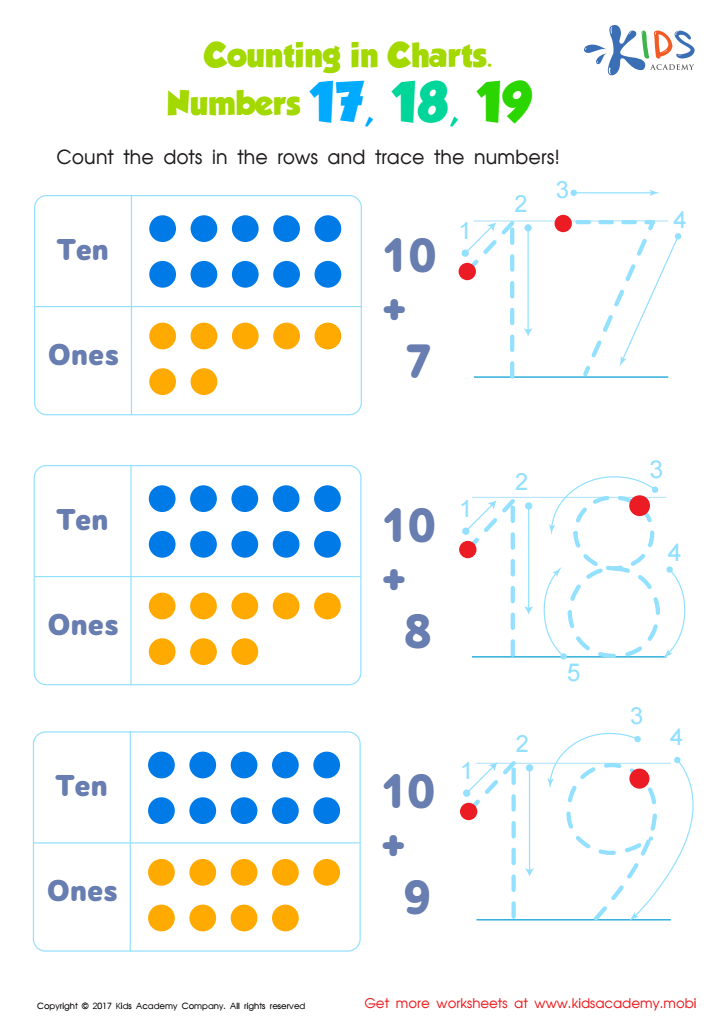
Kindergarten Number Tracing: Counting in Charts Worksheet
Little learners can find big numbers tricky! Help them practice counting and build early math skills, like place value and addition, with this kindergarten number tracing PDF worksheet. Count the dots to solve the problem and trace each answer!
Kindergarten Number Tracing: Counting in Charts Worksheet
Worksheet
Counting in the Neighborhood Part1 Worksheet

Counting in the Neighborhood Part1 Worksheet

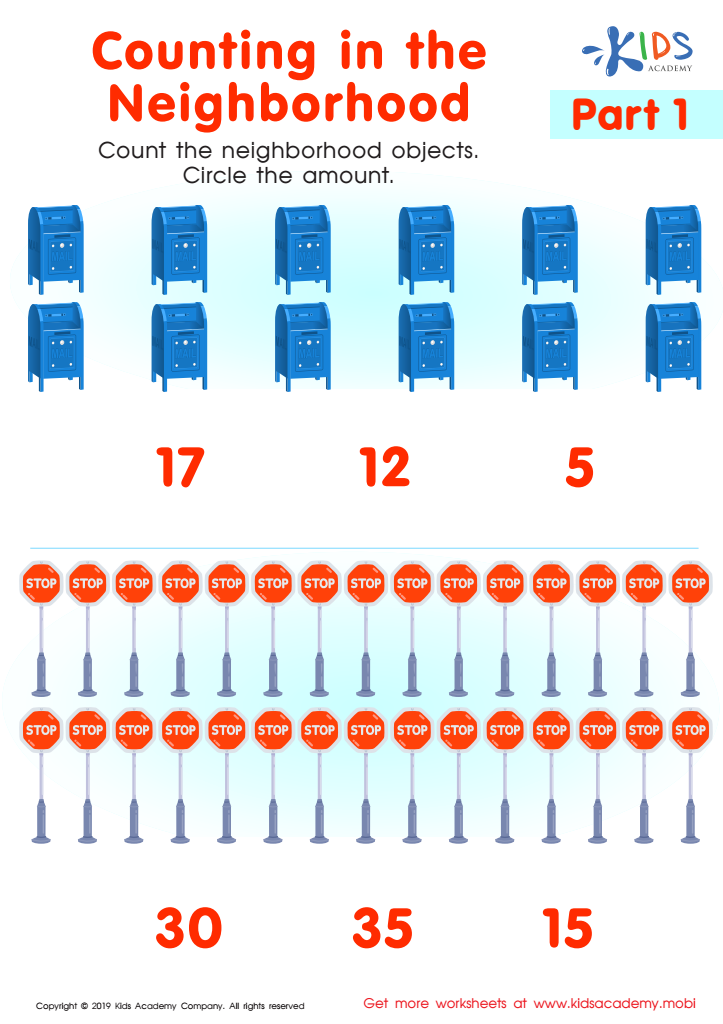
Counting using one-to-one representation is a great way to develop a child's number sense. Use objects, pictures and images to help counting beyond the fingers. This worksheet uses everyday objects to practice counting. It encourages children to find the correct number and count forward. Give it a try!
Counting in the Neighborhood Part1 Worksheet
Worksheet
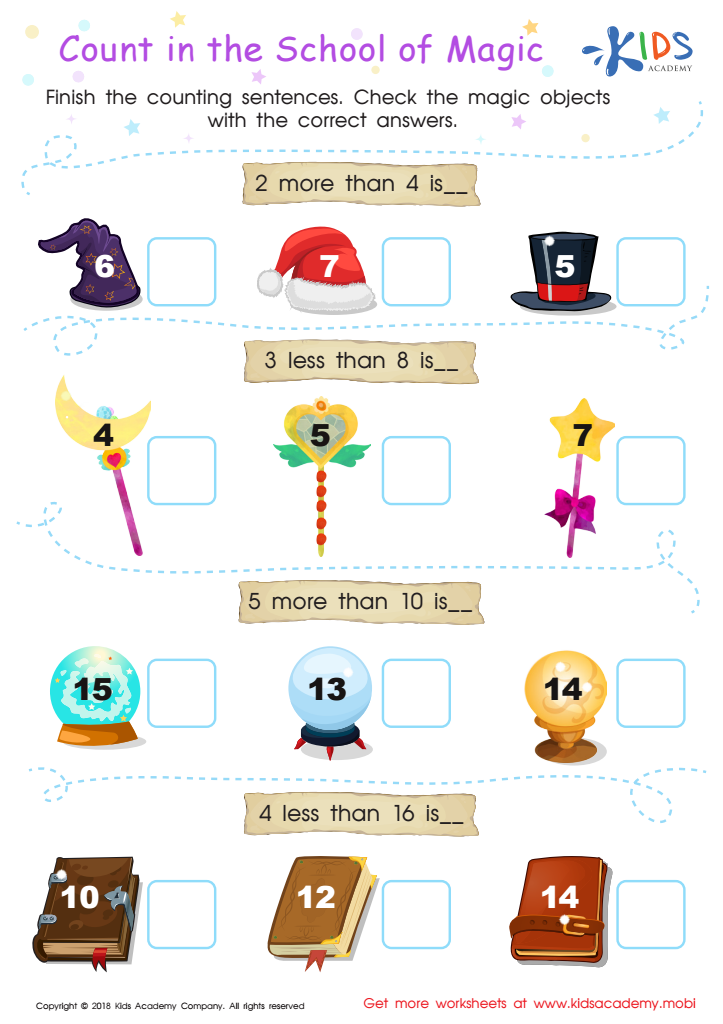
Count in the School of Magic Worksheet

Count in the School of Magic Worksheet

Your math learners can explore the School of Magic with this worksheet. They'll read equations with addition and subtraction numbers under 20, count back and forth to find the answer, then complete the counting sentences. Fun pictures and easy accuracy make it an enjoyable and successful learning experience.
Count in the School of Magic Worksheet
Worksheet
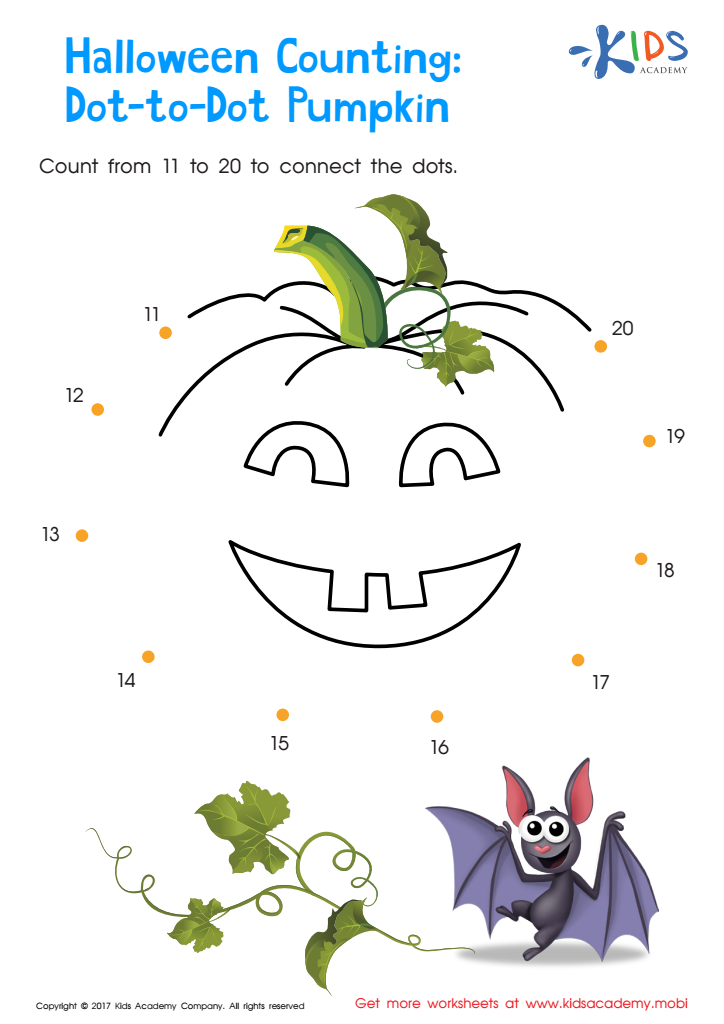
Halloween Counting Worksheet from 11 to 20

Ordering 11–20: Halloween Counting Worksheet
No matter the time of year, help your child get ready for Halloween with this worksheet. They'll practice counting from 11 to 20, recognizing numbers, and using a pencil to draw. By connecting the dots, they'll create a pumpkin picture, while unknowingly strengthening their early math skills. Print it today for an educational and fun experience!
Ordering 11–20: Halloween Counting Worksheet
Worksheet
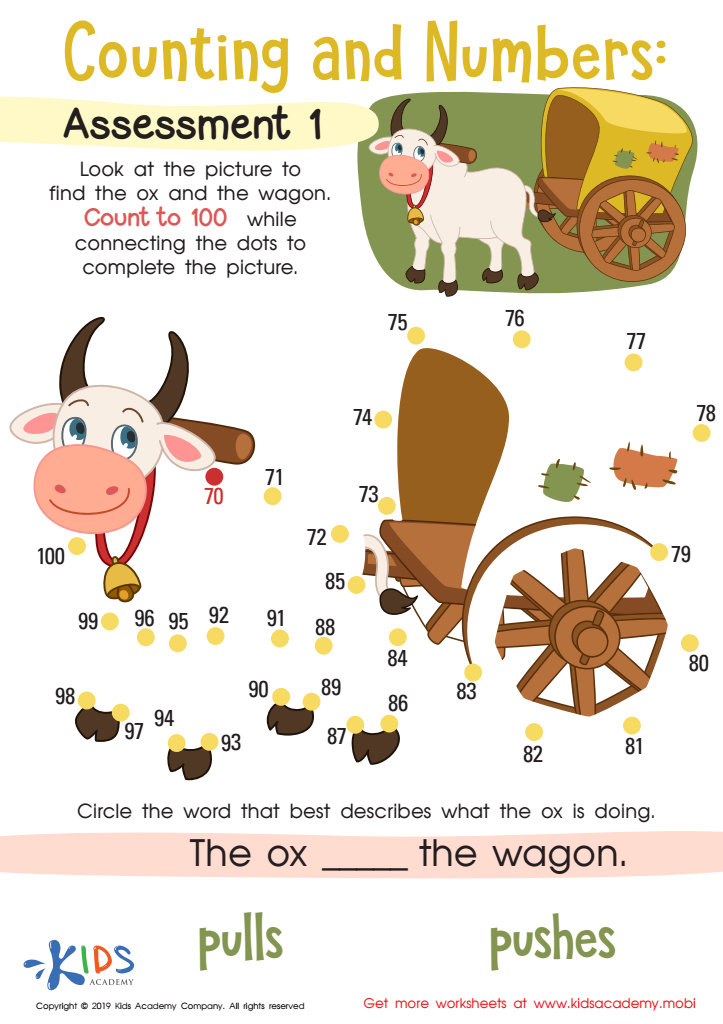
Counting and Numbers: Assessment 1 Worksheet


Counting and Numbers: Assessment 1 Worksheet

Let your kids use the picture as a guide and count from 70 to 100 to complete an ox pulling a wagon. As a comprehension check, have them answer the related question using words from the word bank. This dot-to-dot worksheet is a great way to assess their number reasoning and counting forward skills.
Counting and Numbers: Assessment 1 Worksheet

Worksheet


Counting skills are foundational for children aged 6-7, impacting their overall numerical understanding and later mathematical success. At this age, children transition from simple counting to more complex mathematical concepts, making it crucial for parents and teachers to focus on counting easy numbers up to 100. Mastery in counting not only promotes number recognition but also enhances children's ability to perform basic arithmetic operations, laying the groundwork for addition, subtraction, and even multiplication.

Moreover, counting helps develop critical thinking and problem-solving skills. As children learn to count, they begin to understand patterns, sequences, and the concept of quantity. These skills facilitate better comprehension in everyday situations, such as in shopping scenarios or sharing objects, encouraging practical applications of their knowledge.

Additionally, reinforcing counting through engaging activities can foster a positive attitude towards math. It bolsters confidence, as children experience success in deriving answers independently. Moreover, strong counting skills are predictive of future academic performance; hence, investing time into these early skills can lead to long-term educational success. Emphasizing counting in this age group equips children with essential tools for not only academic achievement but also real-world challenges they will encounter as they grow.