Understanding life cycles Easy Reading Worksheets for Ages 6-7
3 filtered results
-
From - To
Explore "Understanding Life Cycles Easy Reading Worksheets for Ages 6-7", designed to make learning about life cycles engaging and accessible for young minds. These worksheets offer simple, age-appropriate texts paired with vibrant illustrations, helping children grasp the stages of life for plants, animals, and insects. Perfect for early readers, each worksheet integrates fun activities that promote comprehension and curiosity. Ideal for classroom use or homeschooling, these resources support core learning objectives and encourage critical thinking skills. Start your child’s learning journey and watch them thrive with these expertly crafted educational tools!
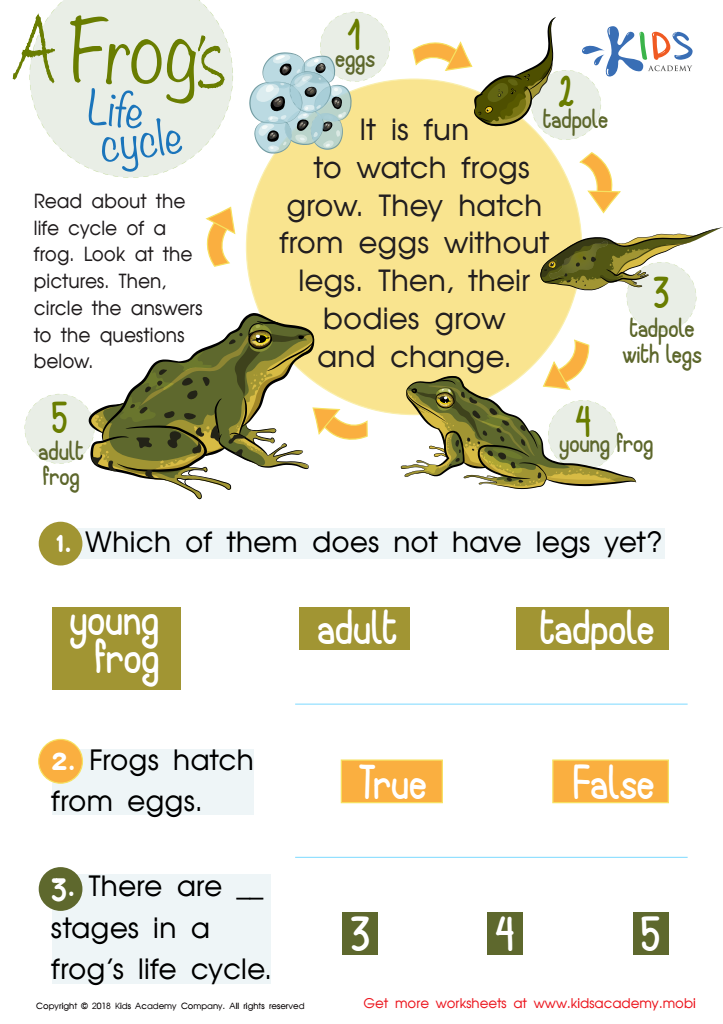
A Frog’s Life Cycle Worksheet
 Assign to My Students
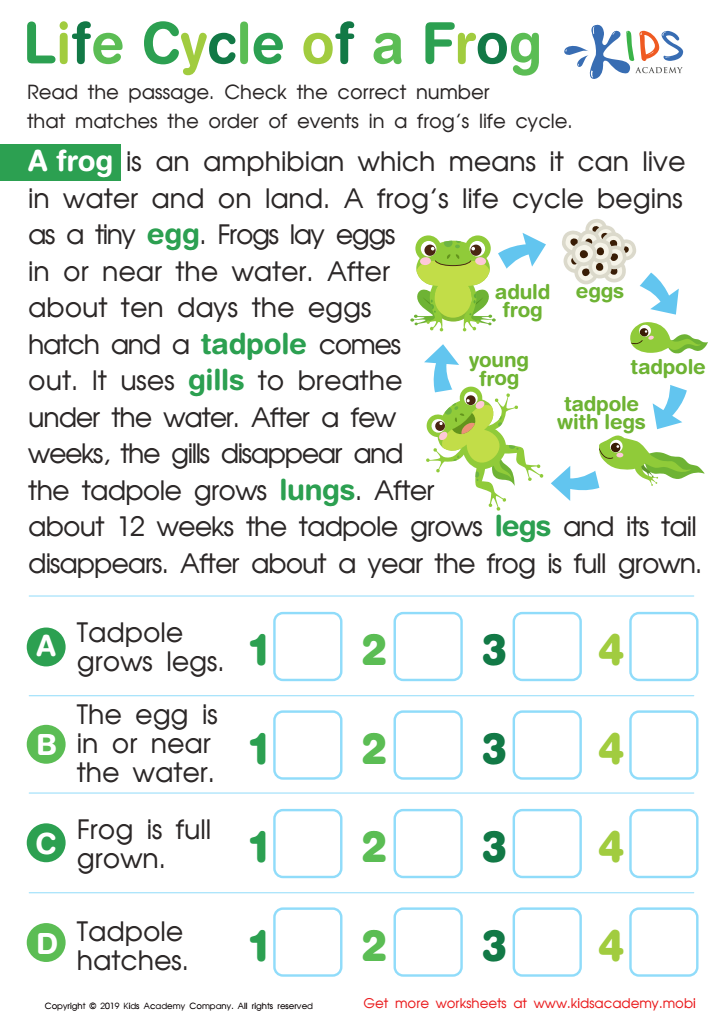
Life Cycle of a Frog Worksheet
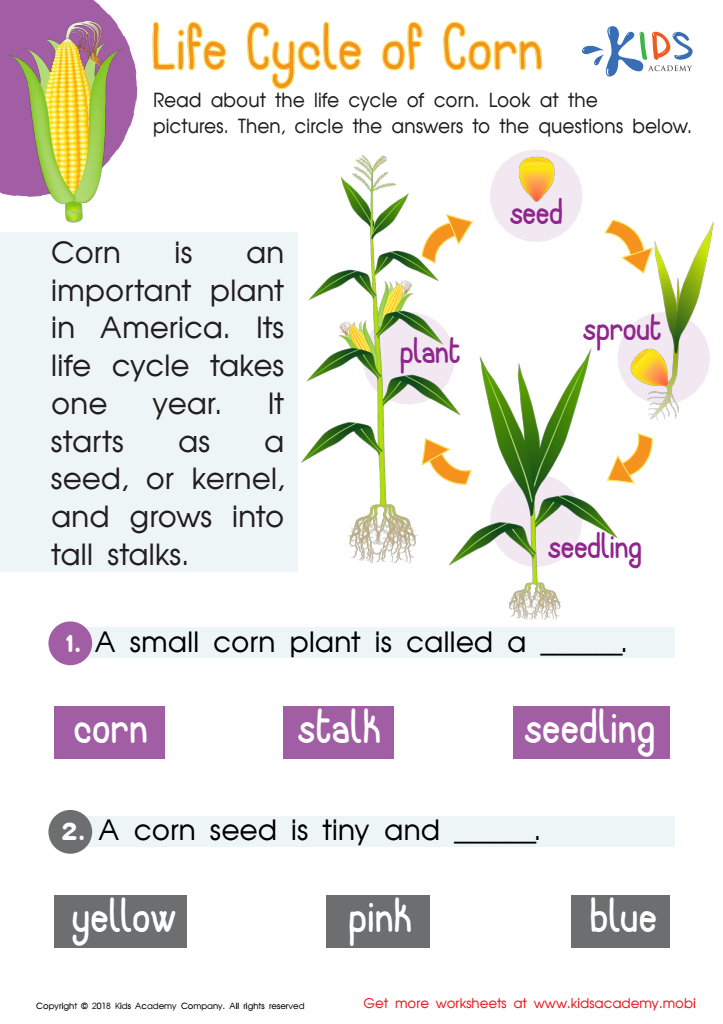
Life Cycle of Corn Worksheet






Understanding life cycles is a fundamental part of early childhood education, especially for children aged 6-7. Parents and teachers should prioritize this because it plays a crucial role in a child's cognitive and emotional development. Learning about life cycles — such as those of plants, frogs, butterflies, and humans — helps children grasp the concept of change and growth. This knowledge can foster a sense of wonder and curiosity about the natural world, encouraging lifelong learning and scientific thinking.
Moreover, understanding life cycles teaches children important biological processes and concepts, laying the foundation for more complex scientific learning in later years. It helps them see the interconnectedness of life and how different organisms, including themselves, fit into the world. This can nurture empathy and compassion, as children learn that all living things go through similar stages of life.
Additionally, these lessons are often hands-on and interactive, involving activities like growing seeds or observing caterpillars become butterflies. Such experiences are not only educational but also deeply engaging, enhancing fine motor skills, observation abilities, and patience.
Overall, understanding life cycles in an easy-reading format helps children build critical thinking skills while fostering a love for science and nature. Parents and teachers play a pivotal role in guiding and supporting this foundational learning journey.