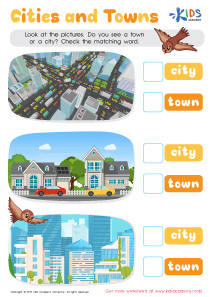
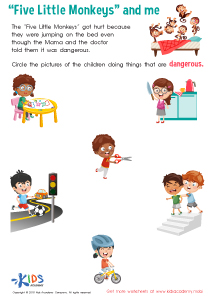
Cognitive Development Easy Reading Comprehension Worksheets for Ages 6-7
4 filtered results
Difficulty Level
Grade
Age
-
From - To
Subject
Activity
Standards
Boost your child’s cognitive development with our Easy Reading Comprehension Worksheets designed for ages 6-7. These engaging activities are crafted to enhance young learners’ reading skills while promoting critical thinking and understanding. Each worksheet includes age-appropriate texts followed by questions that challenge students to recall details, infer meanings, and synthesize information, ensuring a comprehensive grasp of the material. By incorporating vibrant illustrations and relatable themes, these worksheets make learning fun and effective. Perfect for classroom use or at-home practice, our easy-to-follow exercises support developmental milestones in literacy and cognitive growth. Discover joyful learning today at Kids Academy!
Favorites
With answer key
Interactive
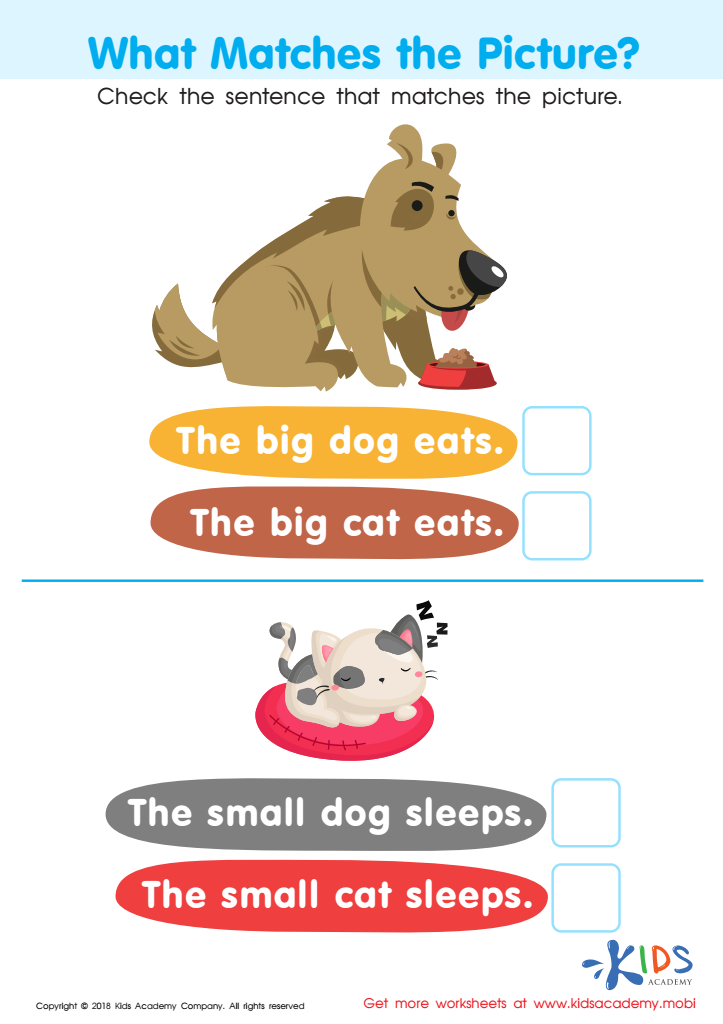
What Matches the Picture? Worksheet
Emerging readers can use pictures of cute pets and phrase repetition to match sentences to pics, building skills while having fun! It's a great way to bolster vocab and confidence, motivating them to keep reading.
 Assign to My Students
What Matches the Picture? Worksheet
Worksheet
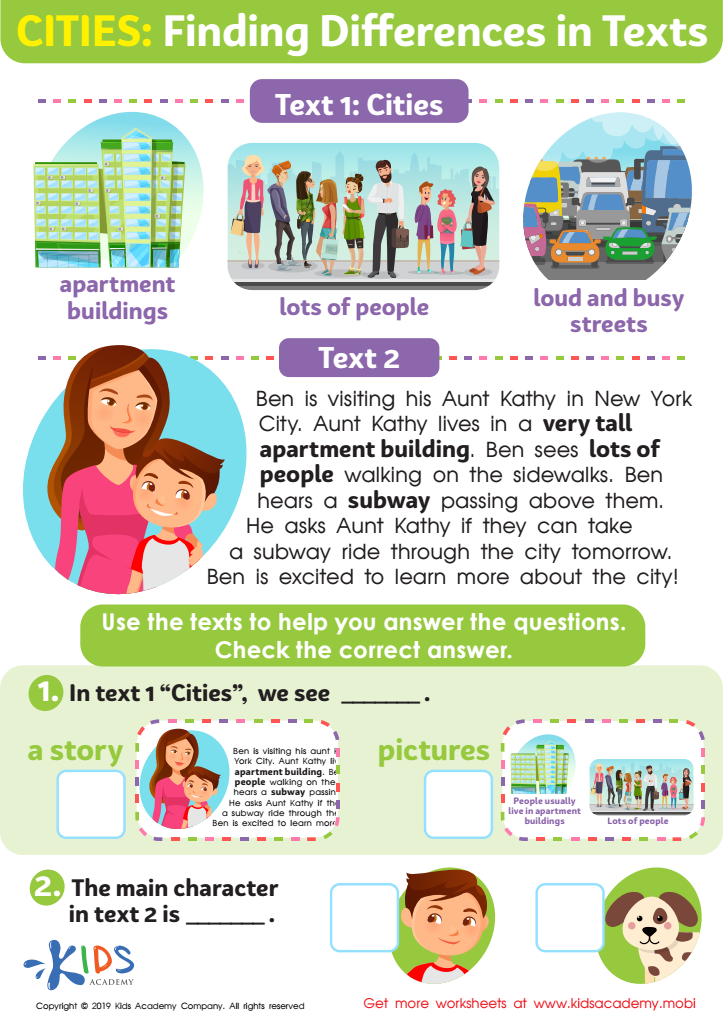
Cities: Finding Differences Worksheet
Critical thinking is essential for reading comprehension. New readers must be able to identify the key information in different text formats. This worksheet helps children learn what they might find in cities and how to differentiate between stories and pictures.
Cities: Finding Differences Worksheet
Worksheet
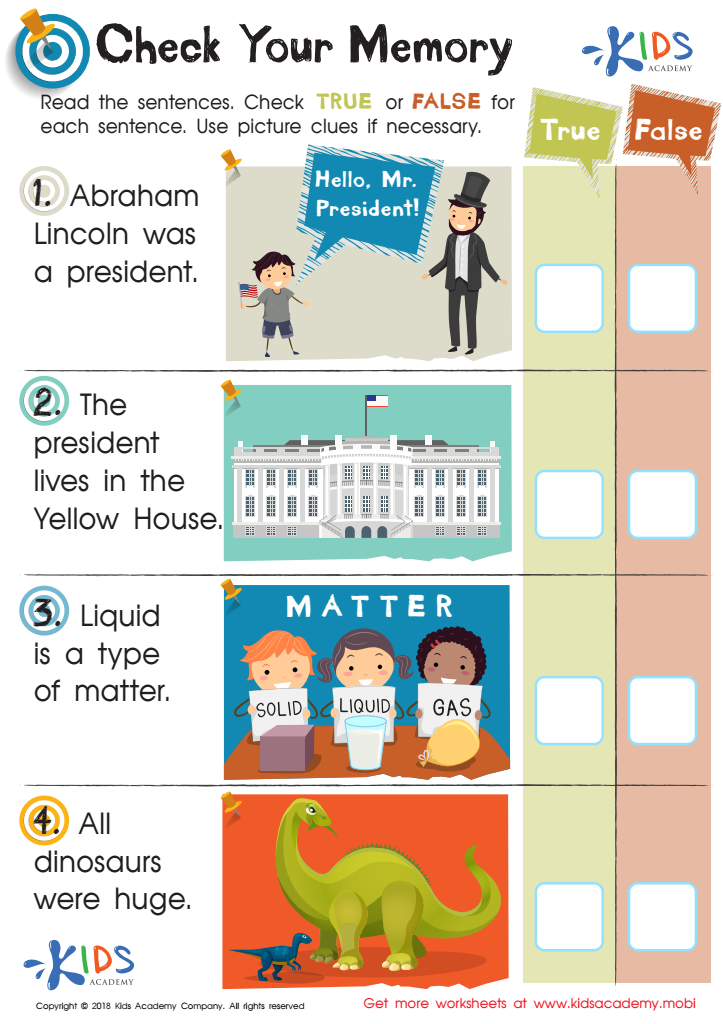
Check Memory Worksheet
Assisting your kids with their homework and using worksheets is a great way for them to learn. The vibrant visuals in this printout can help stimulate the mind and motivate your child. Have them read the sentences and then point to the associated images. Afterwards, ask them to state True or False for each sentence. If they are still uncertain, offer them the picture clues to assist further.
Check Memory Worksheet
Worksheet
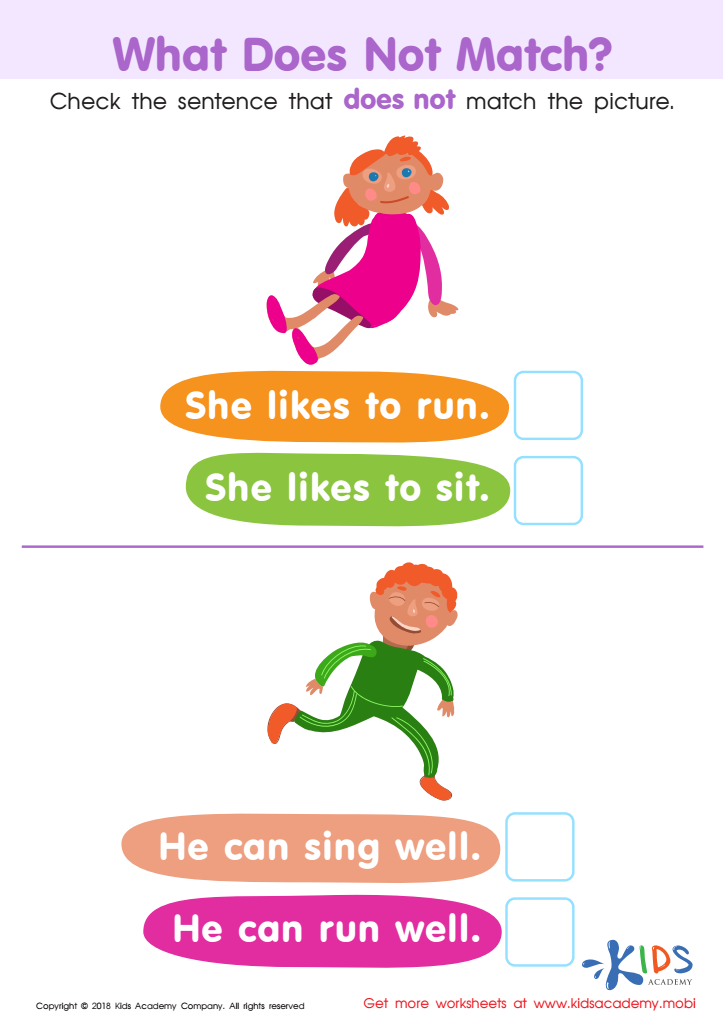
What Does Not Match? Worksheet
Emerging readers need to practice using visual cues and repetitive text. This colorful PDF provides them with an opportunity to look at pictures, use discrimination and discern which phrase does not match. It also enables them to gain familiarity with high-frequency words to aid decoding longer sentences.
What Does Not Match? Worksheet
Worksheet
Join Kids Academy for Free
Who is primarily going to use this learning content?








Understanding cognitive development and fostering reading comprehension for children aged 6-7 is crucial for parents and teachers for several reasons. During these formative years, children's brains are rapidly developing, making it a pivotal period for establishing critical thinking and processing capabilities. Easy reading comprehension activities designed for this age group were created to match their cognitive abilities, aiding in the development of foundational skills such as decoding, vocabulary, and the ability to understand and interpret text.
These skills form the groundwork for future learning, not just in reading but across all subject areas. When children develop strong reading comprehension skills early on, they are better equipped to understand instructions, absorb new knowledge, and engage with content more effectively. Additionally, proficiency in reading comprehension can boost a child's confidence, fostering a positive attitude towards learning and school.
Moreover, early reading success is closely linked to overall academic achievement. Research indicates that children who read proficiently by third grade are more likely to graduate from high school and succeed in their careers. By prioritizing cognitive development and reading comprehension, parents and teachers can ensure that children build a strong educational foundation, setting the stage for lifelong learning, curiosity, and success.