Enhancing observation skills Easy Reading Non-Fiction Worksheets for Ages 6-7
3 filtered results
-
From - To
Enhance your child's observation skills with our Easy Reading Non-Fiction Worksheets designed specifically for ages 6-7. These engaging worksheets promote critical thinking and observation by encouraging young learners to explore real-world topics in a fun and interactive manner. Each activity is crafted to help children identify details, make connections, and develop comprehension skills through non-fiction texts. Ideal for classroom or home learning, our resources are perfect for fostering curiosity and encouraging exploration of the surrounding world. Start your child on the path to becoming an astute observer today with our captivating worksheets that make learning both enjoyable and educational!
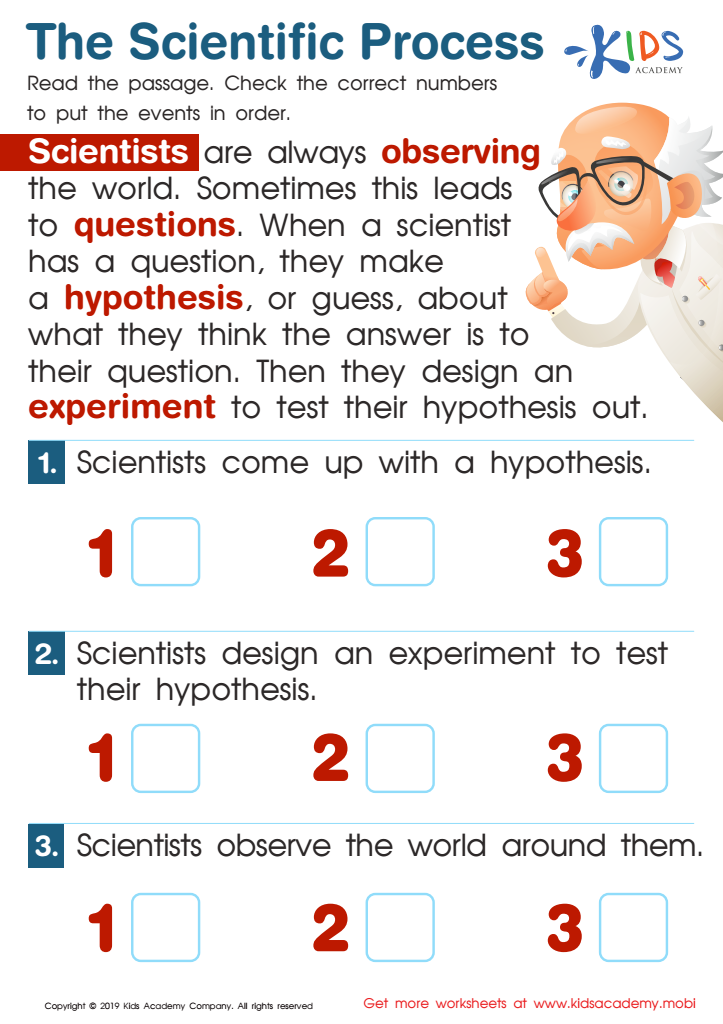
The Scientific Process Worksheet
 Assign to My Students
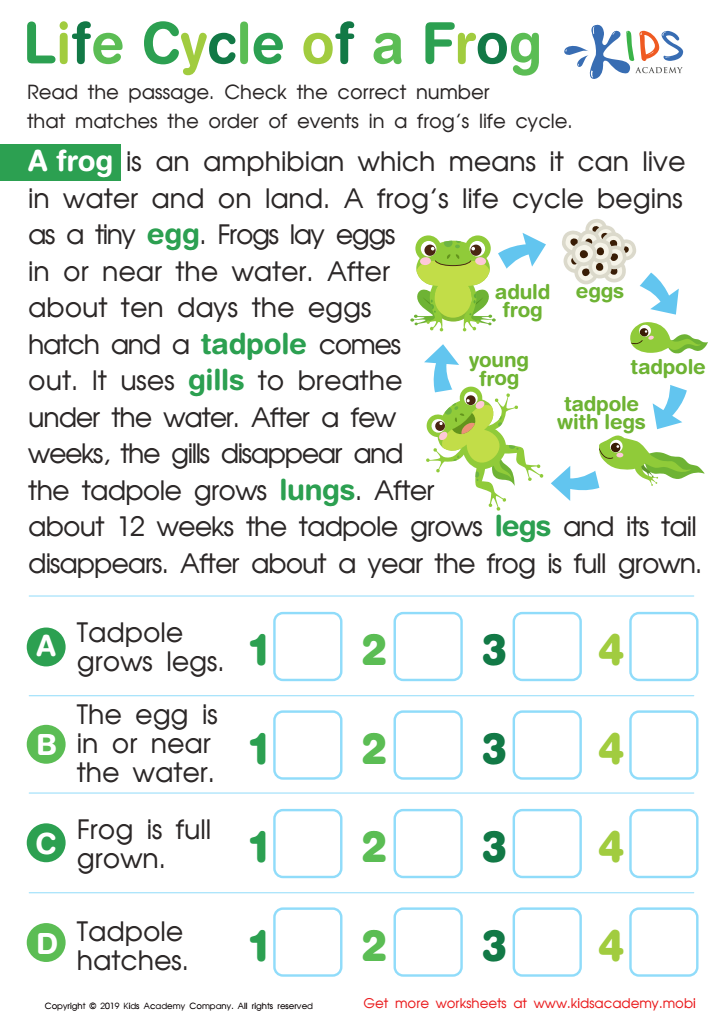
Life Cycle of a Frog Worksheet
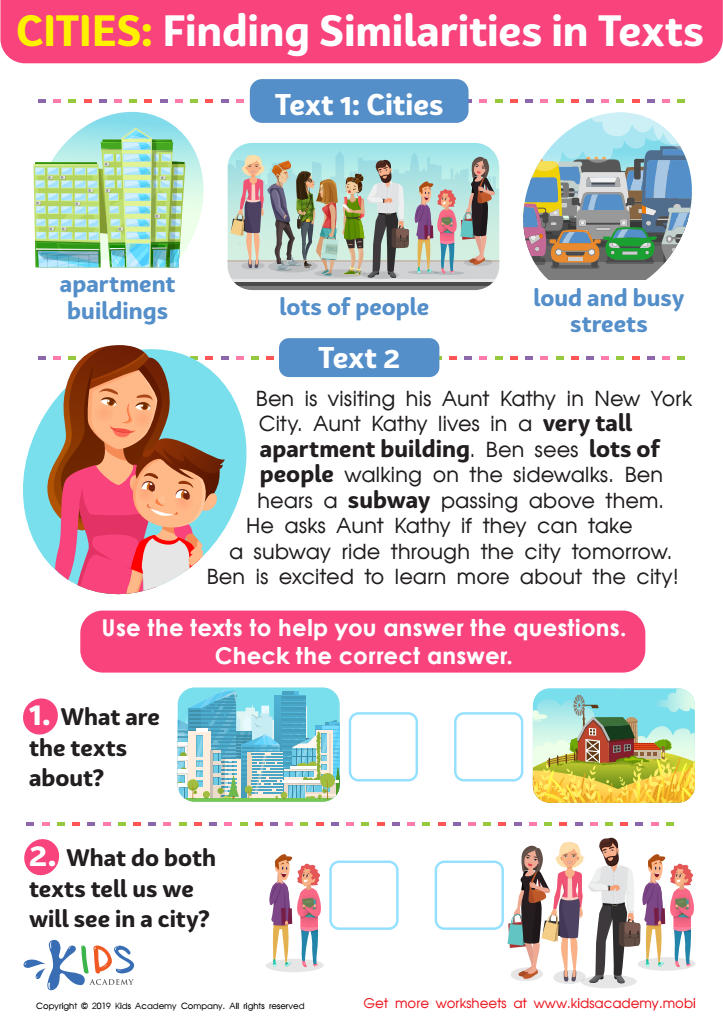
Cities: Finding Similarities Worksheet








Enhancing observation skills in young children, especially those aged 6-7, is crucial for their overall development and learning. At this age, children are naturally curious and eager to explore the world around them. By fostering these skills through Easy Reading Non-Fiction, parents and teachers can help children make meaningful connections between what they read and their everyday experiences.
Observation skills enable children to notice details, ask questions, and think critically about their environment. When they engage with non-fiction texts, they learn to observe facts, understand concepts, and develop a sense of inquiry. This can lead to a deeper understanding of subjects such as science and nature, which are often introduced in early education.
Moreover, improving observation skills can boost a child’s creativity and problem-solving abilities. By noticing details and gathering information, children become more adept at articulating their thoughts and ideas.
Incorporating Easy Reading Non-Fiction into learning experiences allows children to process information in an accessible way. This not only keeps them engaged but also instills a lifelong love for learning. Ultimately, promoting these skills paves the way for academic success and personal growth. Therefore, it is vital for parents and teachers to prioritize this aspect of early childhood education.







