Alphabet Recognition Easy ABC Letters Worksheets for Ages 6-8
6 filtered results
-
From - To
Discover our engaging "Alphabet Recognition Easy ABC Letters Worksheets" designed for children ages 6-8. These interactive worksheets cater to early learners, helping them master the alphabet through fun exercises like tracing, matching, and identifying letters. Our resources foster essential skills such as letter recognition, phonemic awareness, and early literacy, ensuring a solid foundation for reading and writing. With colorful illustrations and varied activities, your child will enjoy practicing their ABCs in an enjoyable and educational way. Explore our user-friendly worksheets today to support your child’s learning journey and boost their confidence in mastering the alphabet!
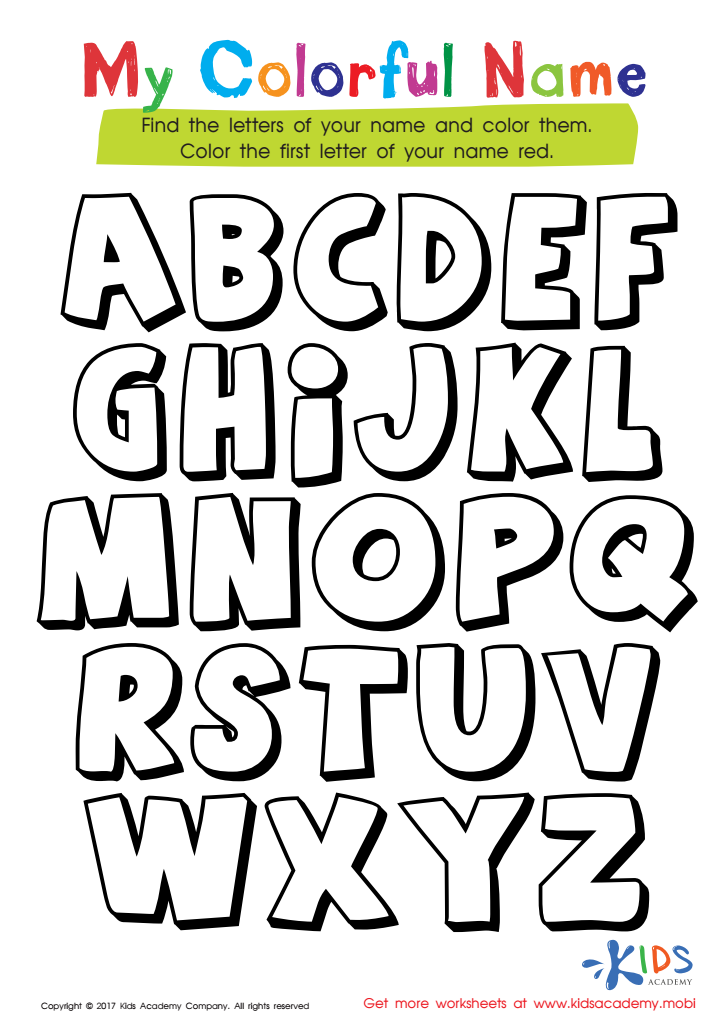
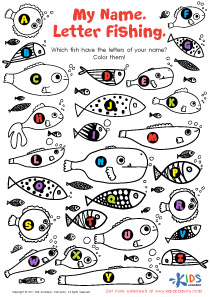
My Colorful Name Worksheet
 Assign to My Students

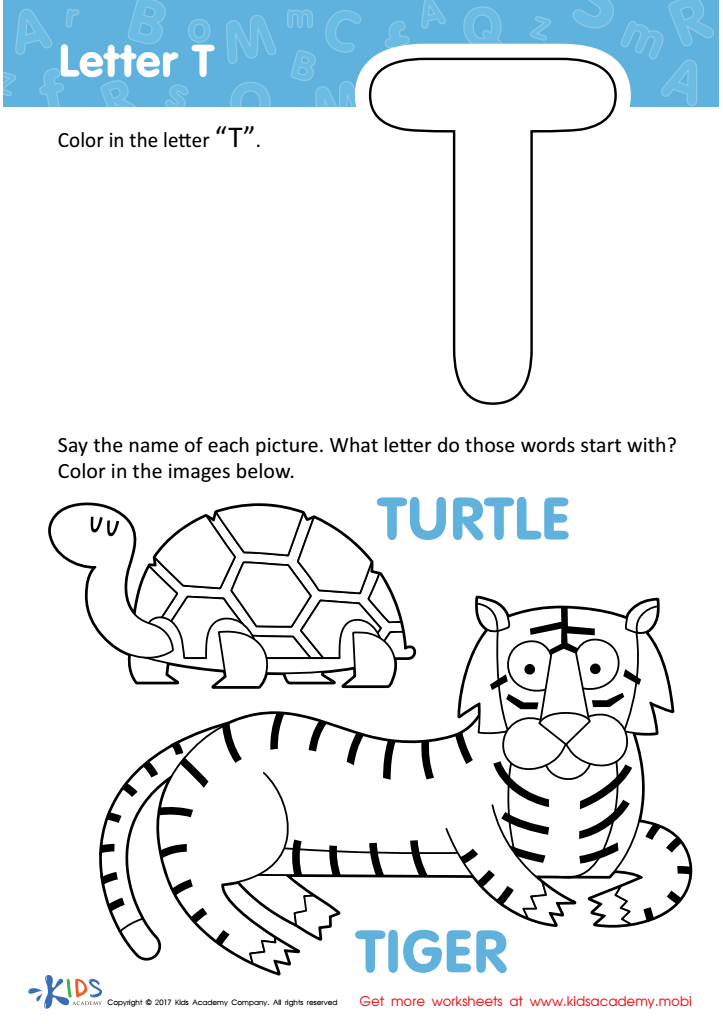
Letter T Coloring Sheet
Assign to My Students
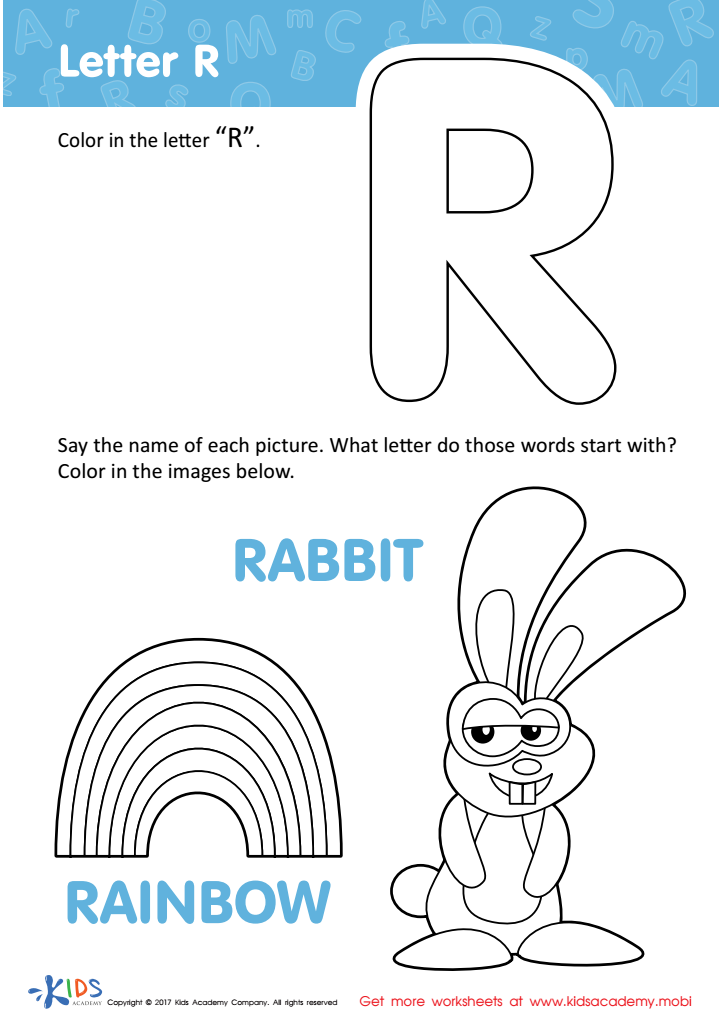
Letter R Coloring Sheet
Assign to My Students
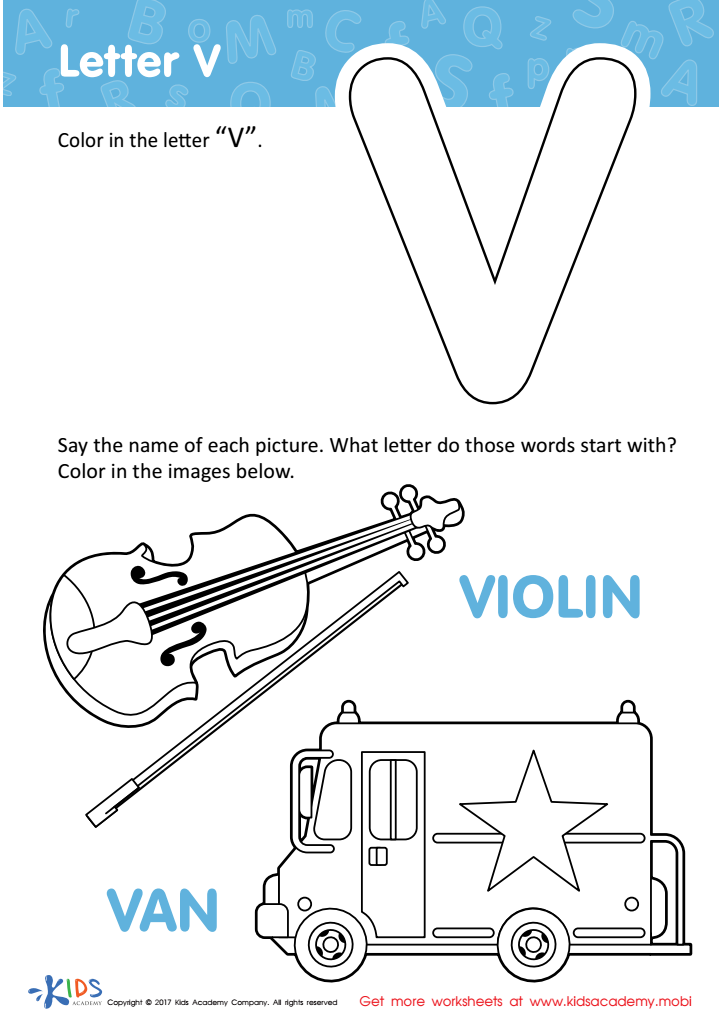
Letter V Coloring Sheet
Assign to My Students
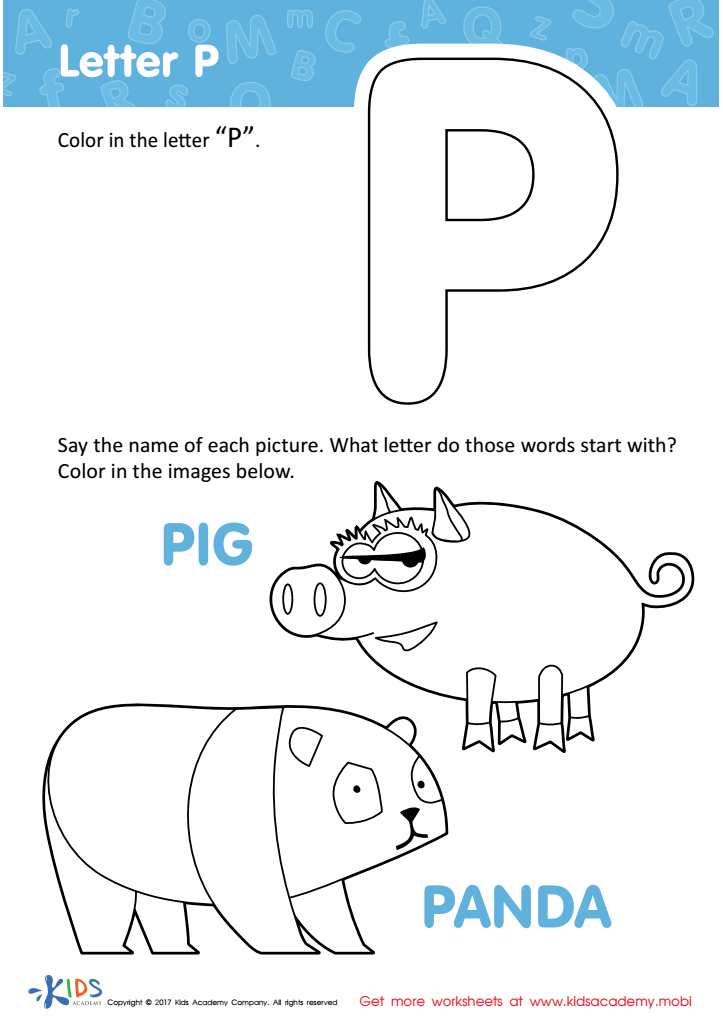
Letter P Coloring Sheet
Assign to My Students
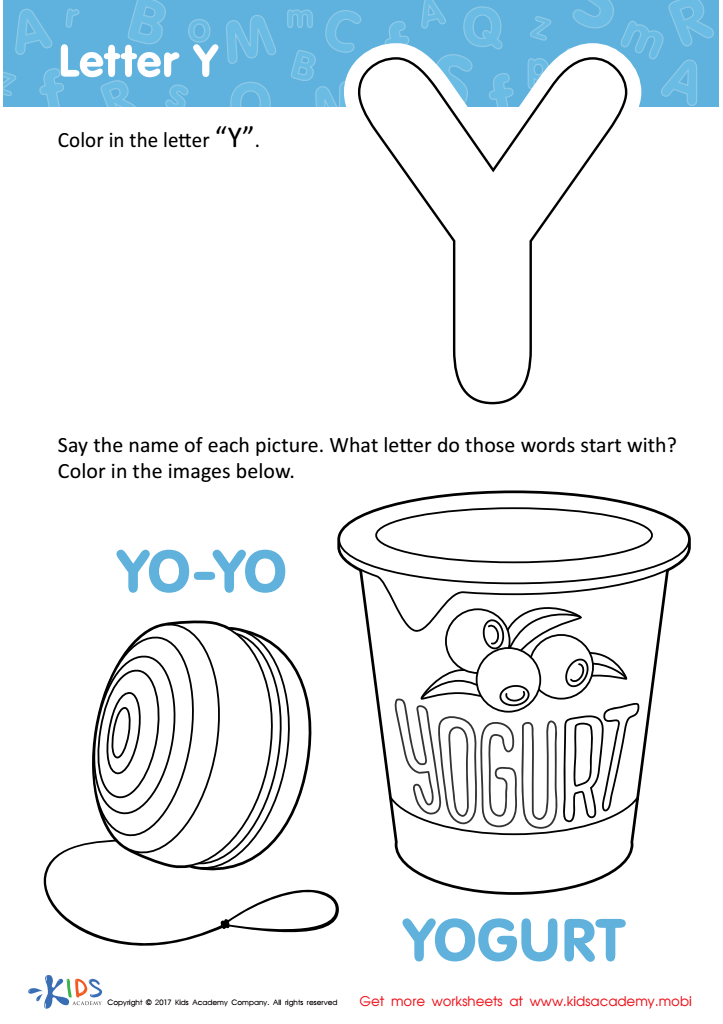
Letter Y Coloring Sheet
Assign to My Students








Alphabet recognition is a fundamental skill for children aged 6-8, serving as the foundation for their literacy development. Parents and teachers should prioritize this skill because it significantly impacts a child’s ability to read, write, and communicate effectively. Mastery of the alphabet enables children to decode words, sound out letters, and understand the phonetic relationships essential for reading fluency.
At this age, children's cognitive abilities are rapidly developing. Engaging in alphabet recognition activities enhances their critical thinking, memory, and auditory skills. What's more, recognizing both uppercase and lowercase letters strengthens their observational skills, cultivating attention to detail—a critical ability for academic success.
Additionally, fluency with the Alphabet fosters a sense of achievement and confidence in children, encouraging a love of reading that prolongs their educational journey. When kids feel competent in their letter knowledge, they are more likely to participate in literacy activities and pursue them with enthusiasm.
Moreover, parents and teachers can create a supportive learning environment that promotes alphabet recognition through games, songs, and interactive activities. By actively fostering this skill, caregivers can bridge the gap between phonetic understanding and reading proficiency, helping children to thrive academically and socially. Thus, prioritizing alphabet recognition is vital for holistic child development.