Alphabet Recognition Easy Letter Recognition Worksheets for Ages 6-8
5 filtered results
-
From - To
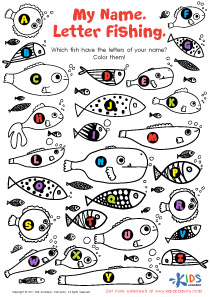
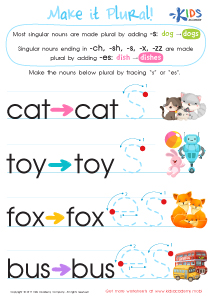
Boost your child's alphabet recognition skills with our engaging "Alphabet Recognition Easy Letter Recognition Worksheets" designed for ages 6-8! These worksheets provide a fun and interactive way for young learners to practice identifying letters through various exercises and activities. Perfect for reinforcing classroom learning or enhancing homeschooling routines, our worksheets feature colorful illustrations, exciting challenges, and clear instructions that make learning enjoyable. With a focus on developing fine motor skills and letter comprehension, these easy-to-use printables will spark your child's love for letters and pave the way for successful reading and writing. Empower your child’s literacy journey today!
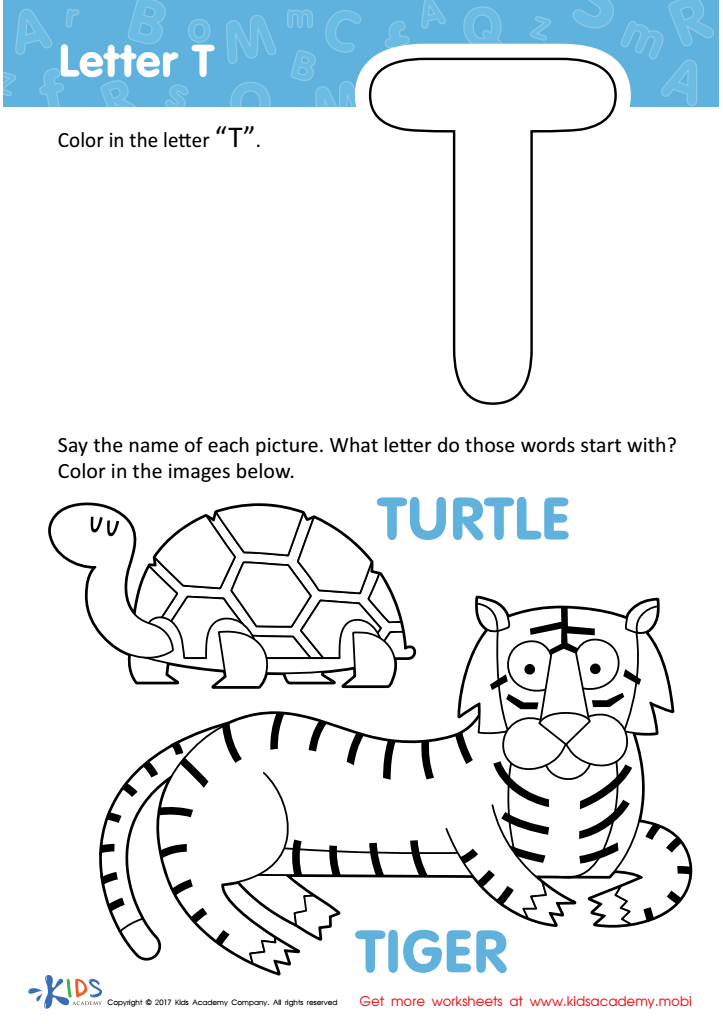
Letter T Coloring Sheet
 Assign to My Students
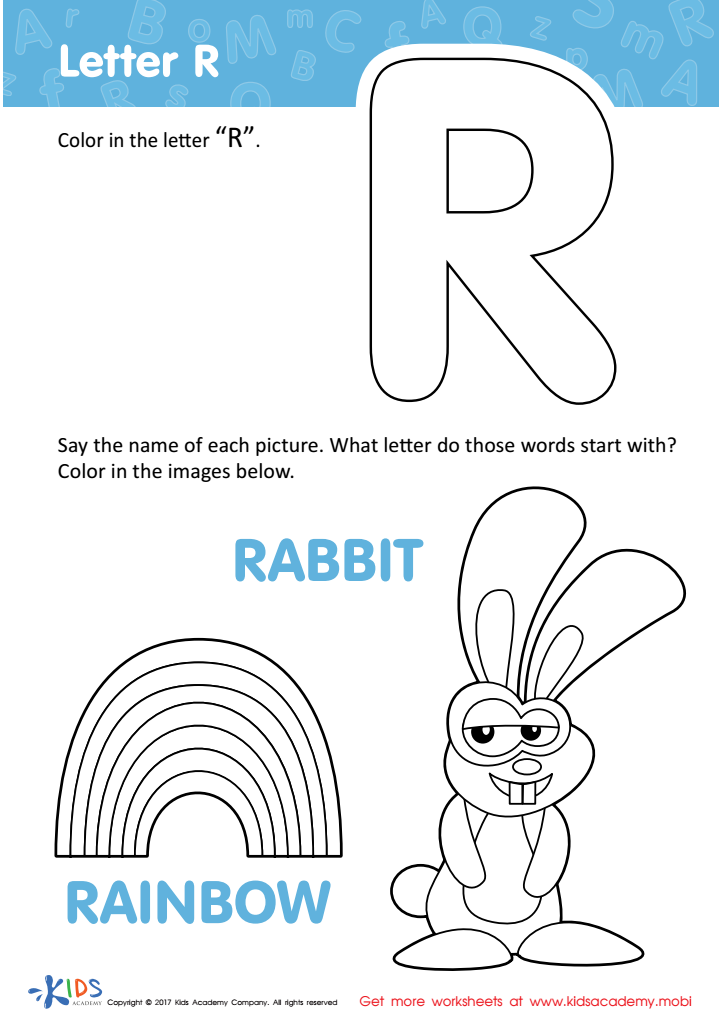
Letter R Coloring Sheet
Assign to My Students
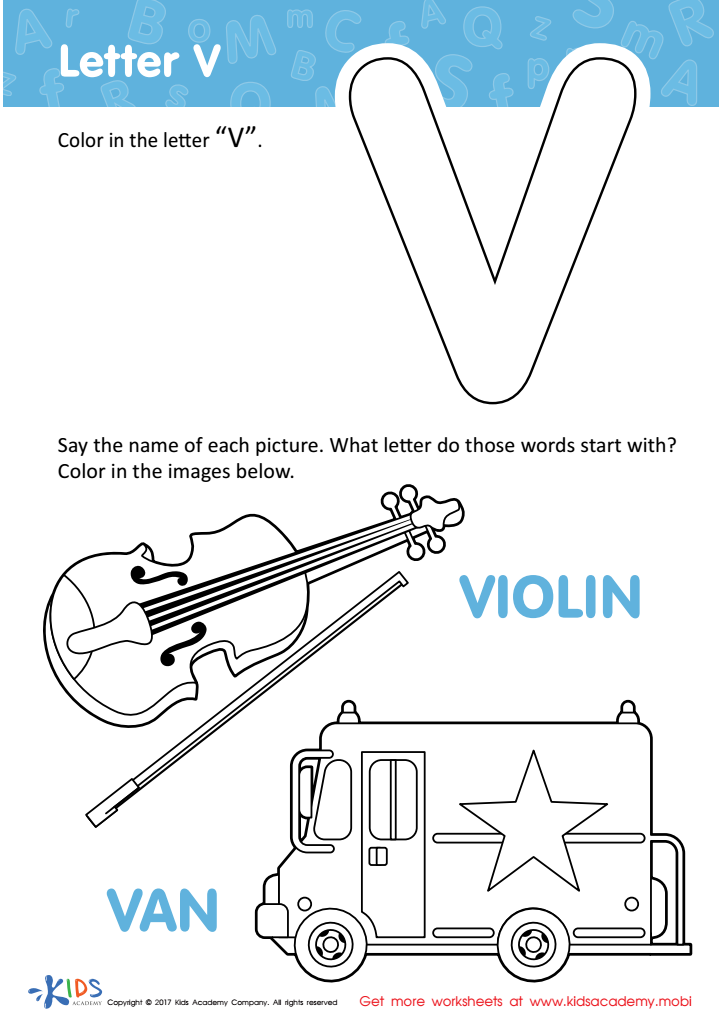
Letter V Coloring Sheet
Assign to My Students
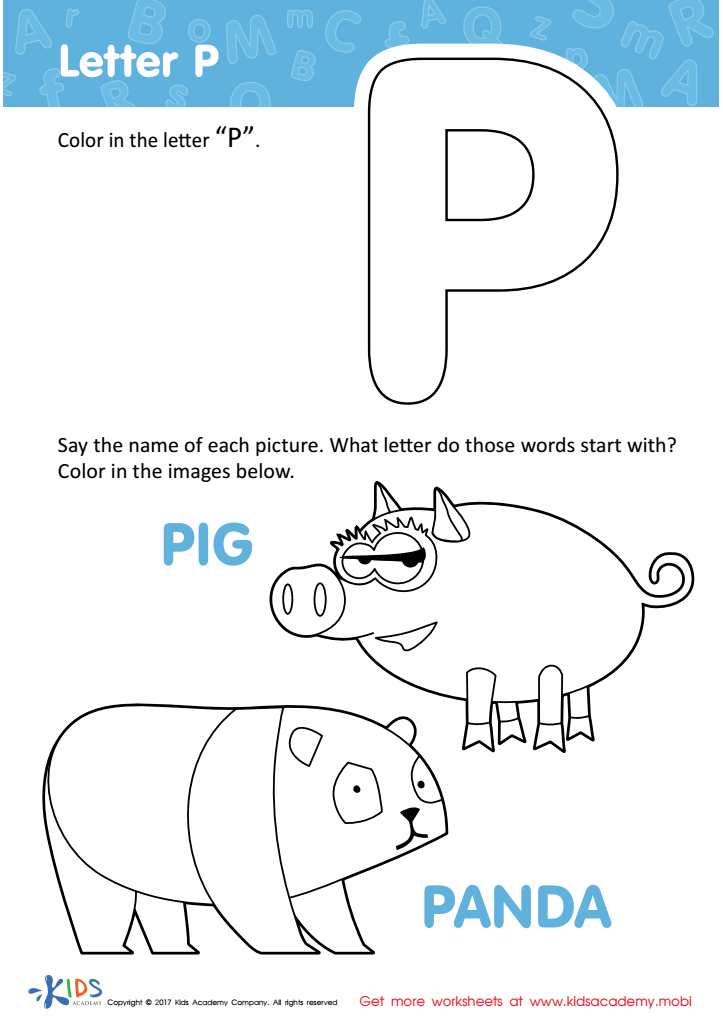
Letter P Coloring Sheet
Assign to My Students
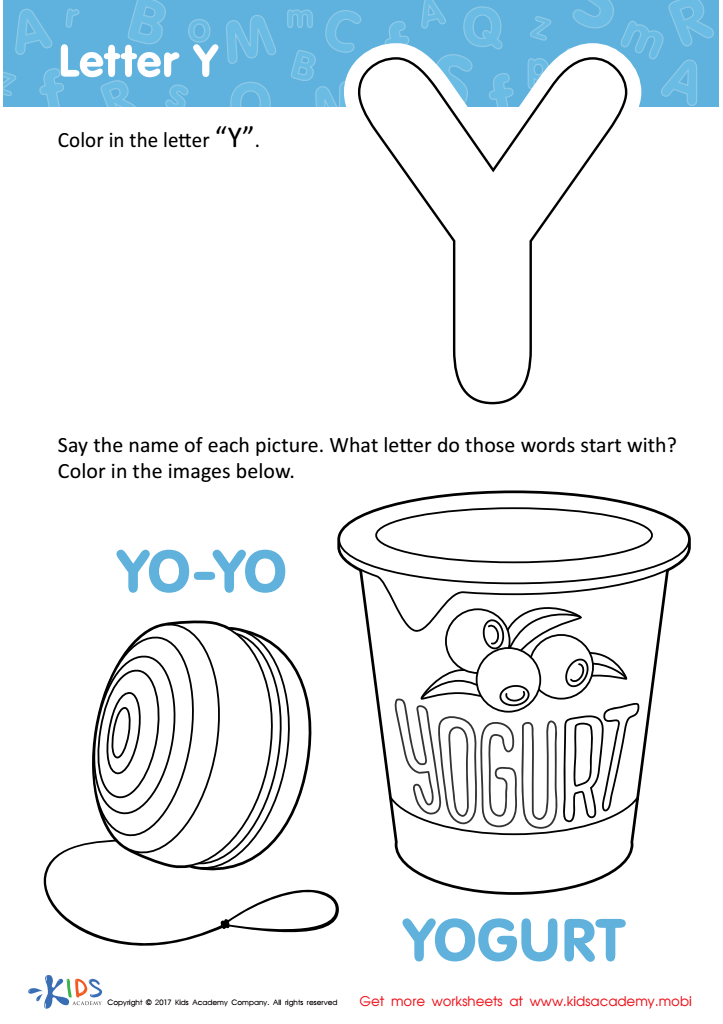
Letter Y Coloring Sheet
Assign to My Students








Alphabet recognition is a foundational skill for children aged 6-8, making it essential for both parents and teachers to prioritize. At this age, children transition from learning letters to reading words, which is a critical stage in their educational journey. Mastery of the alphabet enhances phonemic awareness, which helps children decode words—a vital skill for successful reading.
Strong letter recognition skills contribute to children's confidence and motivation in their learning process. When children can easily identify and understand letters, they become more enthusiastic about reading and writing activities. This early competence promotes a love for literacy that can last a lifetime, positively impacting their academic performance.
Moreover, letter recognition supports language development and critical thinking skills. As children recognize and differentiate letters, they improve their auditory processing and comprehension abilities. By fostering an environment where alphabet recognition is emphasized, whether at home or school, parents and teachers lay down the groundwork for effective communication, creativity, and cognitive growth.
In conclusion, prioritizing alphabet recognition forms a cornerstone for literacy skills, encouraging a broad range of academic and personal development benefits. Awareness of this critical skill equips parents and teachers to better support children’s overall learning experiences.