Problem-Solving Skills Easy Addition & Subtraction Worksheets for Ages 6-8 - Page 2
26 filtered results
-
From - To
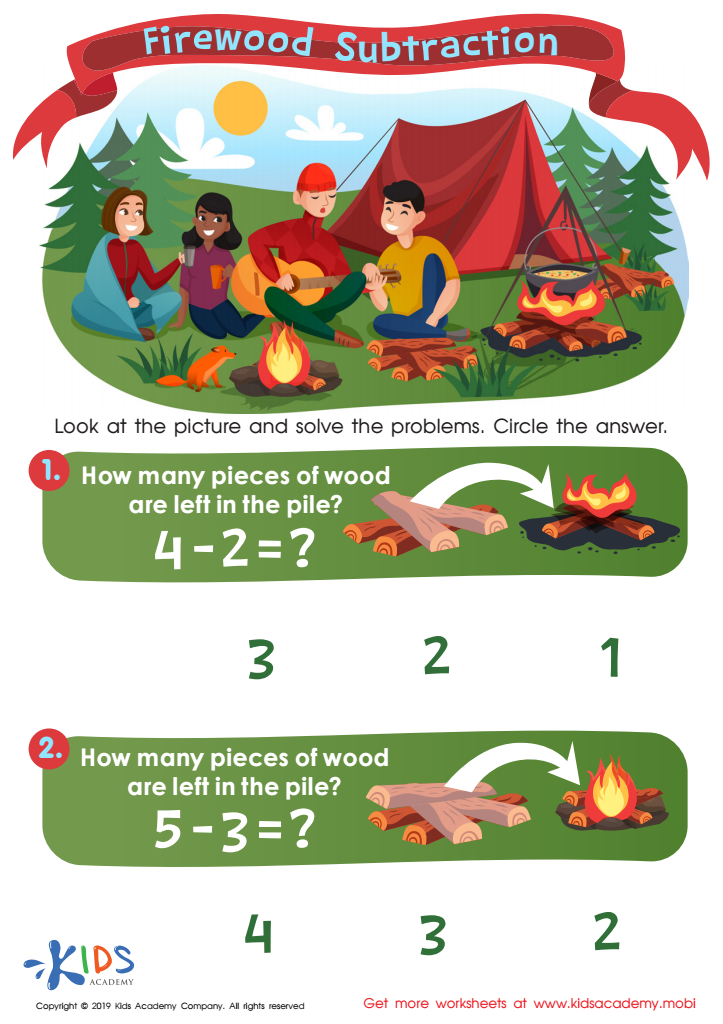
Firewood Subtraction Worksheet
 Assign to My Students
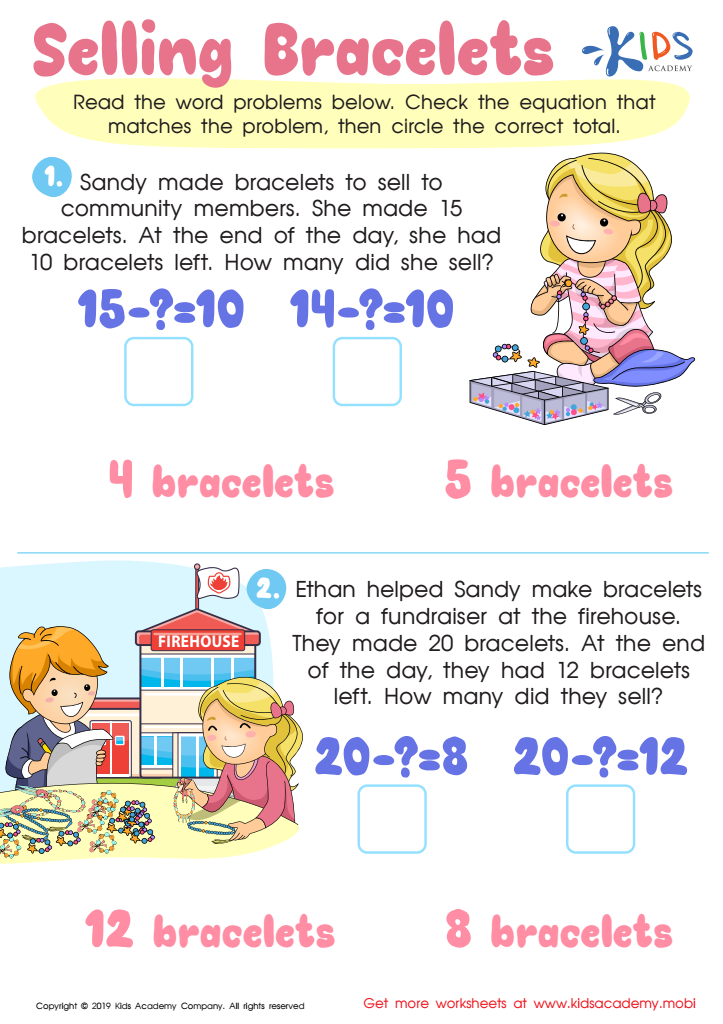
Selling the Bracelets Worksheet








Parents and teachers should prioritize problem-solving skills in easy addition and subtraction for children aged 6 to 8 because these foundational math skills are essential for everyday life and academic success. At this age, children are developing critical thinking and cognitive abilities, and engaging them in problem-solving activities enhances their capacity to approach challenges with confidence and creativity.
Learning addition and subtraction through problem-solving encourages children to apply abstract concepts to real-world situations, fostering a deeper understanding of mathematics. It also promotes engagement and motivation, as children find joy in resolving practical problems, thereby strengthening their numeric fluency.
Moreover, developing these skills lays the groundwork for more complex mathematics as they progress through their education. Problem-solving nurtures perseverance and resilience, critical traits for effective learning. It enhances collaboration and communication skills when children work together to find solutions.
Additionally, beyond academics, strong problem-solving abilities equip children with valuable life skills, enabling them to tackle issues thoughtfully and effectively throughout their lives. By investing time and resources into teaching these early problem-solving skills, parents and teachers empower children to become confident learners and adept problem solvers.








