Understanding times tables Easy Basic Times Tables up to 12 Worksheets for Ages 6-8
3 filtered results
-
From - To
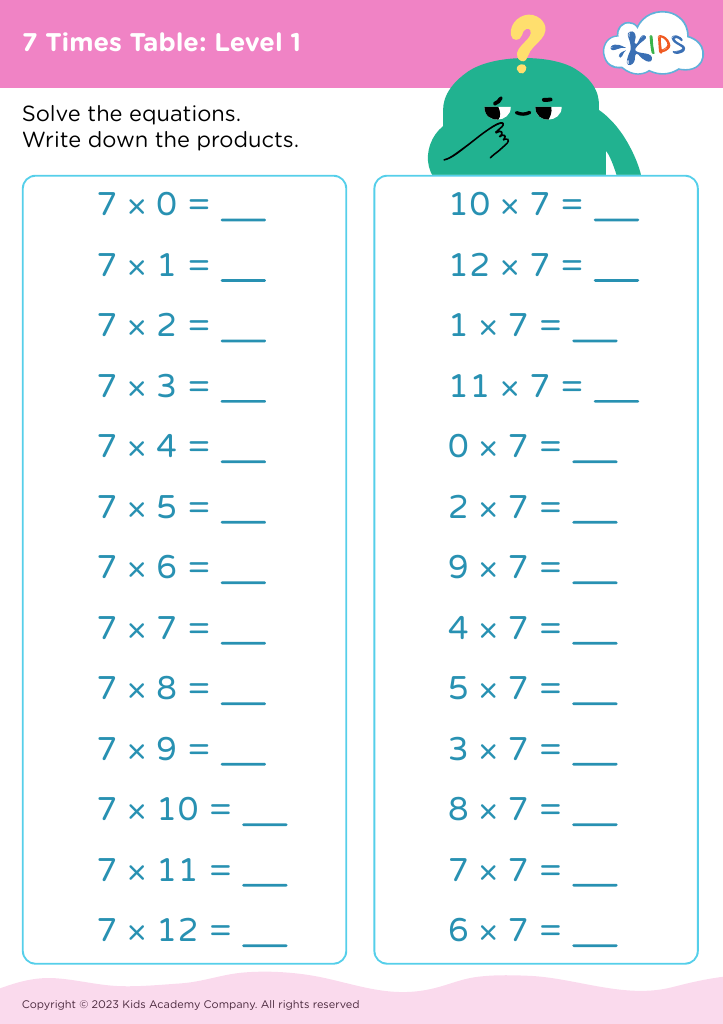
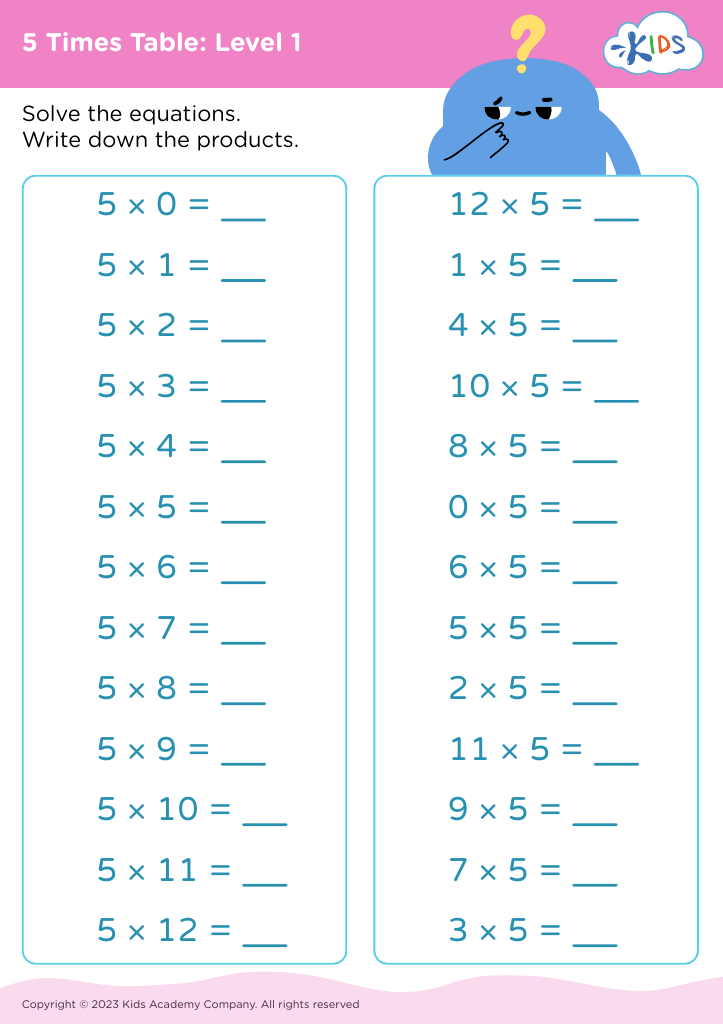
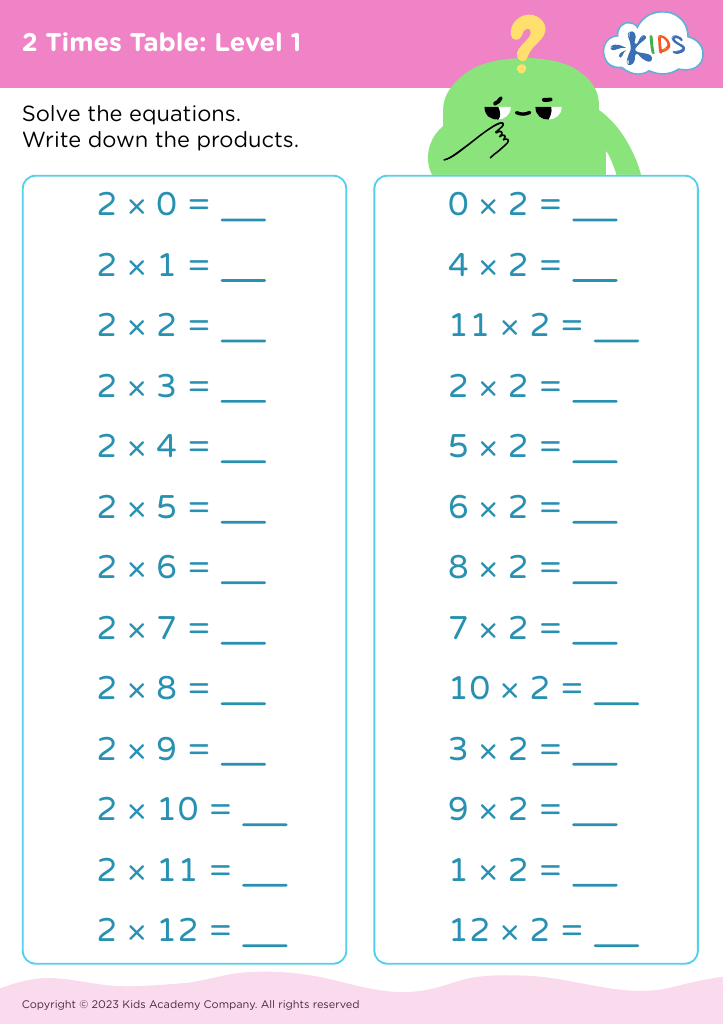
Unlock the essential skill of multiplication with our "Understanding Times Tables Easy Basic Times Tables up to 12" worksheets for ages 6-8! Designed for young learners, these engaging resources help build a strong mathematical foundation. The worksheets introduce times tables in a fun and accessible way, making learning both enjoyable and effective. Children will practice multiplication through colorful visuals and interactive exercises, reinforcing their understanding of numbers. Perfect for homeschooling or classroom use, these beginner-friendly worksheets empower kids to master times tables up to 12, setting the stage for greater math confidence and success in the future. Start their multiplication journey today!


Understanding times tables is crucial for children aged 6-8 as this foundational math skill sets the stage for future learning. Mastering the basics of multiplication enhances a child's overall arithmetic ability, enabling them to tackle more complex math concepts with confidence and ease. Times tables help foster number sense, which is essential in everyday problem-solving situations, from budgeting to cooking.
Moreover, being proficient in times tables enhances a child's focus and academic performance. As they develop quick recall, their cognitive load decreases, freeing up mental resources for more advanced concepts such as division and fractions. Additionally, this knowledge boosts confidence, as children can easily participate in class discussions and complete math assignments without anxiety.
Parents and teachers also play a vital role in reinforcing these skills. By engaging children in fun and interactive ways—like games, songs, and real-life applications—adults can make learning more enjoyable, thus increasing the likelihood that children will retain what they've learned. Ultimately, ensuring that children understand their times tables builds a strong mathematical foundation that opens doors to various academic and life opportunities.








