Addition skills Easy Numbers Worksheets for Ages 6-8
5 filtered results
-
From - To
Jumpstart your child's math journey with our "Addition Skills Easy Numbers Worksheets for Ages 6-8." Perfect for young learners, these worksheets feature engaging activities that simplify the concept of addition. Designed to make learning fun, they help children practice counting, recognizing numbers, and solving basic addition problems. Each worksheet uses colorful visuals and straightforward instructions, ensuring kids stay motivated and confident. These printable resources are ideal for classroom use or at-home practice, providing a solid foundation for future math success. Unlock their potential and make math an enjoyable adventure today!
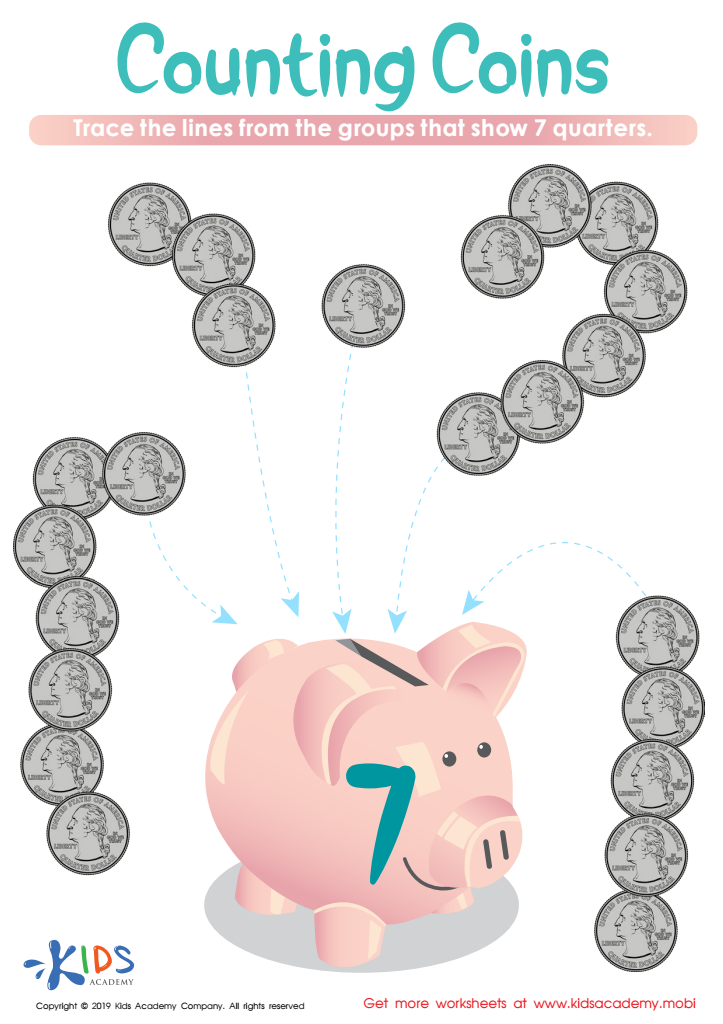
Counting Coins Worksheet
 Assign to My Students
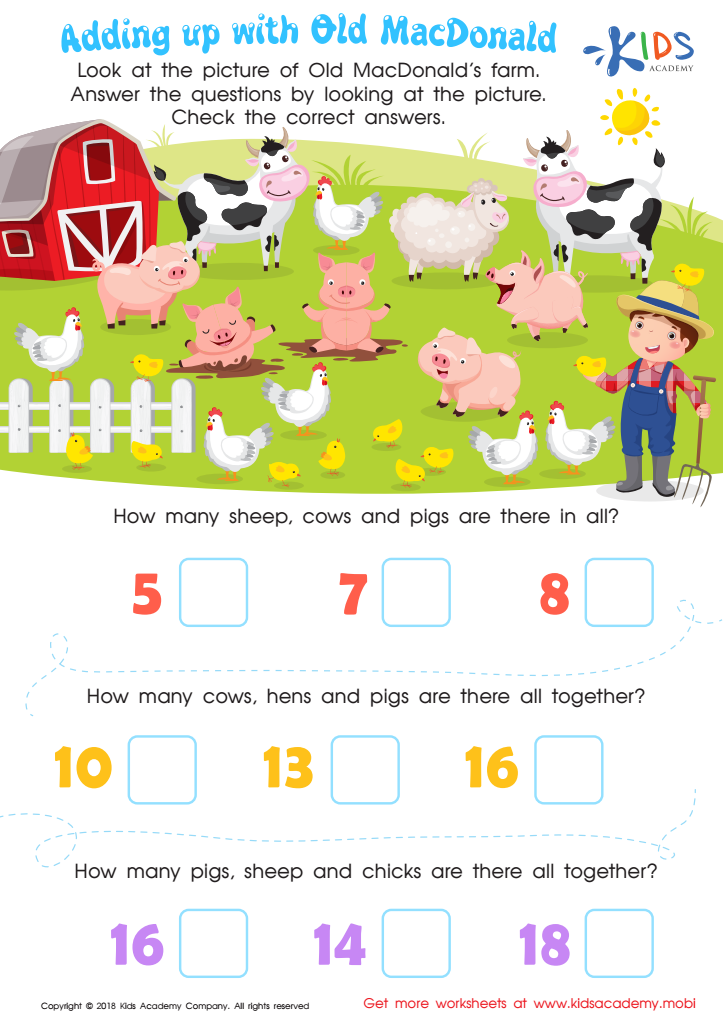
Adding Up with Old MacDonald Worksheet
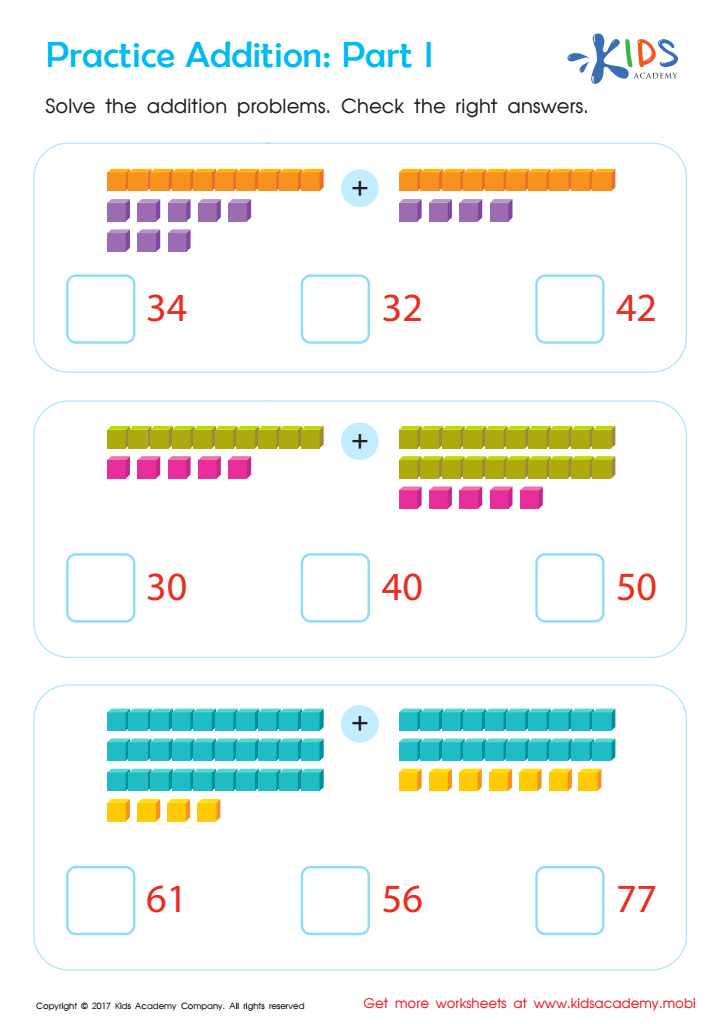
Practice Addition: Part 1 Worksheet
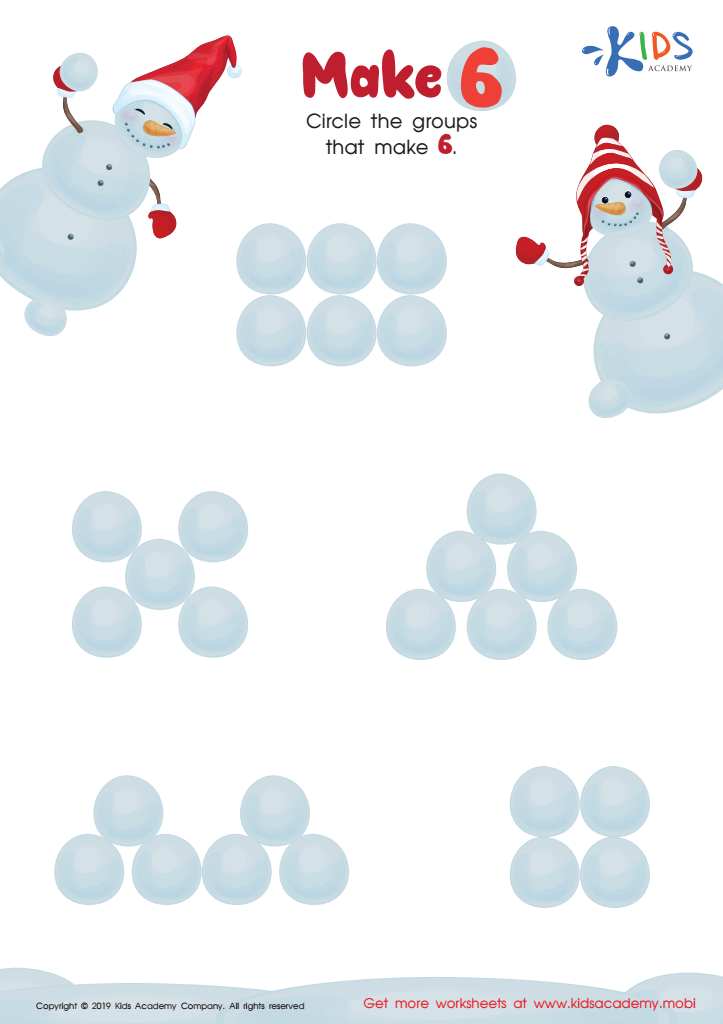
Make 6 Worksheet
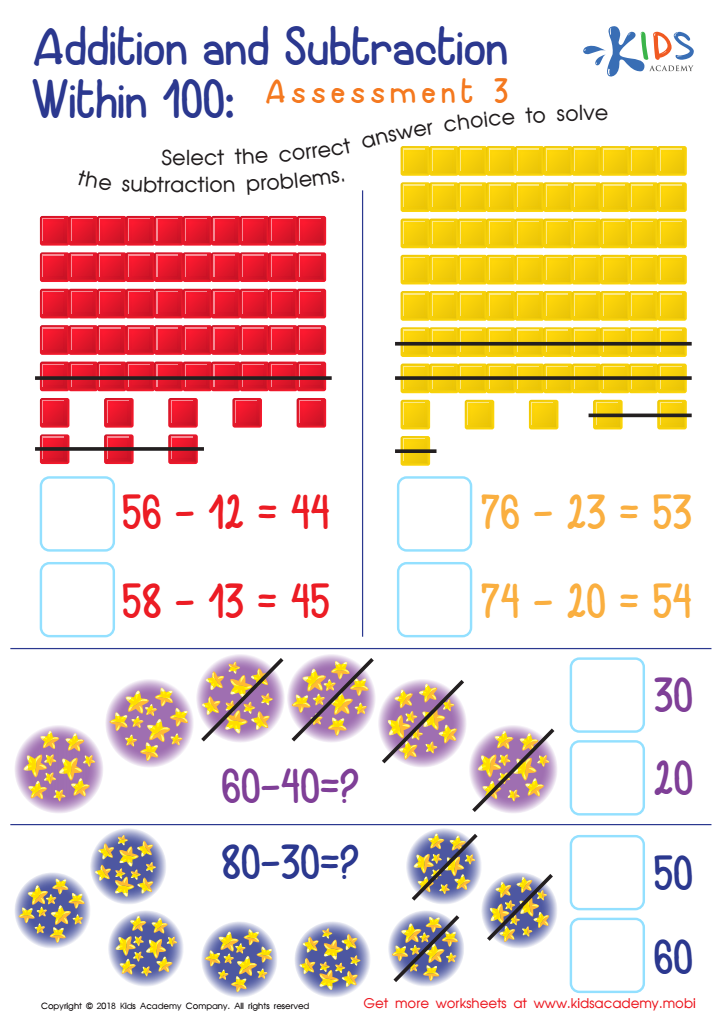
Addition and Subtraction Within 1: Assessment 3 Worksheet








Parents and teachers should care about developing addition skills with easy numbers for children ages 6-8 because it forms the basis of their future mathematical understanding. At this critical age, children are just beginning to grasp the concepts of numbers and arithmetic. Mastering basic addition fosters confidence and sets a strong foundation for more complex mathematical operations such as subtraction, multiplication, and division.
Engaging with addition in a fun and stress-free manner helps children see math as an enjoyable challenge rather than a daunting task. This positive early experience can significantly improve their attitudes towards math in the long term. Furthermore, addition skills are not only important academically but also in everyday life scenarios, like counting money, measuring ingredients, or telling time.
Providing children with a strong grasp of basic math aids in their cognitive development, critical thinking, and problem-solving abilities. These skills are crucial not only in school but also in life beyond the classroom. Thus, focusing on addition skills through age-appropriate and engaging methods empowers children, equipping them with the tools necessary for academic success and practical life skills.
In essence, fostering strong addition skills at an early age promotes confidence, academic achievement, and real-world proficiency, making it an essential focus for both parents and teachers.








