Basic counting skills Easy Numbers Worksheets for Ages 6-8
3 filtered results
-
From - To
Boost your child’s numerical understanding with our "Basic Counting Skills Worksheets," specially designed for ages 6 to 8. These engaging and easy-to-use worksheets help young learners develop essential counting skills through fun activities. Each worksheet offers a variety of exercises to reinforce number recognition, counting abilities, and basic math concepts, making learning enjoyable. Perfect for homeschooling, classroom use, or supplementary practice, our resources aim to build confidence in young mathematicians while adhering to educational standards. Watch your child flourish as they explore numbers with creativity and enthusiasm! Access these valuable worksheets today and watch their counting skills soar!
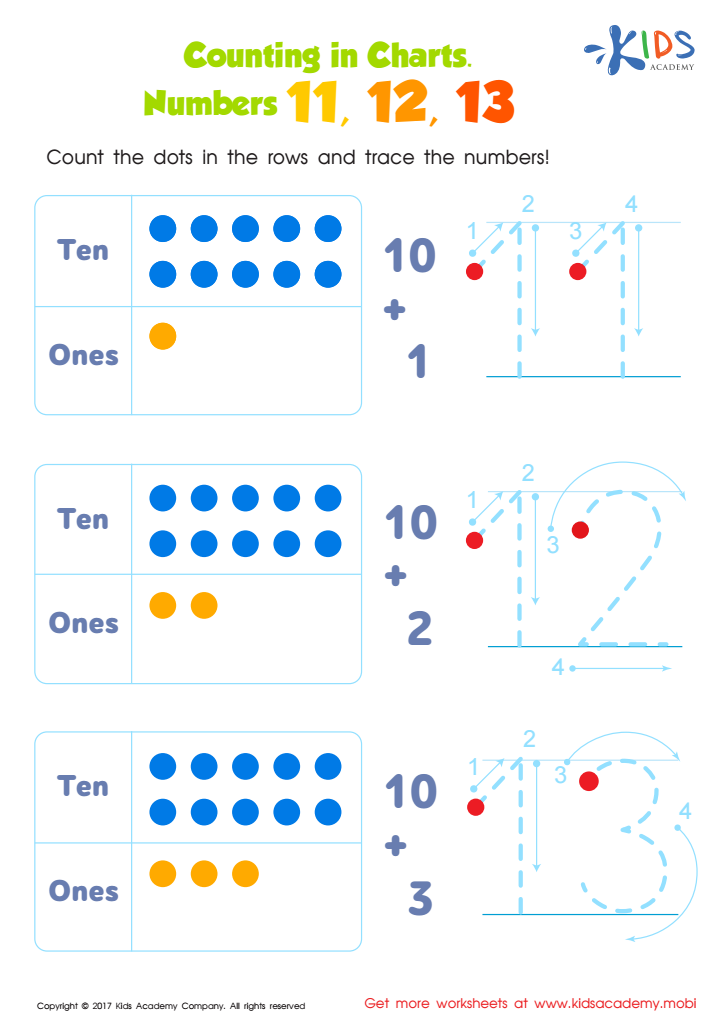
Number Tracing Worksheet For Kindergarten
 Assign to My Students
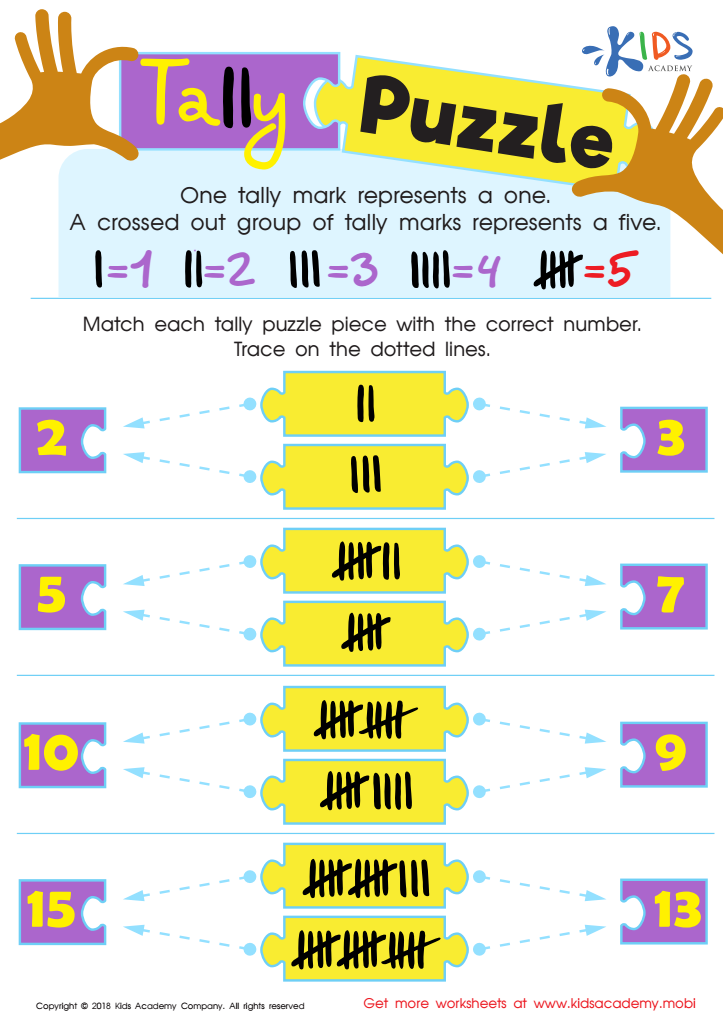
Tally Puzzle Worksheet
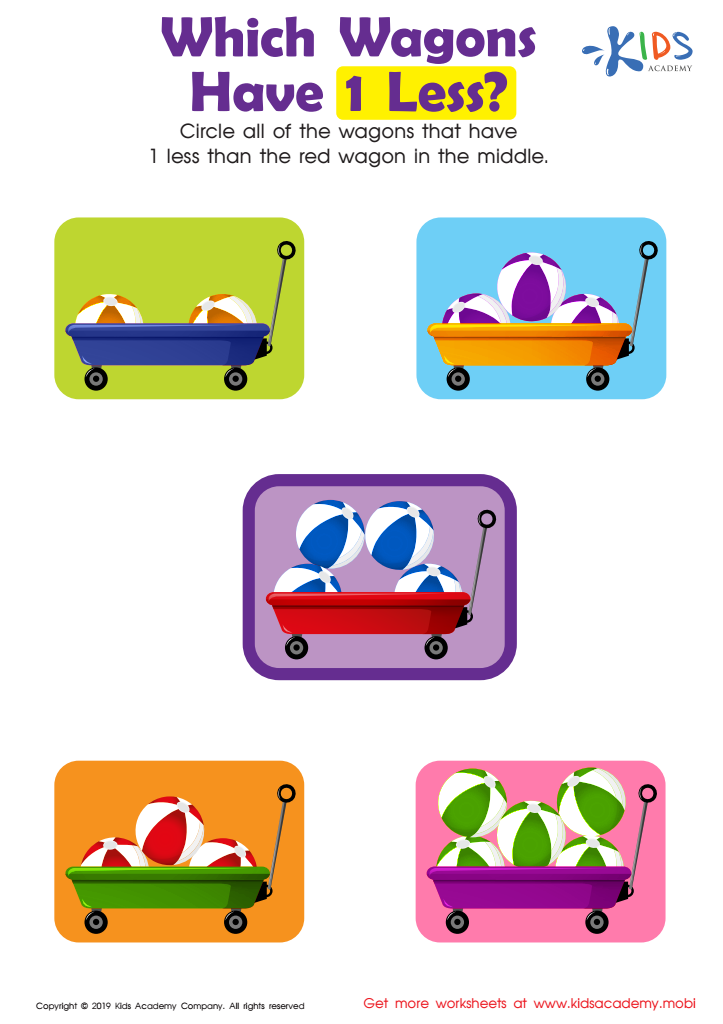
Which Wagons Have 1 Less? Worksheet








Basic counting skills and understanding easy numbers are foundational to a child's overall academic success and daily functioning, especially for children aged 6-8. These skills serve as the building blocks for more complex mathematical concepts, such as addition, subtraction, and problem-solving. When parents and teachers prioritize teaching these skills, they provide children with the confidence and ability to tackle increasingly challenging mathematical tasks.
Moreover, counting skills enhance children's cognitive development and improve their reasoning capabilities. As they learn to recognize patterns, compare quantities, and understand numerical relationships, they become adept at solving real-world problems. Furthermore, early counting skills are closely linked to literacy development, as both disciplines promote critical thinking and logical reasoning.
In addition, mastering basic counting contributes to children's readiness for standardized testing and academic assessments. Consistent practice empowers children to use these skills in practical situations, from counting change to measuring ingredients in cooking. By focusing on basic counting for children ages 6-8, parents and teachers set the stage for lifelong learning, ensuring children develop strong numeracy skills that will benefit them across subjects and throughout their lives. Investing in these skills now maximizes their potential for future success.








