Color recognition Easy Math Worksheets for Ages 6-8
6 filtered results
-
From - To
Discover our engaging Color Recognition Easy Math Worksheets designed for children ages 6-8! These worksheets help young learners identify and differentiate colors, laying a strong foundation for their math skills. With vibrant illustrations and interactive activities, kids will become familiar with colors while practicing essential math concepts, such as counting and sorting. Ideal for classroom use or at-home learning, our worksheets encourage creativity and enhance cognitive development. Perfect for educators, parents, and tutors looking to make learning fun and effective! Download our colorful worksheets today and watch your child’s confidence and skills grow in both math and color recognition!
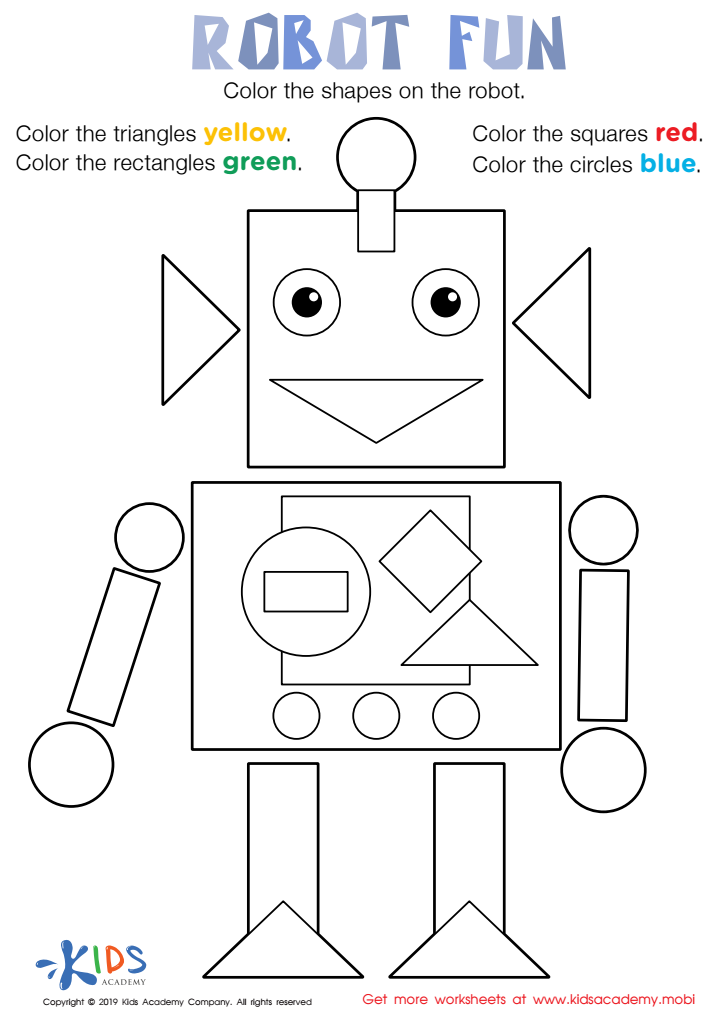
Robot Fun Worksheet
 Assign to My Students
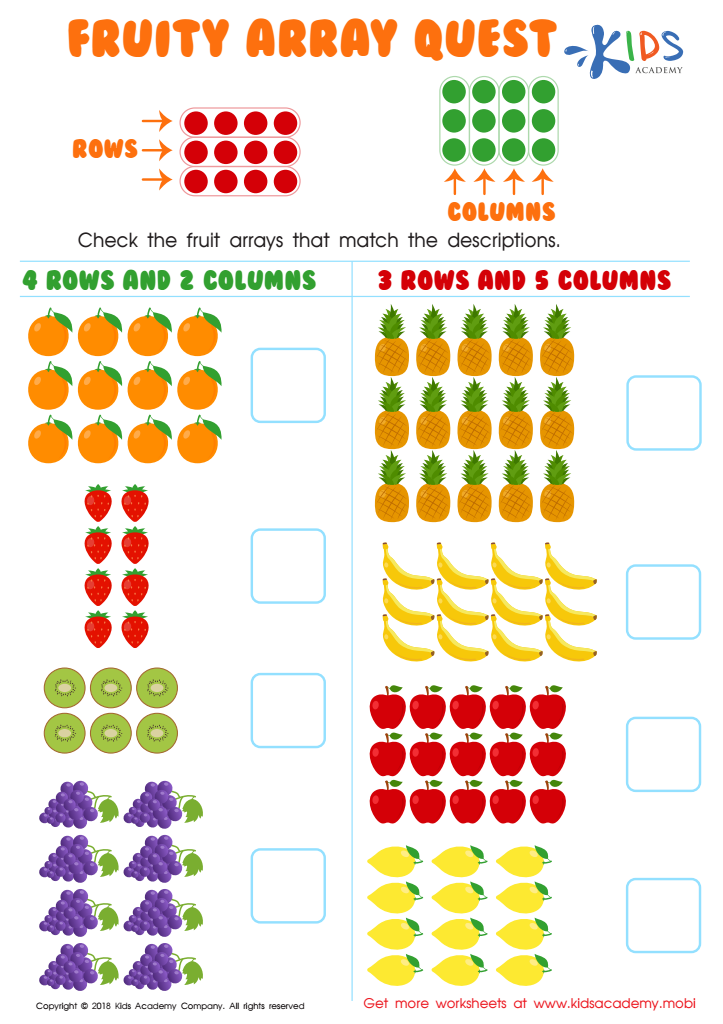
Fruity Array Quest Worksheet
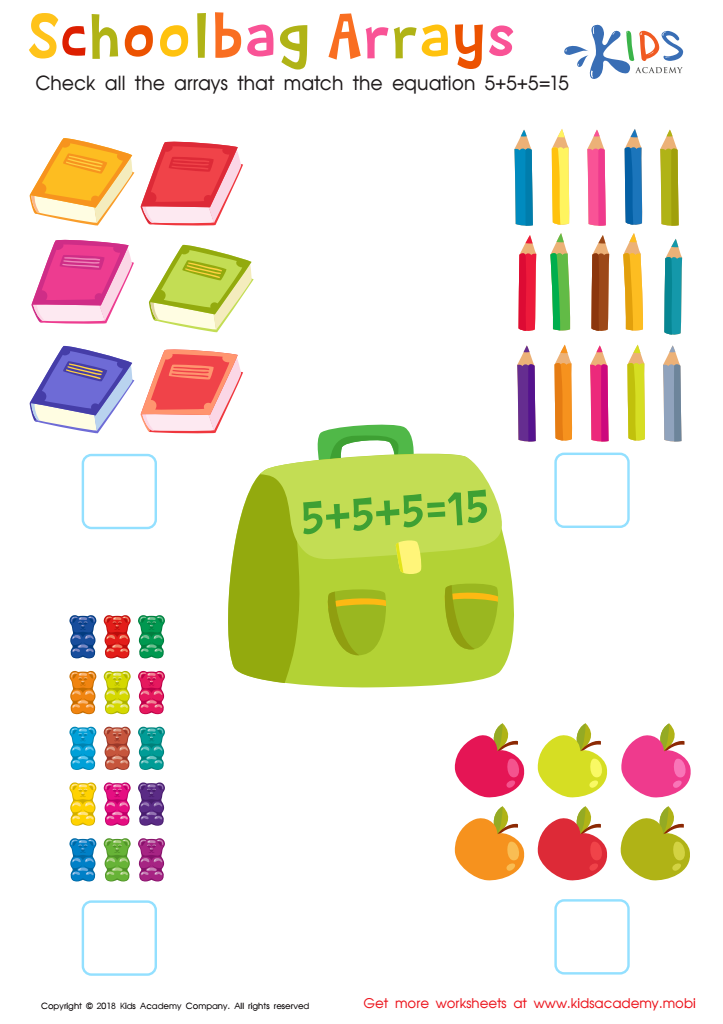
Schoolbag Arrays Worksheet
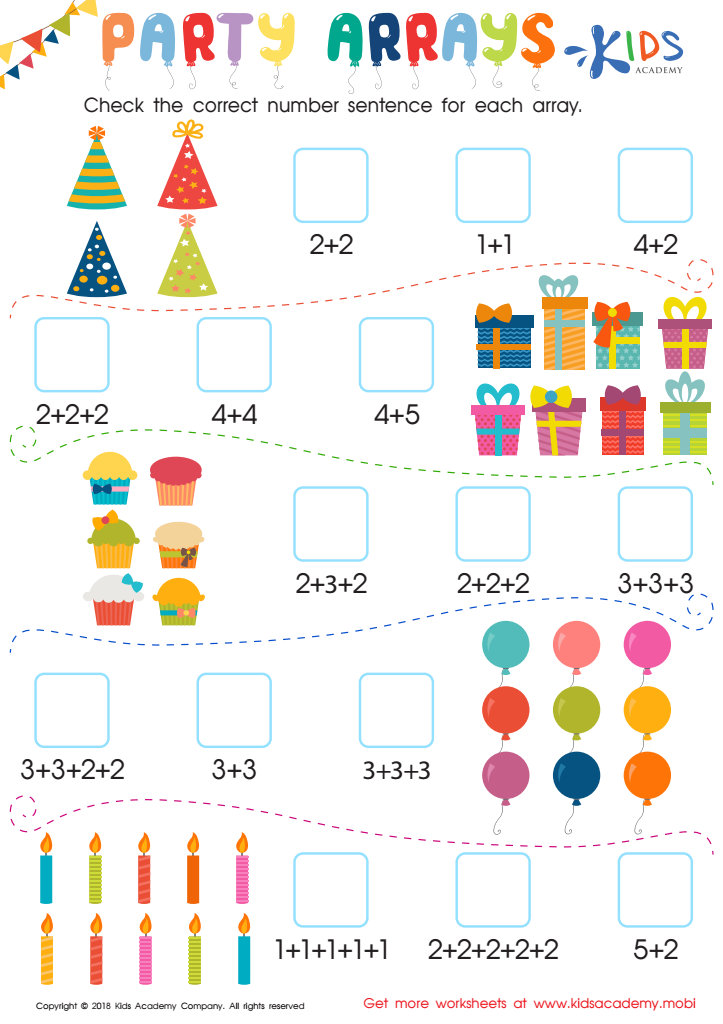
Party Arrays Worksheet
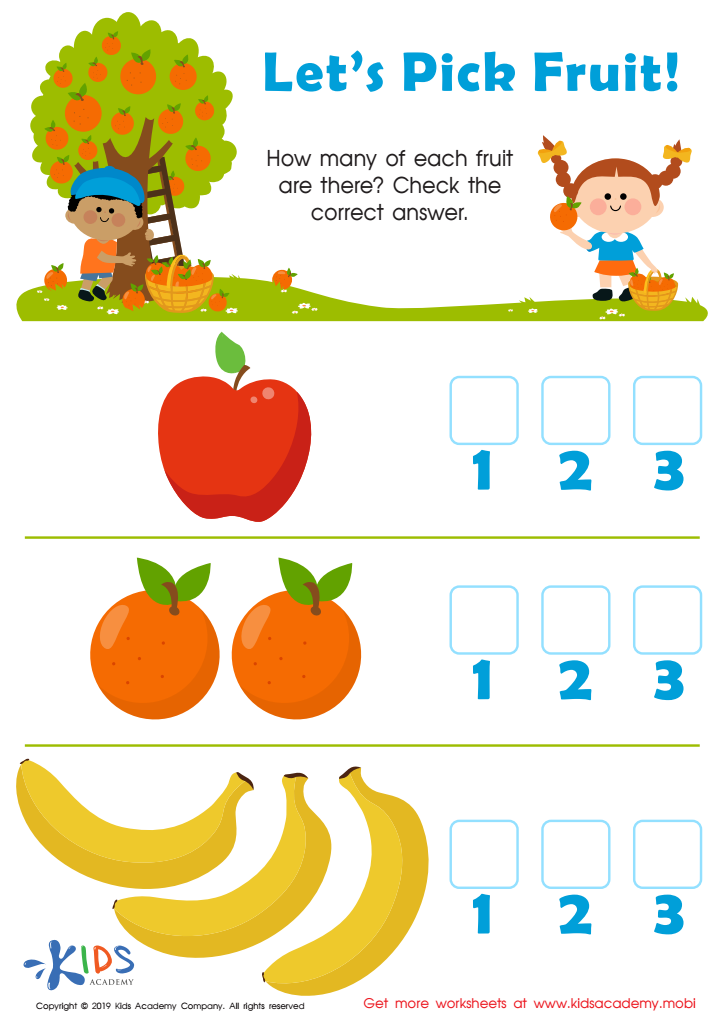
Let's Pick Fruit Worksheet
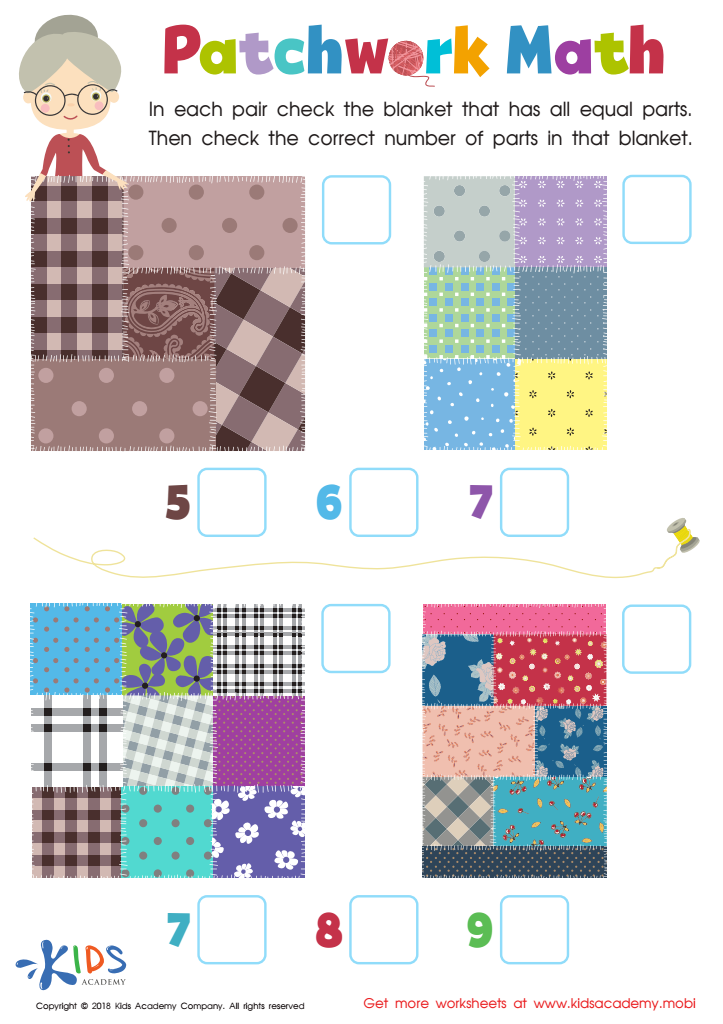
Patchwork Math Worksheet






Color recognition and basic math skills, such as counting and simple addition or subtraction, form an essential foundation for children aged 6-8. At this stage, kids are developing critical cognitive skills and engaging with their environment in more complex ways. Understanding colors enhances their ability to categorize, compare, and make connections, which are pivotal for problem-solving in math.
Teachers and parents should care about these skills because they support both educational development and lifelong learning. Color recognition enhances language skills by helping children describe their surroundings, encouraging communication and expression. When combined with early math concepts, kids not only learn to recognize numbers but also solve problems visually, fostering a deeper conceptual understanding.
Furthermore, integrating color recognition with easy math can make learning engaging and fun. Creative activities, such as art projects or games that involve sorting colors and counting objects, can boost a child's enthusiasm for learning. This positive reinforcement builds their confidence and encourages them to embrace challenging concepts as they progress academically. Ultimately, nurturing these foundational skills helps prepare children for future learning and everyday math applications, setting the stage for academic success in a variety of subjects.








