Fruit identification Easy Math Worksheets for Ages 6-8
3 filtered results
-
From - To
Boost your child’s learning with our "Fruit Identification Easy Math Worksheets" designed specifically for ages 6-8! These engaging and interactive worksheets combine fun fruit illustrations with essential math skills, making learning enjoyable. Kids will improve their counting, addition, and subtraction skills while developing their ability to identify various fruits. Each worksheet is tailored to enhance cognitive abilities through hands-on activities, ensuring a comprehensive learning experience. Ideal for both home and classroom use, our resources make it easy to integrate math and science. Start your child’s educational journey today and watch them develop a love for learning through our fruit-themed worksheets!
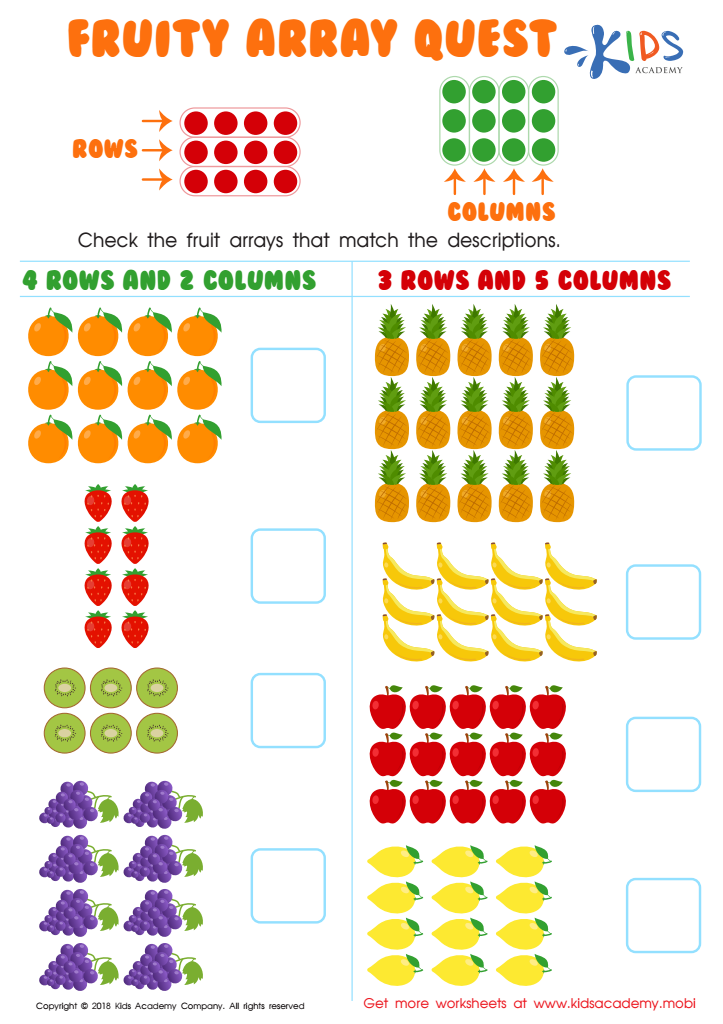
Fruity Array Quest Worksheet
 Assign to My Students
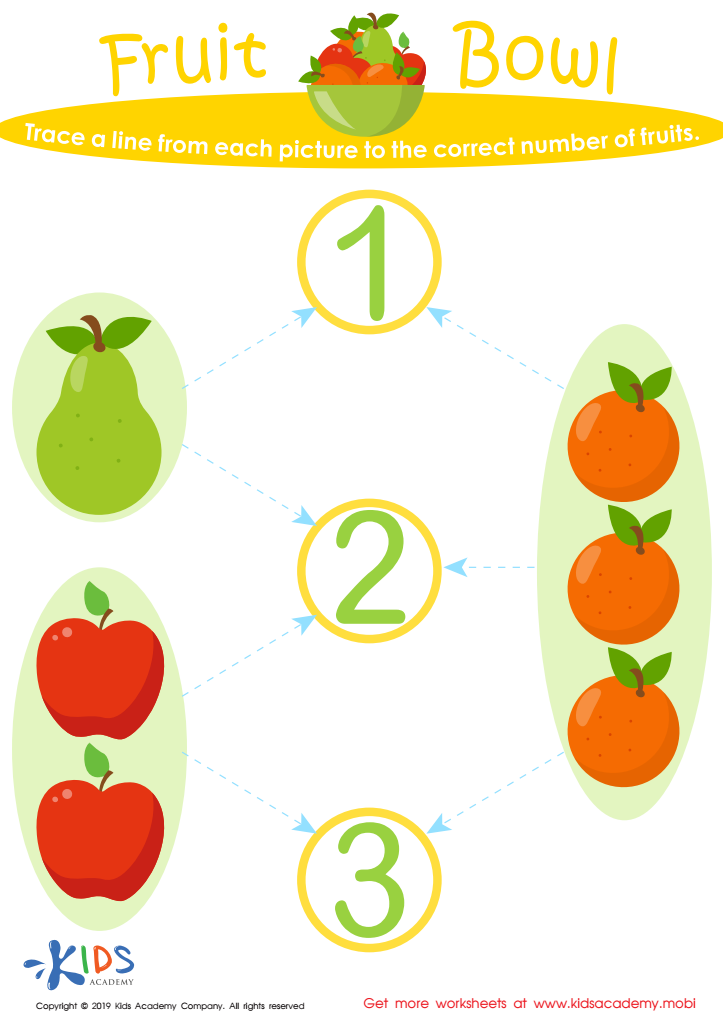
Fruit Bowl Worksheet
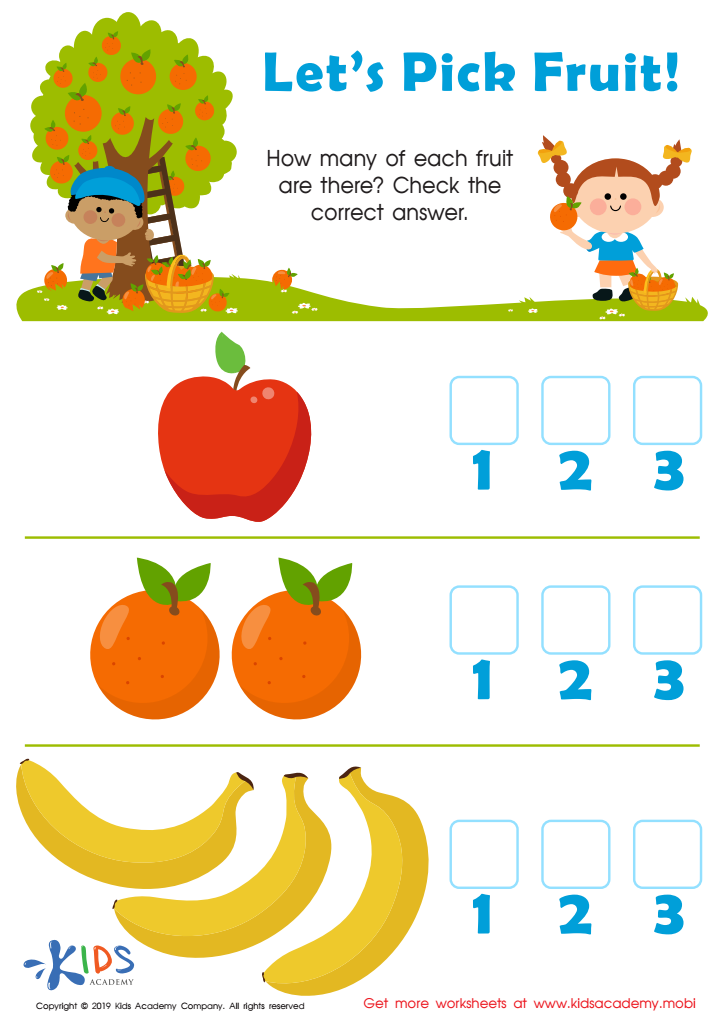
Let's Pick Fruit Worksheet








Parents and teachers should care about "Fruit Identification Easy Math" for children aged 6-8 because it provides a unique intersection of subjects that enhances both cognitive and social skills. Engaging children in fruit identification not only fosters an understanding of healthy eating habits but also elevates their observational skills, encouraging a connection with nature and nutrition.
Moreover, incorporating math concepts while identifying fruits serves as a practical application of math in their everyday lives. For example, counting the number of fruits, comparing sizes, and discussing prices enhances their numerical understanding while making learning enjoyable. As children categorize fruits by color, shape, or size, they also hone their critical thinking abilities.
Additionally, grouping activities can promote collaborative learning, where kids can work together to identify fruits and solve math problems, fostering teamwork and communication skills. This cross-curricular approach makes learning dynamic and relatable, helping children grasp fundamental concepts in a fun way. Ultimately, this method equips children with essential skills that build a solid foundation for future learning, reinforcing the significance of a balanced education that combines health, math, and social interaction. Encouraging such integrative learning experiences will benefit children well beyond their early years.








