Multiplication practice Easy Math Worksheets for Ages 6-8 - Page 2
25 filtered results
-
From - To





.jpg)

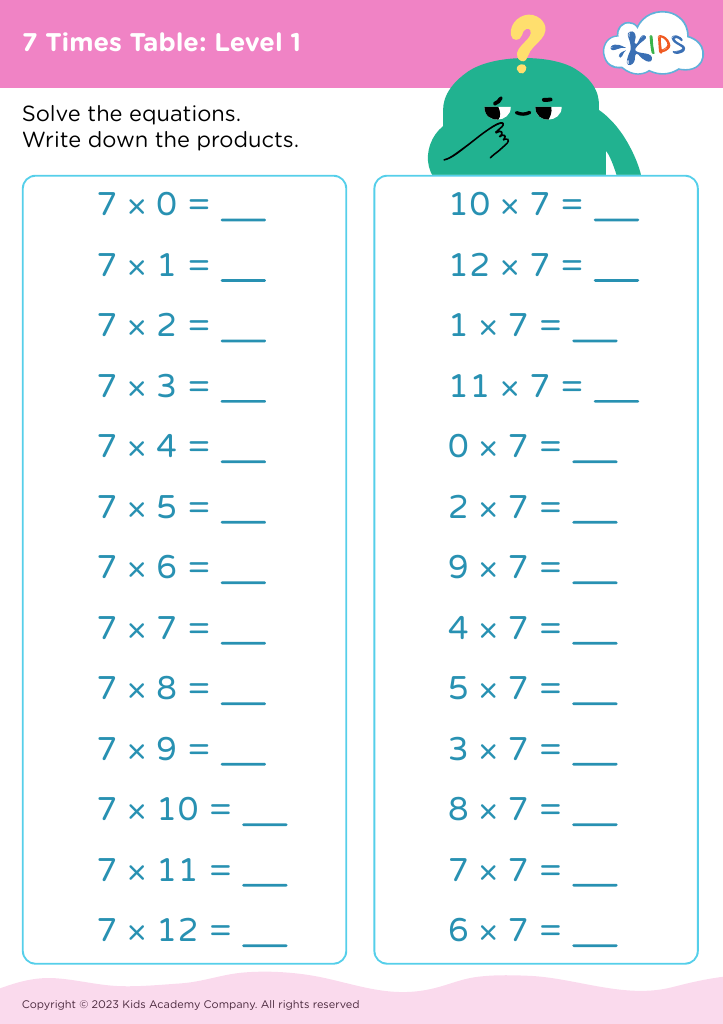
Parents and teachers should prioritize multiplication practice for children ages 6-8 because foundational math skills have a profound impact on overall academic success. At this age, children are developing crucial cognitive abilities, and strong multiplication skills enhance problem-solving capabilities. Familiarity with multiplication not only aids in counting and basic arithmetic but also paves the way for more complex mathematical concepts they will encounter later in school.
Engaging in multiplication practice at an early age builds confidence and competence. When children master multiplication facts, they can approach math tasks with a sense of ease, reducing math anxiety and fostering a positive attitude toward subjects that often challenge students. This foundational skill also links to everyday life applications, such as calculating expenses or understanding time, empowering children with practical knowledge.
Furthermore, practicing multiplication through fun and engaging methods—like games, flashcards, or interactive digital tools—encourages a love for learning. It also supports fine motor skills and improves concentration. By investing time in multiplication practice, parents and teachers help cultivate not just math proficiency, but also critical thinking, resilience, and a lifelong learner mindset in children, laying the groundwork for future academic achievements.








