Time reading skills Easy Math Worksheets for Ages 6-8
4 filtered results
-
From - To
Boost your child’s confidence in telling time with our Time Reading Skills Easy Math Worksheets for ages 6-8. Tailored to young learners, these engaging worksheets offer a range of fun activities to master time-reading concepts. From identifying clock hands to understanding hours and minutes, our expertly designed exercises ensure your little one builds essential skills step-by-step. Perfect for classroom use or at-home practice, these worksheets make learning to read the clock both enjoyable and effective. Invest in your child’s educational journey and watch as they grasp the vital skill of time reading with ease.
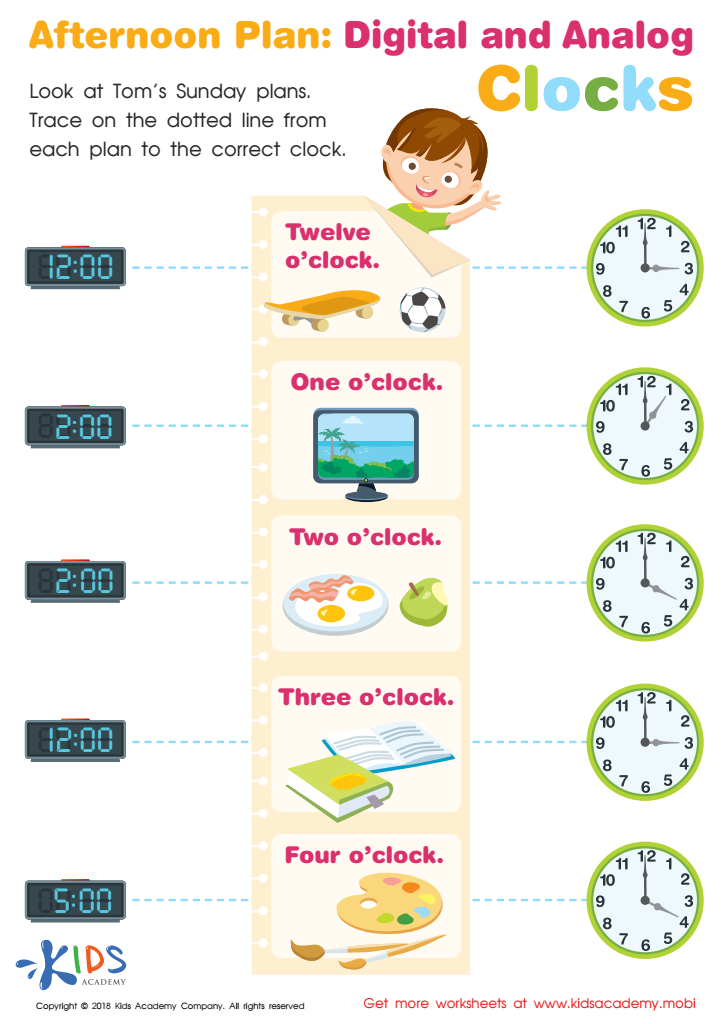
Afternoon Plan: Digital and Analog Clocks Worksheet
 Assign to My Students
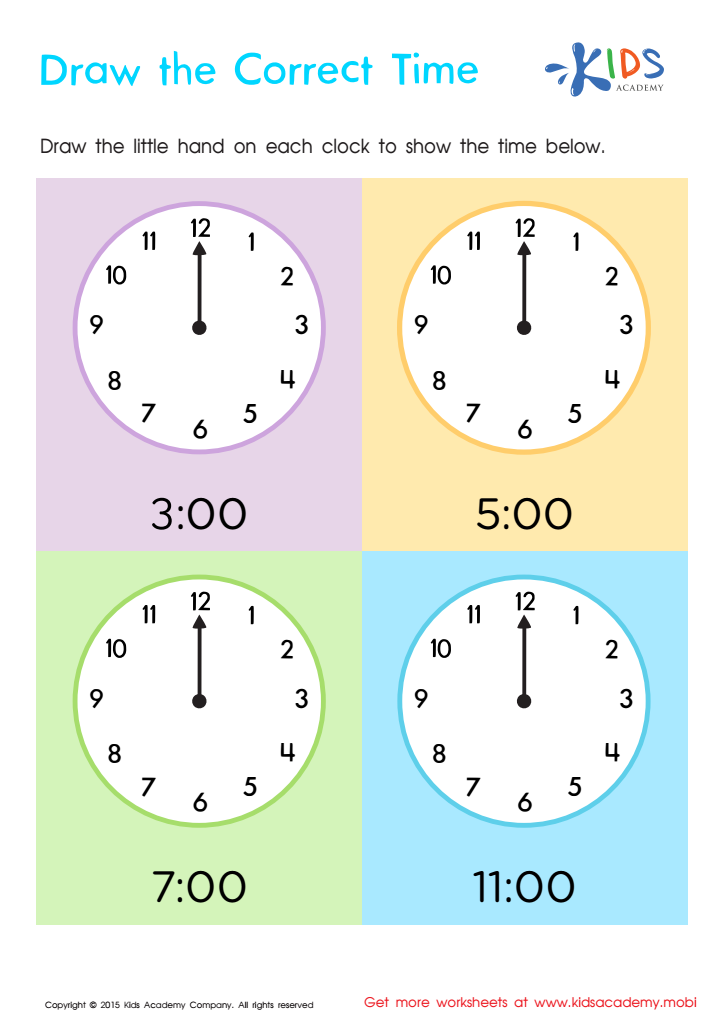
Telling The Time Worksheet: Part 1
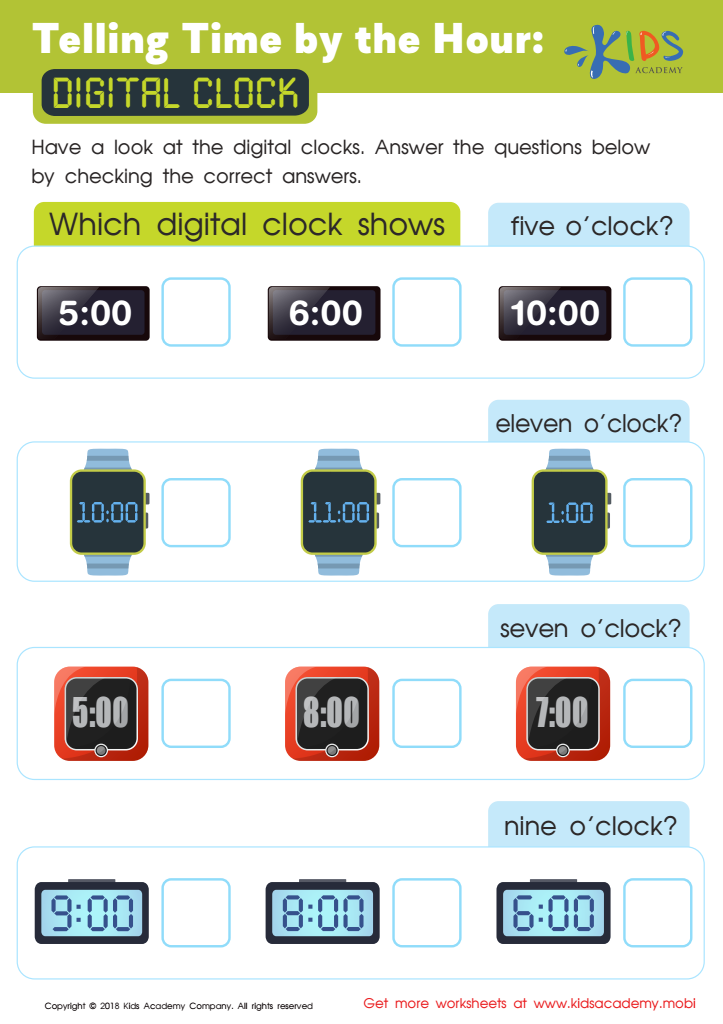
Telling Time by the Hour: Digital Clock Worksheet
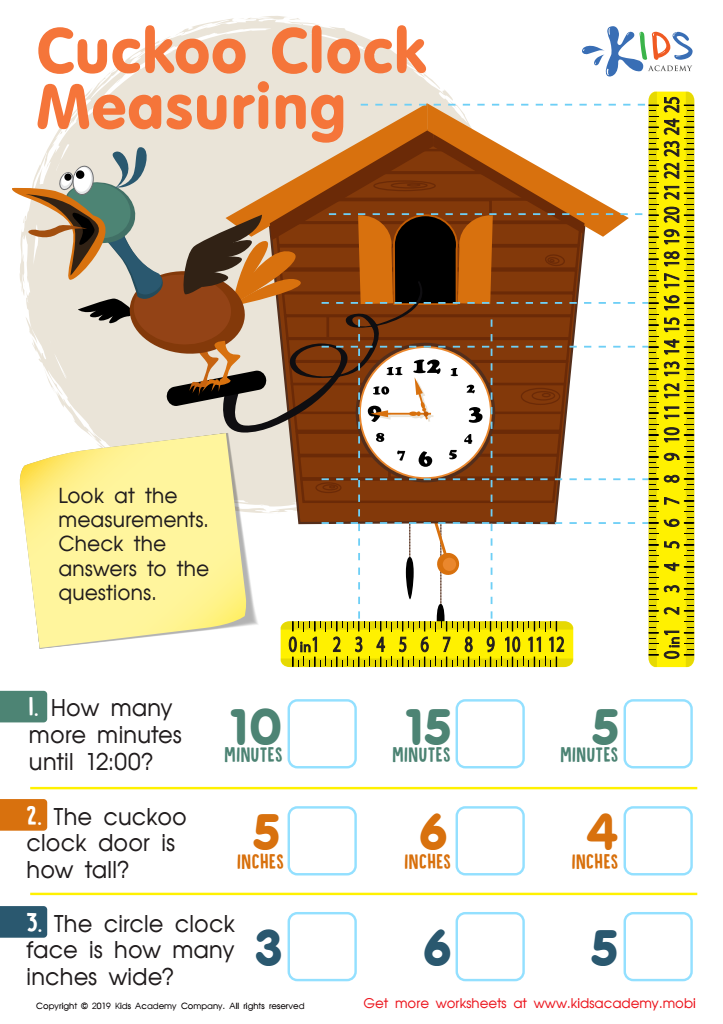
Cuckoo Clock Measuring Worksheet



%20(1).jpg)




Time reading skills and easy math proficiency are foundational components in a child's early education that parents and teachers should prioritize. At ages 6-8, children are at a developmental stage where they are particularly receptive to learning basic academic concepts that will serve as building blocks for future learning and daily problem-solving skills.
Time Reading Skills: Teaching children how to read time not only familiarizes them with the concept of hours and minutes but also instills a sense of responsibility and routine. Understanding time encourages independence as kids learn to manage and allocate their time effectively for various activities, from schooling to playtime. Moreover, time-telling incorporates critical thinking and sequencing skills, as children must comprehend the relationship between numbers and the movement of clock hands.
Easy Math: Foundational math skills such as addition, subtraction, simple multiplication, and division are crucial at this age. These early math skills make everyday tasks comprehensible, like understanding money or measuring ingredients in a recipe. Math forms the basis for logical reasoning and problem-solving abilities which are essential not only academically but in practical scenarios throughout life. Mastery of these basics at an early age boosts a child's confidence and lays the groundwork for more complicated mathematical concepts encountered in higher grades.
By focusing on these areas, parents and teachers equip children with essential life skills, promote cognitive development, and foster a positive attitude towards learning. These skills will provide a strong academic foundation, assisting them in becoming competent and self-assured learners.








