
Visual Learning Easy Math Worksheets for Ages 6-8
5 filtered results
Difficulty Level
Grade
Age
-
From - To
Subject
Activity
Standards
Discover the engaging world of "Visual Learning Easy Math Worksheets" tailored for ages 6-8 at Kids Academy. Our thoughtfully designed worksheets make mastering essential math skills both fun and effective. Through vibrant visuals, interactive activities, and age-appropriate challenges, young learners naturally grasp foundational concepts such as addition, subtraction, and problem-solving. Each worksheet is crafted to enhance critical thinking and visual learning, ensuring children build a solid mathematical foundation. Join Kids Academy today and give your child the tools to thrive in math with confidence and joy. Transform math practice into an exciting adventure!
Favorites
With answer key
Interactive
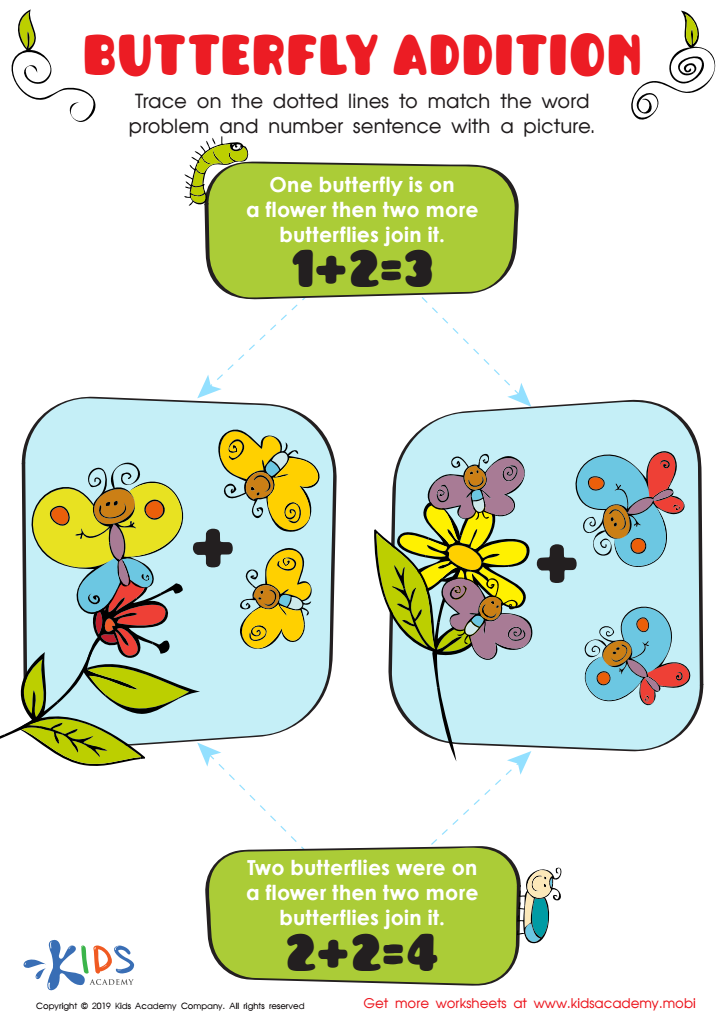
Butterfly Addition Worksheet
This tracing sheet is great for kids to work on math skills and have fun too. Read the word problems to them, then help them trace the dotted lines to match the problem and number sentence to a picture. Not only is it educational, it's beautiful too - your kids will love learning about butterflies!
 Assign to My Students
Butterfly Addition Worksheet
Worksheet
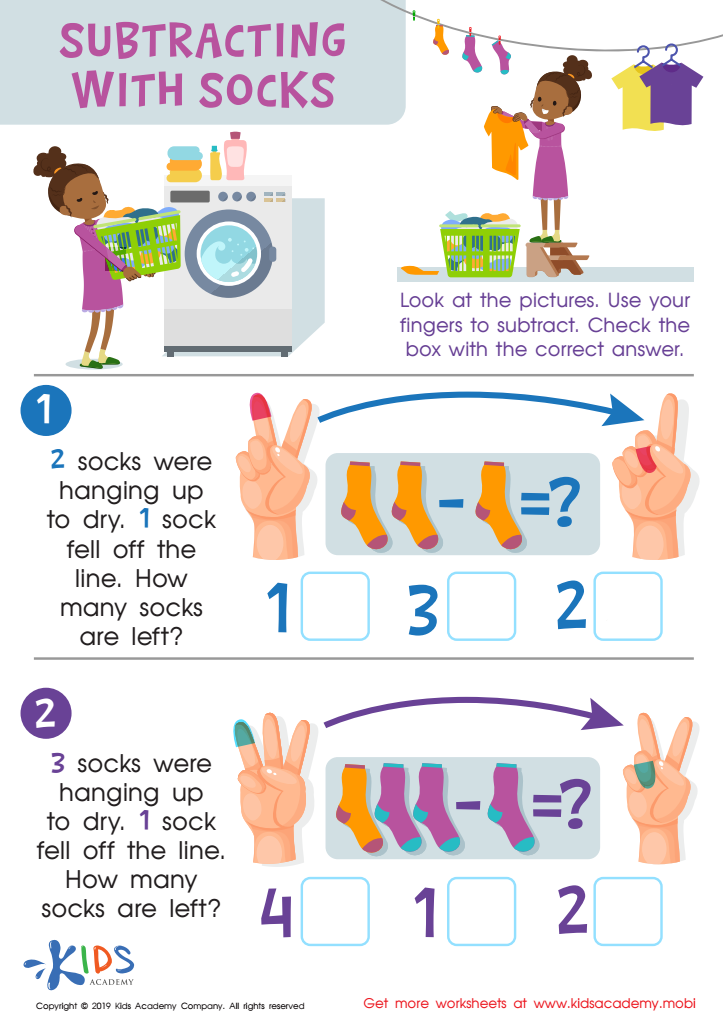
Subtracting Socks Worksheet
Before beginning this exercise with your children, warm them up with a counting game. If math is not their favorite subject, use this worksheet. Help them read the two word problems, then use their fingers to count and subtract. Ask them to select the correct answer and check the box.
Subtracting Socks Worksheet
Worksheet
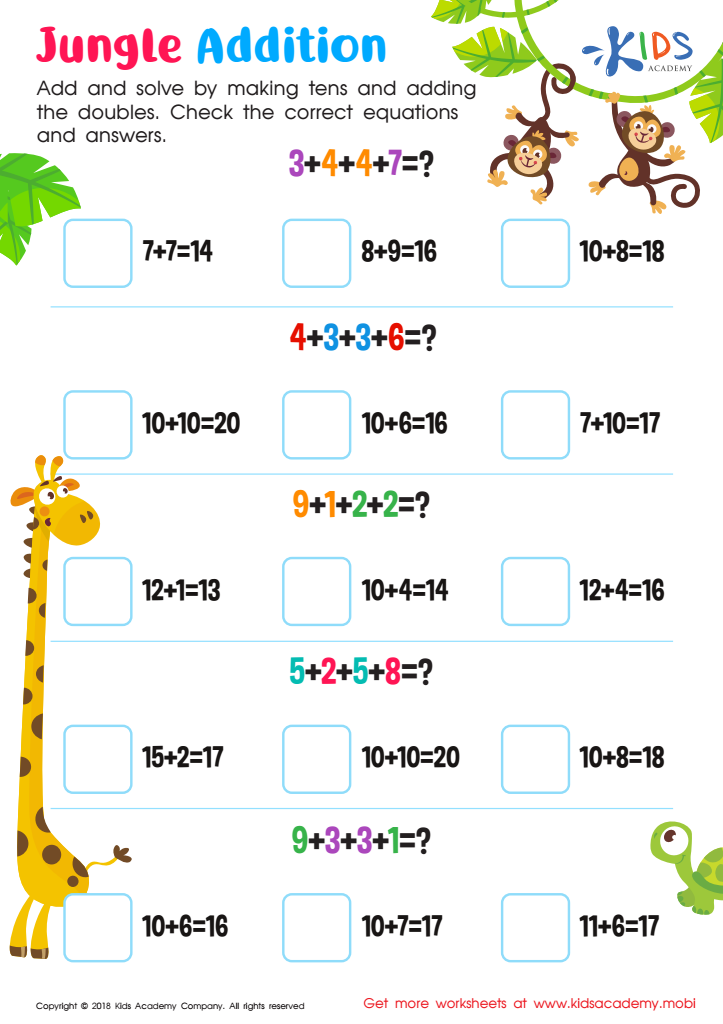
Jungle Addition Worksheet
With this worksheet, kids can use the strategies of making tens and adding doubles to add numbers with more than three addends. They'll practice choosing the right method and become more confident in their calculations, enabling quicker, more efficient computation.
Jungle Addition Worksheet
Worksheet
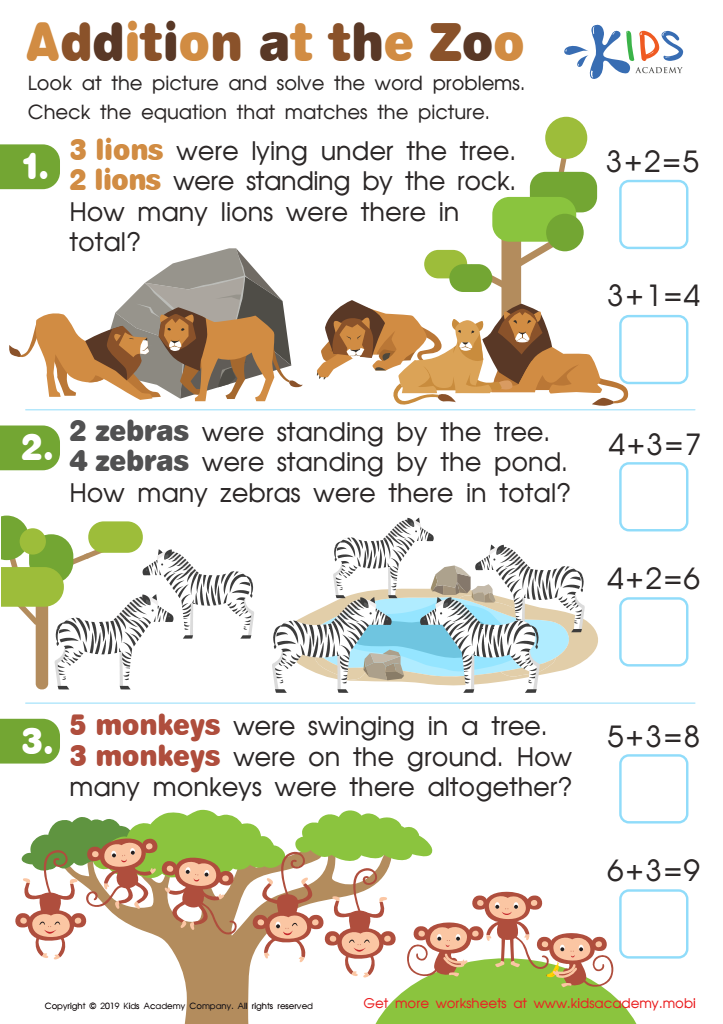
Addition at the Zoo Worksheet
Visit the zoo with your kids and point out all the different animals. Ask them to name their favorites and identify animals on a worksheet. Challenge them to solve word problems related to the pictures. Ask them for the equation that fits the picture and check the answer.
Addition at the Zoo Worksheet
Worksheet
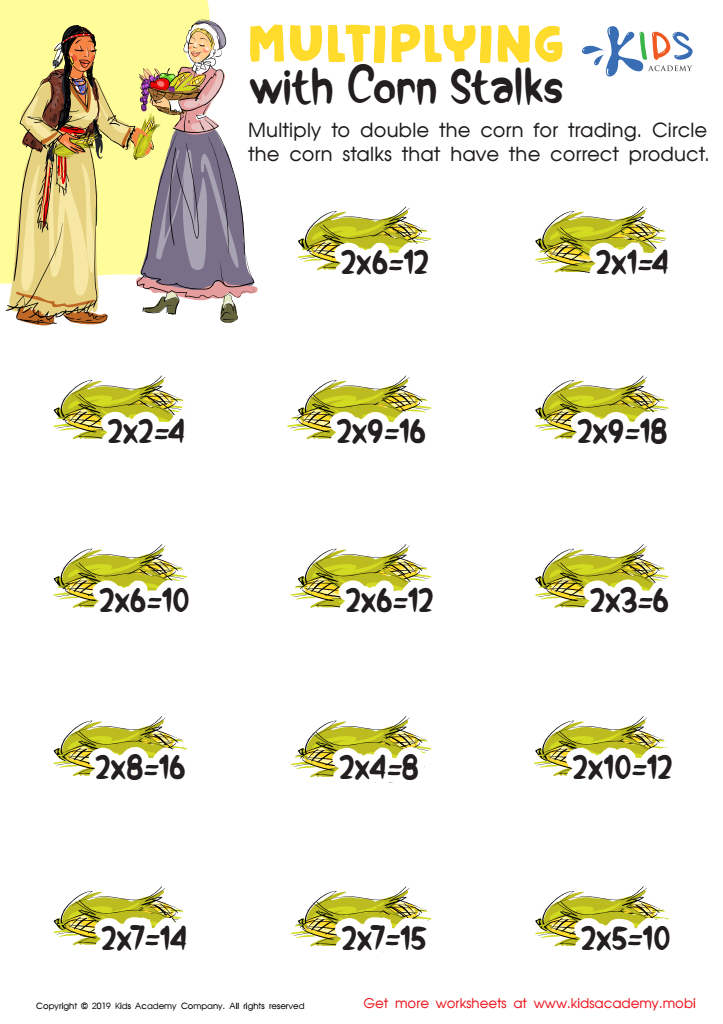
Multiplying With Corn Stalks Worksheet
Farming is profitable; corn is a versatile crop used for many things. Ask your kids what products come from corn! This worksheet is a fun way to teach multiplying with corn stalks. Farmers must multiply the stalks to double their number for trading and increase their profits. Challenge your kids to circle the correct products.
Multiplying With Corn Stalks Worksheet
Worksheet
Join Kids Academy for Free
Who is primarily going to use this learning content?


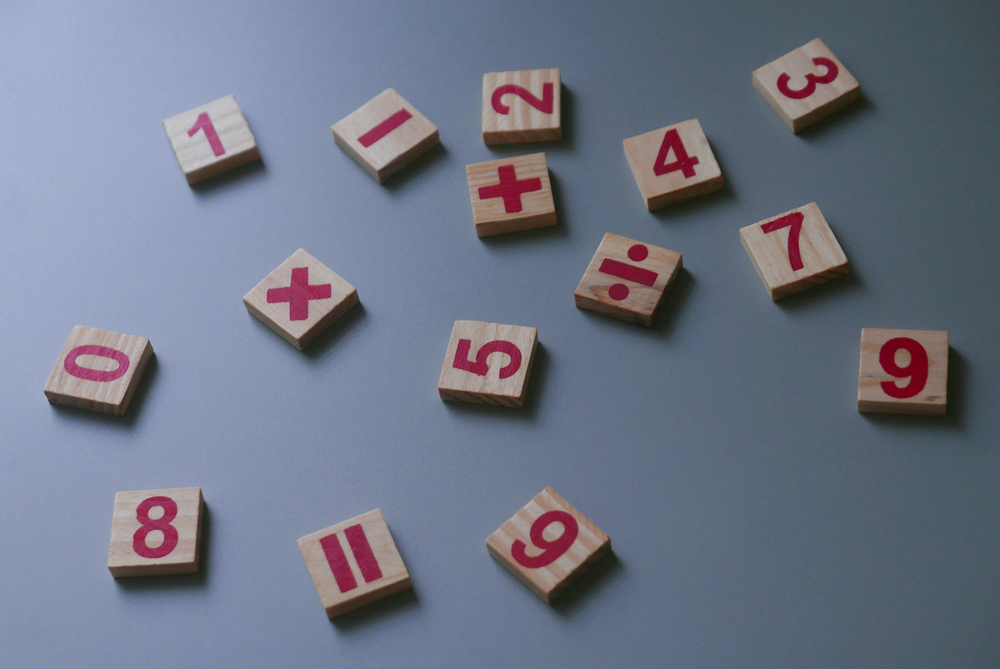




Visual learning plays a crucial role in teaching math to children ages 6-8 because it leverages their natural affinity for images and shapes to grasp complex concepts. At this developmental stage, kids often comprehend visual information more quickly than abstract symbols or text. By using visual aids like pictures, diagrams, and manipulatives, we turn mathematical ideas into something tangible and relatable.
Critically, visual learning helps children understand 'why' behind mathematical operations, not just the 'how.' For example, seeing pie charts or block models can make fractions or basic addition and subtraction more intuitive. This approach not only boosts comprehension but fosters a greater enthusiasm for math, which is pivotal for long-term academic success.
Parents and teachers should also note that visual math strategies cultivate problem-solving skills and logical thinking. When children engage with visual representations, they develop the ability to visualize math problems and their solutions, enhancing both analytical and creative skills.
Lastly, incorporating visual learning into math education supports diverse learning styles. Some children may struggle with traditional rote memorization or purely linguistic explanations but excel when presented with visual stimuli. By addressing these varied needs, parents and teachers ensure inclusive, comprehensive learning experiences that cater to every child’s potential.
In summary, visual learning strategies turn math from an abstract concept into an accessible, enjoyable subject, forming a stronger, more resilient foundation for future learning.








