
Counting skills Easy Matching Worksheets for Ages 6-8
5 filtered results
Difficulty Level
Grade
Age
-
From - To
Subject
Activity
Standards
Enhance your child's counting abilities with our engaging Easy Matching Worksheets, designed specifically for ages 6-8. These worksheets provide a fun and interactive way to develop essential counting skills through colorful visuals and simple exercises. Kids will enjoy matching numbers with corresponding groups of objects, reinforcing their understanding of quantity and number recognition. Perfect for use in the classroom or at home, these worksheets promote critical thinking and improve early math skills while keeping learning enjoyable. Boost your child's confidence in math with our expertly crafted worksheets, making counting a breeze for young learners! Explore our collection today!
Favorites
With answer key
Interactive
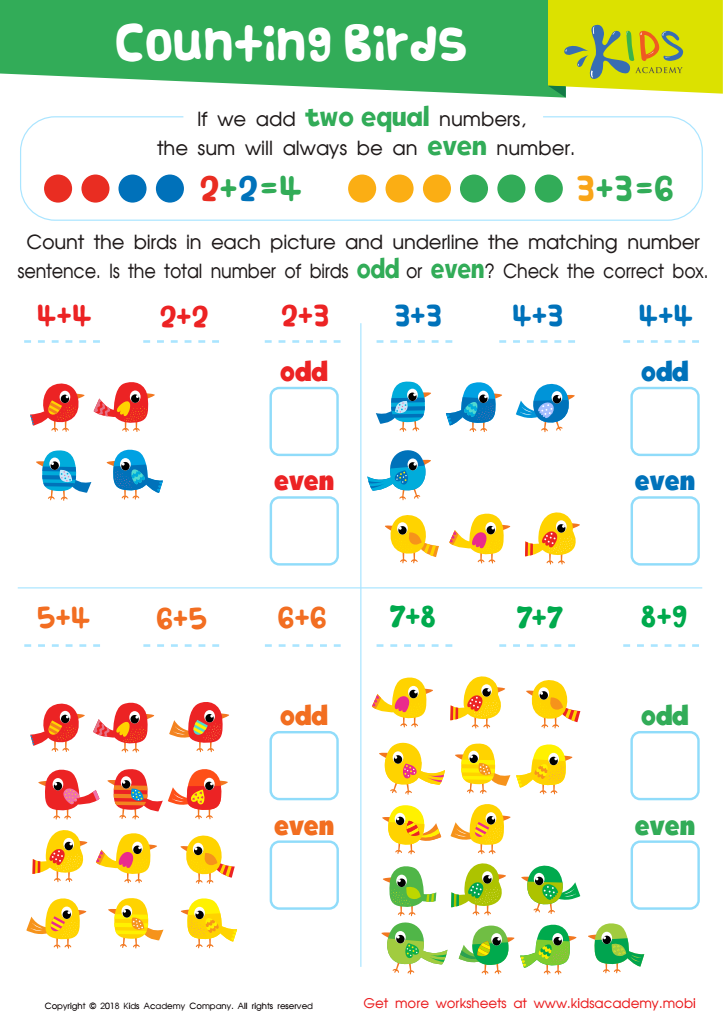
Counting Birds Worksheet
Help your child count and underline the matching number sentence in the worksheet. Ask them if the total number of birds in each picture is odd or even, then check the correct box. When two equal numbers are added, the sum is always an even number (e.g. 2+2=4, 4+4=8, both divisible by 2).
 Assign to My Students
Counting Birds Worksheet
Worksheet
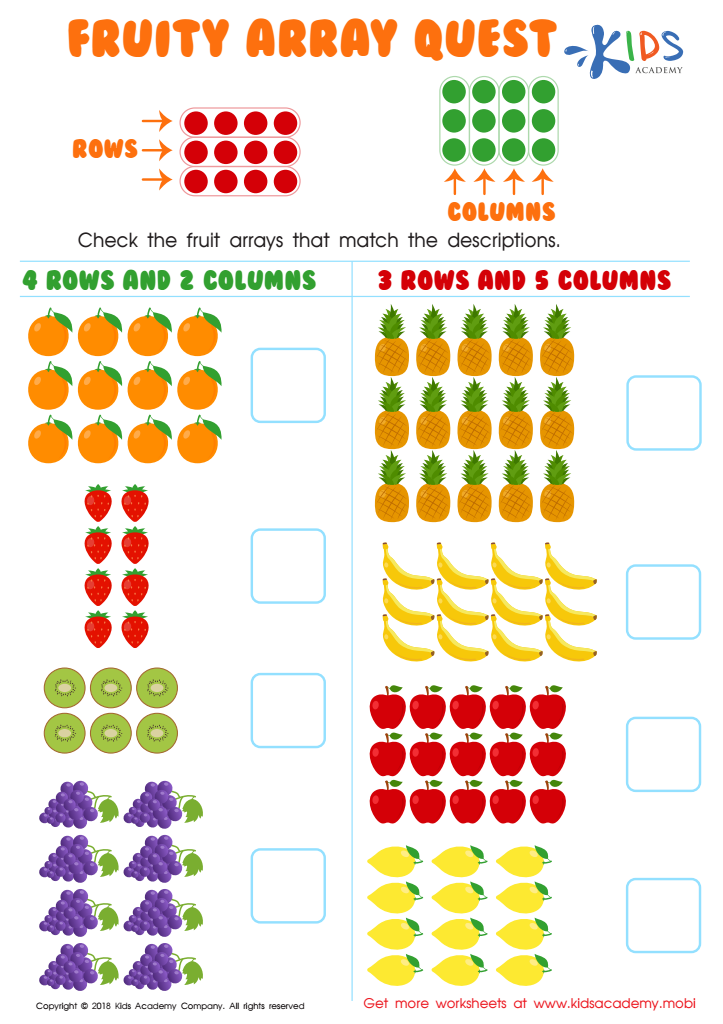
Fruity Array Quest Worksheet
Explain rows (horizontal) and columns (vertical) to your child before starting the worksheet. Show them the picture and the arrows indicating direction. Your child should be able to answer the questions easily after that. Help them match the fruit arrays that match the descriptions.
Fruity Array Quest Worksheet
Worksheet
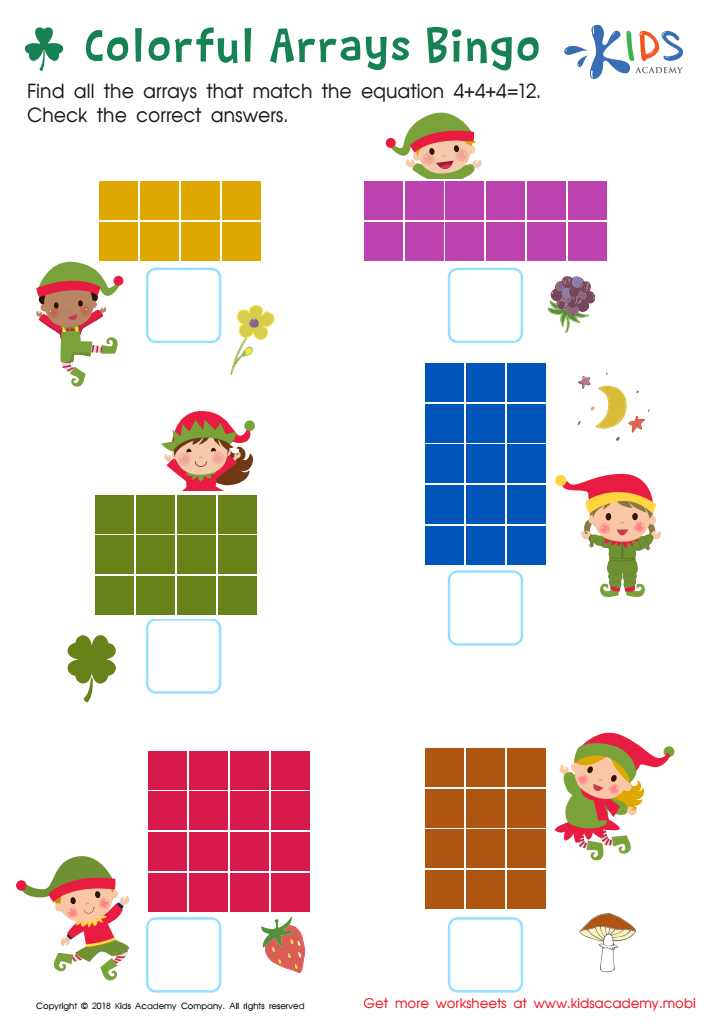
Colorful Arrays Bingo Worksheet
This worksheet stimulates thinking about arrays and how to represent them. Instruct students to count the 6 arrays and find which ones sum up to 12. Ask them to check the answers for accuracy.
Colorful Arrays Bingo Worksheet
Worksheet
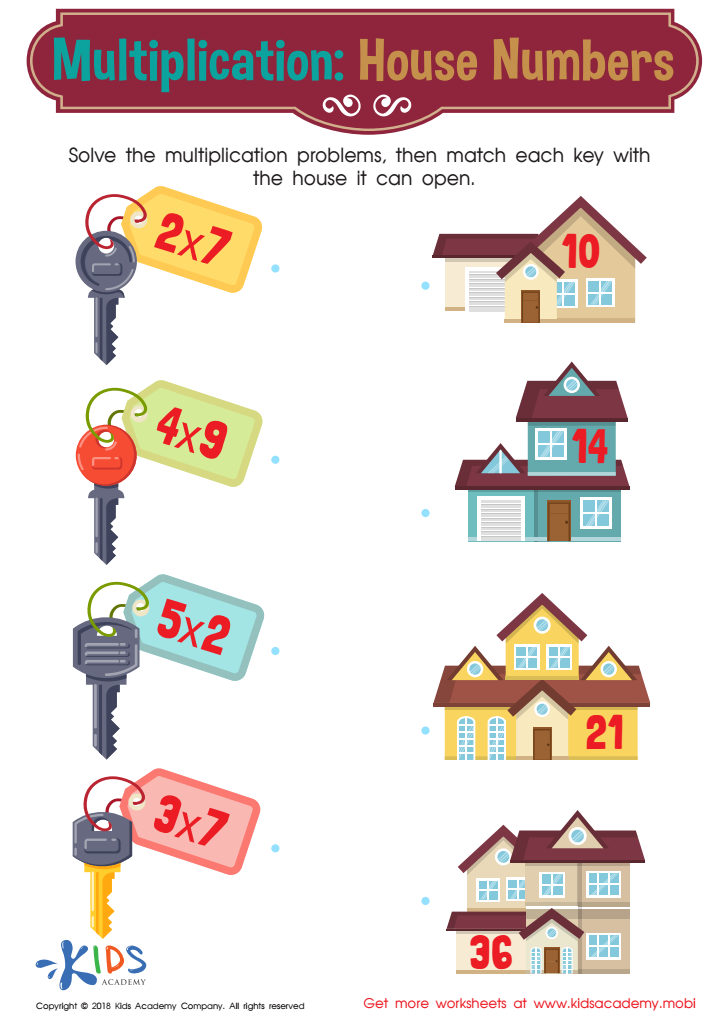
House Numbers Worksheet
This multiplication worksheet is perfect for grade 3 students to sharpen their math skills! Each problem unlocks the door to a house on the page - can they figure out which key fits which door? By solving each problem, they'll boost their multiplication skills and have fun along the way.
House Numbers Worksheet
Worksheet
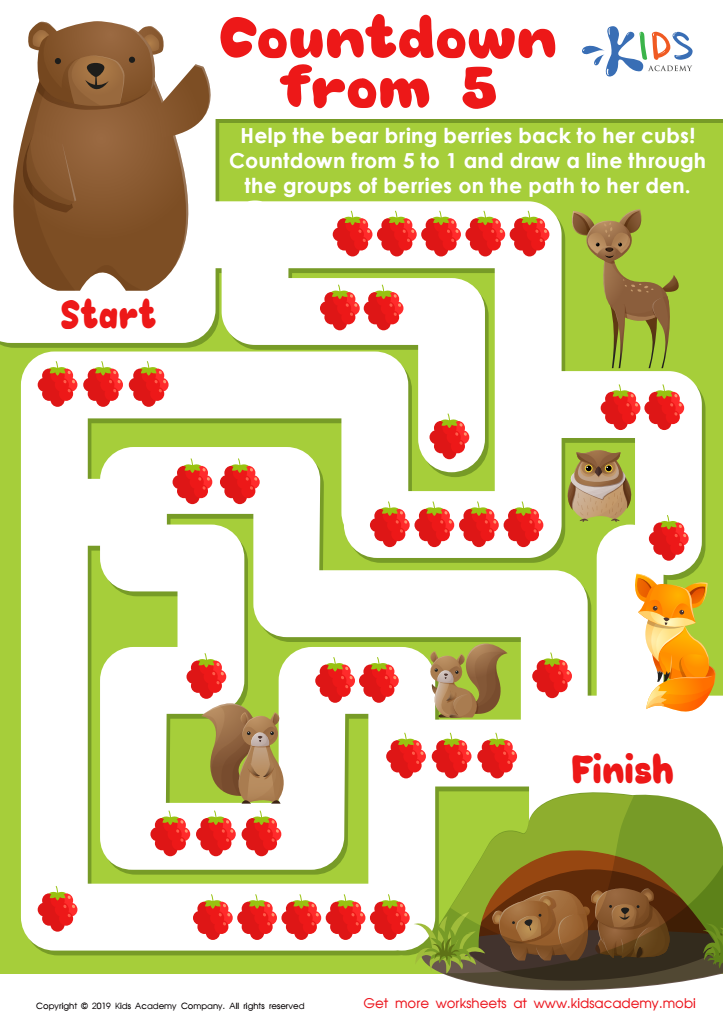
Countdown from 5 Worksheet
Encourage your kids to help Mama Bear find her way to her den! Ask them to count down from 5 to 1 and draw a line through the groups of berries on the path. Point them to the picture of the friendly bears. A fun and safe way to enjoy these cute animals!
Countdown from 5 Worksheet
Worksheet
Join Kids Academy for Free
Who is primarily going to use this learning content?


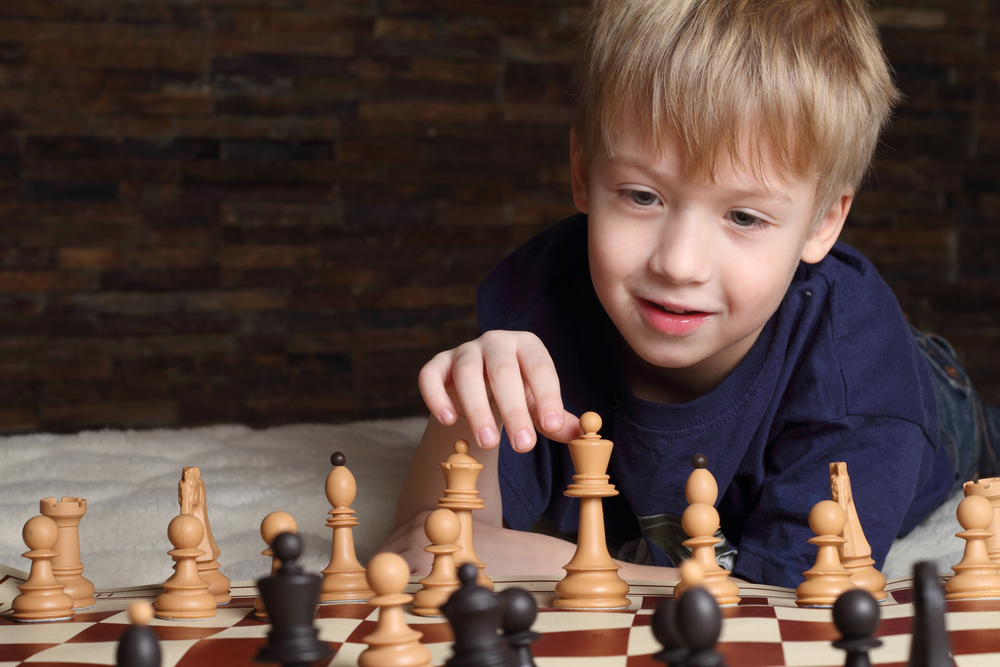





Counting skills and easy matching activities are crucial for children aged 6-8, as they serve as foundational components of early mathematical development. During this period of rapid cognitive growth, children begin to make sense of the world around them and develop essential problem-solving abilities.
Parents and teachers should care about integrating counting skills and matching games because they enhance numerical literacy, critical thinking, and spatial awareness. Counting helps children understand quantities, establish one-to-one correspondence, and engages them in foundational operations like addition and subtraction, crucial for future math success.
Additionally, matching activities bolster cognitive functions such as memory and pattern recognition, fostering a sense of order and organization. These skills extend beyond math, encouraging children to understand relationships between different concepts, whether in math, science, or daily life.
Engaging children in enjoyable counting and matching exercises also promotes social interaction and collaboration, essential for developing communication skills and emotional intelligence. Moreover, early mastery of these skills boosts a child's confidence, encouraging positive attitudes toward learning.
In summary, prioritizing counting skills and matching activities significantly benefits children's overall academic development, preparing them for more complex concepts and a lifelong love for learning.








