Counting skills Easy Measurement Worksheets for Ages 6-8
5 filtered results
-
From - To
Enhance your child's counting and measurement skills with our fun and engaging Easy Measurement Worksheets for Ages 6-8 from Kids Academy! Designed specifically for young learners, these printable worksheets offer a variety of activities that make counting and measuring both educational and entertaining. From simple tasks like counting objects to measuring lengths and comparing sizes, our worksheets help develop essential math skills. Perfect for use at home or in the classroom, these worksheets provide a strong foundation in mathematics while keeping kids motivated and confident. Jumpstart your child's math journey today with Kids Academy!
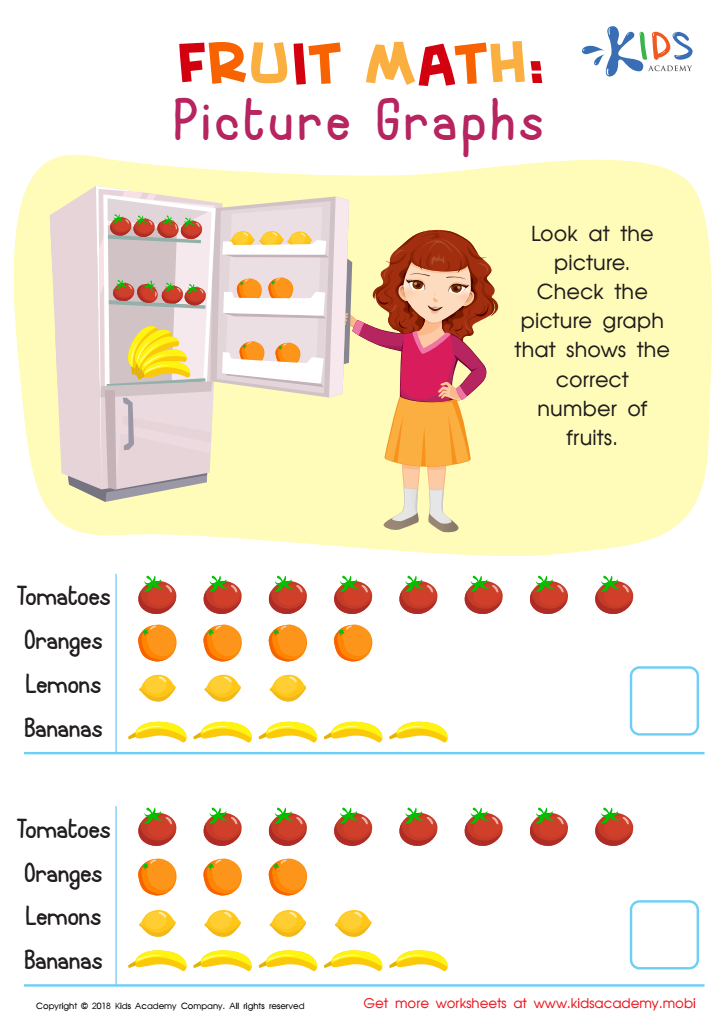
Fruit Math: Picture Graphs Worksheet
 Assign to My Students
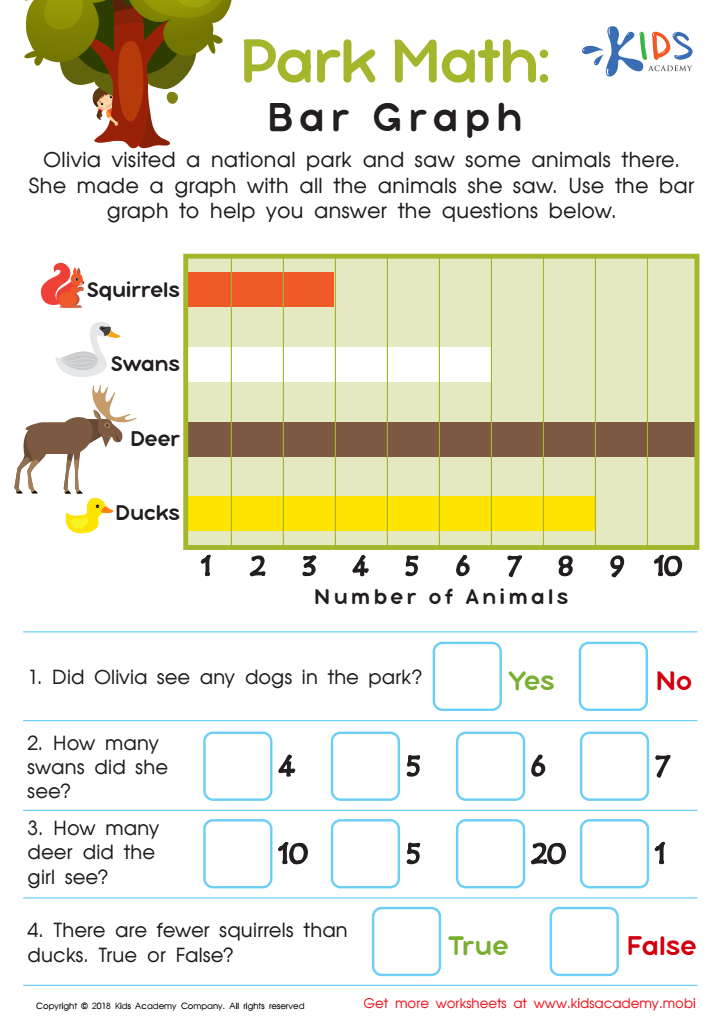
Park Math: Bar Graph Worksheet
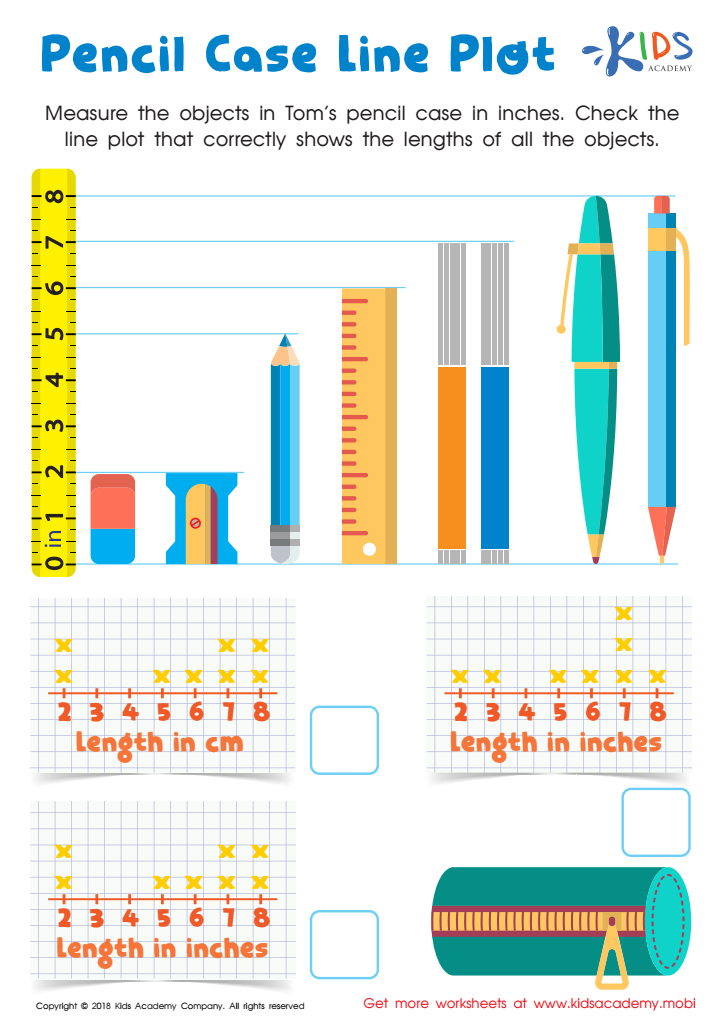
Pencil Case Line Plot Worksheet
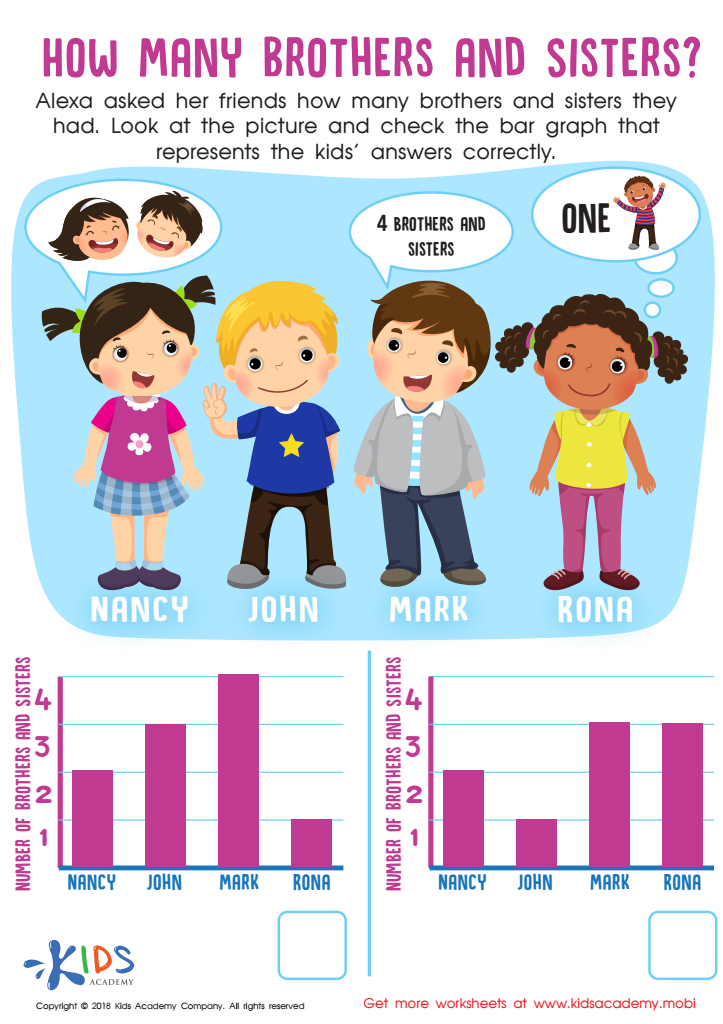
How Many Brothers and Sisters? Worksheet
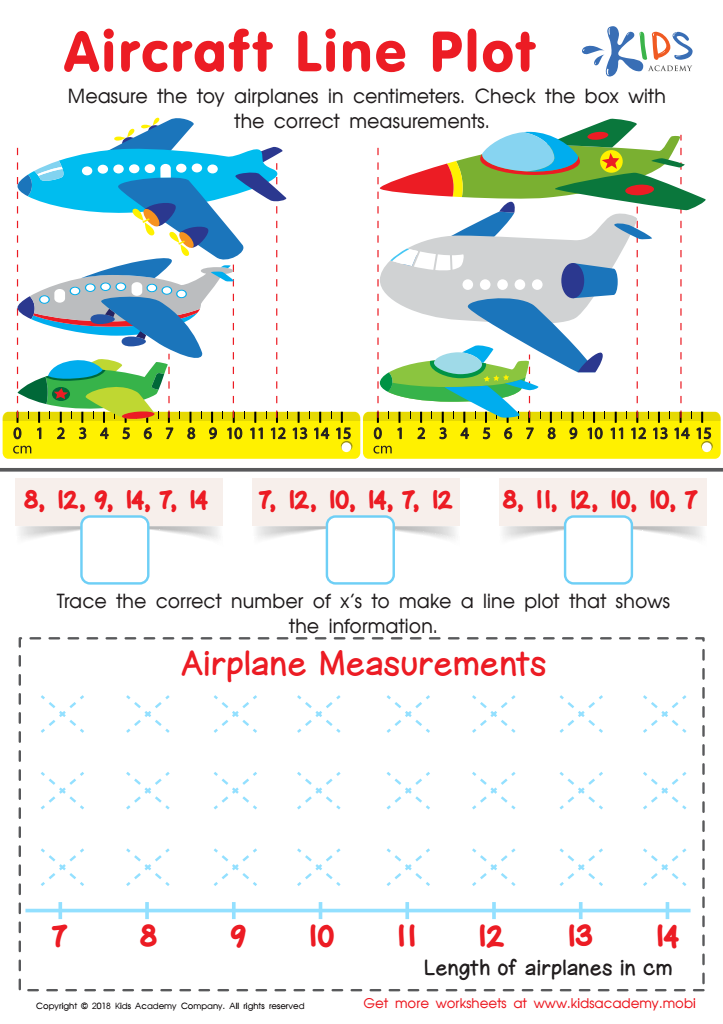
Aircraft Line Plot Worksheet








Counting skills are a fundamental aspect of early mathematics development for children aged 6-8, setting the groundwork for more complex mathematical concepts. Proper counting teaches kids how to recognize numbers, understand their sequence, and comprehend that numbers correlate to specific quantities. For parents and teachers, fostering these skills is essential as it supports not just mathematical learning but also cognitive development, logical thinking, and problem-solving abilities.
Measurement activities play a crucial role in practical understanding. By engaging with simple measurements—like determining which object is longer or how much something weighs—children begin to grasp the physical properties of their environment. Measurement exercises also introduce basic tools and units, providing real-world connections that keep learning interactive and enjoyable.
Cultivating counting and measurement skills at this age boosts a child's confidence and promotes a positive attitude towards math. As children see tangible results from their efforts, they become more eager to learn and explore. Solid proficiency in these areas lays a stable foundation for future academic achievement. Therefore, parents and teachers should prioritize counting and measurement exercises to give children a robust start in their educational journey, ensuring they are well-prepared for the challenges ahead.








