Easy Patterns Worksheets for Ages 6-8
6 filtered results
-
From - To
Discover engaging Easy Patterns Worksheets for ages 6-8 designed to sharpen math skills in a fun, interactive way. These expertly crafted worksheets from Kids Academy help young learners identify, continue, and create patterns using shapes, colors, and numbers. Through our colorful and imaginative exercises, children also enhance their critical thinking and problem-solving abilities. Perfectly suited for first and second graders, each worksheet allows kids to practice at their own pace whether in class or at home. Unlock early math success and make learning enjoyable with our thoughtfully designed pattern worksheets. Visit Kids Academy today!
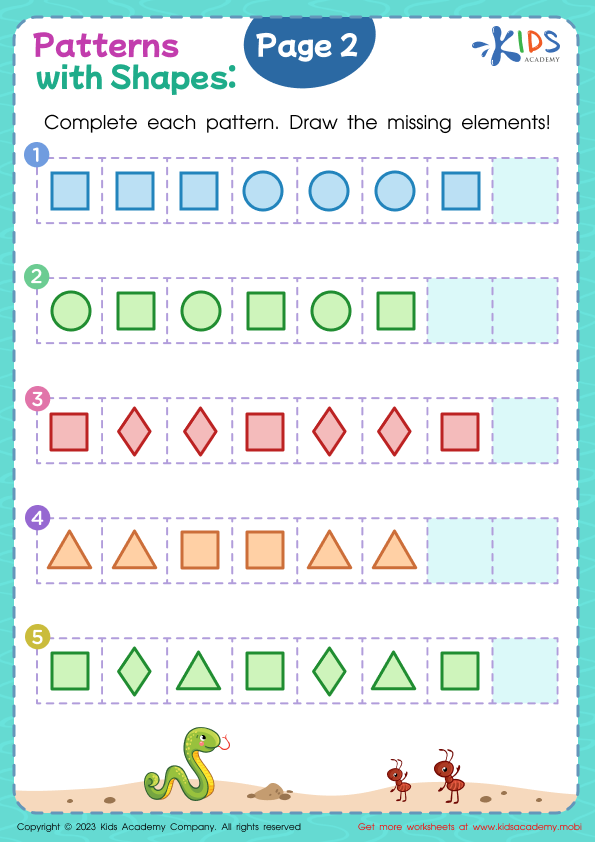
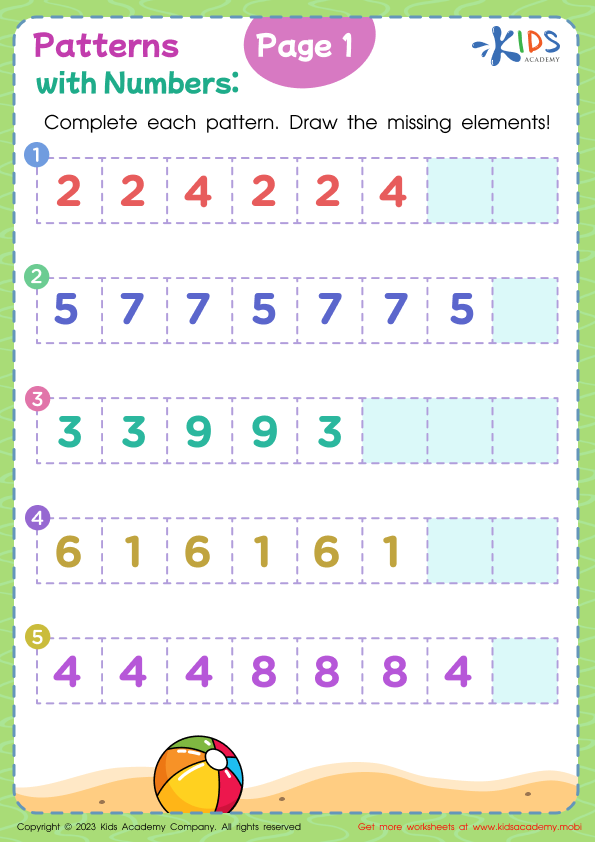
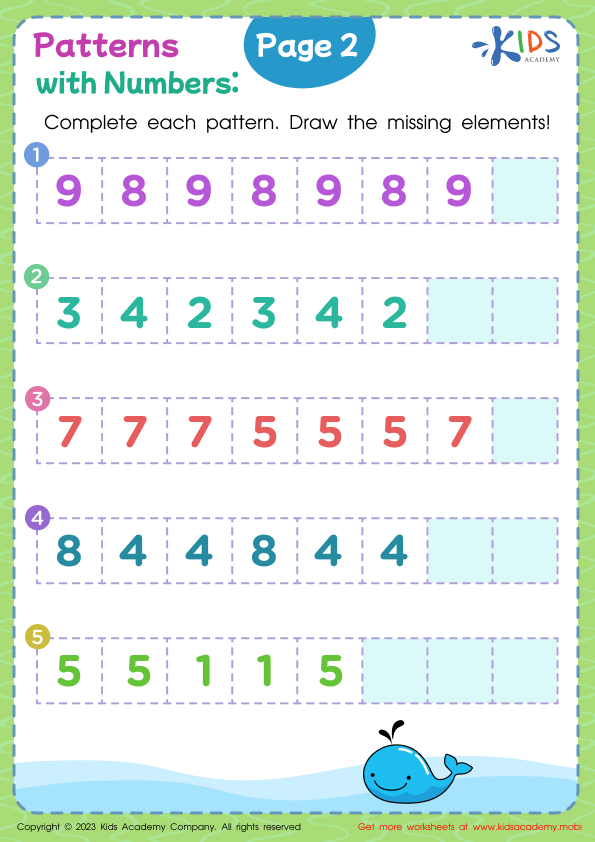
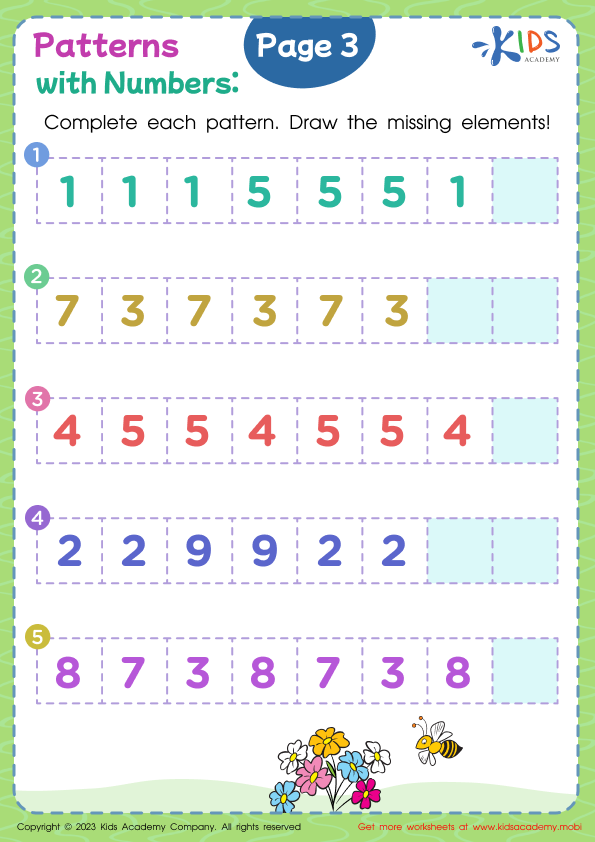
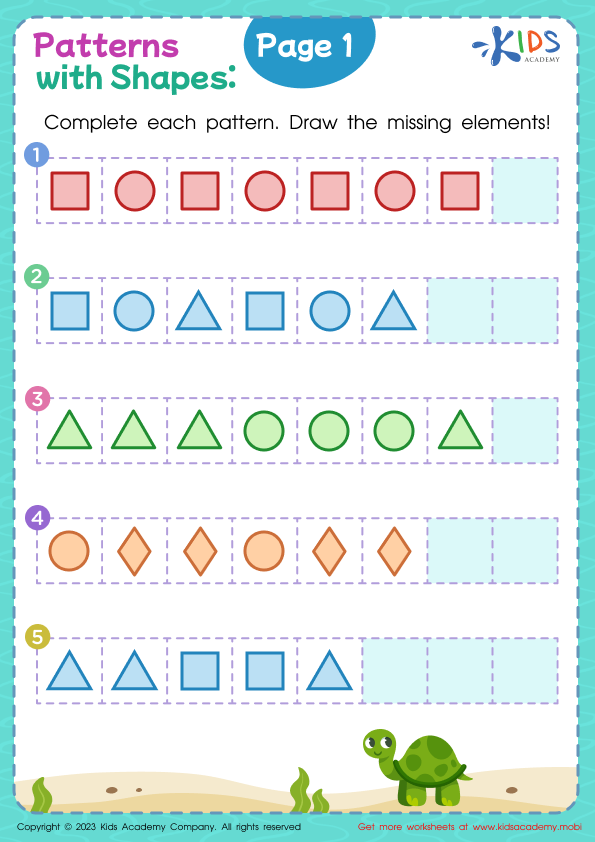
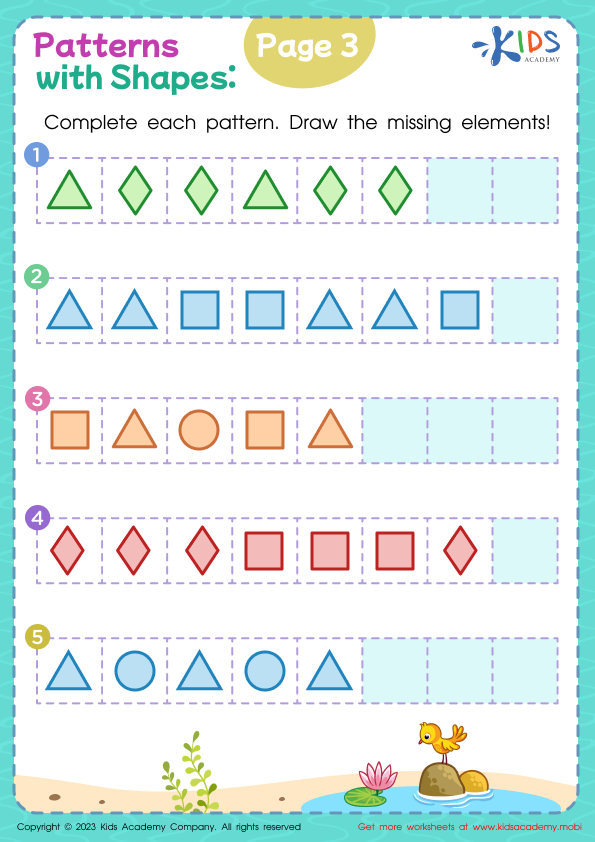








Easy patterns are crucial for children ages 6-8 because they lay the foundation for mathematical thinking and problem-solving skills. At this age, kids are typically in early elementary school where they start encountering organized systems and sequential thought processes, essential for advanced math concepts. Introducing young children to simple patterns like alternating colors, shapes, or numbers helps them recognize and predict sequences, reinforcing logical thinking and reasoning abilities.
Understanding patterns also supports the development of early literacy skills. Just as in math, decoding patterns in language helps children discern letter and sound combinations, improving reading fluency and comprehension. When children grasp patterns in stories or understand rhythmic sequences in poetry, they can better anticipate and enjoy the narrative flow, enhancing their overall appreciation for reading.
Moreover, recognizing patterns fosters cognitive flexibility. Children learn to apply known patterns to new situations, a key skill for adaptive learning and creativity. For parents and teachers, emphasizing easy patterns in activities, whether through games, art, or daily routines, makes learning seamless and enjoyable. This early mastery builds a robust academic foundation, aids in classroom engagement, and prepares children for more complex concepts in both mathematics and language arts. Nurturing this skill in young learners equips them with crucial tools for lifelong learning and intellectual growth.








