Visual Learning Easy Word Problems Worksheets for Ages 6-8
3 filtered results
-
From - To
Enhance your child's math skills with our "Visual Learning Easy Word Problems Worksheets" for ages 6-8! Designed to engage young learners, these worksheets utilize visual aids to simplify complex concepts and make learning fun. Perfect for reinforcing critical thinking and problem-solving abilities, our resources help children grasp math vocabulary and apply their knowledge in real-life scenarios. Each worksheet offers colorful illustrations and relatable contexts that encourage children to explore numbers confidently. Ideal for both home and classroom use, these engaging materials foster a love for learning while sharpening essential math skills. Discover the joys of math through visual learning today!
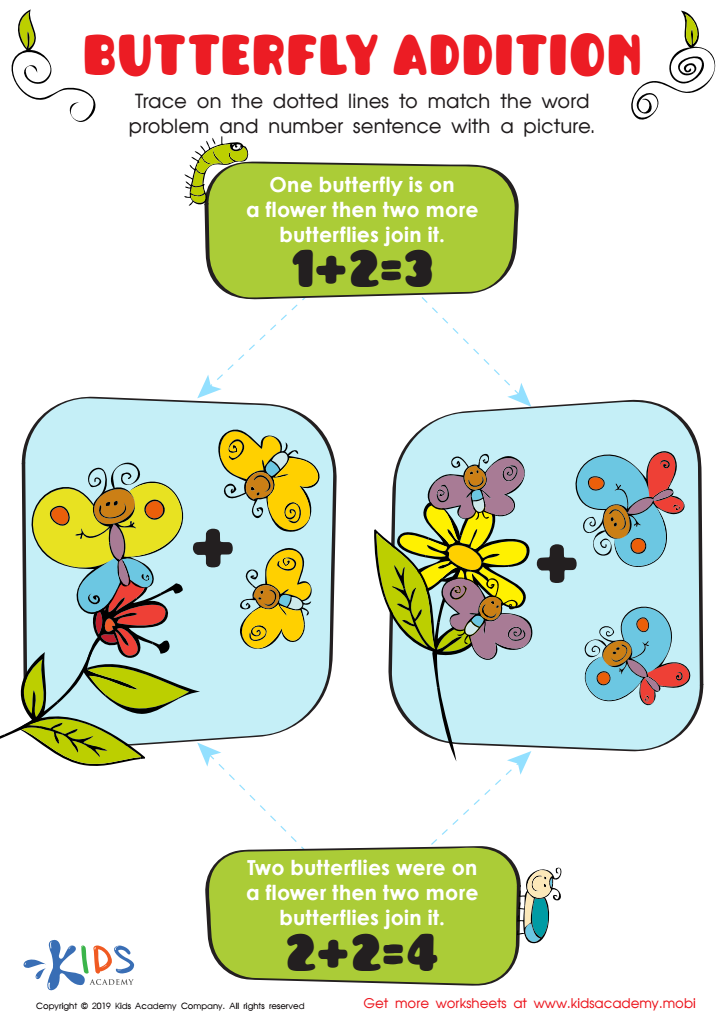
Butterfly Addition Worksheet
 Assign to My Students
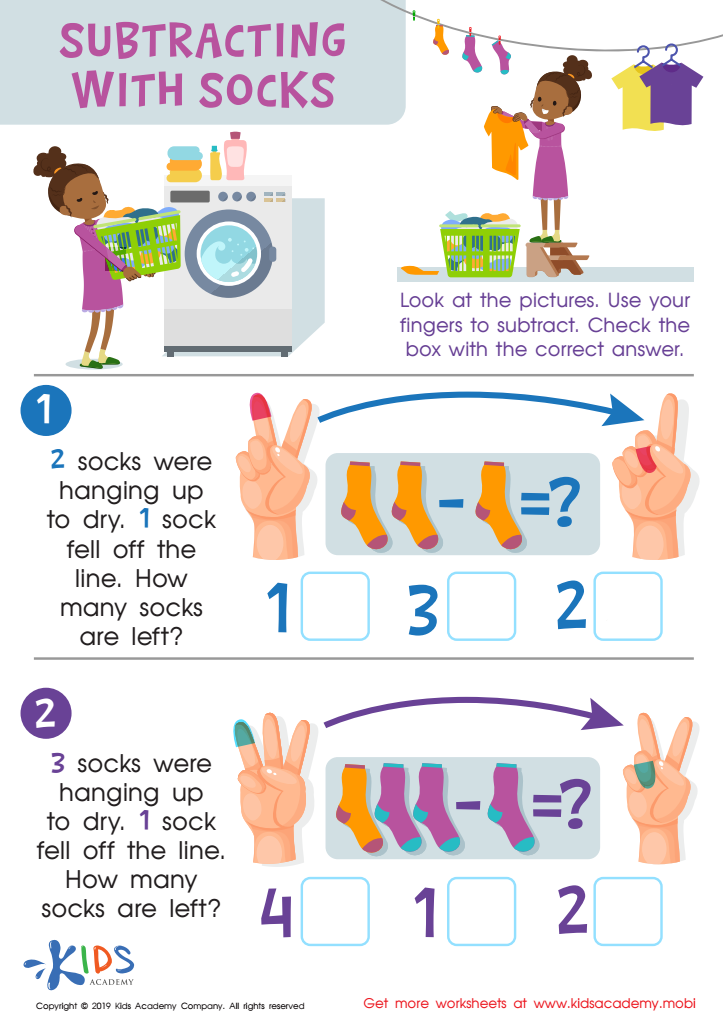
Subtracting Socks Worksheet
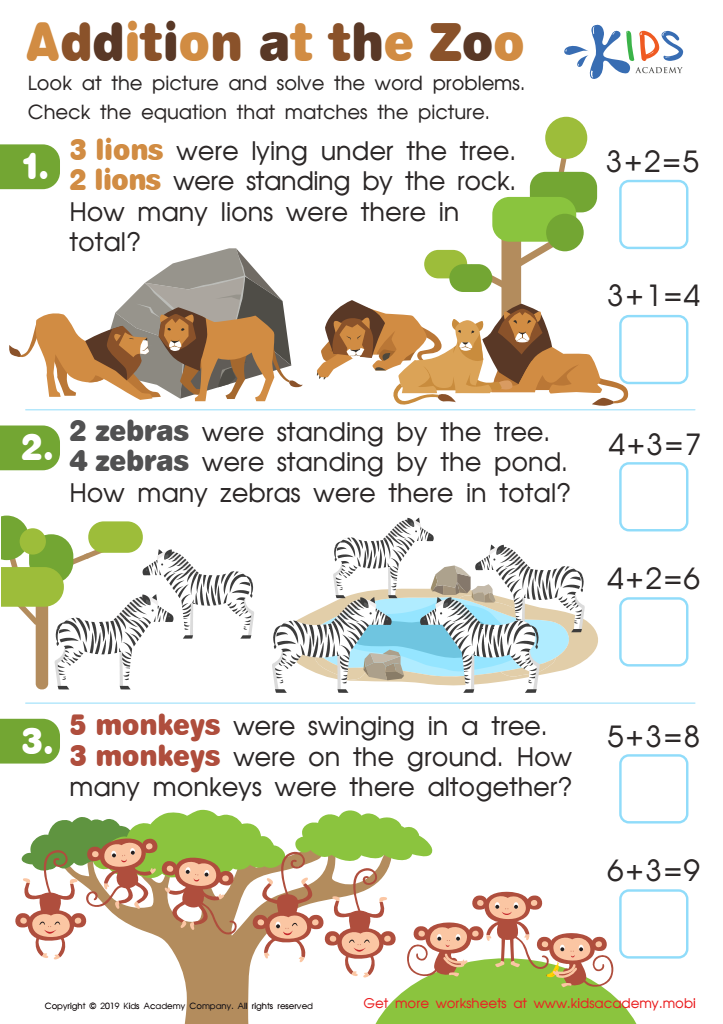
Addition at the Zoo Worksheet



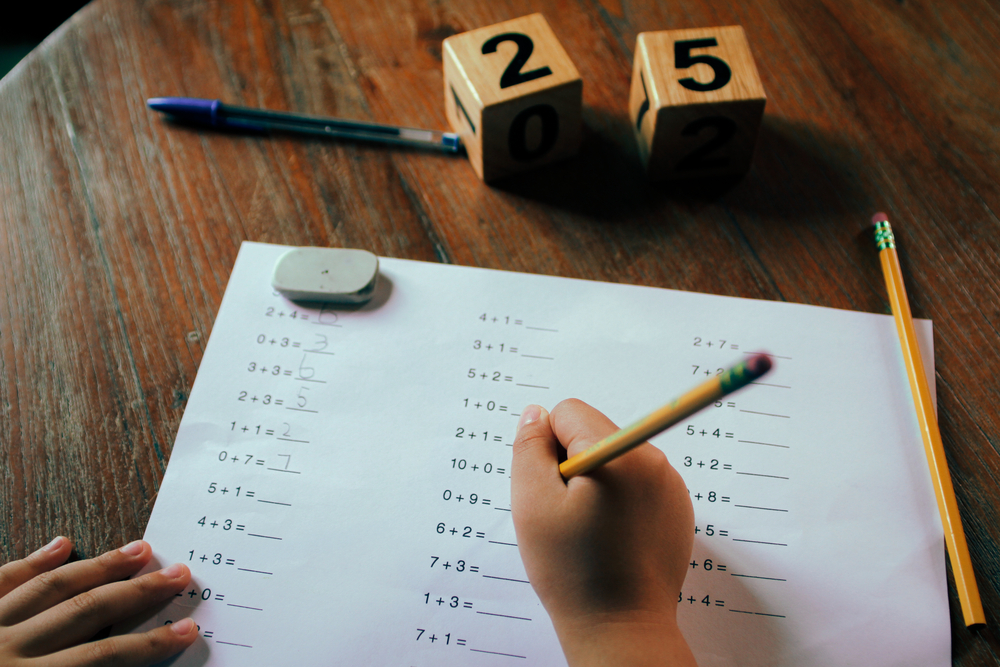




Parents and teachers should prioritize visual learning for solving easy word problems for children aged 6-8 because it significantly enhances comprehension and engagement. At this crucial developmental stage, children are naturally curious and often learn best through visual stimuli. Visual learning aids, such as pictures, diagrams, and visual manipulatives, can help children better understand abstract concepts by linking them to concrete representations.
Using visual strategies simplifies complex word problems into more digestible parts, allowing young learners to break down the problem efficiently. For instance, illustrating a problem with drawings can enable students to visualize relationships and quantities, which can deepen their understanding of math concepts. Moreover, incorporating visuals keeps students actively engaged, making learning more enjoyable and less intimidating. This boosts not only their interest but also their confidence in tackling math problems more independently.
Furthermore, visual learning caters to various learning styles, ensuring that all students, regardless of their preferred way of absorbing information, can grasp mathematical concepts effectively. Ultimately, fostering visual learning in problem-solving is essential for building strong foundational skills that are pivotal for future mathematics achievement and overall cognitive development.








