Fine Motor Skills Easy Building Vocabulary Worksheets for Ages 6-8
3 filtered results
Difficulty Level
Grade
Age
-
From - To
Subject
Activity
Standards
Introducing “Fine Motor Skills Easy Building Vocabulary Worksheets for Ages 6-8,” designed to enhance young learners' fine motor development while boosting their vocabulary. Tailored for children aged 6 to 8, our engaging, educator-crafted printable worksheets promote pencil control, handwriting precision, and word recognition. Each activity creatively intertwines linguistic and motor skill development through fun tracing, drawing, and writing exercises. As kids navigate these stimulating tasks, they build confidence, linguistic awareness, and dexterity, essential for academic success. Perfect for classroom or at-home learning, these worksheets provide a comprehensive, enjoyable educative experience that lays a solid foundation in literacy and fine motor skills development.
Favorites
With answer key
Interactive
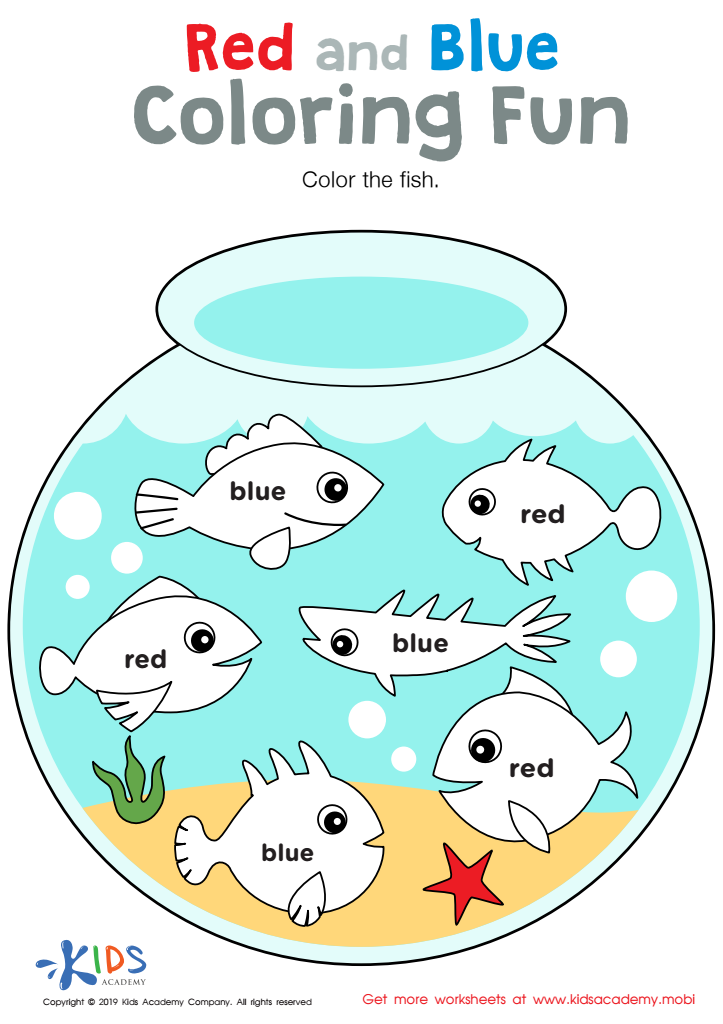
Red and Blue Coloring Fun Worksheet
Kids know colors like red and blue. But can they read these words? Give them practice with this fun fish bowl coloring sheet. They'll look at the fish, then color them the corresponding hue. Home or classroom, they'll be sure to get a kick out of learning colors in this creative way!
Download (PDF)
 Assign to My Students
Assign to My Students
Red and Blue Coloring Fun Worksheet
Worksheet











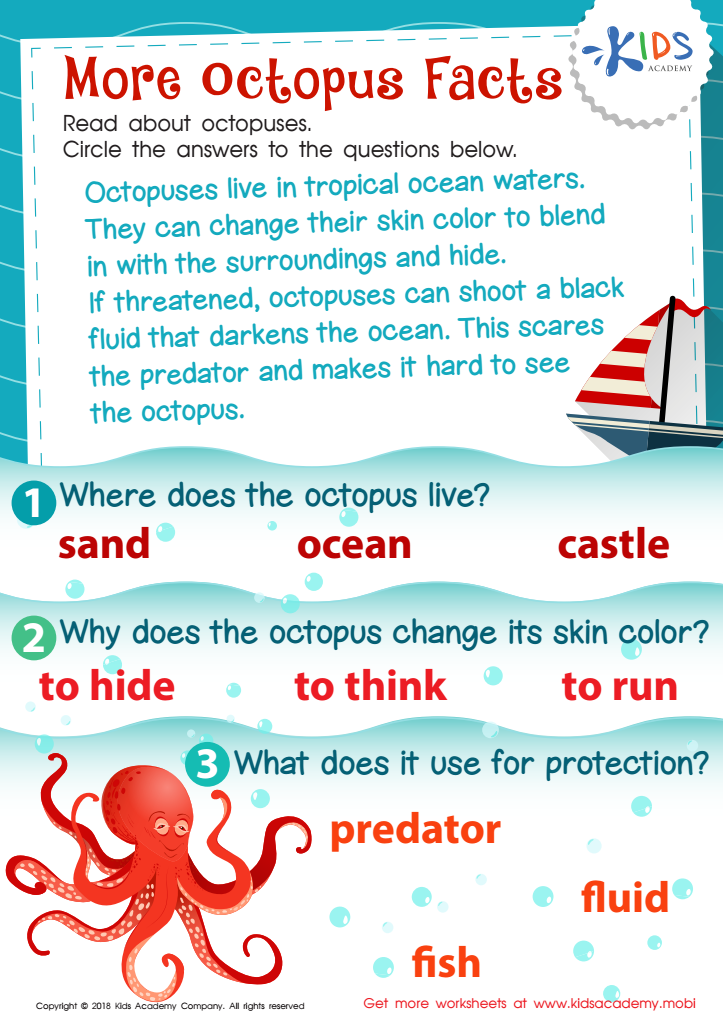
More Octopus Facts Worksheet
This worksheet will help your kids learn about the Octopus. Read the text carefully and have kids read with you. Now, ask them questions based on it and help them answer them by circling the right choices. Teaching your kids facts about animals will help them in the long run.
More Octopus Facts Worksheet
Worksheet
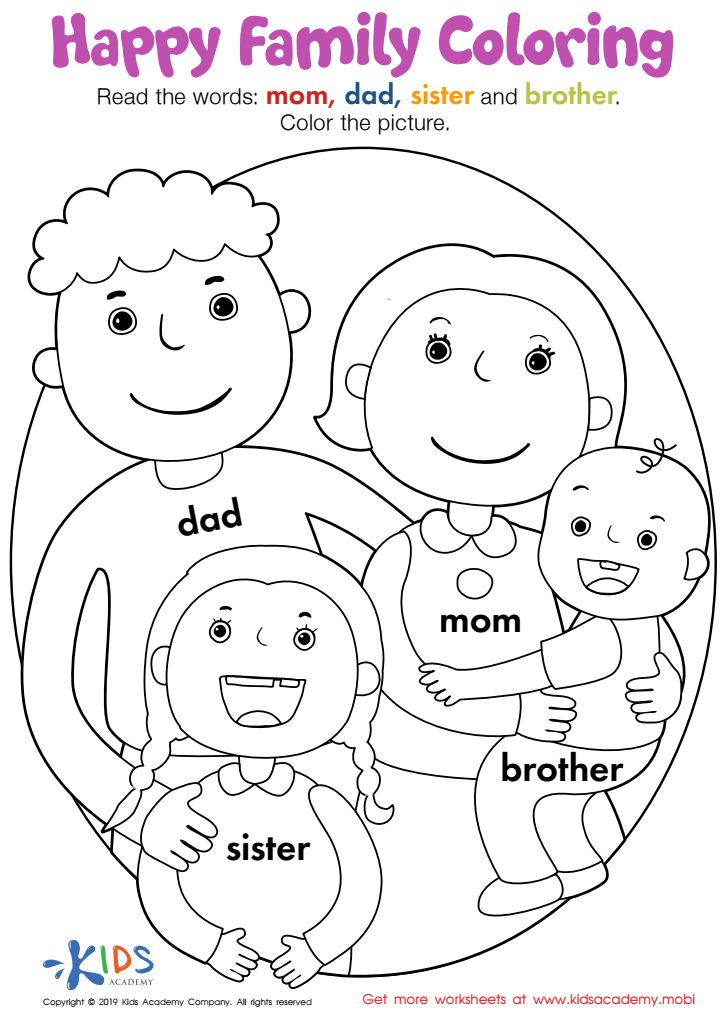
Happy Family Coloring Worksheet
Help your students gain confidence in family vocabulary with this worksheet. Labelled images of a family (dad, mom, sister, brother) are featured, along with an accompanying activity to colour in the picture. Your students will feel a sense of accomplishment after reading and completing the printable.
Download (PDF)
Assign to My Students
Assign to My Students
Happy Family Coloring Worksheet
Worksheet
Join Kids Academy for Free
Who is primarily going to use this learning content?








Developing fine motor skills and building vocabulary at ages 6-8 are both critical for a child's overall growth and success in school. Fine motor skills involve the coordination of small muscle movements, particularly in the hands and fingers. These skills are essential for daily activities like writing, tying shoelaces, cutting with scissors, and buttoning clothes. When children have strong fine motor skills, they perform these tasks more easily and with greater confidence, benefiting their independence and self-esteem.
Simultaneously, building a robust vocabulary enriches a child's ability to communicate effectively. A strong vocabulary underpins comprehension skills, forms the basis for reading fluency, and enhances expressive language abilities. With a rich vocabulary, children can understand instructions better, express their thoughts clearly, and engage more meaningfully in social exchanges and academic discussions.
Fine motor development and vocabulary building are parallel avenues that foster greater academic achievement and interpersonal skills. Activities like playing with building blocks, drawing, coloring, or engaging in word games can synergistically enhance both skill sets. By prioritizing these areas, parents and teachers help children build a strong foundation that supports complex tasks in later grades, setting them on a pathway to lifelong learning and success.