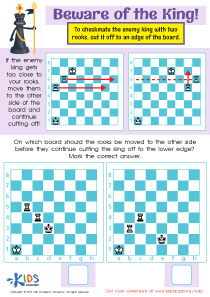
Chess strategy understanding Easy Chess Worksheets for Ages 6-9
3 filtered results
-
From - To
Unlock the world of chess strategy with our engaging and easy worksheets designed specifically for children ages 6-9. These printable resources focus on fundamental strategies to enhance young players' understanding of chess, fostering critical thinking and problem-solving skills. Each worksheet encourages exploration of concepts such as piece movement, positioning, and tactics in a fun, interactive format. Perfect for classrooms or at-home learning, our Chess Strategy Understanding worksheets provide a solid foundation for budding chess enthusiasts. With vibrant designs and age-appropriate content, learning chess has never been more enjoyable. Start your child's journey towards becoming a chess master today!
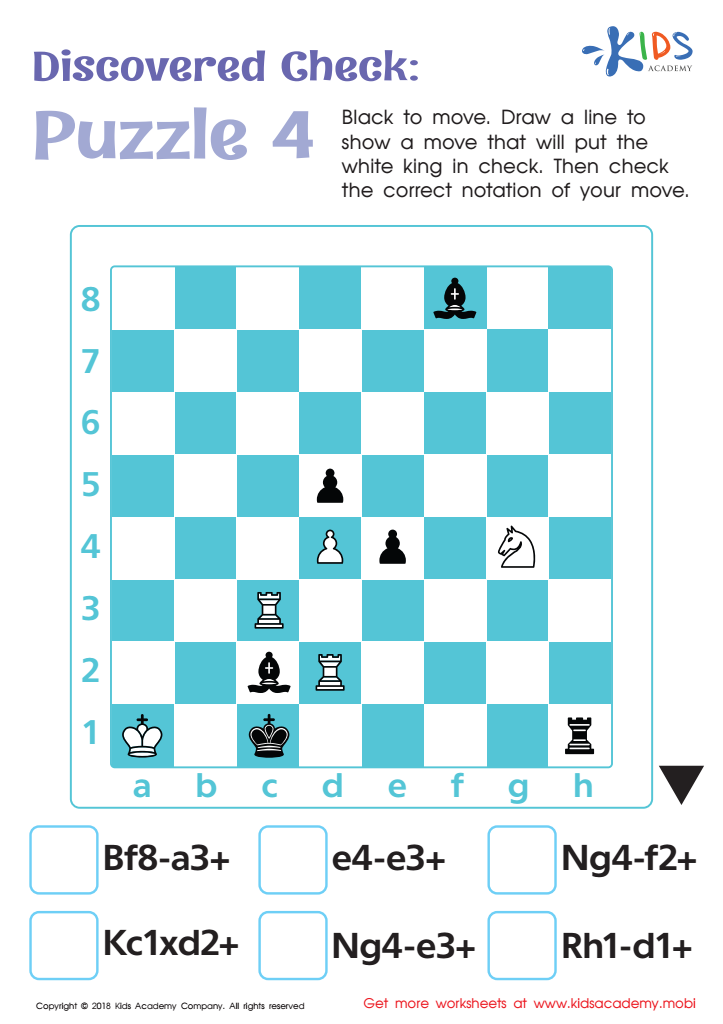
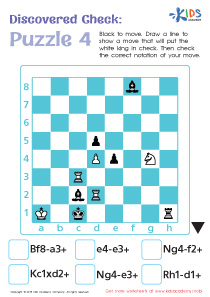
Discovered Check: Puzzle 4 Worksheet

Discovered Check: Puzzle 2 Worksheet
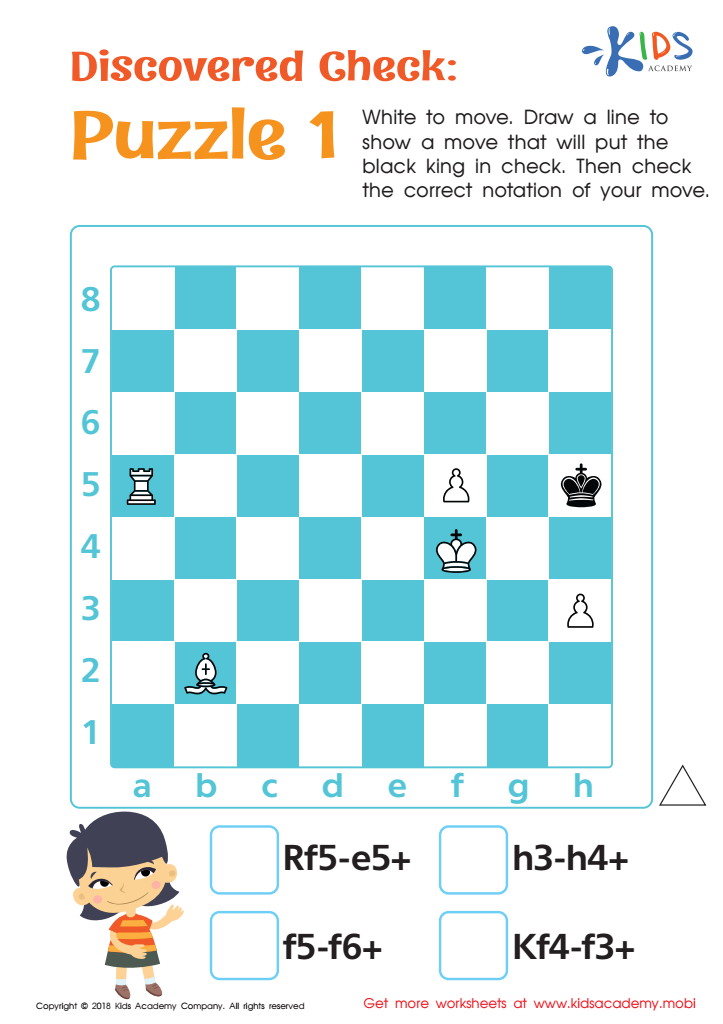
Discovered Check: Puzzle 1 Worksheet



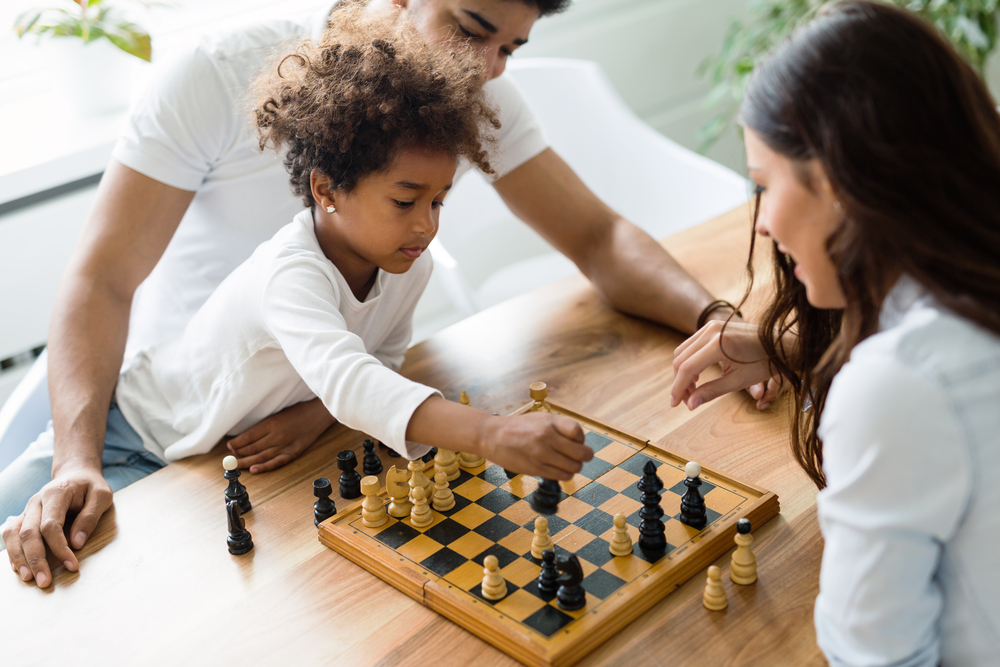




Parents and teachers should prioritize teaching chess strategy to children ages 6-9 as it offers numerous cognitive and social benefits. Understanding chess enhances critical thinking and problem-solving skills, as children learn to analyze positions, anticipate opponents' moves, and devise strategic plans. This not only improves focus and concentration but also nurtures patience, which are vital life skills.
Chess also teaches valuable lessons in sportsmanship and respect for others. When children engage with opponents, they learn to graciously accept losses and celebrate victories, fostering resilience and humility.
Moreover, chess stimulates creativity. As children experiment with various tactics and openings, they engage in imaginative thinking, which can translate to enhanced creativity in other areas, including art and writing.
Additionally, chess can be a fun and engaging way to promote math and logic skills, as players frequently calculate potential moves and outcomes, reinforcing concepts such as patterns and sequences.
Finally, including chess in educational or home environments encourages bonding through shared experiences, whether through casual play or structured lessons. The early introduction of strategic thinking into play not only enriches children’s learning experiences but also equips them for future challenges, both in and out of the classroom.