
Color Identification Easy Worksheets for Ages 6-9
6 filtered results
Difficulty Level
Grade
Age
-
From - To
Subject
Activity
Standards
Explore our engaging "Color Identification Easy Worksheets" specially designed for children ages 6-9! These worksheets are perfect for young learners to enhance their color recognition skills through fun and interactive activities. Each printable worksheet is filled with vibrant illustrations and easy-to-understand instructions that will captivate children’s attention while stimulating their creativity. By completing these exercises, kids will not only learn to identify and match colors, but also improve their fine motor skills and boost their confidence. Perfect for classroom use or at-home learning, our worksheets provide an enjoyable and educational experience that helps nurture a love for learning in every child!
Favorites
With answer key
Interactive
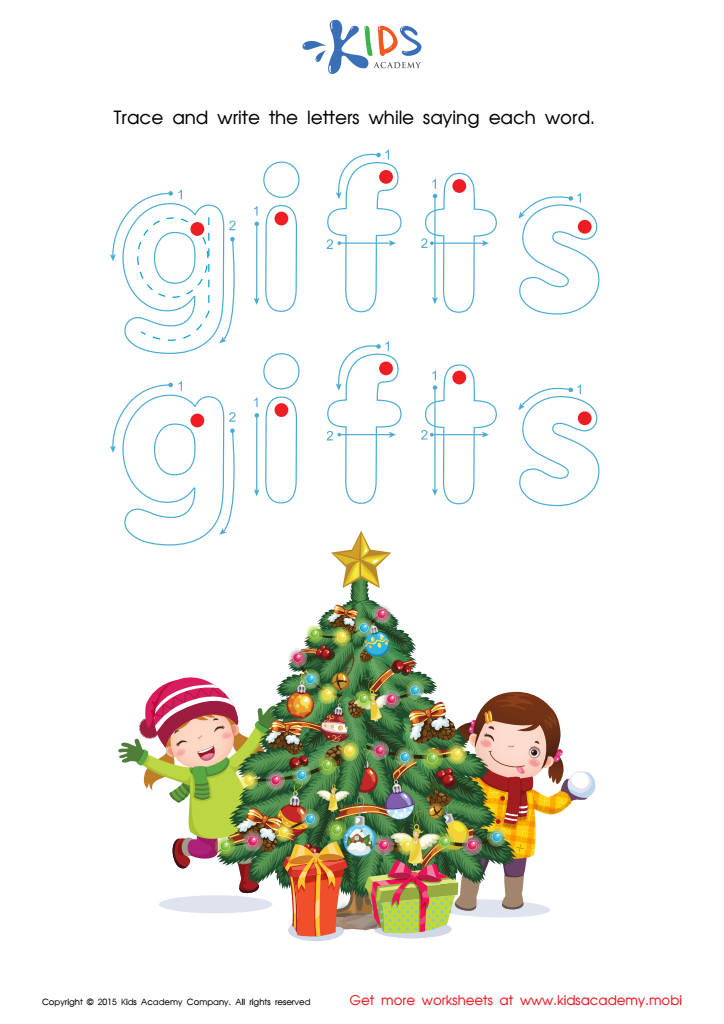
Christmas Tree Tracing Winter Words Worksheet
Print it and let your child trace the word and follow the arrows. Red dots mark the starting points. Have a blast!
Christmas Tree Tracing Winter Words Worksheet
Worksheet
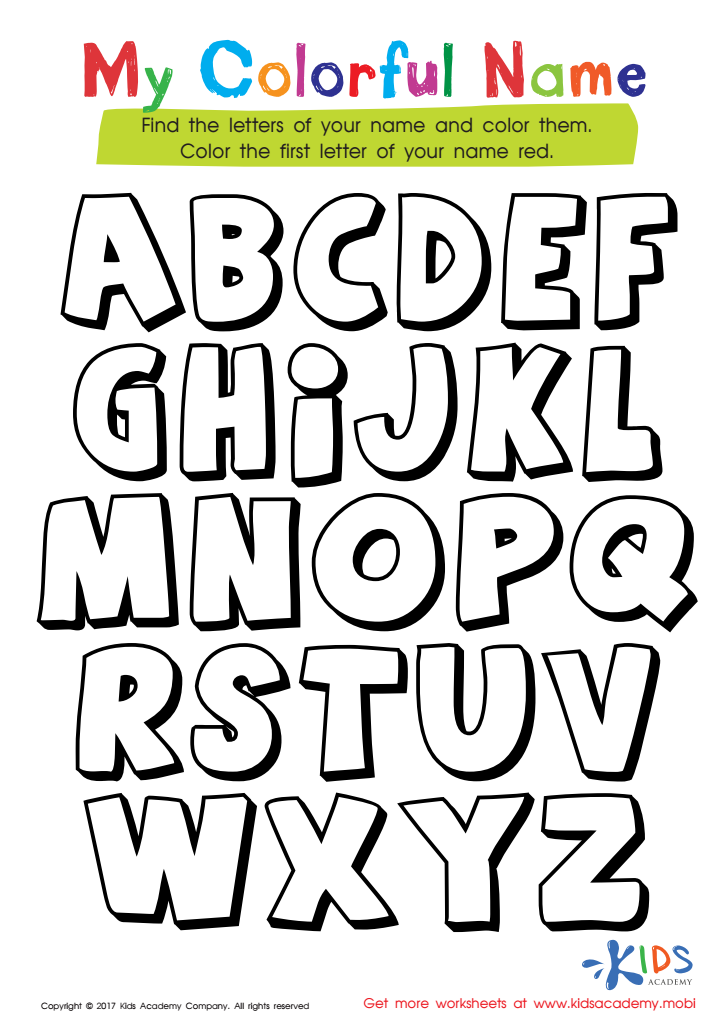
My Colorful Name Worksheet
Writing their names is a milestone for children. With this worksheet, they recall the letters in their name and color the letters one at a time. Spelling and alphabet order are reinforced as they find each letter. Use this fun printable to help kids learn to write their names!
Download (PDF)
 Assign to My Students
Assign to My Students
My Colorful Name Worksheet
Worksheet
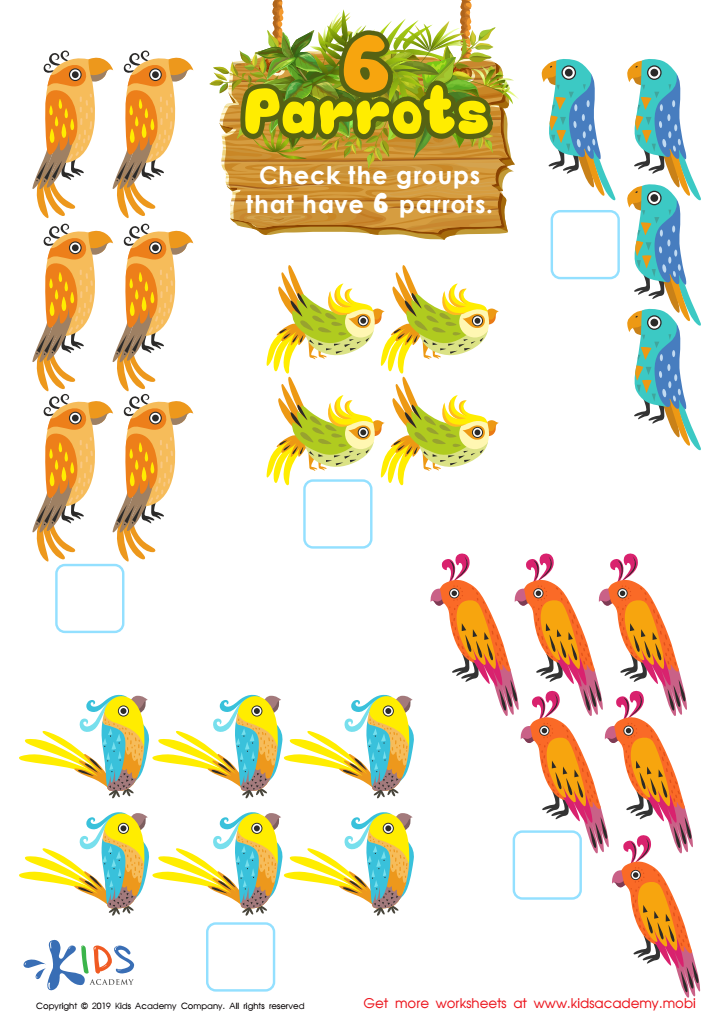
6 Parrots Worksheet
Love parrots? Here's a free worksheet to help your children practice counting to six with colorful parrot representations! Kids will adore counting the parrots and checking off groups of six - and it won't even feel like math! Just a fun way to make some new and exciting friends.
6 Parrots Worksheet
Worksheet
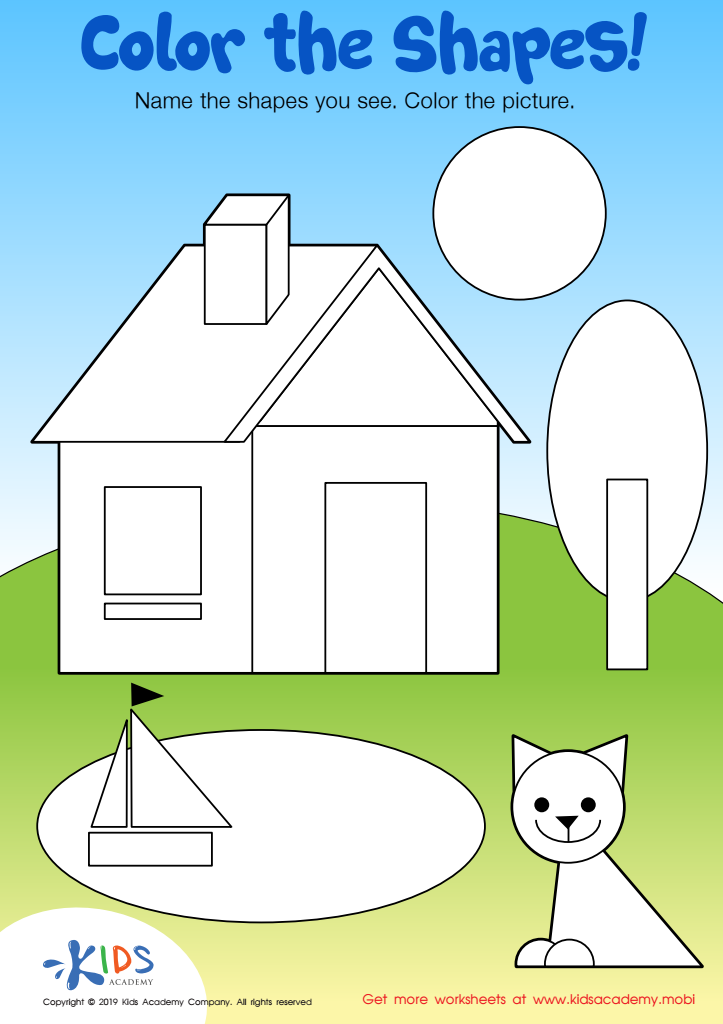
Color the Shapes Worksheet
Help your student master shape identification with this fun worksheet. Ask them to name the shapes in the picture, then color it! Ask questions like "How many squares do you see?" and "How many triangles?" to extend the learning. Identify squares, circles, triangles and rectangles with this enjoyable coloring page.
Download (PDF)
Assign to My Students
Assign to My Students
Color the Shapes Worksheet
Worksheet
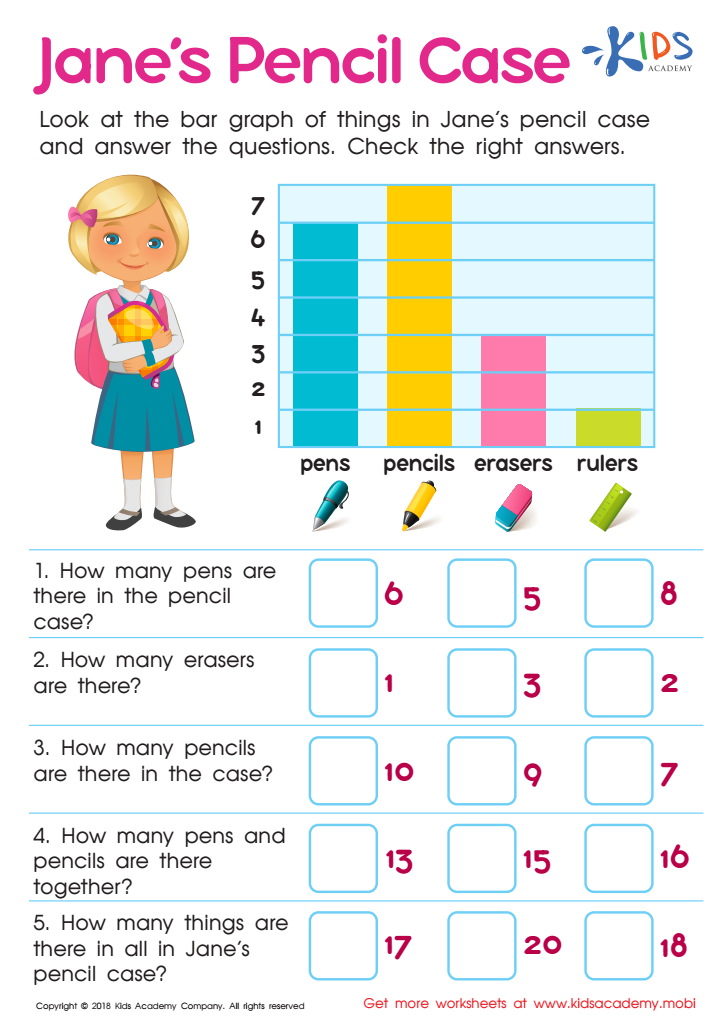
Jane's Pencil Case Worksheet
Help Jane organize her pencil case! Have your child look and the bar graph on the worksheet and interpret the data. Ask them to read each problem, then check the box next to the correct number. It's a fun way to practice reading graphs and reporting data.
Jane's Pencil Case Worksheet
Worksheet
Join Kids Academy for Free
Who is primarily going to use this learning content?







Color identification is an essential skill for children ages 6 to 9, as it lays the foundation for their cognitive and emotional development. At this age, children are increasingly engaging with their environment and developing critical thinking skills. Mastering colors enhances their ability to categorize objects, recognize patterns, and articulate their thoughts. This skill is particularly important in subjects like art and math, where colors are used to convey meaning and solve problems.
Additionally, color identification supports communication and social interactions. Children often express their feelings and preferences through colors, allowing them to connect with peers and adults on a deeper level. Understanding colors can also foster creativity, inspiring children to explore artistic endeavors, thus enabling them to express themselves more freely.
For parents and teachers, encouraging color identification can greatly enrich a child’s educational experience. It can be easily incorporated into daily activities and lessons, making learning more engaging and fun. Simple games, crafts, and interactive storytelling can all enhance this skill. Supporting color identification not only boosts academic performance but also aids emotional intelligence, making it a vital focus for holistic development in young learners.








