
Grammar practice Easy Worksheets for Ages 6-9
4 filtered results
Difficulty Level
Grade
Age
-
From - To
Subject
Activity
Standards
Help your child master the essentials of grammar with our “Easy Worksheets for Ages 6-9.” Designed for early learners, these engaging resources provide a fun and interactive way for kids to practice crucial grammar skills. Each worksheet focuses on different aspects of grammar, including parts of speech, sentence structure, punctuation, and verb tense, making learning both enjoyable and effective. Our user-friendly format ensures that young learners can build confidence in their writing and communication abilities. Perfect for classroom or home use, these worksheets empower children aged 6-9 to develop a strong foundation in grammar as they embark on their educational journey.
Favorites
With answer key
Interactive
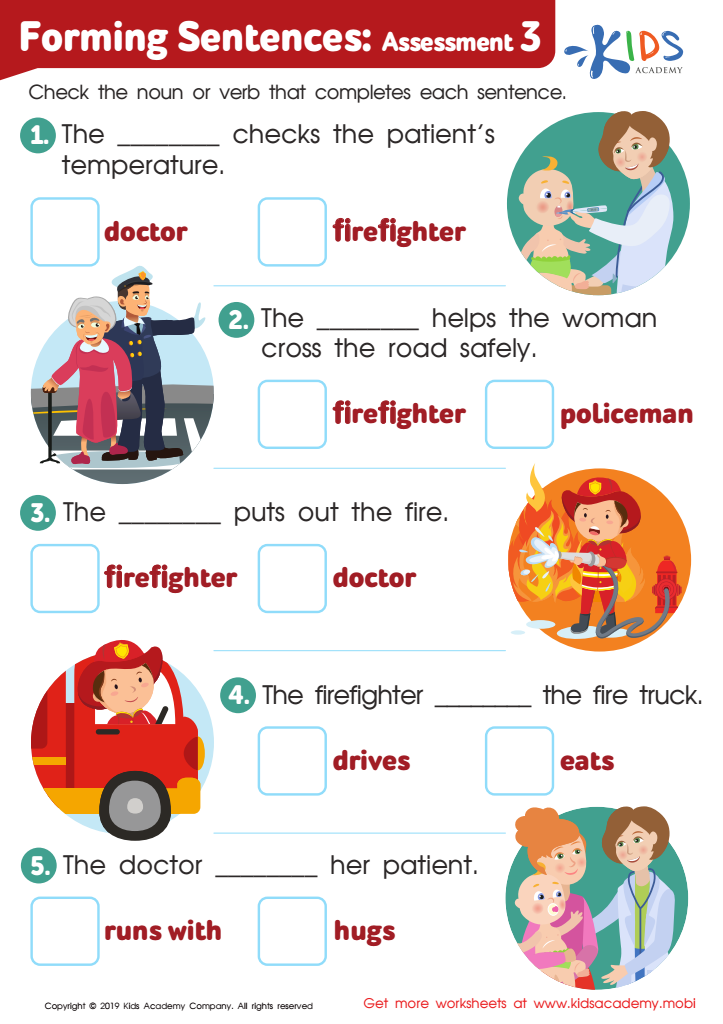
Forming Sentences: Assessment 3 Worksheet
Students must master sentence formation to be successful English learners. After grasping the ABCs and basic words, the next step is to construct sentences using those words. Worksheets like this one can help teach kids how to make sentences; they need to look at the pictures and select the correct noun or verb to complete each sentence.
 Assign to My Students
Forming Sentences: Assessment 3 Worksheet
Worksheet
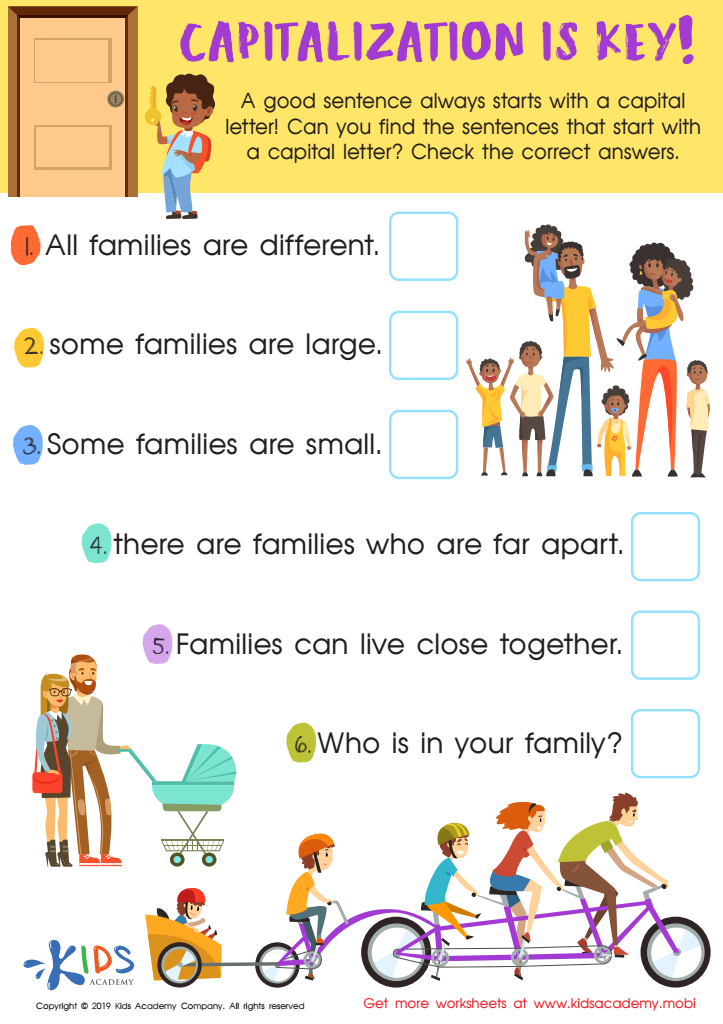
Capitalization Key Worksheet
Help your kids learn the importance of capitalizing at the start of sentences with this fun PDF! It features 6 family-themed sentences, with pictures, that your students have to find the correctly capitalized versions of. Perfect for young learners, this worksheet adds a fun twist to learning.
Capitalization Key Worksheet
Worksheet
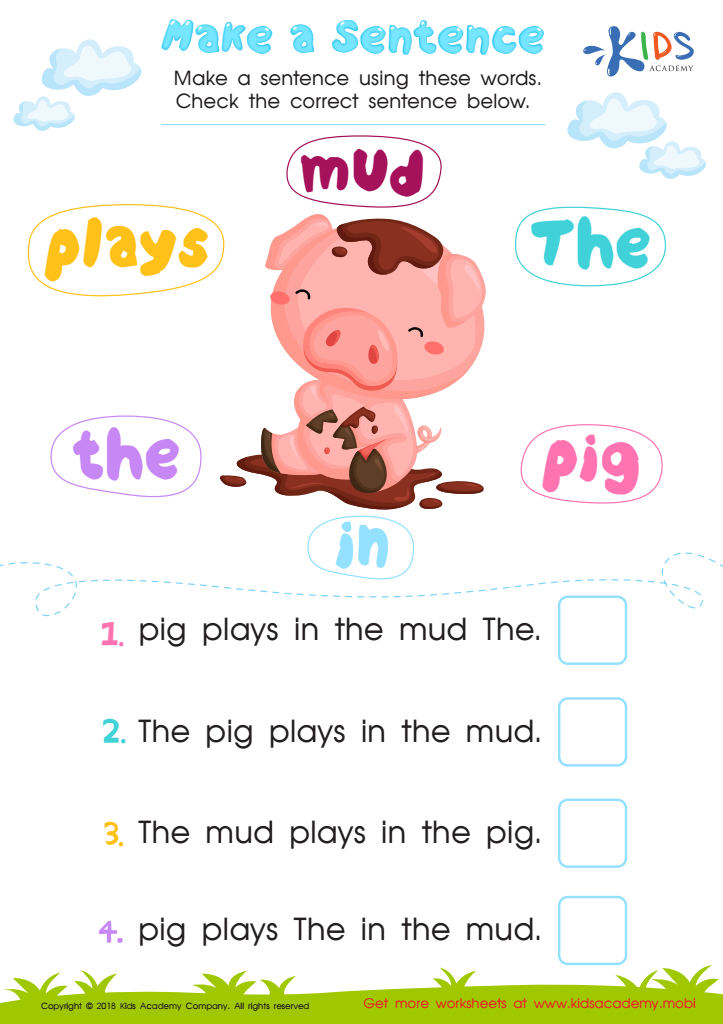
Assessment: Make a Sentence Worksheet
Help your kids identify the animal in the printout. Read the words in the bubbles and then read the four sentences in the options 1 – 4. Ask them to check the box with the correct sentence.
Assessment: Make a Sentence Worksheet
Worksheet
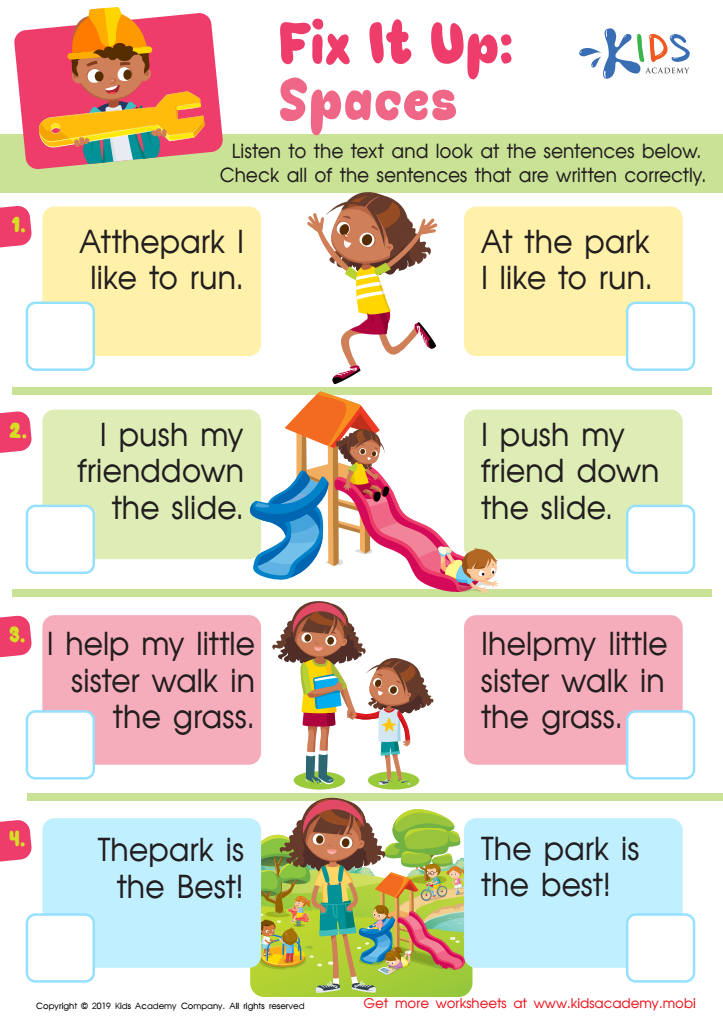
Fix Spaces Worksheet
Encourage kids to check sentences in the worksheet for proper spacing. Explain that clear, orderly writing needs spaces between words, otherwise words can become jumbled and hard to understand. Show them how to identify correctly spaced sentences.
Fix Spaces Worksheet
Worksheet
Join Kids Academy for Free
Who is primarily going to use this learning content?






.jpg)
.jpg)
Grammar practice for children aged 6-9 is crucial for their linguistic development and overall academic success. At this stage, children are beginning to understand the building blocks of language, and focusing on grammar helps them communicate clearly and effectively. Strengthening their grammar skills fosters confidence in writing and speaking, enabling them to express their thoughts and ideas with precision.
Moreover, proper grammar is essential for reading comprehension; children who grasp grammar rules are better equipped to understand complex sentences and literary structures. This foundational knowledge supports their transitions into more advanced texts as they progress in their education.
Engaging activities that make grammar enjoyable can cultivate a positive attitude towards language learning. By incorporating fun exercises, teachers and parents can encourage a sense of curiosity and exploration in young learners.
Learning grammar can also enhance cognitive skills, as children analyze sentence structures and work through various language tasks. The social aspect of practicing grammar through group activities or family discussions promotes collaboration and communication skills.
In summary, parents and teachers should prioritize grammar practice for children ages 6-9 as it is foundational for effective communication, reading comprehension, and overall academic achievement. Investing in these skills now sets children up for success in their future educational journeys.








