Punctuation understanding Easy Worksheets for Ages 6-9
3 filtered results
-
From - To
Enhance your child's writing skills with our "Punctuation Understanding Easy Worksheets for Ages 6-9"! These engaging worksheets are designed to help young learners master essential punctuation marks, including periods, question marks, exclamation points, and commas. Each activity is tailored to make learning punctuation enjoyable and accessible, fostering confidence and proficiency. Perfect for classroom use or at-home practice, our worksheets provide a solid foundation for developing strong writing skills. Visit us today to discover how our fun, educational resources can support your child's journey towards punctuation mastery!
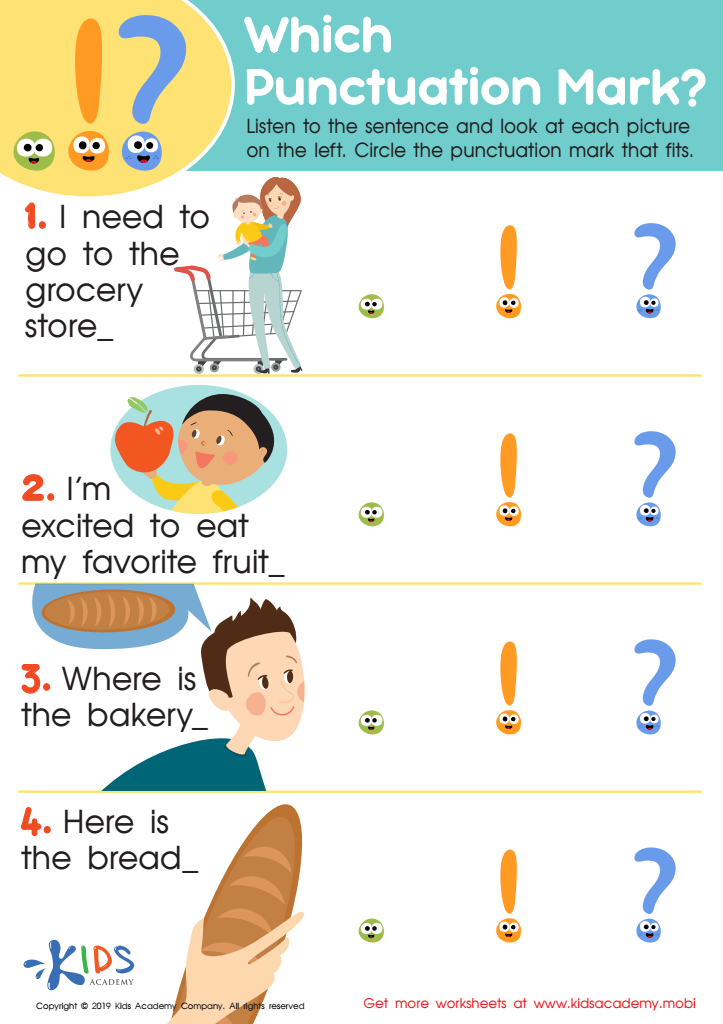
Which Punctuation Mark Worksheet
 Assign to My Students
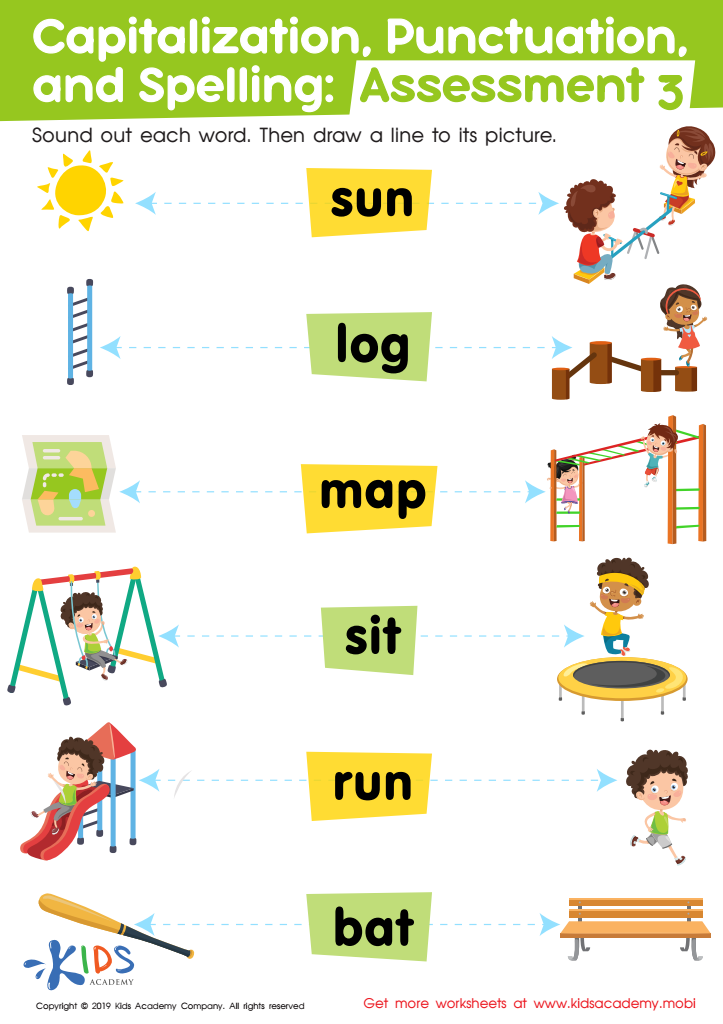
Capitalization. Punctuation. Spelling. Assessment 3 Worksheet
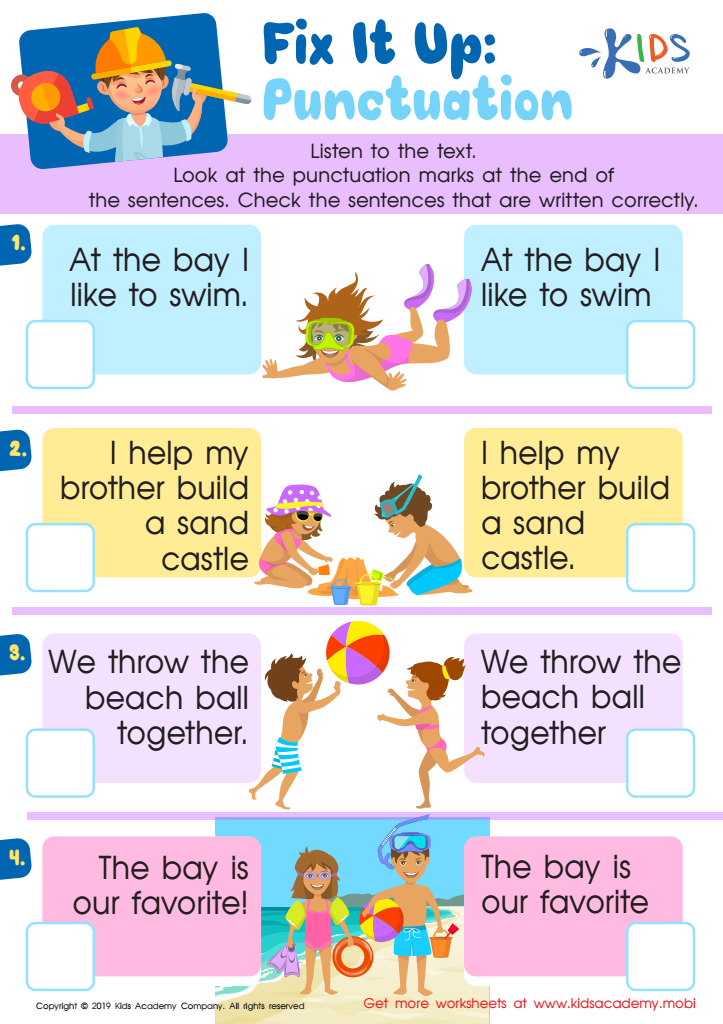
Fix Punctuation Worksheet




.jpg)



Punctuation is a fundamental component of language that helps clarify meaning, separate ideas, and ensure the readability of text. For children aged 6-9, mastering punctuation is crucial as it forms the foundation for effective communication both in writing and reading. During these formative learning years, a solid grasp of punctuation marks—such as periods, commas, question marks, and exclamation points—enables children to write clearer and more expressive sentences.
Parents and teachers play a significant role in facilitating this understanding. Correct punctuation aids in developing reading fluency and comprehension, essential skills for academic success. For instance, a well-placed comma can change the meaning of a sentence entirely, thus teaching children about its importance helps avoid confusion and misunderstanding.
Moreover, punctuation understanding supports children’s cognitive development by enhancing their ability to organize thoughts logically and coherently. Early exposure also lays the groundwork for more advanced language skills, contributing to their overall literacy. Simple and fun activities, such as reading together, interactive writing exercises, and punctuation-focused games, can make this learning process enjoyable and effective.
In essence, prioritizing punctuation for young children equips them with critical communication tools that will benefit their lifelong learning and personal expression, making it an indispensable aspect of their early education.








