
Understanding opposites Easy Worksheets for Ages 6-9
4 filtered results
Difficulty Level
Grade
Age
-
From - To
Subject
Activity
Standards
Unlock the fun of learning opposites with our "Understanding Opposites Easy Worksheets" designed specifically for children aged 6-9. This resource aims to enhance comprehension skills while providing engaging activities that make learning enjoyable. Each worksheet is filled with age-appropriate exercises that challenge young minds through matching, fill-in-the-blanks, and creative illustrations. These interactive tasks help kids recognize and comprehend contrasting concepts, laying a strong foundation for language development. Perfect for educators and parents alike, these worksheets foster critical thinking and cognitive skills in a playful and supportive manner. Dive into the world of opposites and watch your child's understanding grow!
Favorites
With answer key
Interactive
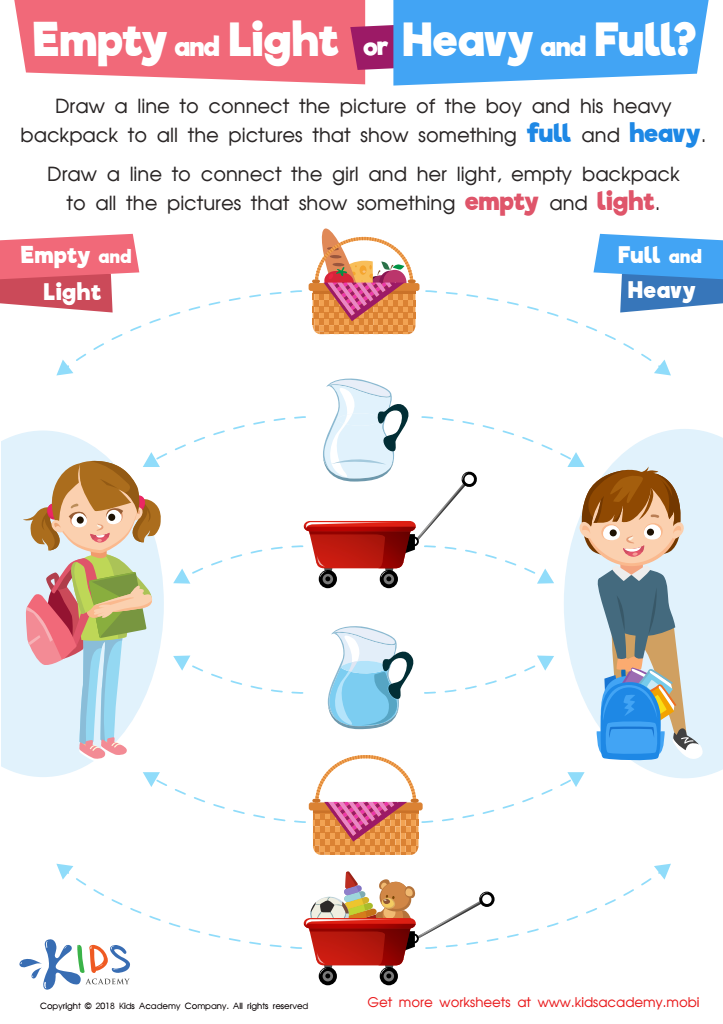
Empty and Light or Heavy and Full? Worksheet
Kids can have trouble understanding measurement, like the differences between heavy and light. This worksheet helps them associate full with heavy and empty with light, using familiar images. Plus, it's a fun way to practice fine motor skills, tracing the lines to connect the pictures.
 Assign to My Students
Empty and Light or Heavy and Full? Worksheet
Worksheet
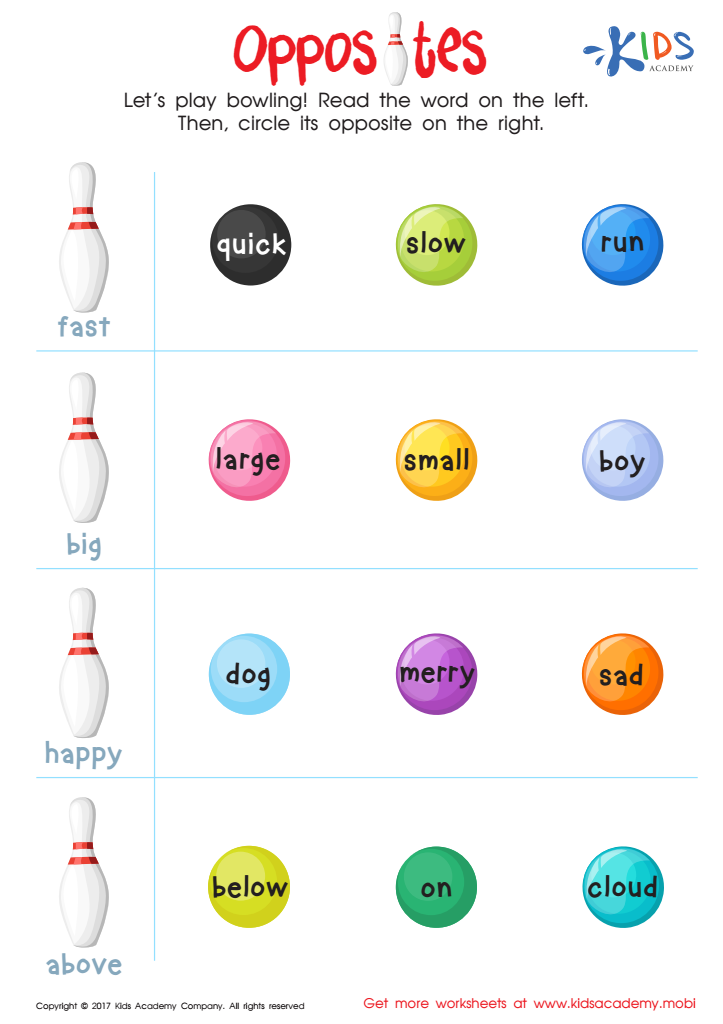
Opposites Worksheet
Have your students identify and circle the opposites of the words on the left. As a fun bowling-themed exercise, read the words and ask your kids if they know the opposites. Look through the options on the right and see if the answer is there; then, circle the correct answers.
Opposites Worksheet
Worksheet
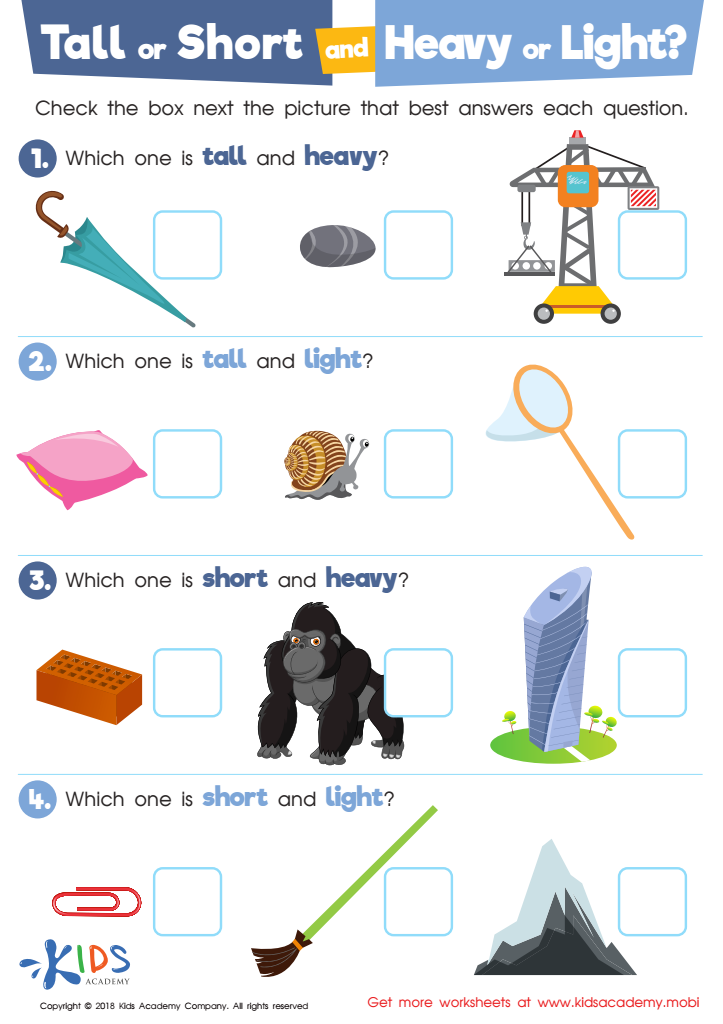
Tall or Short and Heavy or Light? Worksheet
Young children can find basic measurement concepts tricky. This PDF introduces them to the appropriate vocabulary for describing heavy, light, tall and short items, by using familiar pictures. It helps them accurately select which items fit each category.
Tall or Short and Heavy or Light? Worksheet
Worksheet
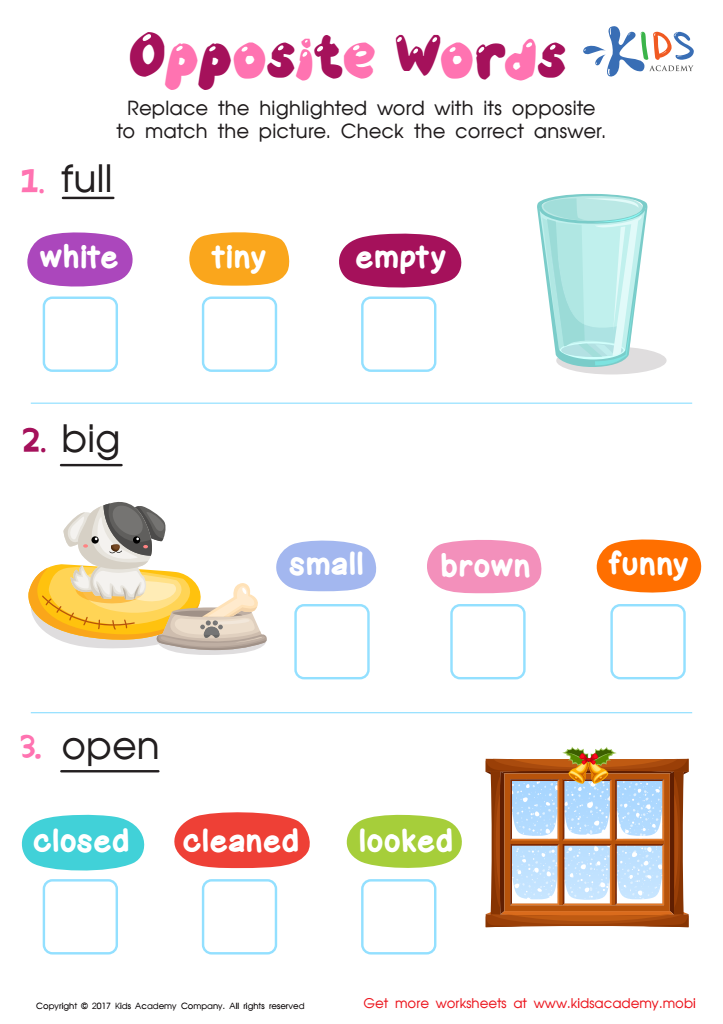
Opposite Words Worksheet
Help your child learn words and opposites. Look through a worksheet with them. Ask if they can read the underlined words. Then, ask which highlighted word is the opposite of the underlined word. The answer should match the picture.
Opposite Words Worksheet
Worksheet
Join Kids Academy for Free
Who is primarily going to use this learning content?







Understanding opposites is a fundamental concept for children aged 6-9, as it enhances their cognitive development and vocabulary. When parents and teachers emphasize opposites, they introduce essential critical thinking skills. Children learn to recognize differences, which aids in categorization and comprehension. For instance, knowing that "hot" is the opposite of "cold" helps them grasp temperature concepts and temperature-related vocabulary.
Additionally, understanding opposites can improve social skills. Children encounter various emotions; recognizing the opposite feelings (like happy vs. sad) assists them in expressing their emotions better and understanding others' feelings. This emotional intelligence is crucial for successful social interactions and empathetic relationships.
Moreover, activities focused on opposites can stimulate creativity and imagination. Exploring contrasts—like big vs. small or light vs. dark—can spark inventive play and storytelling, enriching their learning experiences.
Daily life is filled with opposites, making the concept relatable and practical. Teaching children about opposites also supports early literacy, as they become familiar with antonyms, enhancing their reading and writing skills. Overall, parents and teachers who emphasize this concept foster a deeper understanding of the world, enhance communication skills, and encourage emotional and social growth.








