Understanding time Easy Worksheets for Ages 6-9
3 filtered results
-
From - To
Help your child master the concept of time with our "Understanding Time Easy Worksheets" designed specifically for ages 6-9. These engaging worksheets offer a fun and interactive way to learn how to read clocks, recognize time in hours and minutes, and understand daily schedules. With clear illustrations and age-appropriate exercises, children will find joy in exploring concepts of time through relatable scenarios. Our worksheets also support critical thinking and problem-solving skills, making learning both effective and enjoyable. Perfect for homeschoolers or classroom use, our resources cater to various learning styles and pave the way for a solid foundation in time management. Dive in today!
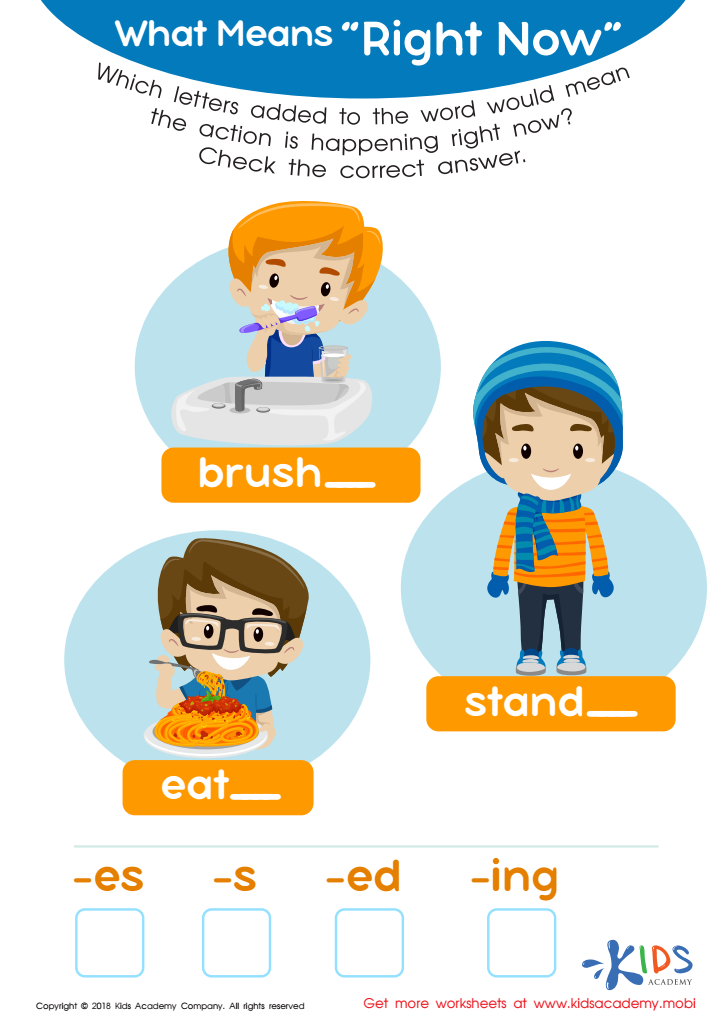
What Means "Right Now" Worksheet
 Assign to My Students
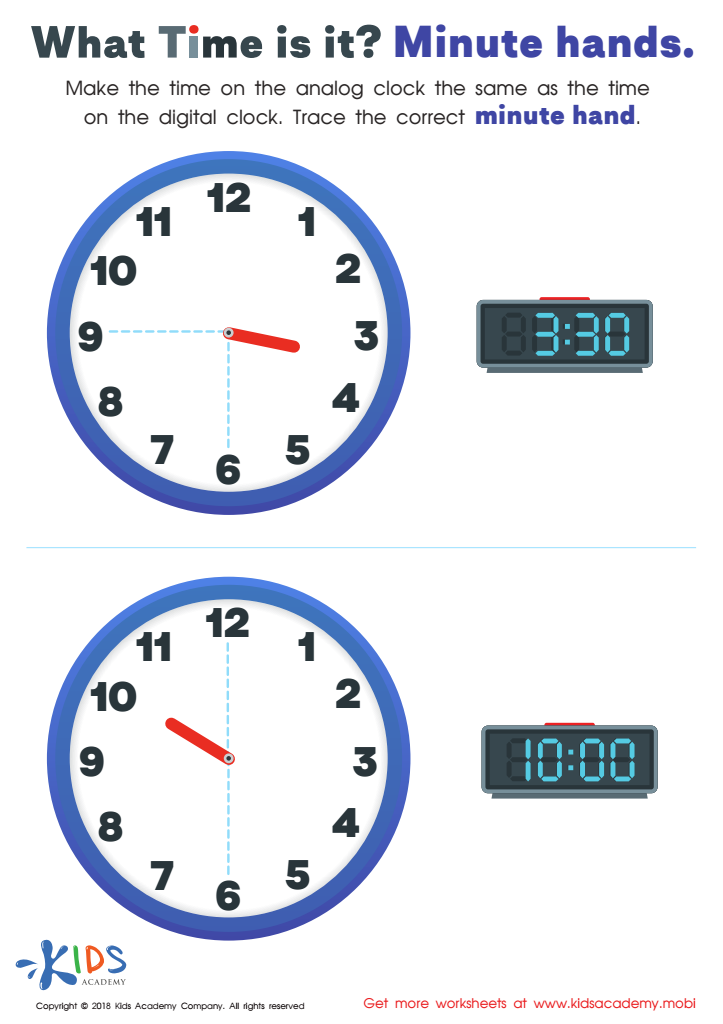
What Time Is it? Minute Hands Worksheet
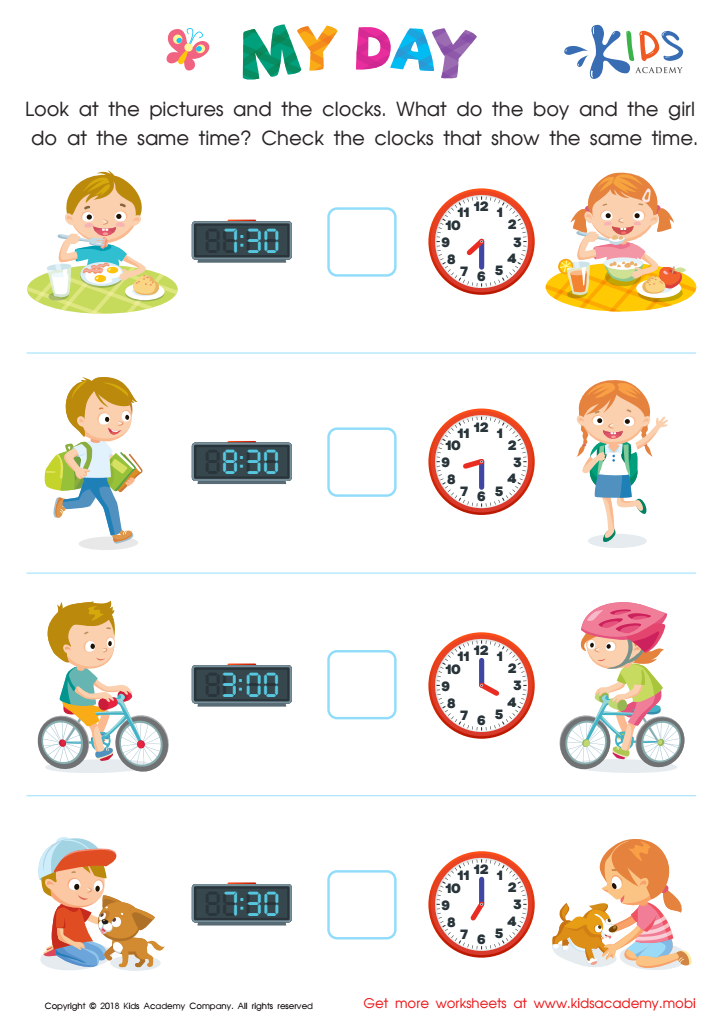
My Day Worksheet


.jpg)





Understanding time is crucial for children aged 6-9, as it lays the foundation for essential life skills. During these formative years, children encounter routines, schedules, and various activities that require time management. Parents and teachers should care about teaching this concept because it fosters independence and responsibility.
When children learn to read clocks, understand concepts of minutes and hours, and differentiate between morning and evening, they become more adept at planning their day. This directly impacts their ability to arrive on time for school, manage homework assignments, and engage in extracurricular activities.
Moreover, grasping the concept of time enhances learning in other subjects, particularly mathematics, as children begin to understand cycles, sequencing, and basic arithmetic through timetables.
Beyond academics, understanding time benefits social development. For instance, children learn to cooperate during group activities, appreciate patience, and experience the structure necessary for personal development.
Ultimately, teaching time comprehension nurtures critical thinking and decision-making skills. By emphasizing this foundational skill, parents and teachers empower children to navigate their surroundings effectively and cultivate habits that support lifelong learning and personal growth.








