Fine Motor Skills Easy Addition Worksheets for Ages 6-9
3 filtered results
-
From - To
Boost your child's fine motor skills with our engaging Easy Addition Worksheets for Ages 6-9. Designed to develop precision and control, these worksheets merge math practice with activities that strengthen hand muscles. Featuring colorful, fun, and interactive exercises, children practice addition while tracing numbers, solving puzzles, and completing patterns. Suitable for beginners, our worksheets provide dual benefits: foundational math skills and improved handwriting. Perfect for parents and teachers, these printable resources support learning at home or in the classroom, ensuring that children gain confidence and dexterity while mastering early math concepts. Explore and download today!
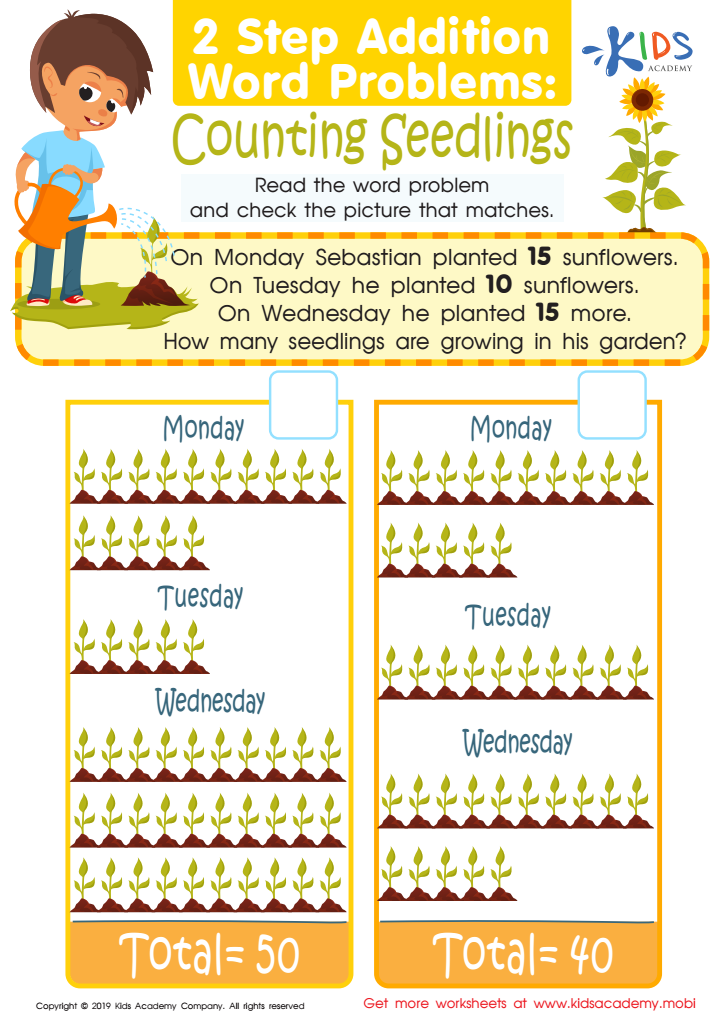
Counting Seedlings Worksheet
 Assign to My Students
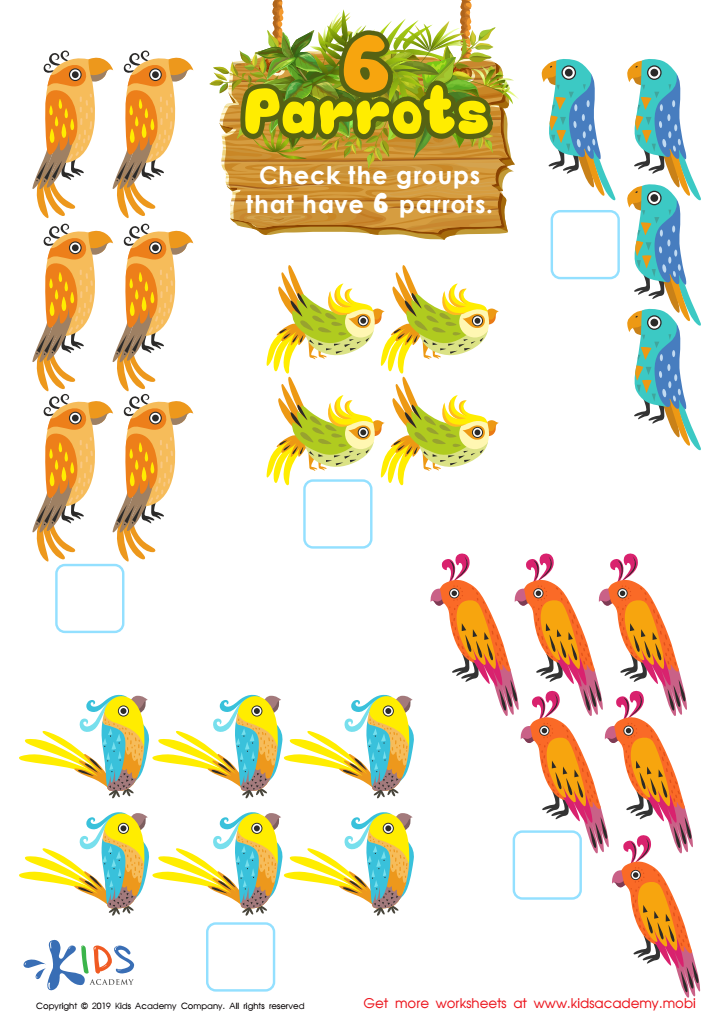
6 Parrots Worksheet
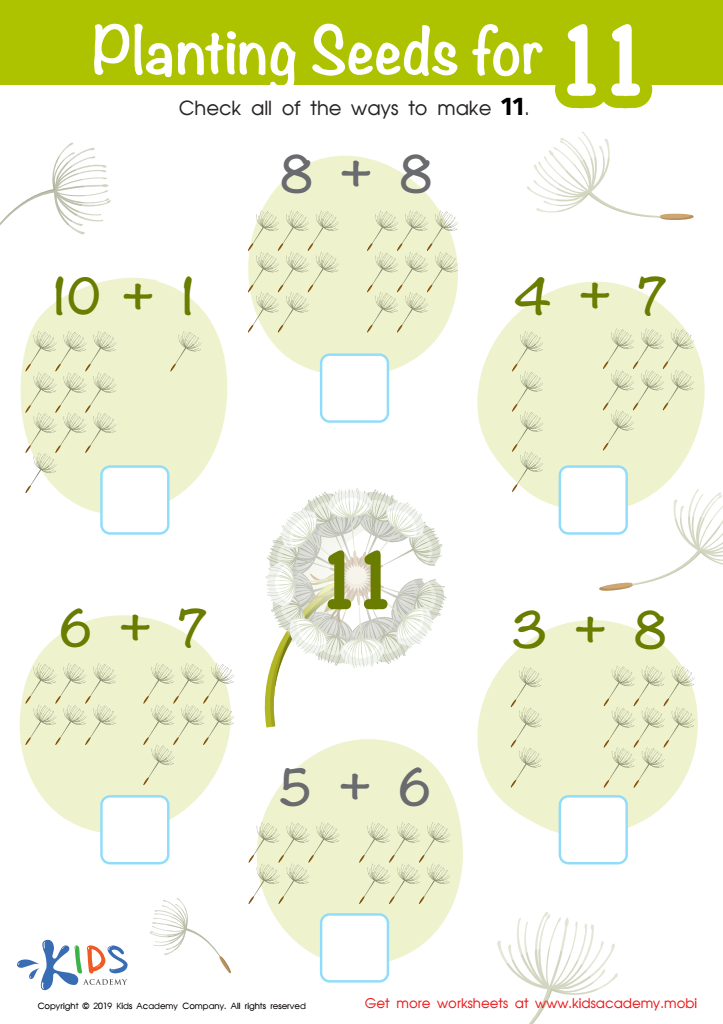
Planting Seeds for 11 Worksheet








Fine motor skills are crucial for children aged 6-9 as they form the foundation for many daily activities and academic tasks. Developing these skills involves strengthening the small muscles in the fingers, hands, and wrists, which directly impacts a child's ability to write legibly, use scissors proficiently, and engage in detailed tasks such as tying shoelaces or buttoning clothes.
At this stage, math becomes more complex, and easy addition introduces foundational arithmetic concepts. By integrating fine motor skills training with easy addition practice, you address multiple developmental areas simultaneously. For instance, manipulating small objects like counters or using an abacus not only reinforces math skills but also enhances finger dexterity and hand-eye coordination. Activities such as drawing numbers or solving addition problems through fun, hands-on activities like puzzles make learning engaging while reinforcing motor control.
Parents and teachers should prioritize fine motor skills development because it contributes to overall academic success and daily functionality. Strong motor control impacts a child's ability to focus on cognitive tasks rather than struggling with the physical mechanics of writing and manipulating objects. By emphasizing fine motor skill development alongside basic math skills, you foster a more holistic development approach, preparing children not only for more advanced math but also for a smoother transition into other academic and life skills.








