Understanding patterns Easy Basic Times Tables up to 12 Worksheets for Ages 6-9
3 filtered results
-
From - To
Explore our engaging "Understanding Patterns Easy Basic Times Tables up to 12 Worksheets" designed for ages 6-9! These fun and interactive worksheets help young learners grasp the concept of times tables by recognizing patterns in multiplication. Through colorful graphics and easy-to-follow exercises, students will enhance their math skills while building confidence. Our resources focus on critical thinking and problem-solving, making learning exciting and accessible. Ideal for classroom use or at-home practice, these worksheets are perfect for reinforcing essential concepts. Unlock the joy of mathematics and help your child master their times tables today! Access these worksheets and watch them thrive!
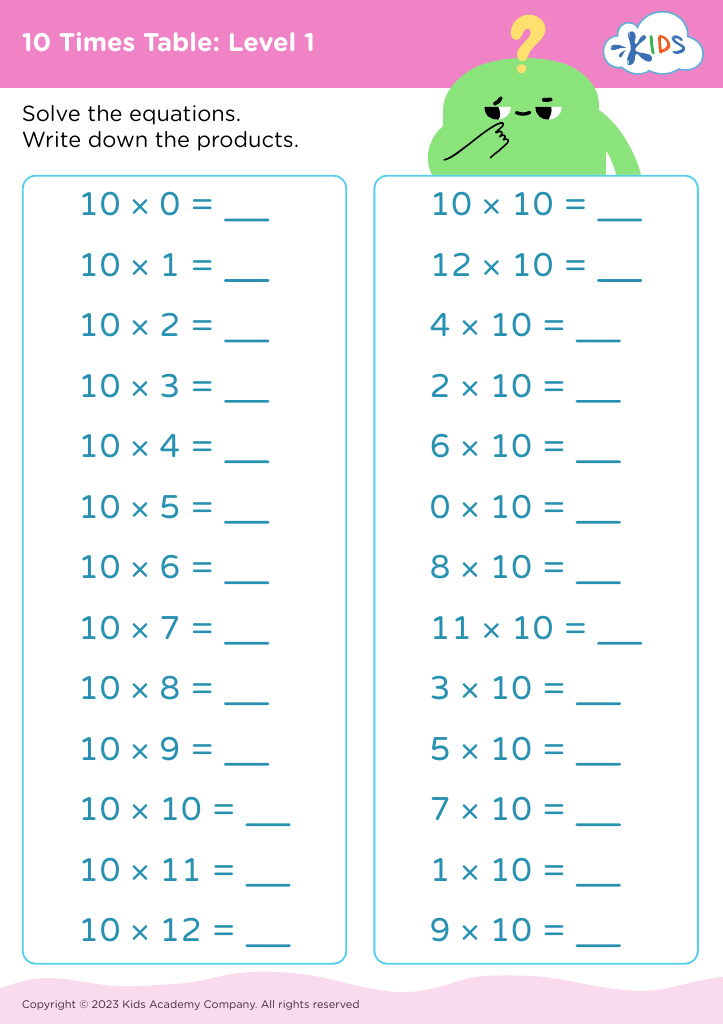
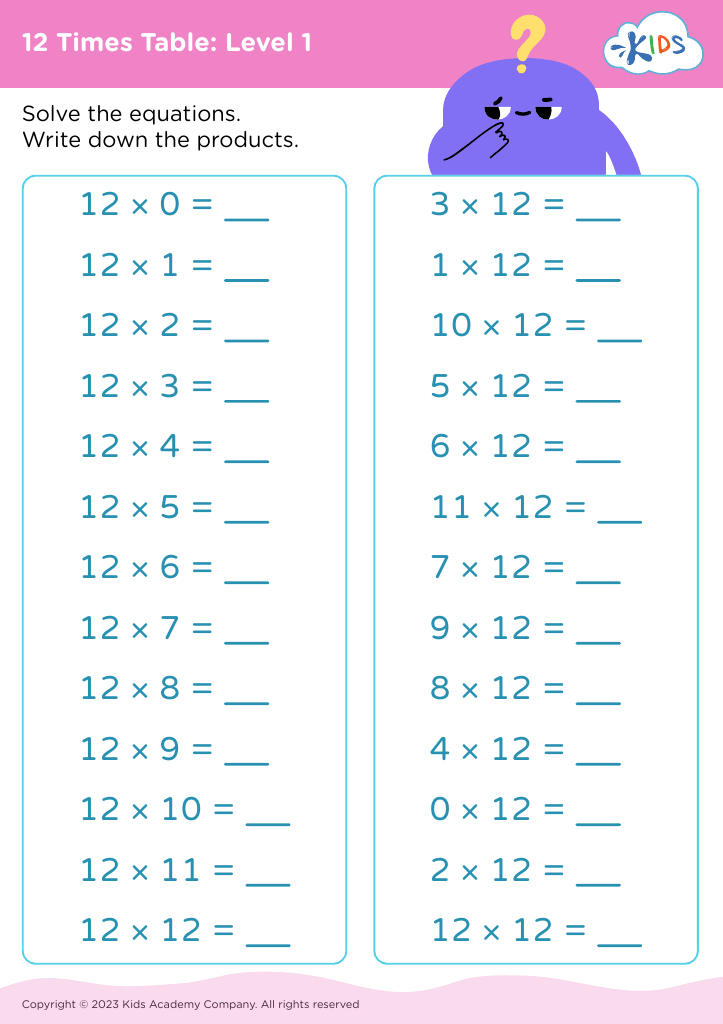
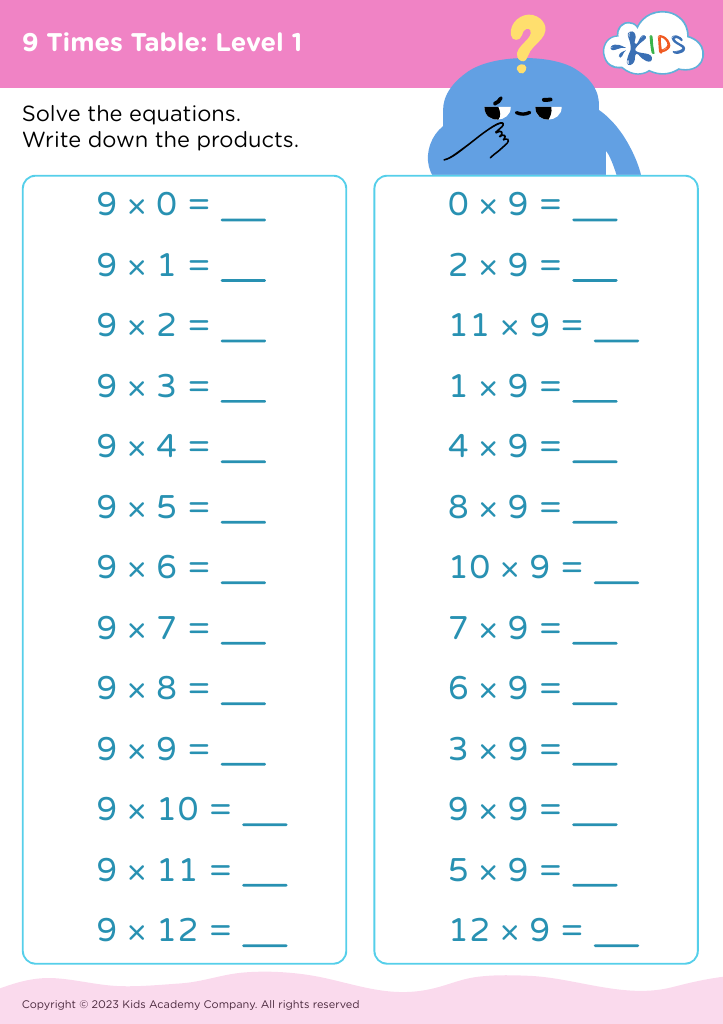


Understanding patterns in basic times tables is crucial for children ages 6-9, as it lays a strong foundation for their mathematical comprehension and problem-solving skills. Learning multiplication through identification of patterns helps children move beyond rote memorization and develop a deeper conceptual understanding. For example, recognizing that the multiplication of any number by 10 always ends in a zero allows children to quickly calculate those products.
Moreover, patterns in multiplication reinforce the idea of relationships between numbers, which is essential for more advanced math concepts they will encounter later, such as algebra. As children start to recognize patterns, like those found in the 5s (ending in 0 or 5) or 9s (where the digits in the product add up to 9), they gain confidence and a sense of accomplishment.
Parents and teachers play a vital role in facilitating this understanding by providing engaging and relatable examples. This fosters a positive attitude toward math, encouraging students to explore further. Ultimately, comprehending these patterns prepares children not only for academic success in math but also for practical life situations, as they can efficiently apply their knowledge to solve everyday problems. Thus, a solid grasp of basic times tables through patterns is an invaluable asset in a young learner’s toolkit.








