Shape Recognition Easy Fractions of Shapes Worksheets for Ages 6-9
5 filtered results
-
From - To
Introduce your child to the fascinating world of fractions with our "Shape Recognition Easy Fractions of Shapes Worksheets," designed for ages 6-9. These engaging and educational worksheets combine the basics of fractions with fun shape recognition activities, perfect for young learners. Help your child develop essential math skills by identifying and coloring fractions of various shapes. Our worksheets provide a step-by-step learning approach, ensuring your child grasps foundational concepts while enjoying the process. Ideal for classroom or home use, these worksheets make learning fractions an exciting and enjoyable adventure. Explore our collection and watch your child's confidence in math grow!
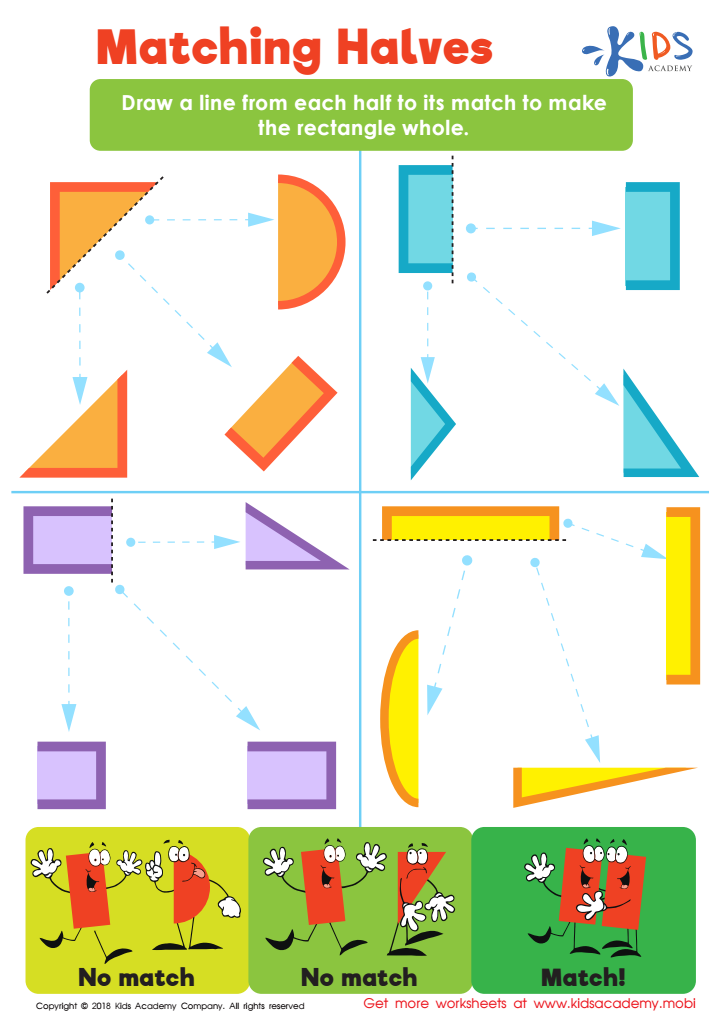
Matching Halves Worksheet
 Assign to My Students
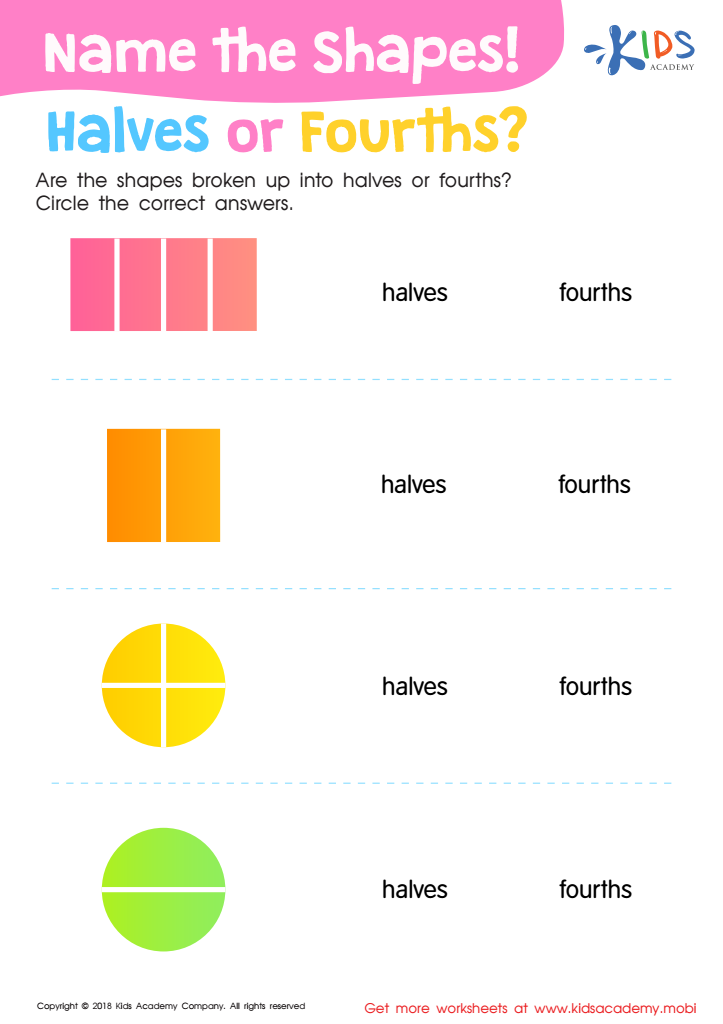
Name the Shapes Halves or Fourths? Worksheet
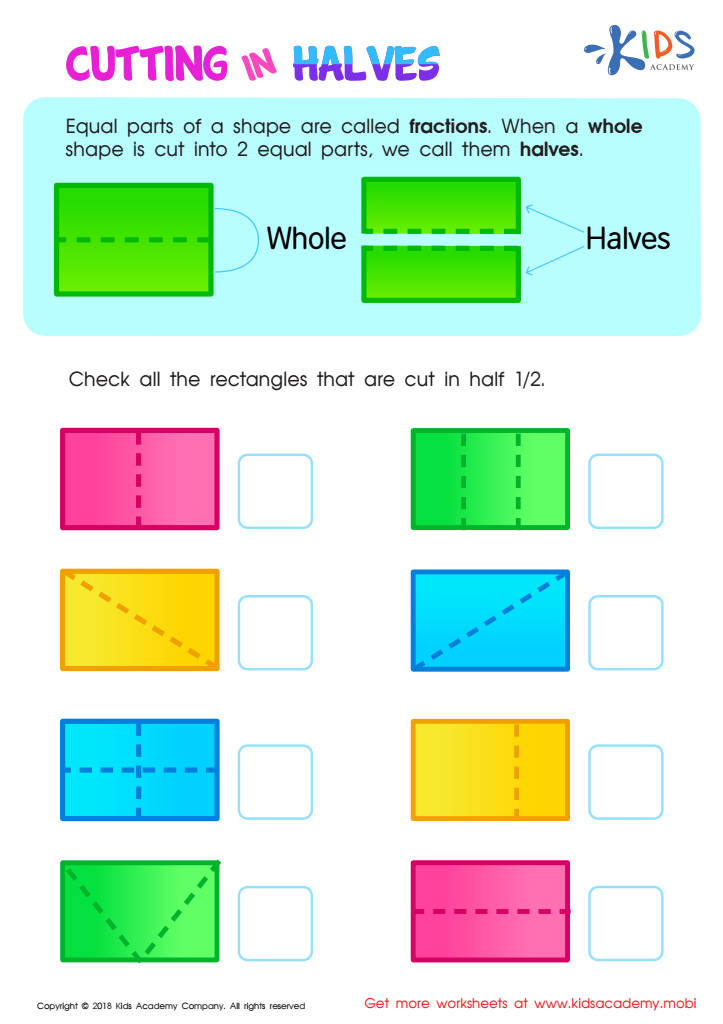
Cutting in Halves Worksheet
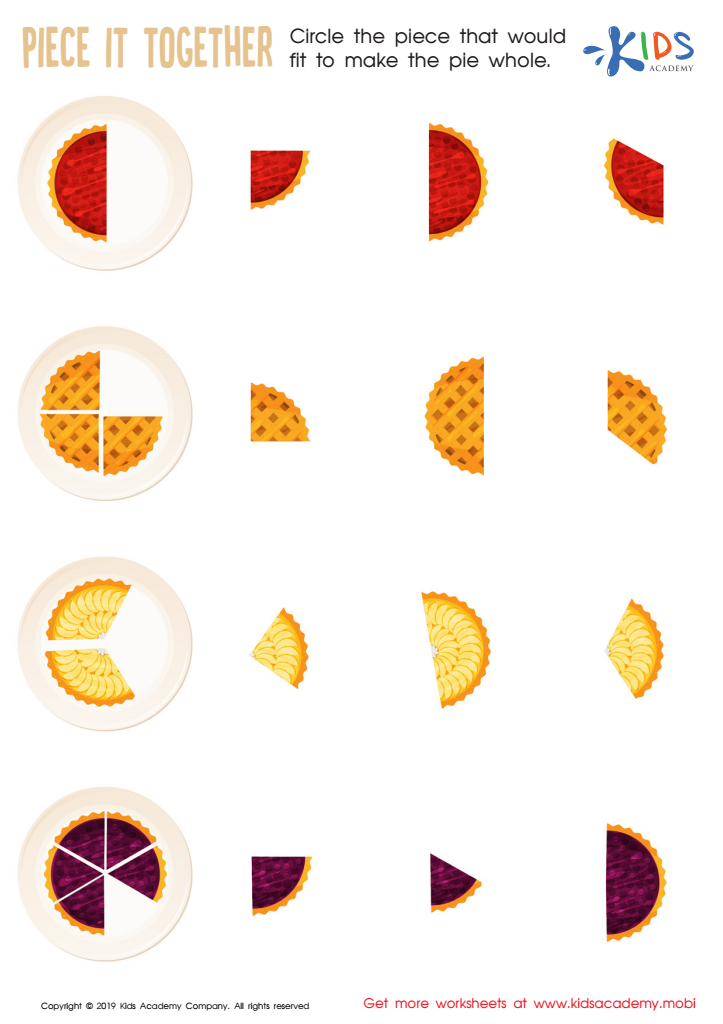
Piece it together Worksheet
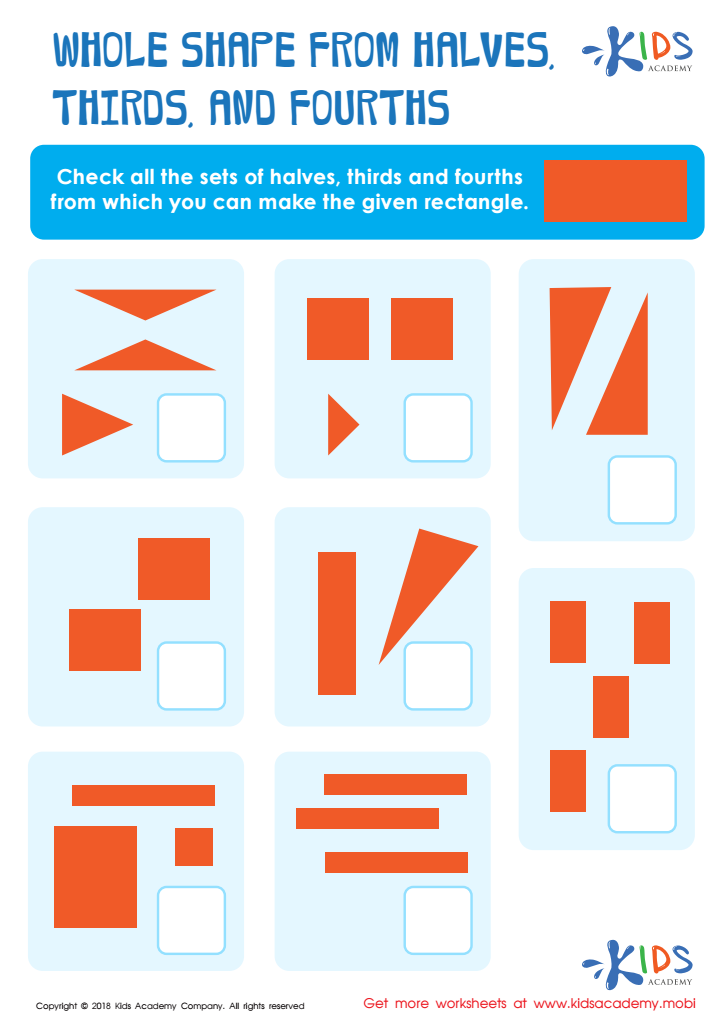
Whole Shape from Halves, Thirds and Fourths Worksheet








Parents and teachers should recognize the immense value in teaching young children (ages 6-9) shape recognition and fractions for several key reasons. Early exposure to these concepts lays a foundation for essential mathematical skills that are crucial for advanced learning. Understanding shapes helps children improve their spatial awareness, critical thinking, and problem-solving abilities. This foundational knowledge is not just for mathematics; it extends to understanding the world, enabling children to think more visually and creatively.
When combined with fractions, shape recognition becomes a powerful tool. Fractions teach early numeral literacy—the understanding of parts, wholes, and their relationships. When children explore fractions through shapes, they can visualize and grasp abstract numerical concepts more concretely. For example, dividing a circle into halves or quarters demystifies the concept of fractions, making it tangible and relatable. Such integrative learning methods create connections between different areas, reinforcing both geometric and arithmetic comprehension.
Moreover, these activities often involve hands-on learning which is engaging and enjoyable for young students, fostering a positive attitude towards math. A strong grasp of these basic concepts prepares children for more complex mathematical concepts in later grades, making shape recognition and fractions teaching pivotal in their early educational journey.