Basic counting skills Easy Numbers Worksheets for Ages 6-9
3 filtered results
-
From - To
Our "Basic Counting Skills Easy Numbers Worksheets for Ages 6-9" are designed to lay a solid foundation in math for young learners. These engaging worksheets focus on basic counting, number recognition, and sequencing, tailored specifically to children aged 6-9. Through fun and interactive activities, kids will enhance their numeracy skills while building confidence in their abilities. Ideal for both classroom and at-home practice, these worksheets support the development of essential counting skills, paving the way for future math success. Check out our collection to make learning numbers an enjoyable and rewarding experience for your child.
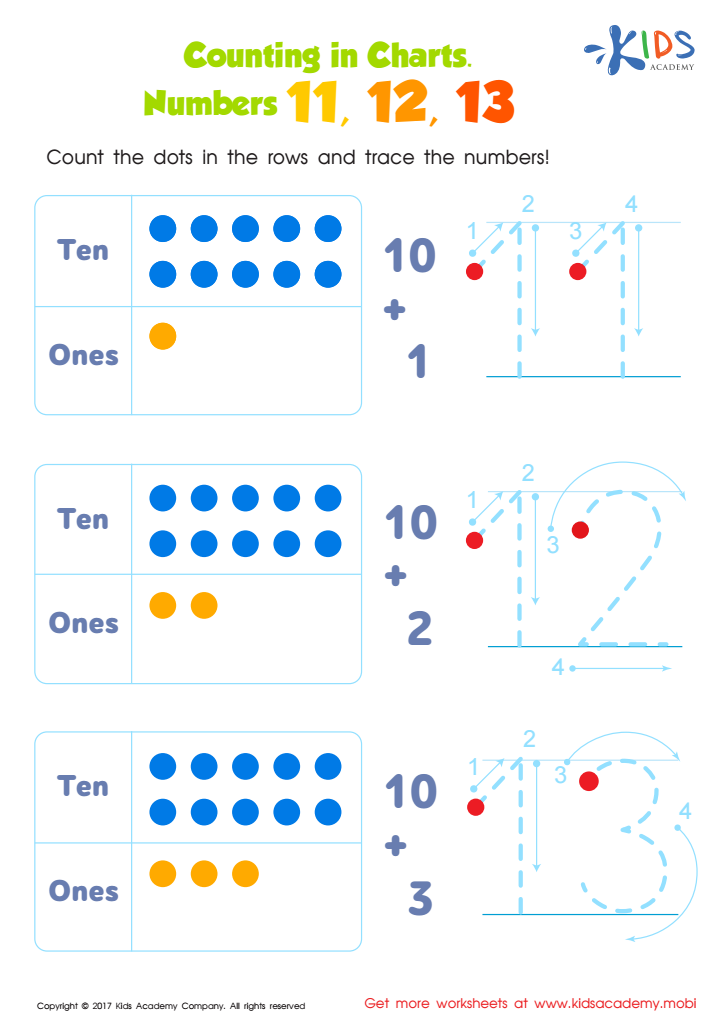
Number Tracing Worksheet For Kindergarten
 Assign to My Students
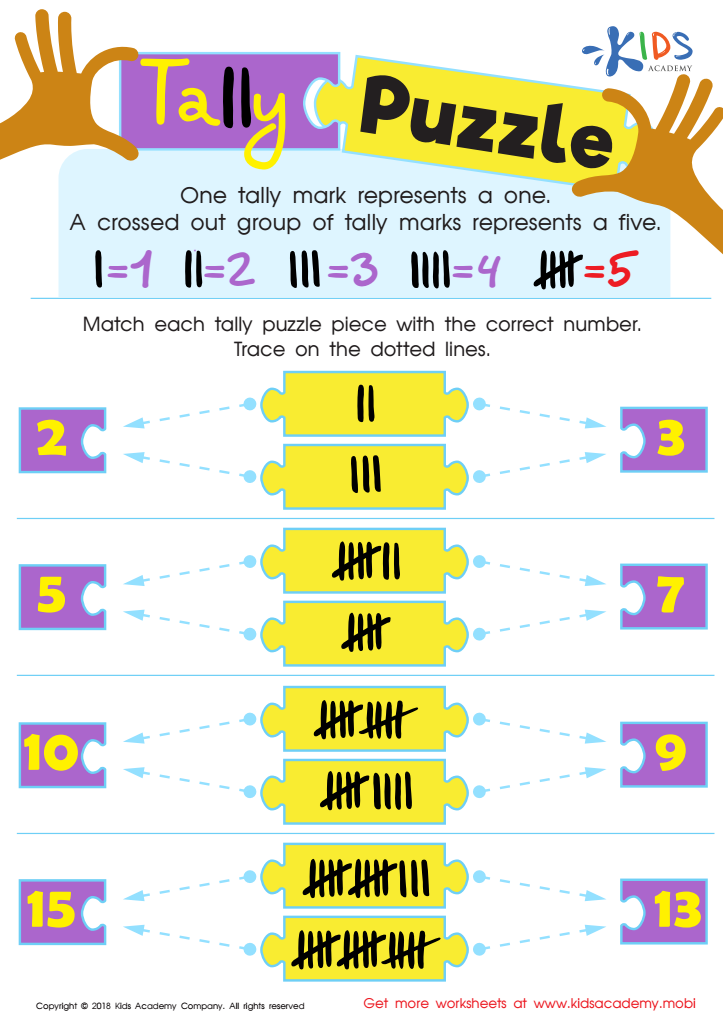
Tally Puzzle Worksheet
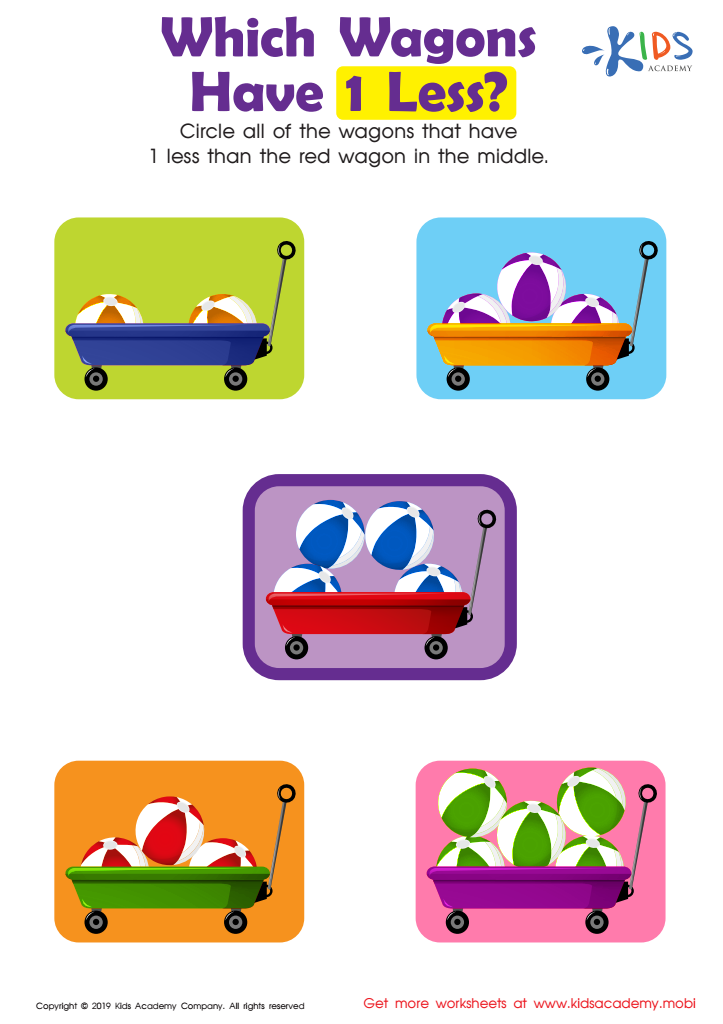
Which Wagons Have 1 Less? Worksheet








Parents and teachers should invest time and effort in fostering basic counting skills in children aged 6-9 because these skills form the foundation for all future mathematical learning. At this developmental stage, children's brains are highly receptive and capable of building strong numerical understandings when given appropriate opportunities. Mastering basic counting promotes number sense, the ability to recognize, differentiate, and understand quantities and their relationships. This foundational skill not only supports subsequent arithmetic learning—such as addition, subtraction, multiplication, and division—but also promotes logical thinking, problem-solving abilities, and overall cognitive development.
Basic counting helps children to better comprehend the world around them. Whether it's telling time, managing money, measuring ingredients for a recipe, or understanding patterns, the importance of these skills is embedded in day-to-day life. Additionally, early proficiency in mathematics is often correlated with greater confidence and reduced anxiety in more advanced mathematical concepts taught in later grades. This leads to improved academic performance across all subjects and fosters a more positive attitude towards learning.
Finally, incorporating counting activities at home and in the classroom helps build a nurturing environment where children feel supported in their academic journey. This encouragement from parents and teachers is crucial in cultivating a lifelong love of learning and persistence in the face of new challenges.








