Visual learning reinforcement Easy Math Worksheets for Ages 6-9
3 filtered results
-
From - To
Discover our "Visual Learning Reinforcement Easy Math Worksheets" tailored specifically for children aged 6 to 9! These engaging worksheets utilize vibrant illustrations and interactive activities to captivate young learners and reinforce essential math concepts. With a focus on visual learning, children can connect math with real-world objects and scenarios, boosting their understanding and retention. Covering a variety of topics such as addition, subtraction, and basic geometry, these worksheets promote independent practice and strengthen problem-solving skills. Ideal for home or classroom use, our fun and educational materials make math enjoyable while paving the way for foundational skills needed for future success.
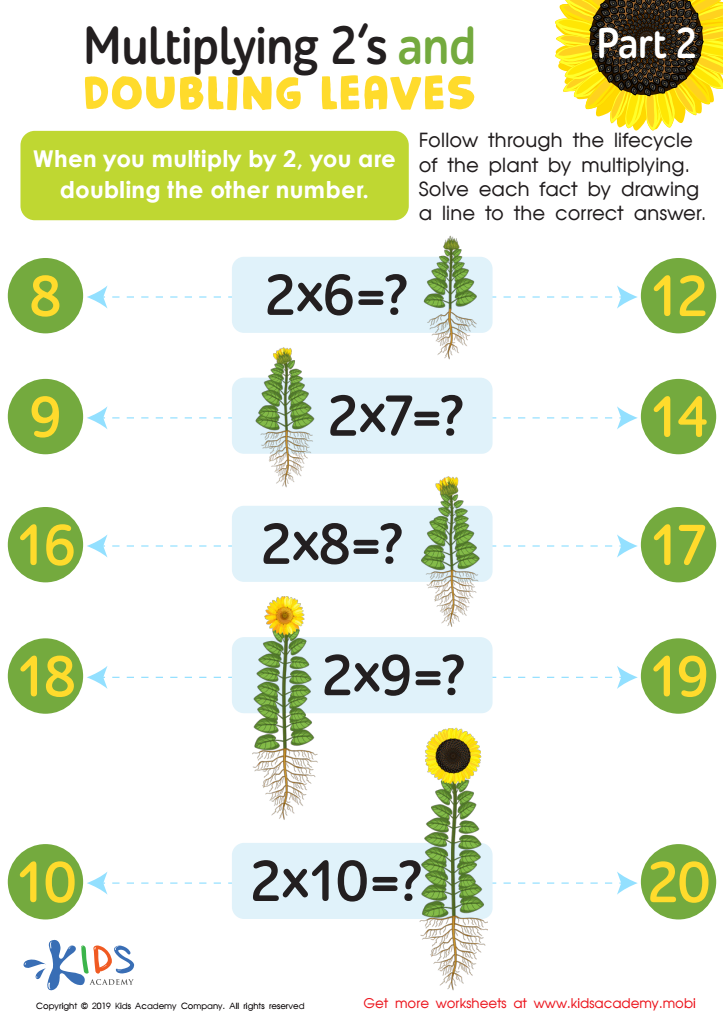
Multiplying 2’s and Doubling Leaves Part 2 Worksheet
 Assign to My Students
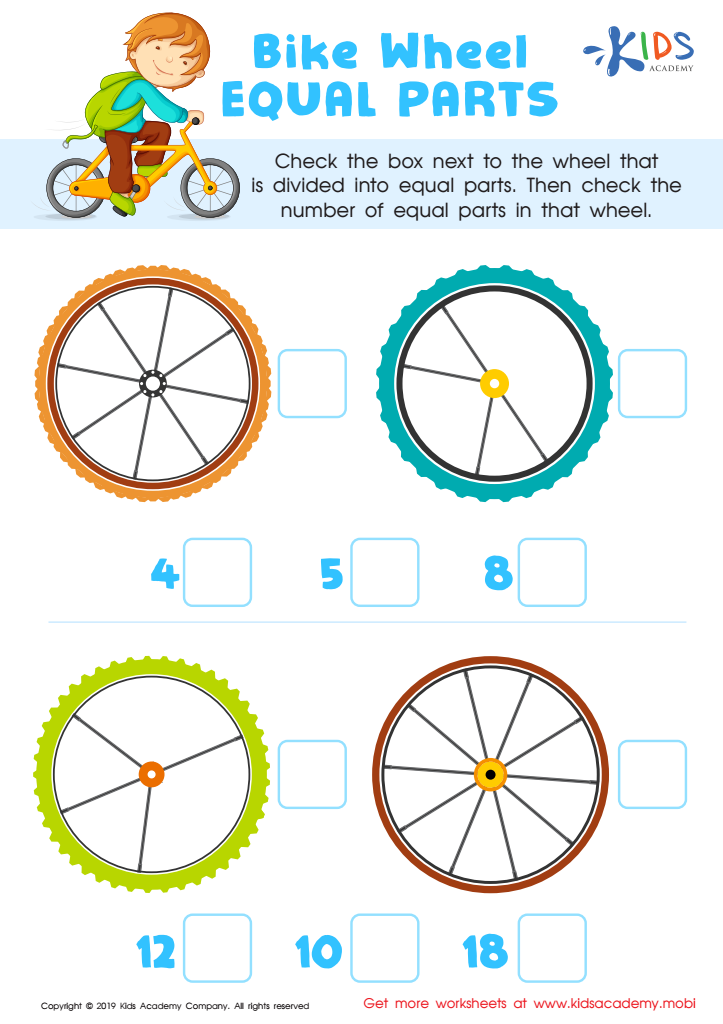
Bike Wheel Equal Parts Worksheet
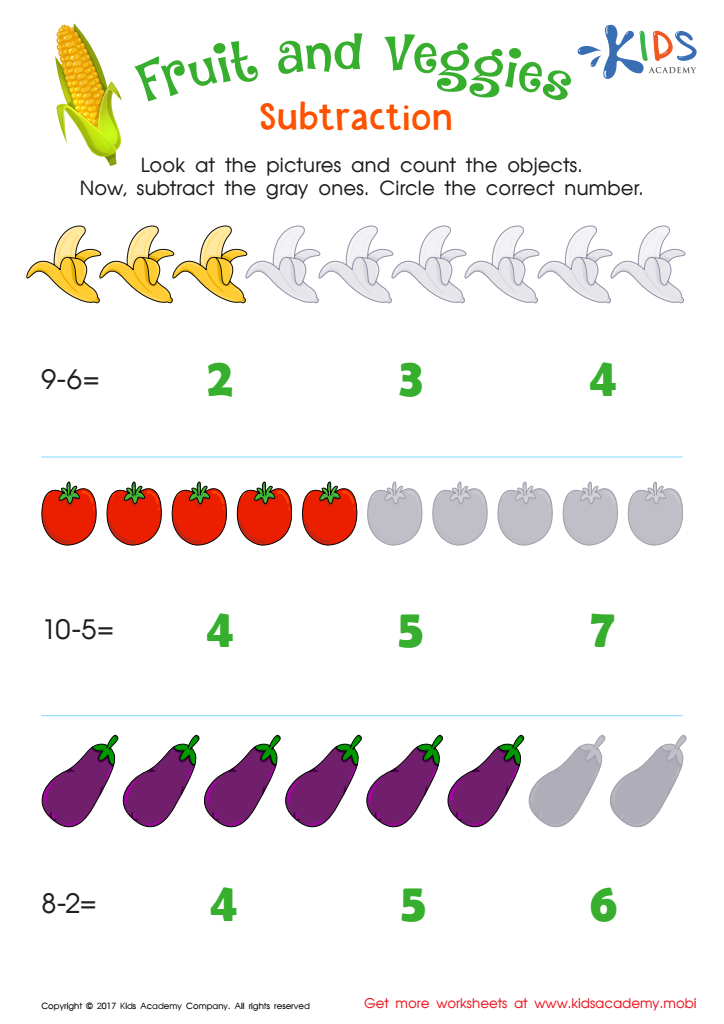
Fruit and Veggies Subtraction Worksheet




.jpg)

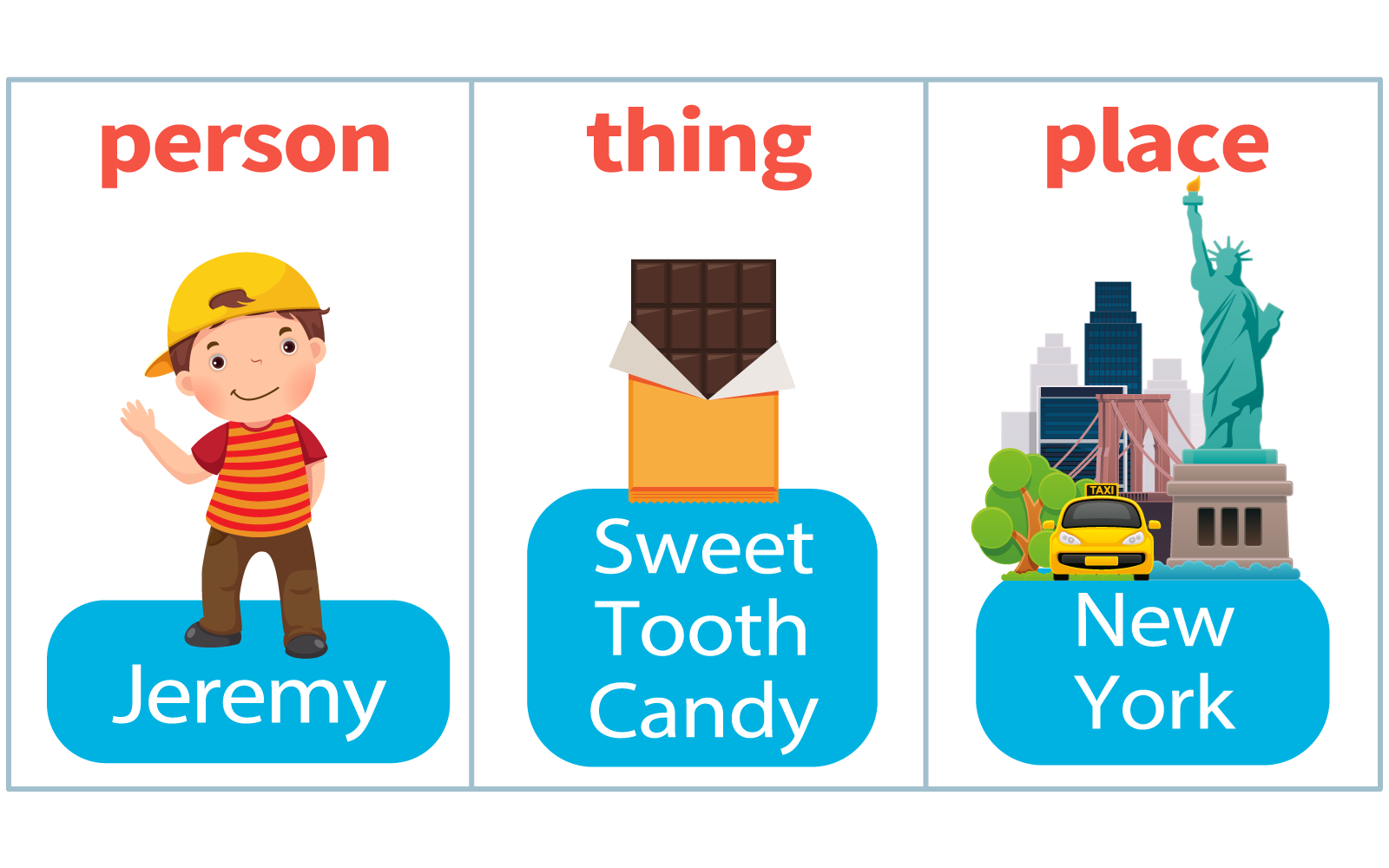
Parents and teachers should care about Visual Learning Reinforcement in Easy Math for Ages 6-9 because it fosters a deeper understanding of mathematical concepts through engaging visual aids. At this developmental stage, children are particularly receptive to visual stimuli, which aids memory retention and comprehension. Utilizing visual learning tools, such as diagrams, charts, and manipulatives, makes abstract ideas more concrete, enabling students to grasp operations and relationships in math more effectively.
Additionally, visual aids often cater to various learning styles, helping those who struggle with traditional methods find success. This inclusive approach not only boosts confidence but also promotes a positive attitude towards learning math. Furthermore, such reinforcement encourages critical thinking and problem-solving skills, as students learn to visualize equations and number relationships.
Incorporating visual learning strategies allows for active participation, making math a fun and enjoyable subject, reducing anxiety associated with math-related tasks. By embracing Visual Learning Reinforcement, parents and teachers equip children with valuable tools that extend beyond the classroom, inspiring lifelong learning habits and fostering a stronger foundation in mathematics. Investing in this method ultimately supports children in becoming confident and competent problem-solvers.








