Understanding patterns Easy Multiplication Worksheets for Ages 6-9
4 filtered results
-
From - To
Unlock the magic of math with "Understanding Patterns: Easy Multiplication Worksheets for Ages 6-9!" Specially designed for young learners, these worksheets make mastering multiplication a breeze. Kids will discover the power of patterns, fostering both numerical fluency and critical thinking. Each worksheet features engaging, age-appropriate activities that turn complex concepts into fun, manageable challenges. Ideal for in-class practice or homework, these resources support a solid mathematical foundation while keeping kids intrigued and motivated. Give your child the gift of confident problem-solving skills with this comprehensive collection!
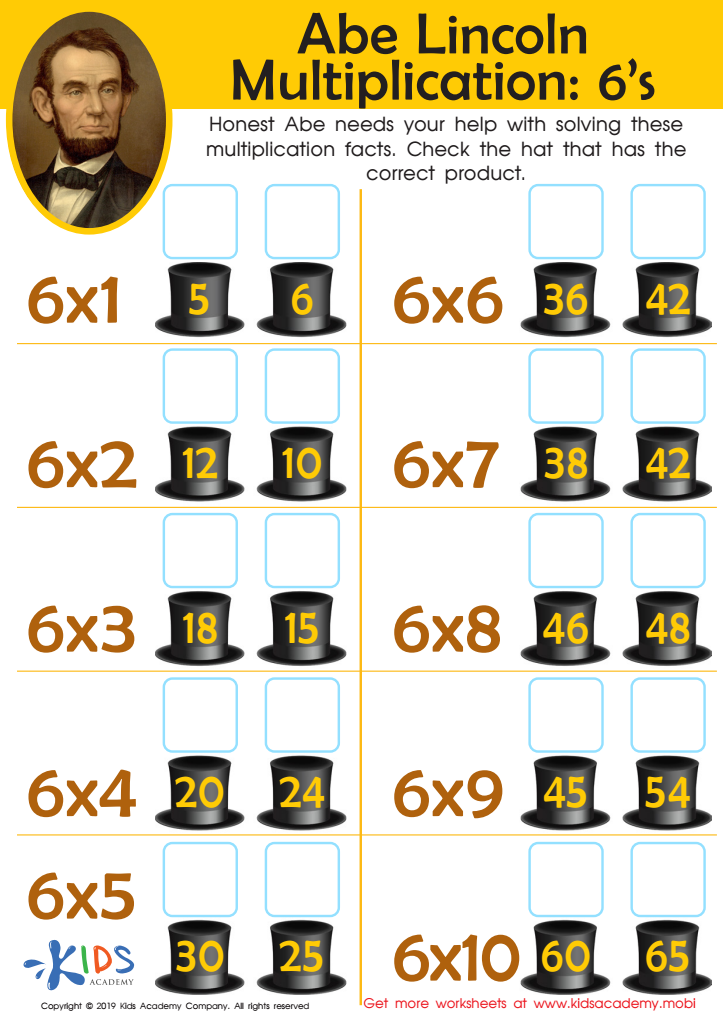
Abe Lincoln Multiplication: 6’s Worksheet
 Assign to My Students
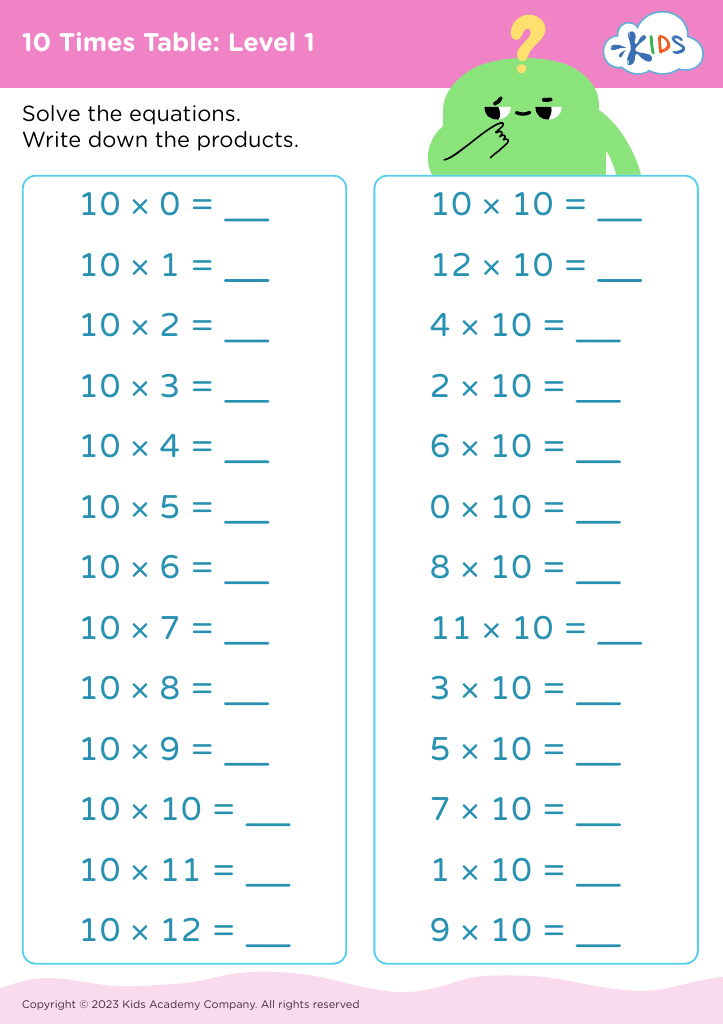
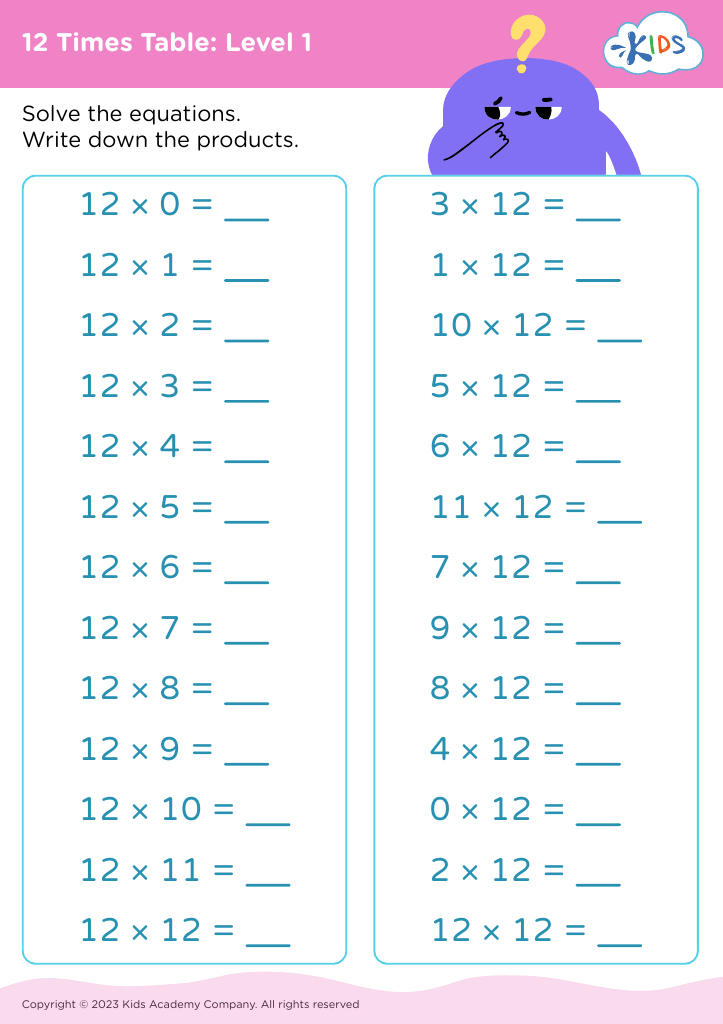
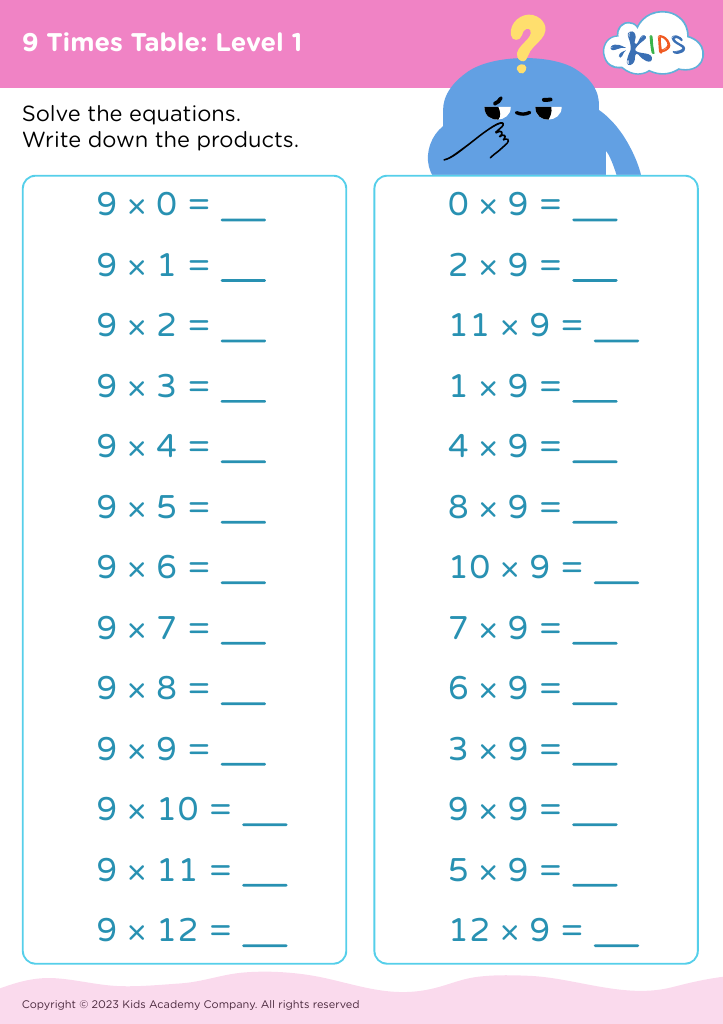








Understanding patterns and basic multiplication at an early age is fundamental for children's cognitive development and future academic success. For ages 6-9, these foundational skills are crucial as they form the building blocks of more advanced mathematical concepts.
Recognizing and understanding patterns helps children develop critical thinking and problem-solving skills. Patterns are inherently present in various aspects of math and the world around us; understanding them can make learning more intuitive and enjoyable. For instance, patterns teach repetitive structures, sequencing, and prediction, which are essential in everyday tasks and more complex mathematical operations.
Introducing easy multiplication through patterns simplifies the concept for young learners. Multiplication is essentially repeated addition, and spotting patterns in multiplication tables enables children to grasp the idea more quickly. For example, noticing that the products of multiplying by 2 always end in 0, 2, 4, 6, or 8 can significantly boost a child's confidence and capability in handling arithmetic.
Caring about these early skills sets a concrete academic foundation, encouraging a positive attitude towards math, which will be beneficial throughout their educational journey. Furthermore, these competencies aid in overall brain development, fostering logical reasoning and analytical skills that extend beyond mathematics to enhance everyday problem-solving abilities.








