Critical Thinking Easy Building Vocabulary Worksheets for Ages 6-9
3 filtered results
-
From - To
Enhance your child's language skills with our "Critical Thinking Easy Building Vocabulary Worksheets" designed for kids aged 6-9! These engaging and interactive worksheets encourage young learners to think critically while expanding their vocabulary. Each activity incorporates fun scenarios that prompt thoughtful responses, promote comprehension, and enhance language application. Aligned with educational standards, our worksheets help children grasp new words in context, facilitating deeper understanding and retention. Perfect for home or classroom use, these resources provide an enjoyable way to build essential literacy skills. Foster your child's confidence in reading and critical thinking today with our thoughtfully crafted worksheets!
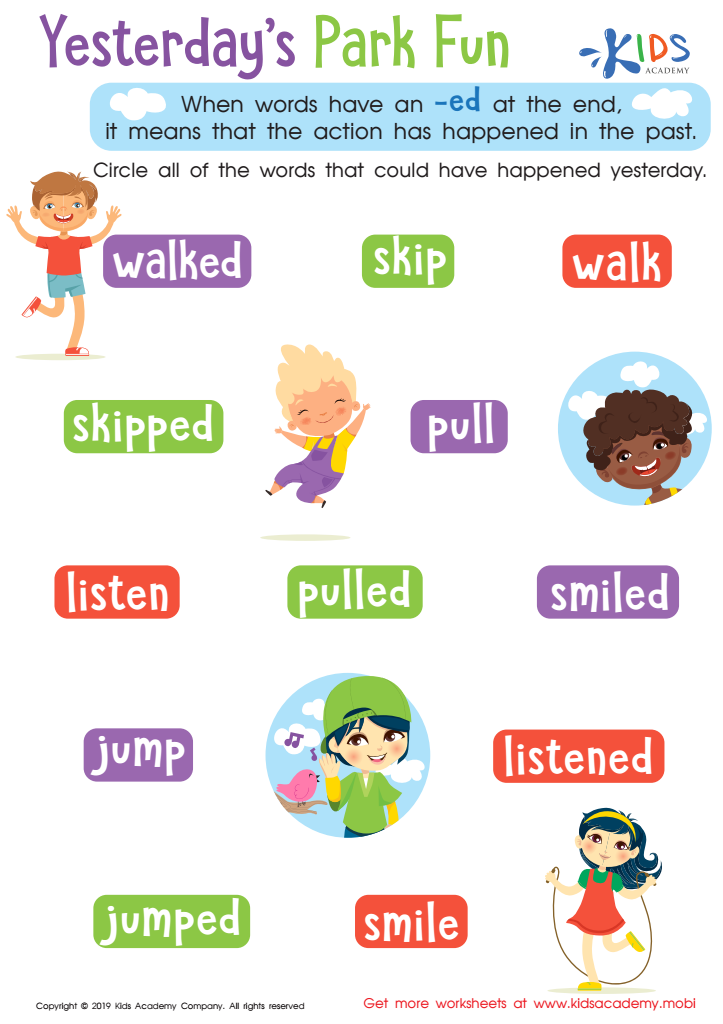
Yesterday's Park Fun Worksheet
 Assign to My Students











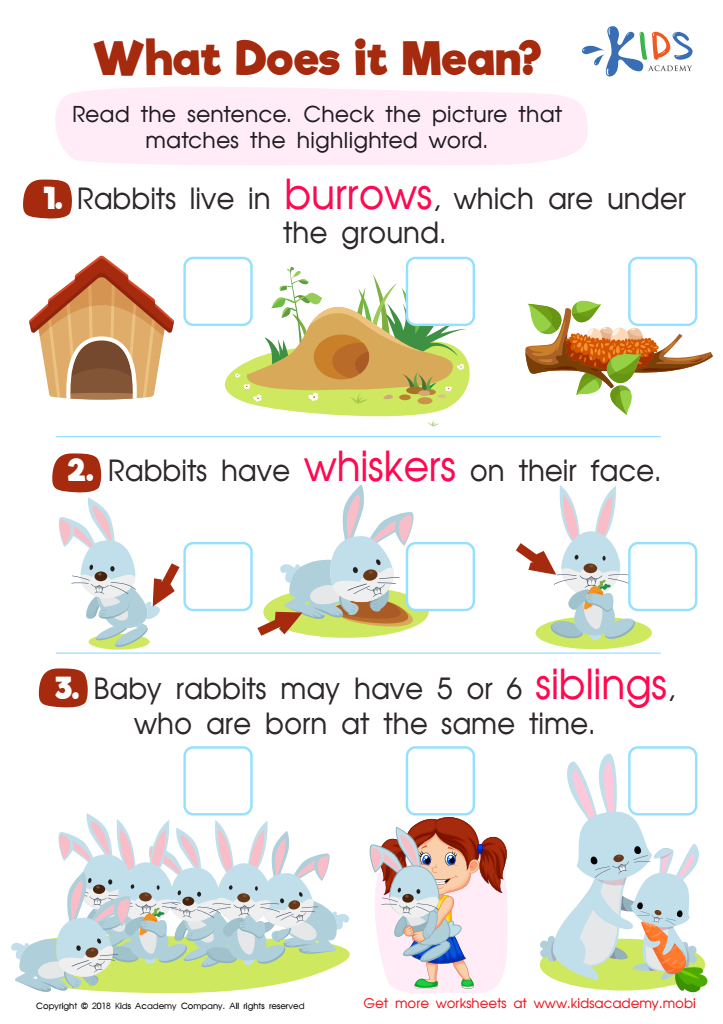
What Does It Mean? Worksheet
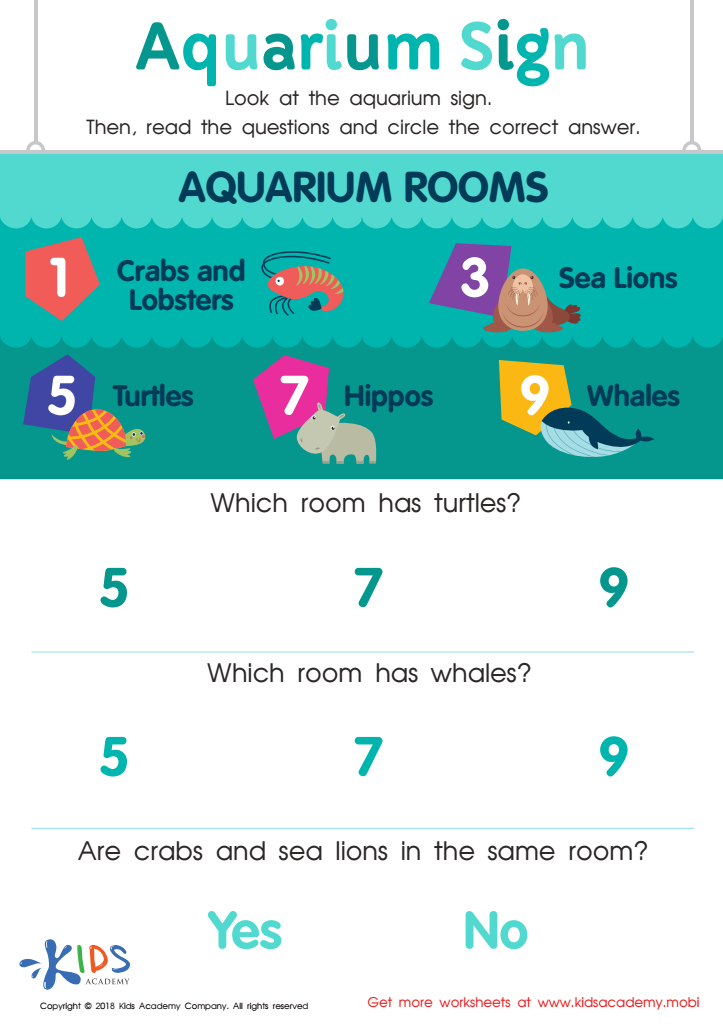
Assessment: Aquarium Sign Worksheet








Critical thinking and vocabulary building are essential components of early childhood education, particularly for children aged 6-9. During these formative years, children develop foundational skills that shape their learning and cognitive abilities. Parents and teachers should prioritize these skills for several compelling reasons.
Firstly, critical thinking cultivates the ability to analyze, evaluate, and synthesize information, which is crucial for problem-solving across various subjects. When children learn to think critically, they become more discerning consumers of information, enabling them to navigate an increasingly complex world.
Secondly, an expansive vocabulary enhances communication skills. As children learn new words, they gain the tools to express their thoughts and emotions more articulately. This not only boosts their confidence in discussions and presentations but also fosters a love for reading, allowing them to explore diverse ideas and cultures.
Moreover, combining critical thinking with vocabulary development prepares students for academic challenges ahead. When children can effectively articulate their ideas while evaluating concepts critically, they build a solid academic foundation.
In summary, emphasizing critical thinking and vocabulary for early learners equips them with essential life skills that extend beyond the classroom, promoting success and lifelong learning. Hence, prioritizing these skills is a crucial investment in their future.