Alphabet Recognition Easy Alphabet Worksheets for 6-Year-Olds
6 filtered results
-
From - To
Discover engaging Alphabet Recognition Worksheets designed specifically for 6-year-olds, perfect for fostering early literacy skills! Our easy-to-use resources help children recognize letters through fun activities that keep their interest alive. Each worksheet is crafted to reinforce letter identification, both uppercase and lowercase, through colorful illustrations, tracing exercises, and whimsical games. This approach not only makes learning enjoyable but also encourages independent practice. Watch your child build a solid foundation in alphabet knowledge while developing essential fine motor skills. Explore our variety of printable worksheets and make learning the alphabet a delightful experience for your young one today!
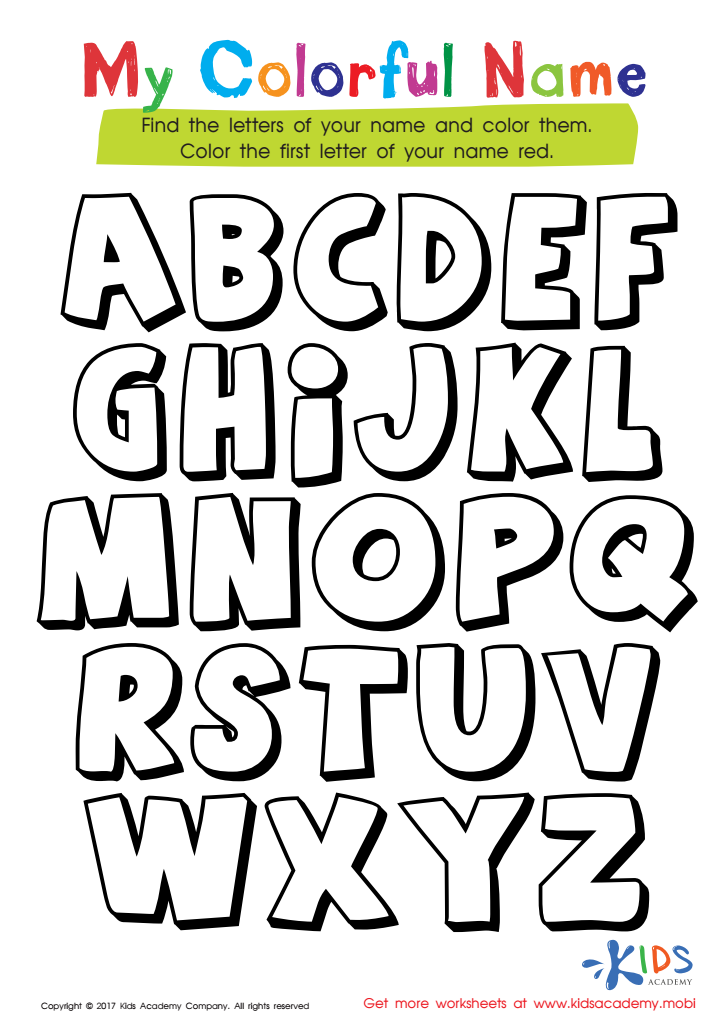
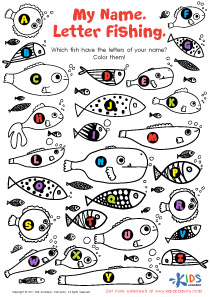
My Colorful Name Worksheet
 Assign to My Students
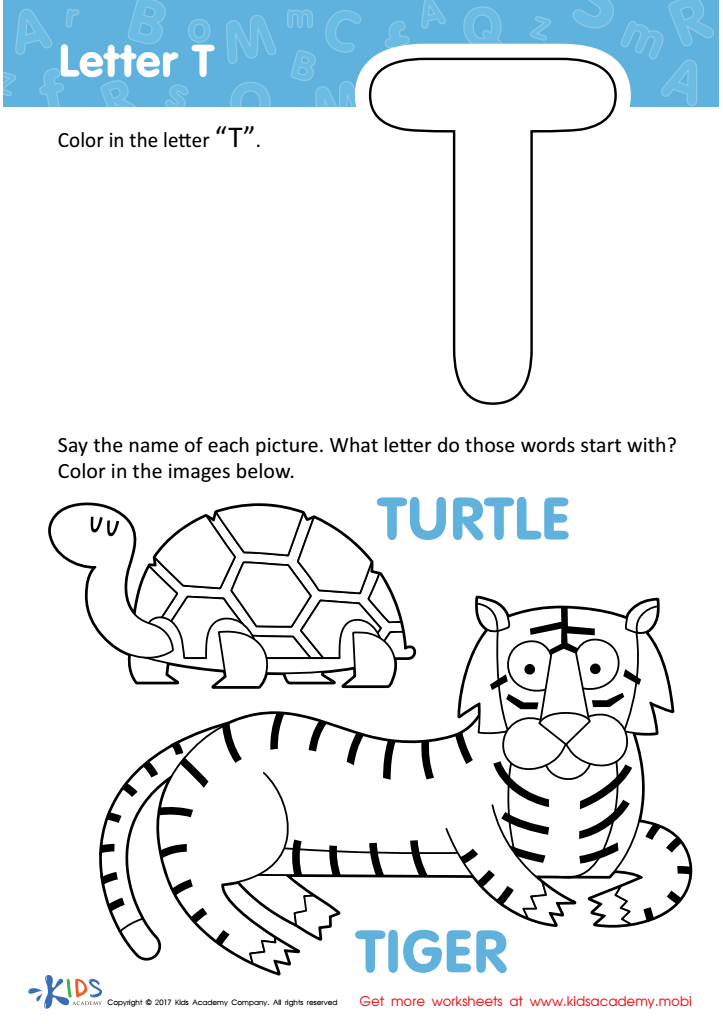
Letter T Coloring Sheet
Assign to My Students
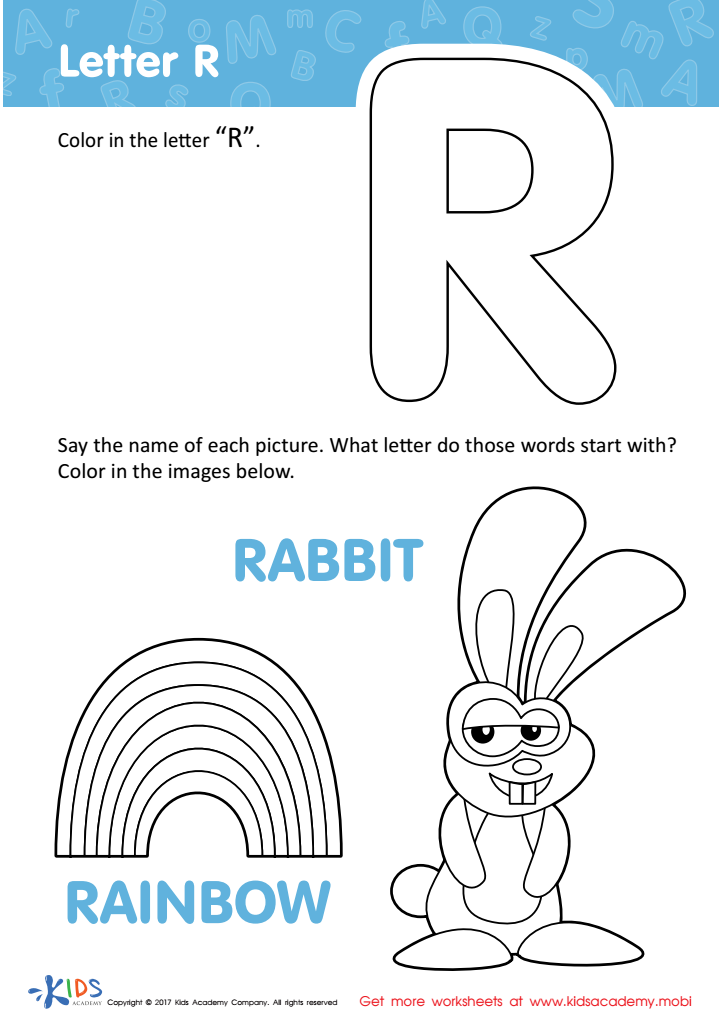
Letter R Coloring Sheet
Assign to My Students
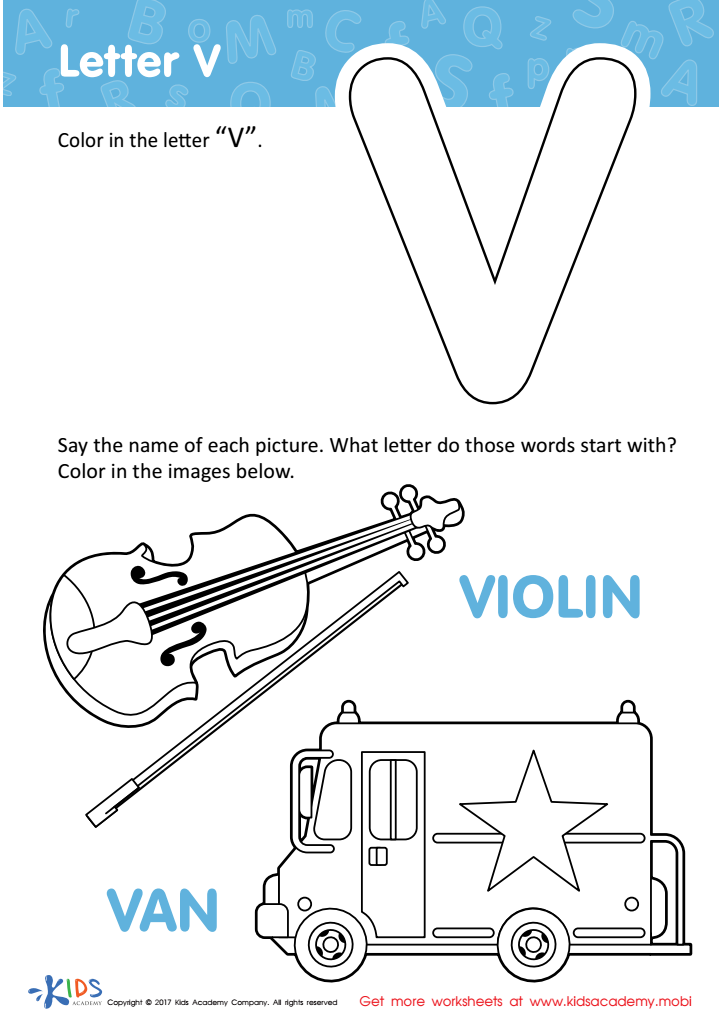
Letter V Coloring Sheet
Assign to My Students
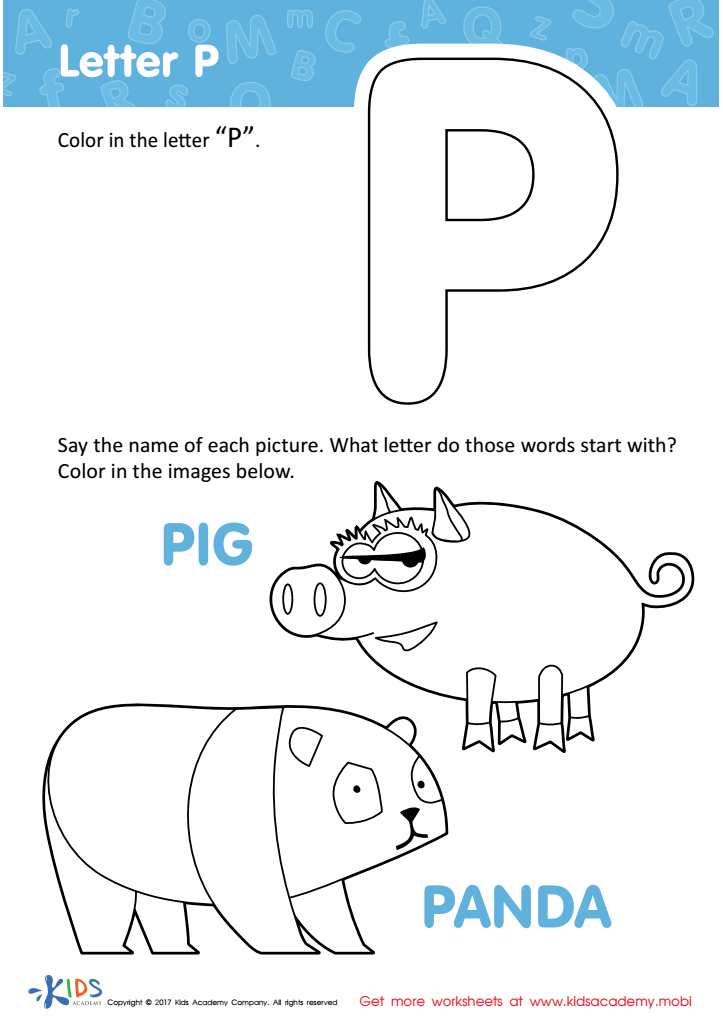
Letter P Coloring Sheet
Assign to My Students
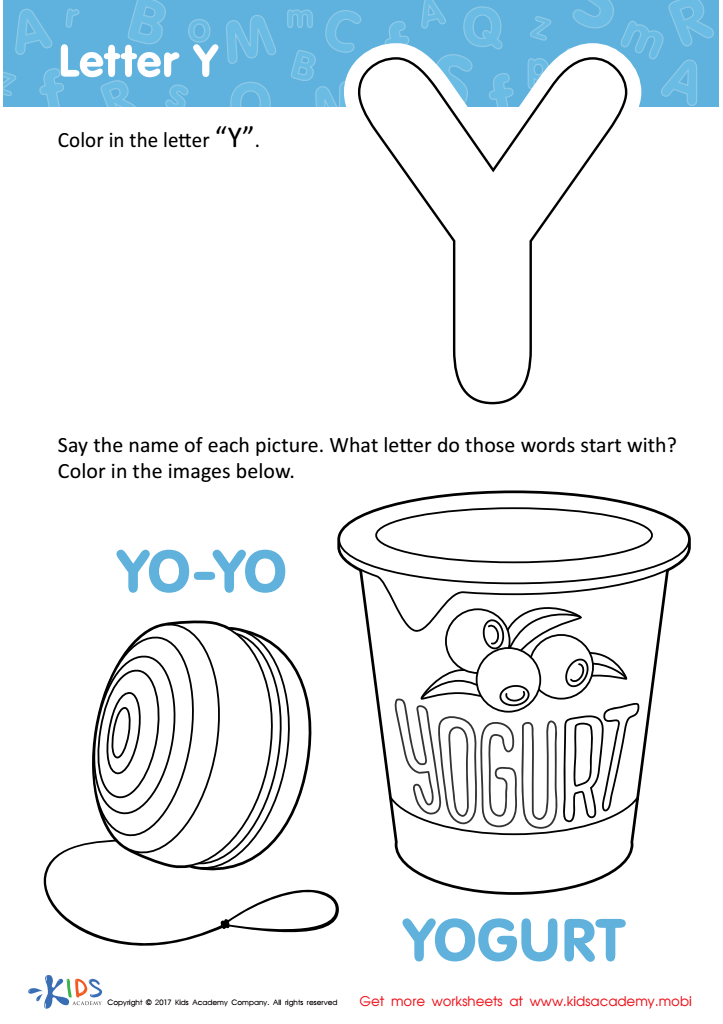
Letter Y Coloring Sheet
Assign to My Students








Alphabet recognition is a fundamental skill that serves as the foundation for a child's literacy development. For 6-year-olds, mastering the alphabet is crucial as it enhances their ability to read, write, and communicate effectively. Parents and teachers should prioritize this learning milestone because it directly impacts a child's overall academic success and confidence.
Understanding the alphabet allows children to decode and comprehend texts, which fosters a love for reading. Early exposure to letters helps them recognize shapes and sounds, laying the groundwork for phonics and vocabulary acquisition. Furthermore, engaging activities that make alphabet learning enjoyable can boost a child's motivation and curiosity, making education a positive experience.
In today's digital age, strong literacy skills are more critical than ever. Proficiency in reading and writing empowers children to access information, express their thoughts, and appreciate literature. Parents and teachers play a vital role in facilitating this learning process by incorporating fun and interactive methods, like flashcards or songs, into daily routines.
By prioritizing alphabet recognition for 6-year-olds, caregivers pave the way for lifelong learning, creativity, and effective communication, ensuring that children are well-prepared for future challenges in their academic journeys and beyond.