Discover engaging Logical Reasoning Easy Worksheets designed specifically for 6-year-olds! Our carefully curated worksheets help young learners develop critical thinking skills while having fun. Each activity is tailored to enhance problem-solving abilities, encouraging children to analyze, compare, and make decisions. With vibrant illustrations and age-appropriate tasks, children will enjoy exploring patterns, shapes, and sequencing exercises that challenge their minds. These worksheets aim to foster a love for learning and boost confidence in logical reasoning. Perfect for parents and educators alike, our resources are easily accessible and support early childhood development in a playful, interactive way. Download today to ignite your child's curiosity!

Check out this FREE "Logical Reasoning" Trial Lesson for age 6!

Arrange up to 5 Objects

Favorites
With answer key
Interactive
  • 6
  • Logical Reasoning
  • Easy
Beware of the King! Worksheet

Beware of the King! Worksheet

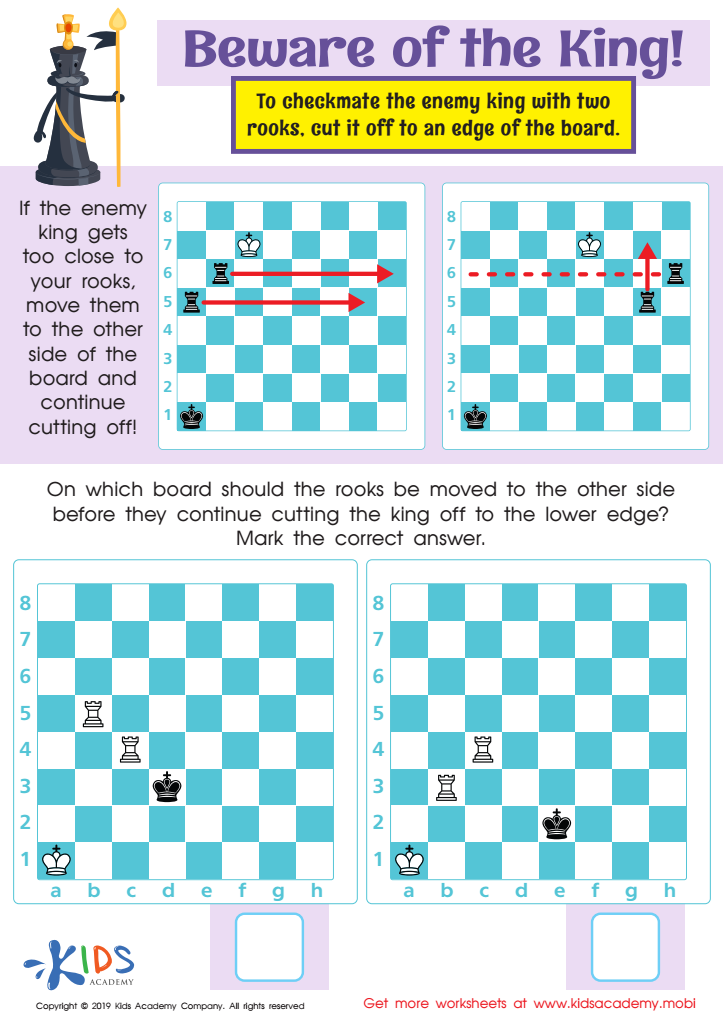
Teach your child to play chess and gift them valuable skills like critical thinking, logic, and reasoning! This free PDF worksheet will teach them the Two Rook Mate strategy to checkmate an enemy king with two rooks. They'll learn how to keep the king away and move the rooks for checkmate. Have screen-free fun together!
Beware of the King! Worksheet
Worksheet
Arranging Clothes Worksheet

Arranging Clothes Worksheet

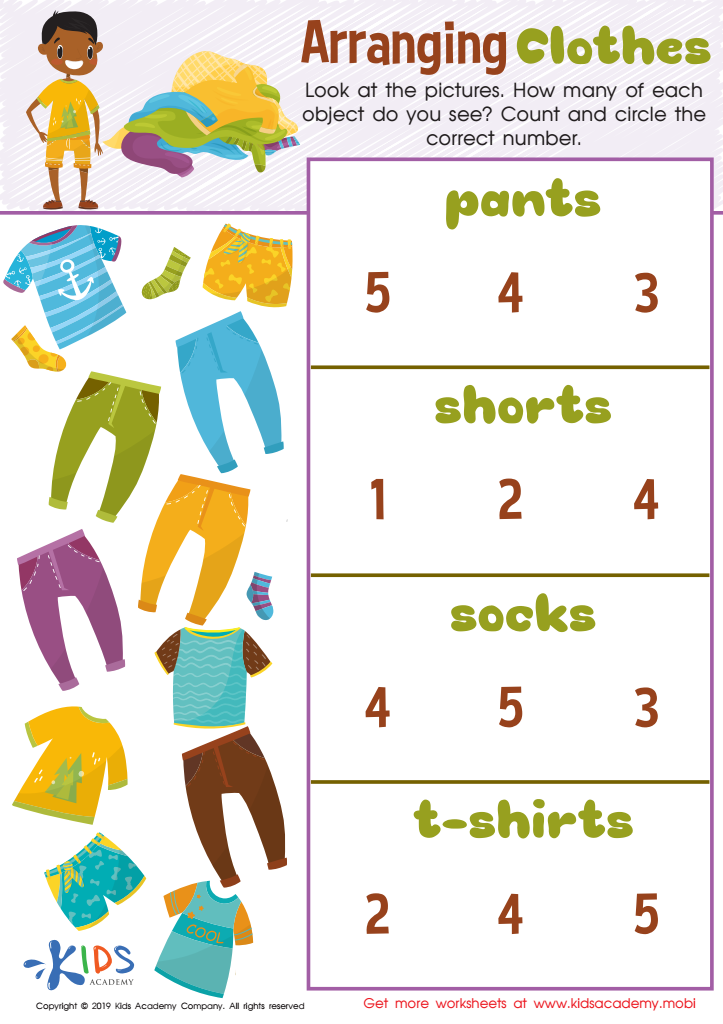
This worksheet uses familiar items, brightly colored to attract your kids. Ask them to name each item, then count them and circle the right number.
Arranging Clothes Worksheet
Worksheet
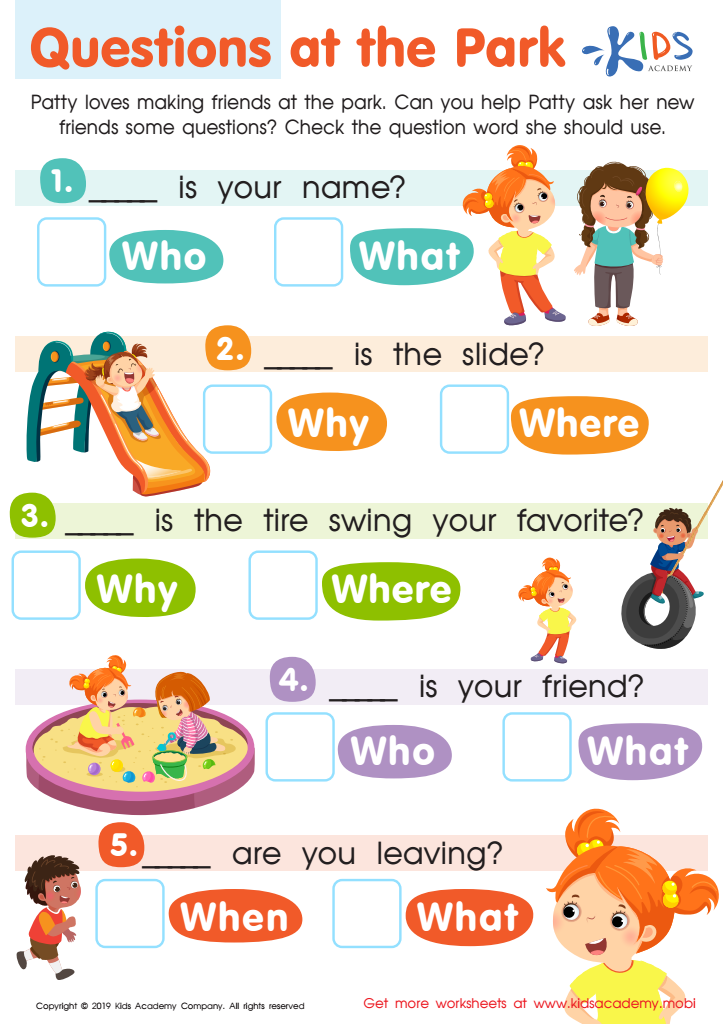
Questions at the Park Worksheet

Questions at the Park Worksheet

Parks are great for fun! Kids can play, run and be as loud as they want! Ask them what their favorite activities are. If they love making friends, like Patty in this worksheet, help them practice their question words to get to know their new pals better.
Questions at the Park Worksheet
Worksheet
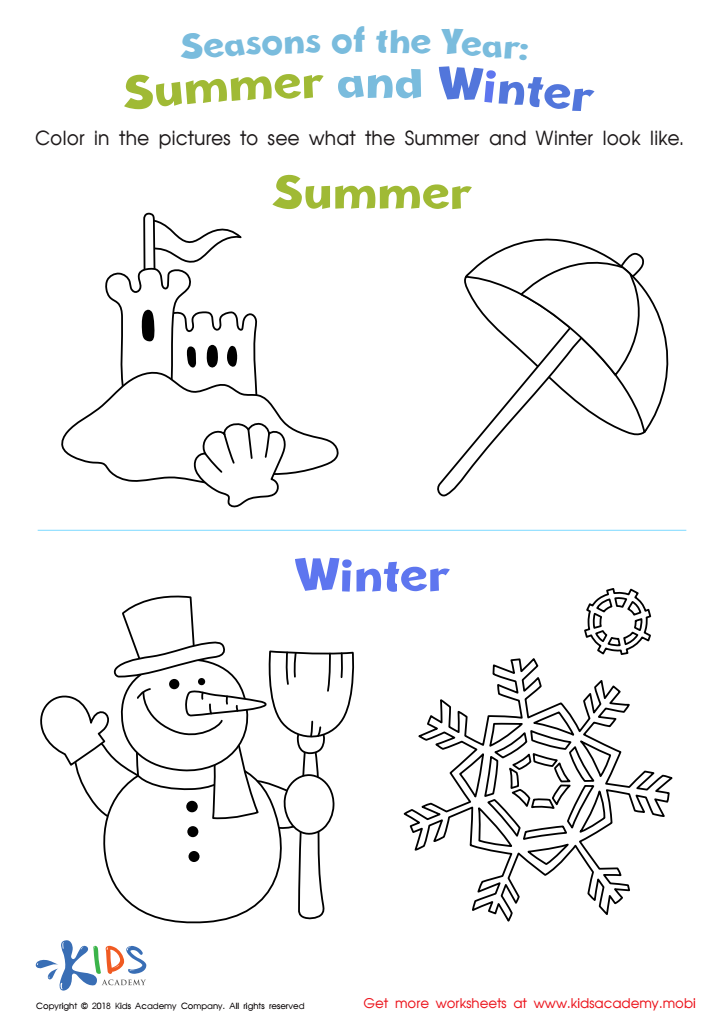
Summer and Winter Worksheet

Summer and Winter Worksheet

Ask your child what they associate with winter and summer. What do they look forward to in winter? What colors do they see most? What do they love doing in summer? Help them color in the pictures of winter and summer in the worksheet, choosing the colors they think best represent each season.
Download (PDF)
Assign to My Students
Summer and Winter Worksheet
Worksheet
Pond Trouble Worksheet

Pond Trouble Worksheet

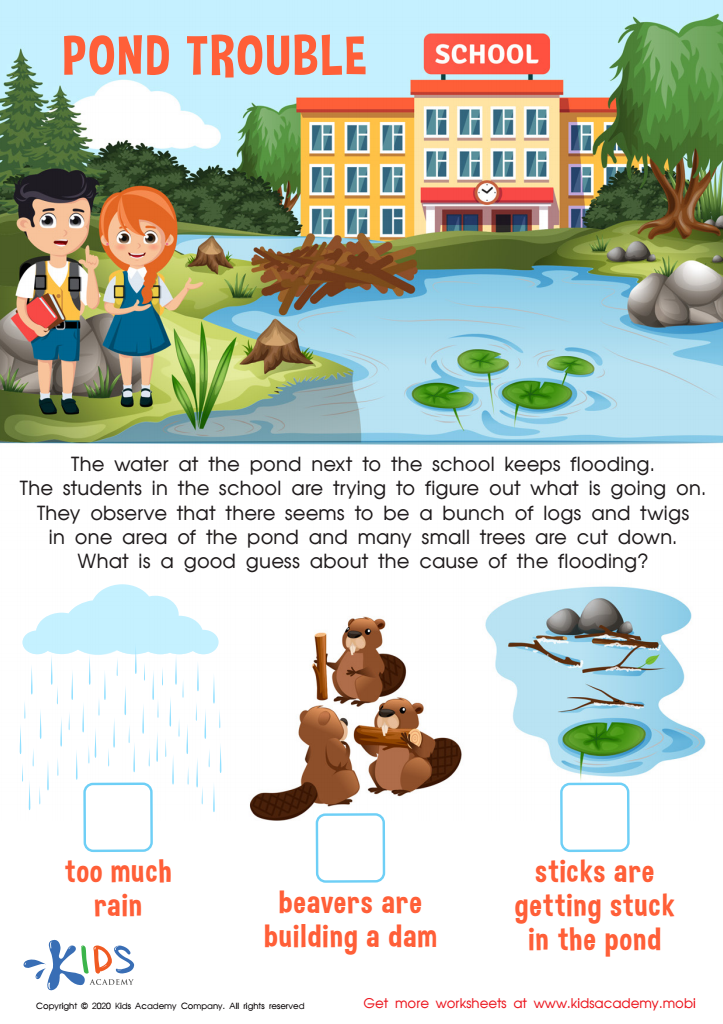
This fun worksheet will get your child's brain buzzing! They must help the characters solve the mystery of a flooding pond by reading the explanation and carefully considering each answer choice. Encourage them to think deeply about the possible cause before picking the most likely one.
Pond Trouble Worksheet
Worksheet
Fairness: Sequencing Worksheet

Fairness: Sequencing Worksheet

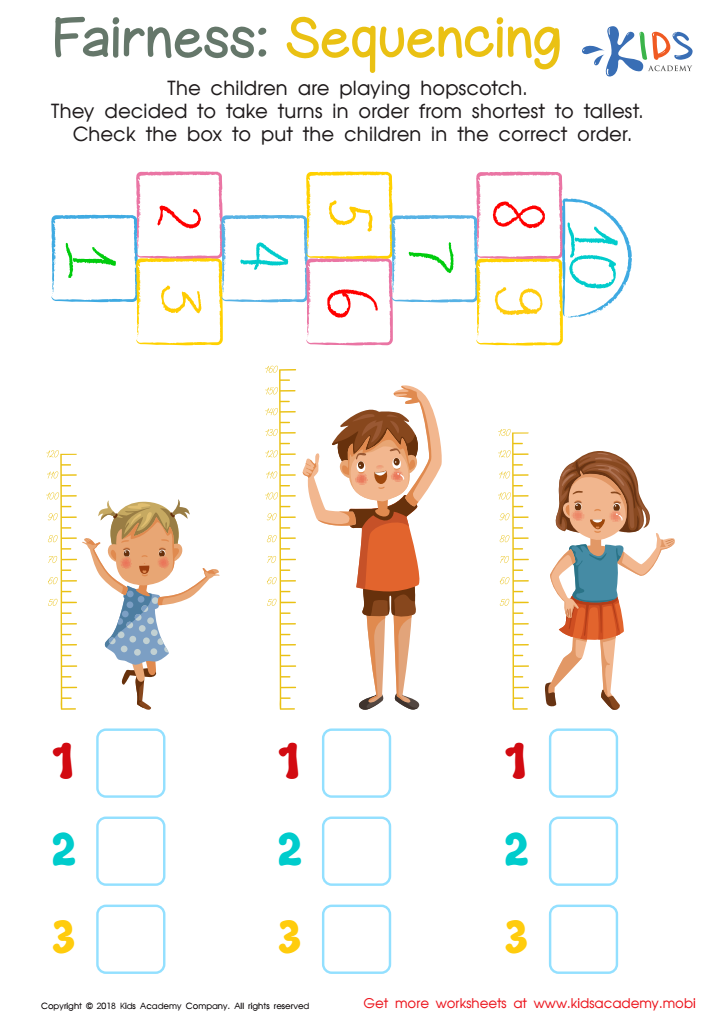
Kids likely already know how to play hopscotch. Ask them to show you the shortest, tallest and middle child in the worksheet. Then, help them order them from shortest to tallest by checking the boxes.
Fairness: Sequencing Worksheet
Worksheet
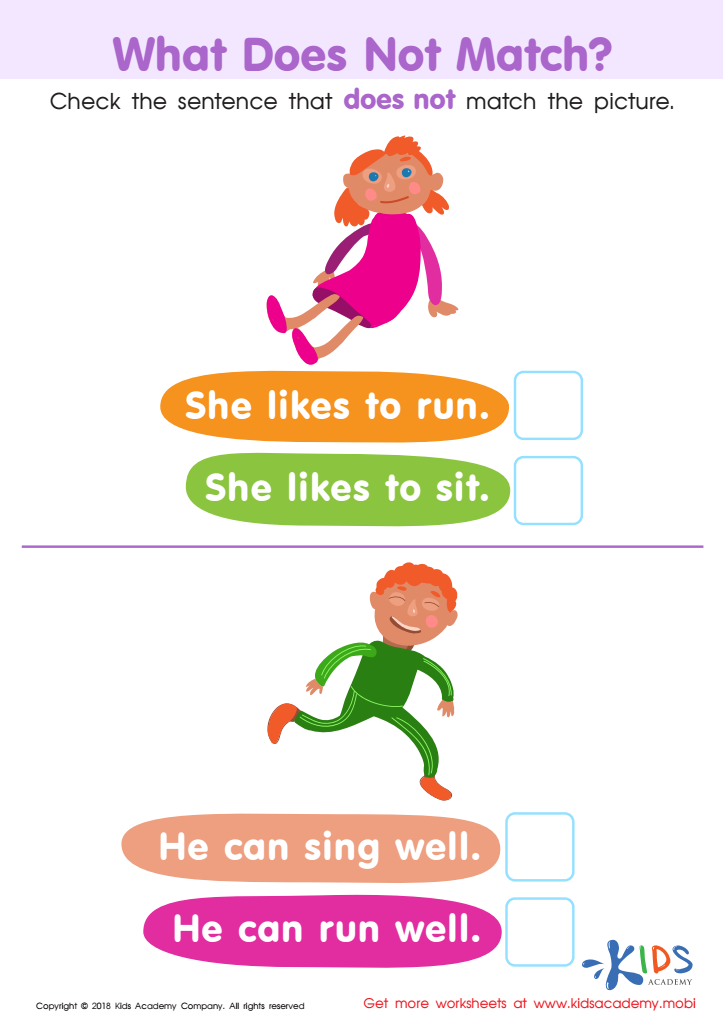
What Does Not Match? Worksheet


What Does Not Match? Worksheet

Emerging readers need to practice using visual cues and repetitive text. This colorful PDF provides them with an opportunity to look at pictures, use discrimination and discern which phrase does not match. It also enables them to gain familiarity with high-frequency words to aid decoding longer sentences.
What Does Not Match? Worksheet
Worksheet


Logical reasoning is a fundamental skill for 6-year-olds, laying the foundation for critical thinking, problem-solving, and independent learning. Parents and teachers should prioritize this skill as it helps children process information, make decisions, and understand cause and effect. Engaging in logical reasoning activities stimulates cognitive development, encouraging kids to think analytically and creatively.

When children practice logical reasoning, they learn to recognize patterns, sort and classify information, and draw conclusions based on evidence. These skills are essential not only in academic settings but also in everyday life as they navigate social interactions and practical challenges. For example, by solving puzzles or playing games that require reasoning, children become better equipped to evaluate situations and choose appropriate actions.

Furthermore, fostering logical reasoning in early childhood can significantly impact a child’s confidence and motivation to learn. It promotes a growth mindset, making them more willing to tackle complex tasks. Parents and teachers who prioritize logical reasoning activities help create a nurturing educational environment, ensuring that children develop strong foundational skills that will benefit them throughout their academic careers and beyond. In essence, logical reasoning empowers young learners to become curious, capable, and confident individuals.