Visual discrimination Easy Worksheets for 6-Year-Olds
5 filtered results
-
From - To
Enhance your child's visual discrimination skills with our fun, easy worksheets designed for 6-year-olds! At Kids Academy, our visually appealing printables help young learners distinguish between shapes, colors, sizes, and patterns, crucial for reading and mathematics development. Each activity targets specific learning skills through engaging exercises that captivate your child's interest. Perfect for in-home practice or classroom use, these worksheets encourage critical thinking and observation in a playful manner. By incorporating visual discrimination exercises into their daily routine, you'll provide a strong foundation for your child's academic success. Download our worksheets today to support your child's educational journey!
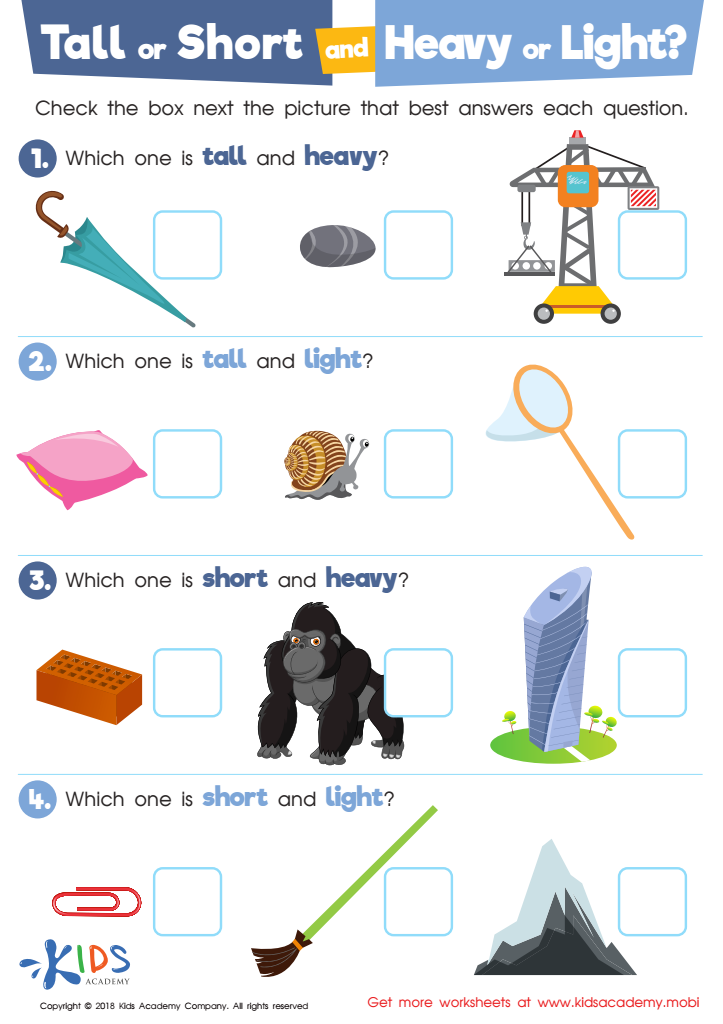
Tall or Short and Heavy or Light? Worksheet
 Assign to My Students
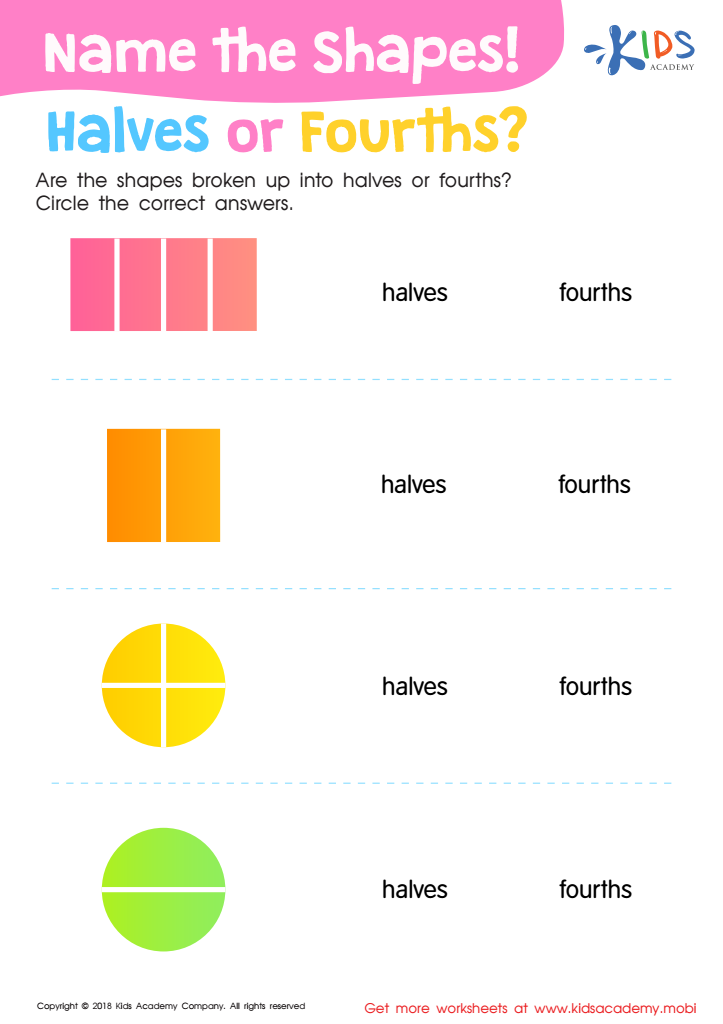
Name the Shapes Halves or Fourths? Worksheet
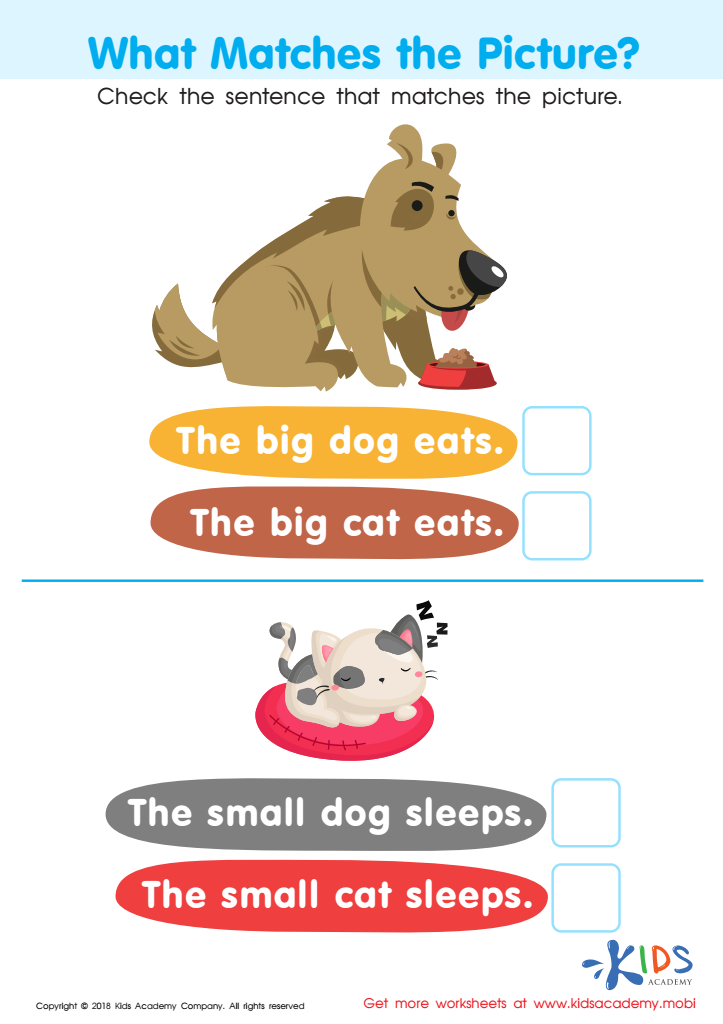
What Matches the Picture? Worksheet
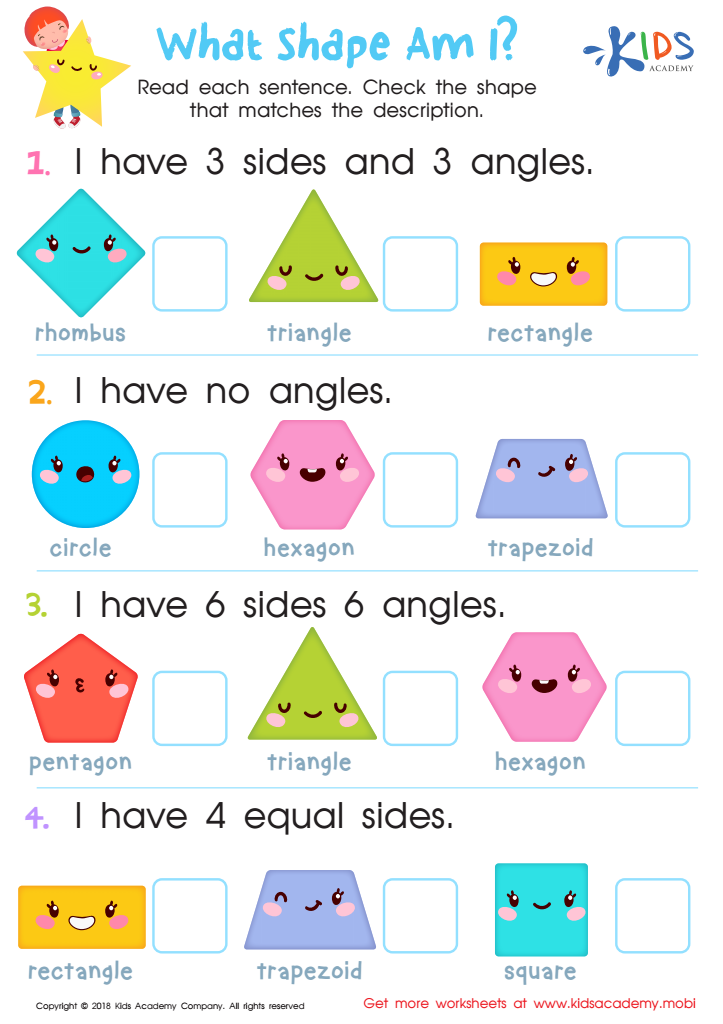
What Shape Am I? Worksheet
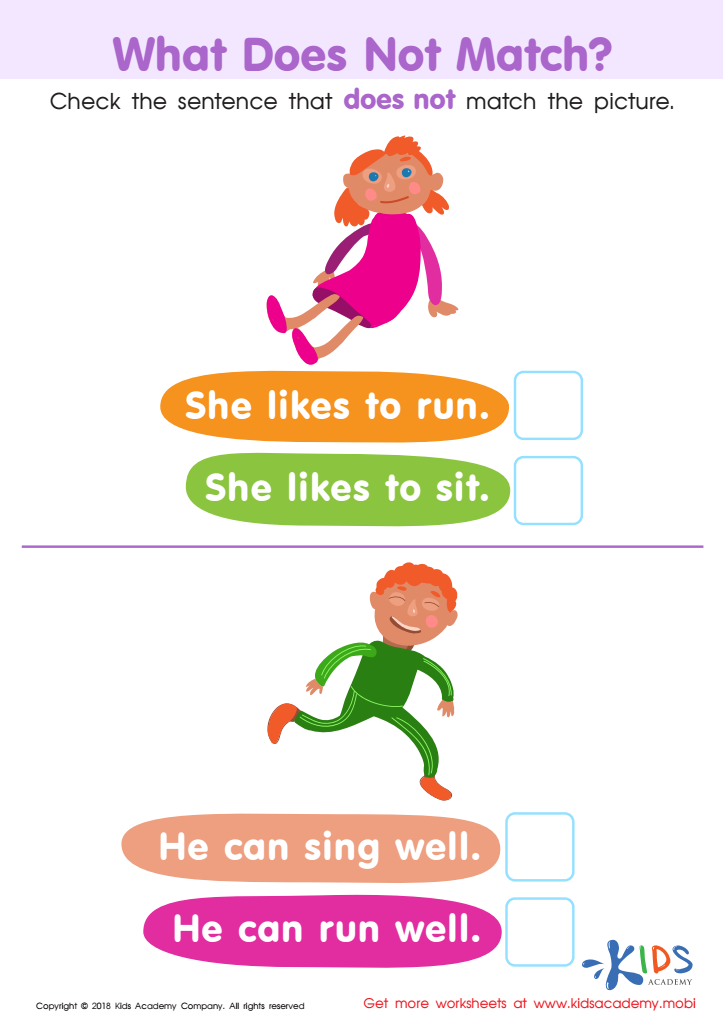
What Does Not Match? Worksheet








Visual discrimination is the ability to detect differences and similarities in size, shape, color, pattern, and position of objects. For 6-year-olds, developing strong visual discrimination skills is fundamental to their overall cognitive development and academic success.
Firstly, it plays a crucial role in reading and writing. Children must differentiate between letters and numbers that look alike (such as 'b' and 'd' or '6' and '9'). This skill directly impacts their ability to learn phonics, word recognition, and spelling, which are foundational for literacy.
Secondly, visual discrimination aids in mathematical understanding. Children rely on this skill to distinguish between different numerals and shapes, which assists in learning basic math concepts and problem-solving.
Additionally, these skills contribute to activities of daily life. Tasks such as matching socks, identifying symbols on signage, and understanding pictures in storybooks become more manageable when children have refined visual discrimination abilities.
Furthermore, strengthening visual discrimination can also improve attention to detail and enhance visual memory, both of which enrich a child's capacity to learn new information and apply it in various contexts.
For educators and parents, nurturing visual discrimination in a 6-year-old ensures they are set for success and less likely to face struggles in core subjects and daily tasks. Engaging activities like puzzles, matching games, and focused reading exercises are effective ways to support this critical aspect of development.








