
Vocabulary development Easy Worksheets for 6-Year-Olds
8 filtered results
Difficulty Level
Grade
Age
-
From - To
Subject
Activity
Standards
Welcome to our Vocabulary Development Worksheets for 6-Year-Olds! These engaging, easy-to-use worksheets are designed to enhance vocabulary skills in young learners. Featuring a variety of activities such as matching words with pictures, filling in the blanks, and simple word searches, each worksheet makes learning fun and interactive. Tailored to support early literacy, our resources aim to boost comprehension and language development through playful exercises. Perfect for teachers, parents, or homeschoolers looking to enrich their child's vocabulary, these worksheets foster a love for words and lay a strong foundation for future reading and communication skills. Start exploring today!
Favorites
With answer key
Interactive
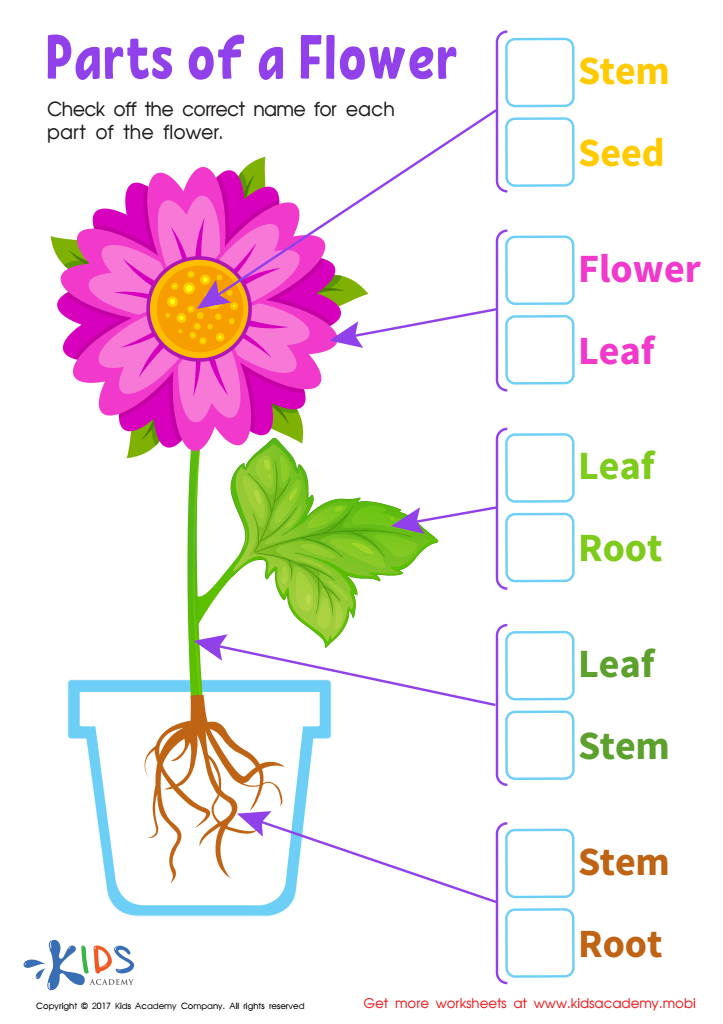
Parts Flower Printable
Introduce your child to life science with this vivid parts of a flower worksheet! They'll learn basic flower structures while building biology vocabulary and discovering plants are living creatures too! Perfect for budding little scientists!
 Assign to My Students
Parts Flower Printable
Worksheet
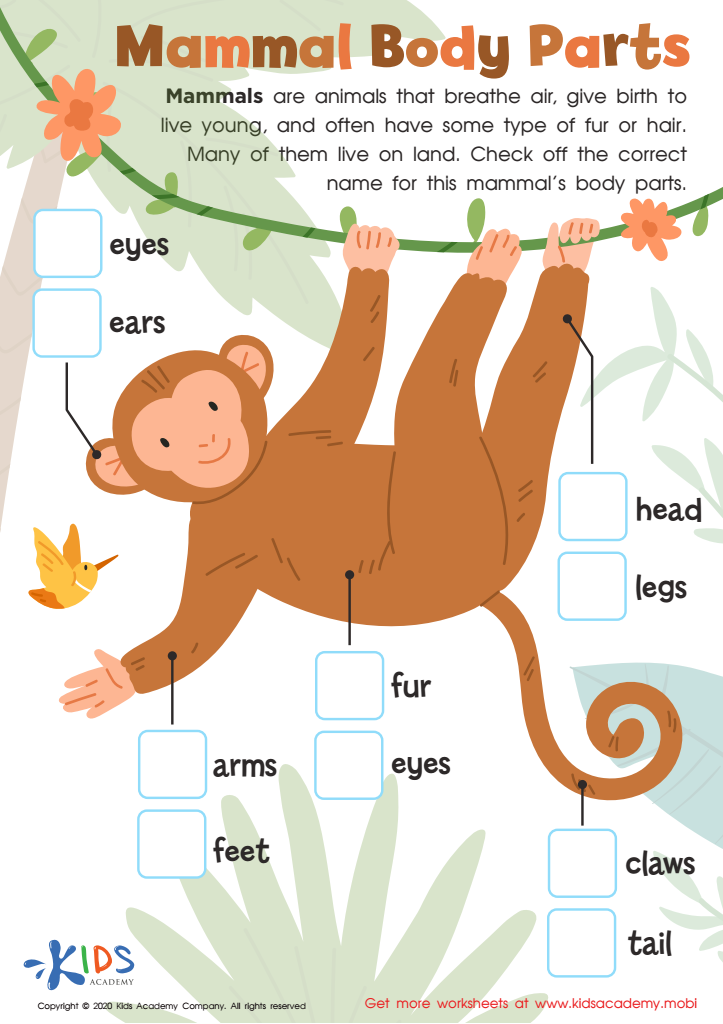
Mammal Body Parts Worksheet
Help your little scientist identify a mammal's body parts with this cute and colorful worksheet. It includes fur, arms, legs, tails, and more! Read the passage to learn what makes an animal a mammal, then have them check off the boxes to identify parts of the monkey. It's a fun way to learn about animals in the animal kingdom!
Mammal Body Parts Worksheet
Worksheet
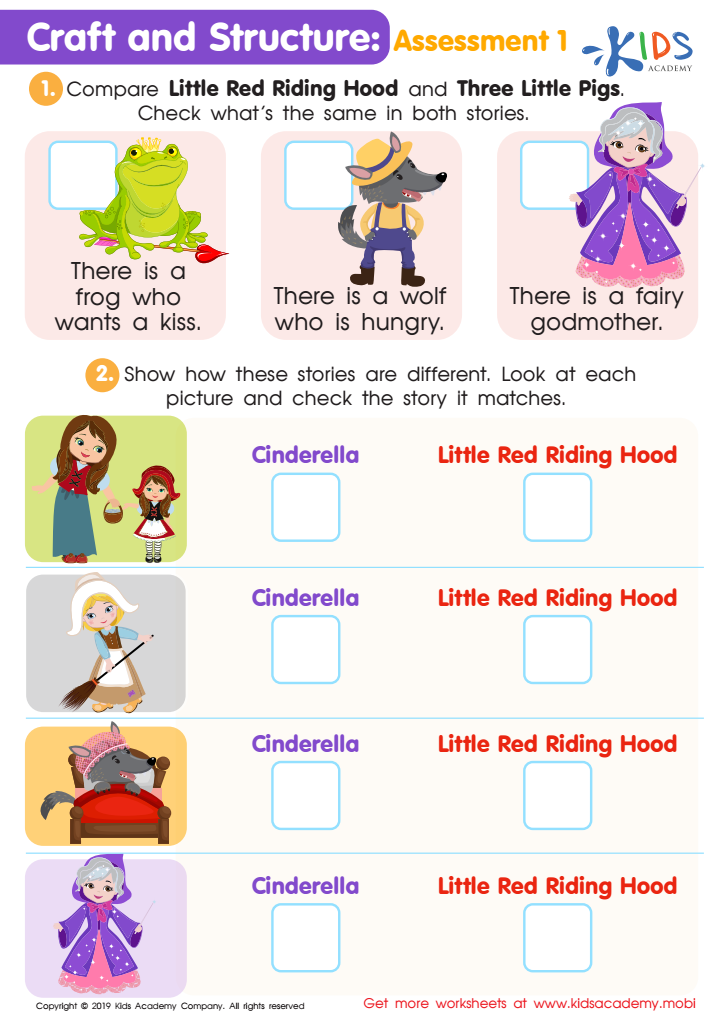
Craft and Structure: Assessment 1 Worksheet
Fairytales are a great way to bond with your kids while teaching them. Popular stories include Little Red Riding Hood and Three Little Pigs. Test how well they understood these two with this assessment worksheet. Ask them to compare the two stories and check what is the same. Doing this will help kids learn new words and sentence construction, as well as teaching them life lessons.
Craft and Structure: Assessment 1 Worksheet
Worksheet
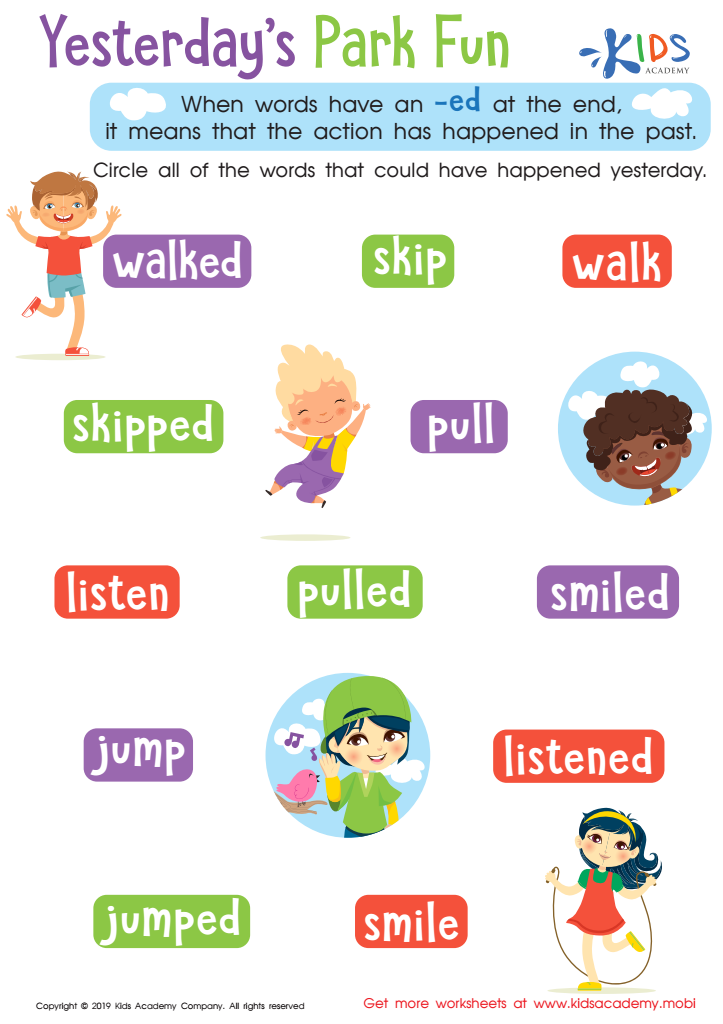
Yesterday's Park Fun Worksheet
Add -ed to the end of words and you get a word that happened in the past. This PDF helps your child understand this concept by giving practice examples: walk, pull, jump and smile can all be transformed into the past tense with a -ed suffix. They'll circle all the words that happened yesterday and learn about the past tense.
Yesterday's Park Fun Worksheet
Worksheet
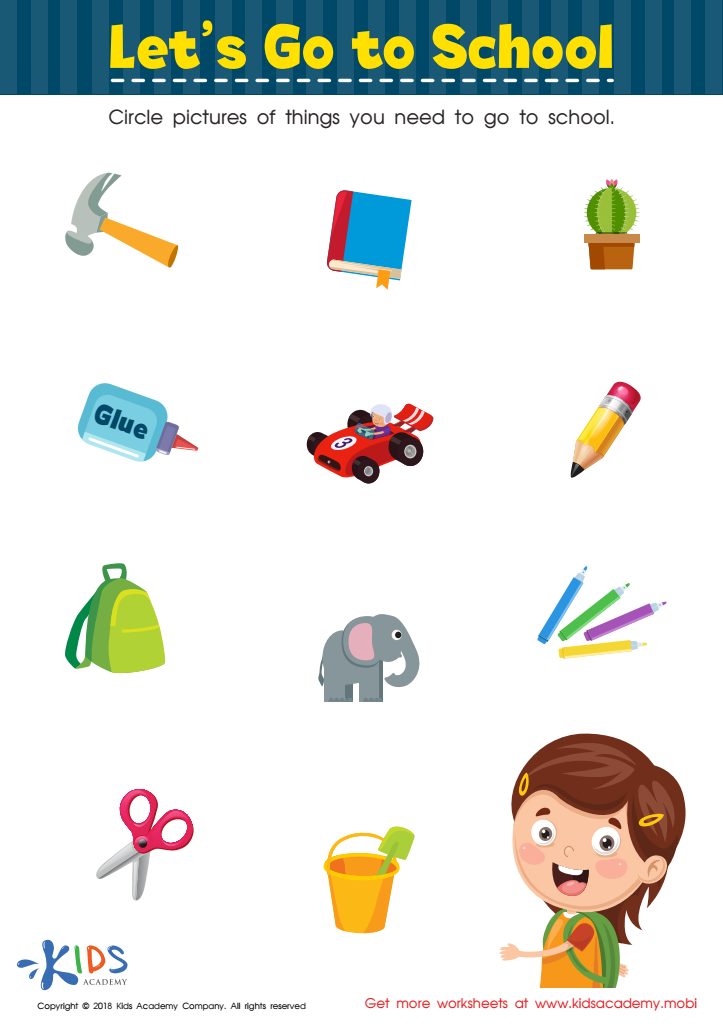
Let's Go to School! Worksheet
Ask your kids to circle the objects they need for school on this worksheet. It contains pictures of different objects - some needed and some not related to school. This should be easy for them as they're already enrolled or homeschooled.
Let's Go to School! Worksheet
Worksheet
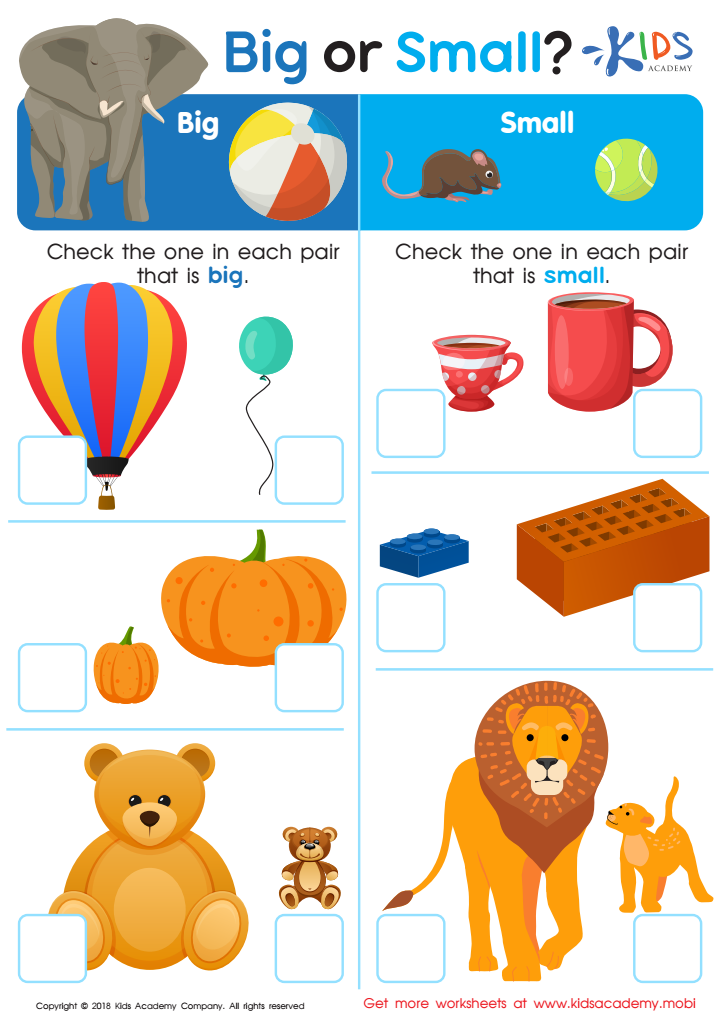
Big or Small? Worksheet
Kids need visuals to understand bigger and smaller concepts. This free PDF worksheet offers fun pictures that let them compare and gain a stronger understanding of sizes. Kids will enjoy it and won't realize they're learning since the pictures are so engaging. It's great preparation for future measurements.
Big or Small? Worksheet
Worksheet
Join Kids Academy for Free
Who is primarily going to use this learning content?






.jpg)
Vocabulary development is super important for kids, especially for 6-year-olds! When children learn new words, they become better at talking, reading, and understanding everything around them.
First, having a strong vocabulary boosts their confidence. When kids know more words, they can share their thoughts and stories clearly. This makes them eager to participate in conversations and school activities.
Second, good vocabulary helps with school. Many subjects, like science and social studies, have special words or terms. If children know these words, they can understand lessons better, do well in tests, and love learning even more!
Also, when kids read, a rich vocabulary makes it easier for them to grasp the stories and ideas. This encourages a love for reading that can last a lifetime!
Finally, strong vocabulary skills help in making friends. Communicating well leads to better relationships with peers, which supports their social development.
In short, vocabulary is the key to communication, learning, and building friendships for young children. Parents and teachers should work together to encourage listening, speaking, reading, and writing activities that help kids expand their vocabulary. This way, children can grow into confident learners and happy communicators!








